
How to Identify Halogen and Xenon Bi-Pin Bulbs

Updated 8/18/26 by Angela Rogers
The bulb suddenly burned out in those little "puck" lights under your kitchen cabinets. Or maybe it's the light in your desk lamp. You may have even had a bulb in your landscape lighting bullet fixture burn out. Once you figure out how to get the fixture apart, you find a tiny bulb with a base you don't recognize. Now what?
Sure, you can throw the entire fixture out and just get a new one. And while that may be easier, it definitely won't be cheaper. And what happens when the bulb burns out again (which it certainly will)? Are you going to keep buying replacement fixtures?
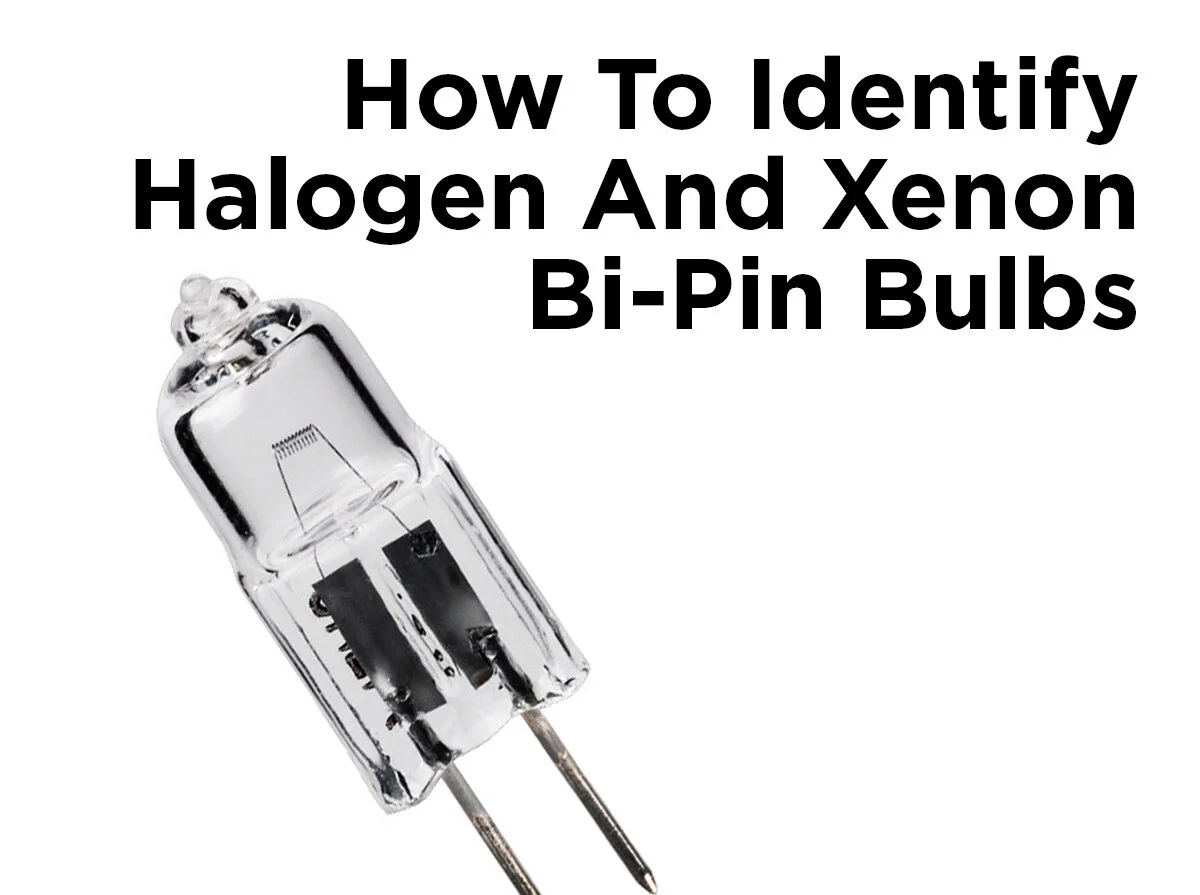
Relax. At 1000Bulbs.com, we have you covered. Identifying and replacing your existing mini bi-pin halogen or xenon bulb (sometimes called '2-pin bulbs' or 'T-bulbs') is easier than you think. You even have the option of upgrading to an LED bulb, which provides longer-lasting light at reduced energy costs. Just follow the simple steps we've outlined below.
Step 1: Identify Your Halogen or Xenon Mini Bi-Pin Bulb
To find the correct replacement bulb, you must first determine what bulb you have in your fixture. Mini bi-pin bulbs come in a wide variety of bases, wattages, and voltages, so you have to match all of that to find the correct replacement. But you might be wondering, what are mini bi-pin bulbs?
The original bi-pin base, like those on fluorescent and LED tube lights, was invented in the late 19th century. The mini bi-pin base came along much later as smaller light fixtures became more popular. Originally available as halogen bulbs and later xenon bulbs, mini bi-pin bulbs produce a focused directional light due to their compact size. They are commonly used today in track, recessed, under-cabinet, and landscape lighting.
Common Mini Bi-Pin Base Types
The first step to determining what bulb you have is to identify the base. In some cases, this information will be printed on the bulb or somewhere on the fixture. If it's not, don't worry. Most bases can be identified by measuring the pin spacing or by how the pins look.
Mini bi-pin bases have two long, straight (in most cases) pins coming out of the bottom of the bulb. They are installed by gently pushing them into the socket. Use a ruler or digital caliper to measure the space between the pins in millimeters. Write this measurement down, as it will help you find the right base type.
Bi-pin light bulbs are labeled with a “G” followed by pin spacing:
| Bi-Pin Bulb Pin Spacing Chart | ||
|---|---|---|
| Base | Pin Spacing | 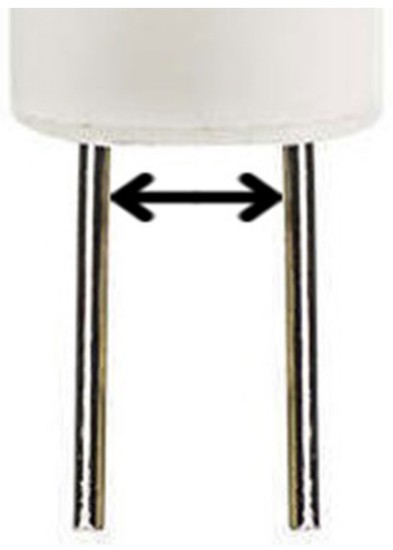 |
| G4 | 4 millimeters | |
| G5.3 | 5 millimeters | |
| G6.35 | 6 millimeters | |
| GY6.35 | 6 millimeters | |
| G8 | 8 millimeters | |
| GY8 | 8 millimeters | |
| G9 | 9 millimeters | |
| Bi-pin light bulb base chart showing G4, G6.35, GY6.35, G8, GY8, and G9 pin spacing. | ||
On the chart above, you'll notice that a few bulbs have the same pin spacing. In the case of G6.35 and GY6.35 bases, they have the same spacing but are differentiated by the pin diameter:
G6.35 pins have a diameter of 1 millimeter
GY6.35 pins are 1.25 millimeters in diameter
G8 and GY8, on the other hand, have differing pin lengths:
G8 pins measure 8 millimeters long
GY8 pins measure 8.5 millimeters long
Mini Bi-Pin Bulb Tip: The most common bi-pin base types include G4, G5.3, and G9.
Mini Bi-Pin Bulb Base Variations
Most bi-pin light bulbs have straight pins. Some, however, will have looped pins. Knowing if the pins are straight or looped will help you narrow down your bulb selection. In fact, there are several other specialty bases that mini bi-pin bulbs can have.
If the bulb you removed from your fixture doesn't have a bi-pin base, it may have one of these bases instead:
| Base Type | Description | Image |
|---|---|---|
| Looped | Variation of G9 base bi-pin bulbs where the pins are formed into loops. | 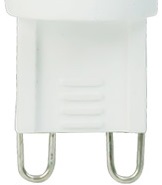 |
| Wedge | Pins are partially encased, with the bulb being designed to be "wedged" down into a specialty socket. | 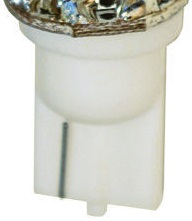 |
| Single Contact (SC) Bayonet | Twist-and-lock bulb with one metal contact on the bottom of the base. | 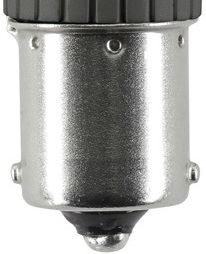 |
| Double Contact (DC) Bayonet | Twist-and-lock bulb with two metal contacts on the bottom of the base. | 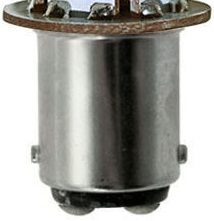 |
| Festoon | Has points on each end of the lamp and can only be used in festoon sockets. | 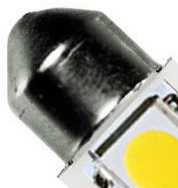 |
| R7s NEW |
Has long contact protrusions on each end and can only be used in double-ended recessed single-contact bases. | 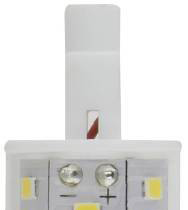 |
| Mini Candelabra (E11) | Screw-base that measures 11 millimeters. | 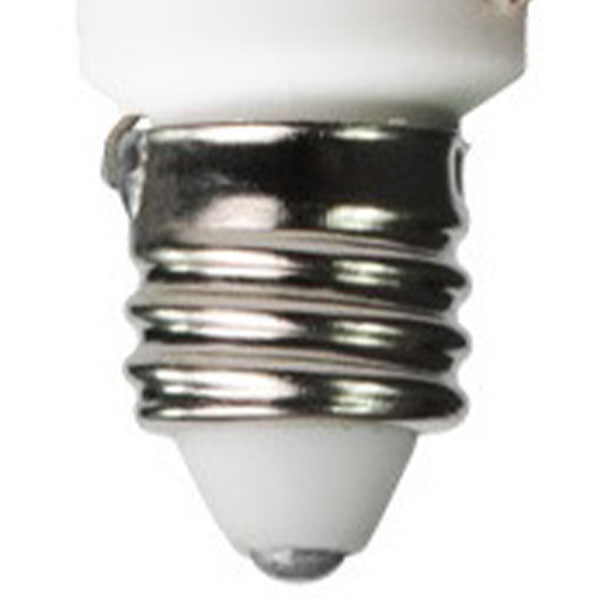 |
| Candelabra (E12) | Screw-base that measures 12 millimeters. | 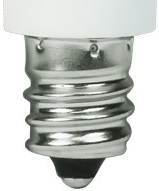 |
| Intermediate (E17) | Screw-base that measures 11 millimeters | 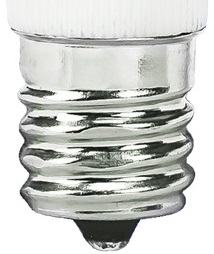 |
| Note: Mini candelabra (E11) and candelabra (E12) bulbs are not interchangeable, even though there is only a millimeter difference between the two. | ||
Chart showing base types, with images and correlating descriptions for each.
NEW: Mini Bi-Pin G5.3 Bases vs MR16 G5.3 & GU10 Bases
Wait a second? Isn't a G5.3 base the same as what is used for MR16 bulbs? When it comes to G5.3 bases, there tends to be a lot of confusion. Yes, both are considered bi-pin bases. And yes, mini bi-pin lamps and MR16 lamps have G5.3 bases. However, they are very different from each other.
The G5.3 base for mini bi-pin bulbs is essentially two long pins protruding from the base of a small, capsule-like bulb. The G5.3 base for halogen MR16 bulbs has two very short, thick pins with sharp points protruding from the bottom of a small reflector bulb. Modern LED MR16 bulbs have a GU5.3 base, which is nearly identical to a G5.3 MR16 base.
GU10 bulb bases are also commonly mistaken for mini bi-pin bases. Also used for MR16 bulbs, the GU10 base has very short pins with wide end nubs for twisting and locking into place. For a better idea of what these bulbs and bases look like, take a look at the image below:
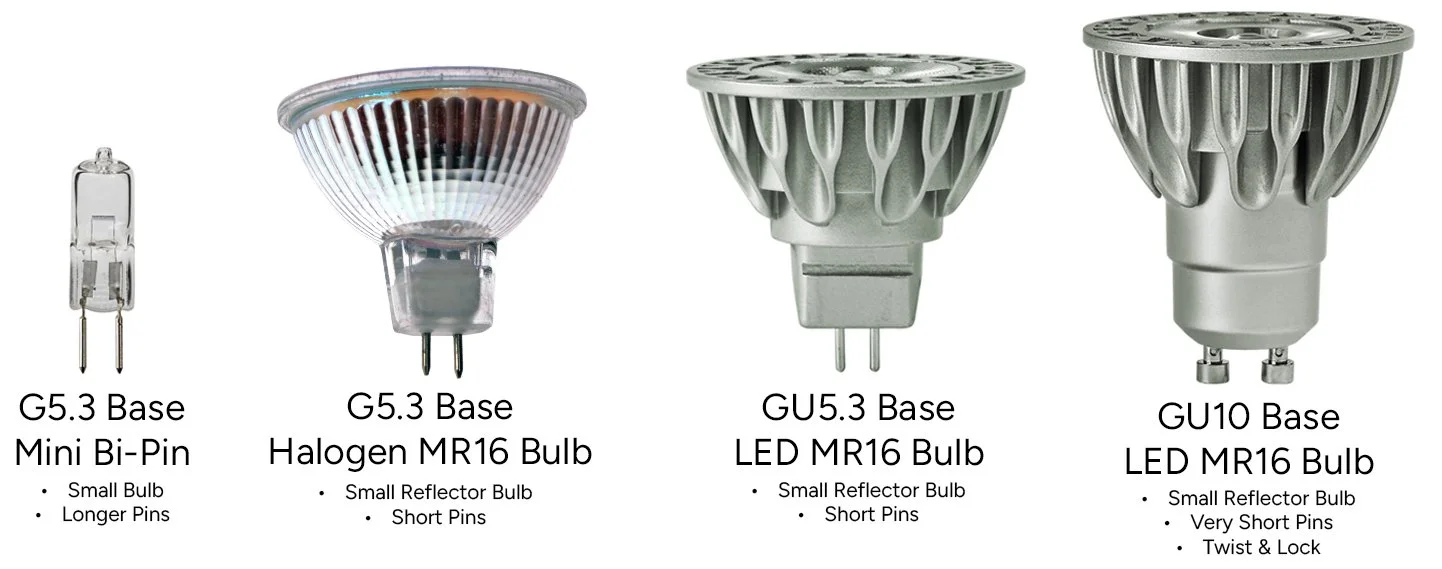
Comparison of mini bi-pin G5.3 vs MR16 G5.3, GU5.3, and GU10 bases
Aside from base types and appearance, these lamps have other differences too. As mentioned earlier, mini bi-pin bulbs produce a very focused directional light. MR16 bulbs can produce a wide range of beam angles, which makes them ideal for spot and flood lighting. You can learn more about MR16 and other MR lamps by reading our blog post: Light Bulb Shape Guide: MR-Shape.
Twist-and-Lock vs Push-In Bulb Bases: Bulbs with a push-in base are simply pushed down into the socket. Twist-and-lock bulbs are first gently pushed into the socket, then twisted so that they lock into place.
If the bulb you are trying to replace is, in fact, an MR16, here is where you can find them:
Determining Mini Bi-Pin Bulb Voltage and Wattage
Next, you need to find the fixture's operating voltage. The operating voltage can range from 6 Volts up to 120 Volts, using either AC (alternating current) or DC (direct current). Check the fixture housing or socket for a label indicating the voltage of the original bulb. The label will most likely have a UL or CSA symbol. If there isn't a label, look for writing stamped directly on the fixture itself (see the example below). If it's not on the fixture, try to find the information on the bulb. When you find the voltage, write it down.
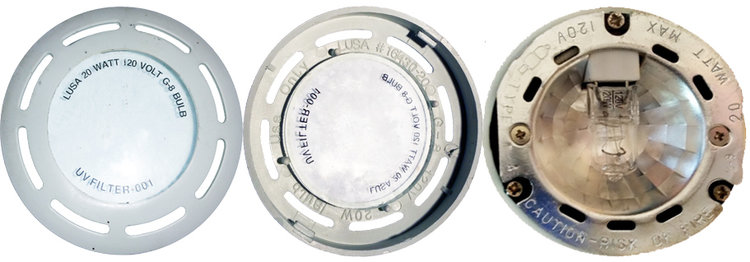
Fixture labels show operating voltage and maximum wattage.
Finally, see what wattage your bulb uses. Like the voltage, the wattage can be found printed directly on the bulb. Fixtures will also have the wattage information printed on them. In some cases, you may see the wattage followed by ‘maximum wattage'. This indicates that the fixture cannot be used with a bulb that exceeds that wattage.
Step 2: Choose a Replacement Bulb
Now that you've got the pin spacing, pin type, wattage, and voltage, it's time to find a replacement bulb. Let's put everything together with a few examples:
If your bi-pin bulb measures 4 millimeters between pins, you have a G4 base bulb. These bi-pin bulbs come in 6, 12, or 24 Volts.
A measurement of 5.3 millimeters is a G5.3 base, which is available in 12 Volts.
If your measurement is just a hair wider than 6 millimeters, you have a bulb with a G6.35 base, which comes in 12, 24, or 120 Volts.
A measurement of 8 millimeters means you have a G8 base bulb, which only comes in 120 Volts.
Straight or looped pins that are spaced 9 millimeters apart mean you have a G9 base bulb, which also only comes in 120 Volts.
Upgrading to LED Bulbs
While you're replacing your halogen or xenon bulb, consider upgrading to an LED. If the bulb is hard to reach or you have difficulty accessing the bulb, LED mini bi-pin bulbs are a great solution. They are also helpful if your countertops get overly warm due to excess heat generated by halogen bulbs.

A T3 wafer.
Using a fraction of the energy, these light bulbs outlast their halogen and xenon counterparts, allowing you to go longer between replacements. To find a corresponding LED equivalent, you first need to match the base of the original bulb. LED mini indicator light bulbs are available in a variety of bases, including the following:
Bi-pin – G4, GY6.35, G8, G9 Straight Pin, or G9 Looped Pin
Single Contact (SC) or Double Contact (DC) Bayonet
Festoon
Wedge
Candelabra (E12) or Intermediate (E17)
Match Voltage and Wattage
Next, match the LED to the voltage of the fixture. LED mini indicator bulbs generally range from 12 to 120 Volts and can operate using DC only, AC only, or both. Some light bulbs, such as T3 wafers, can operate on slightly lower voltages. Pay close attention, as applying the wrong voltage or current can damage both the bulb and the fixture.
Now, compare wattages. For a light output similar to your current halogen light bulbs, look for LED bulbs that have the same wattage equivalent. For example, an LED mini indicator bulb labeled as “50 Watt Equal” will produce a similar amount of light as a 50-Watt halogen while using less electricity and producing far less heat. For brighter light, choose a bulb that has a higher wattage equivalent. Since these LED bulbs consume far less energy than halogens, you don't have to worry about going over the maximum wattage rating for the fixture.
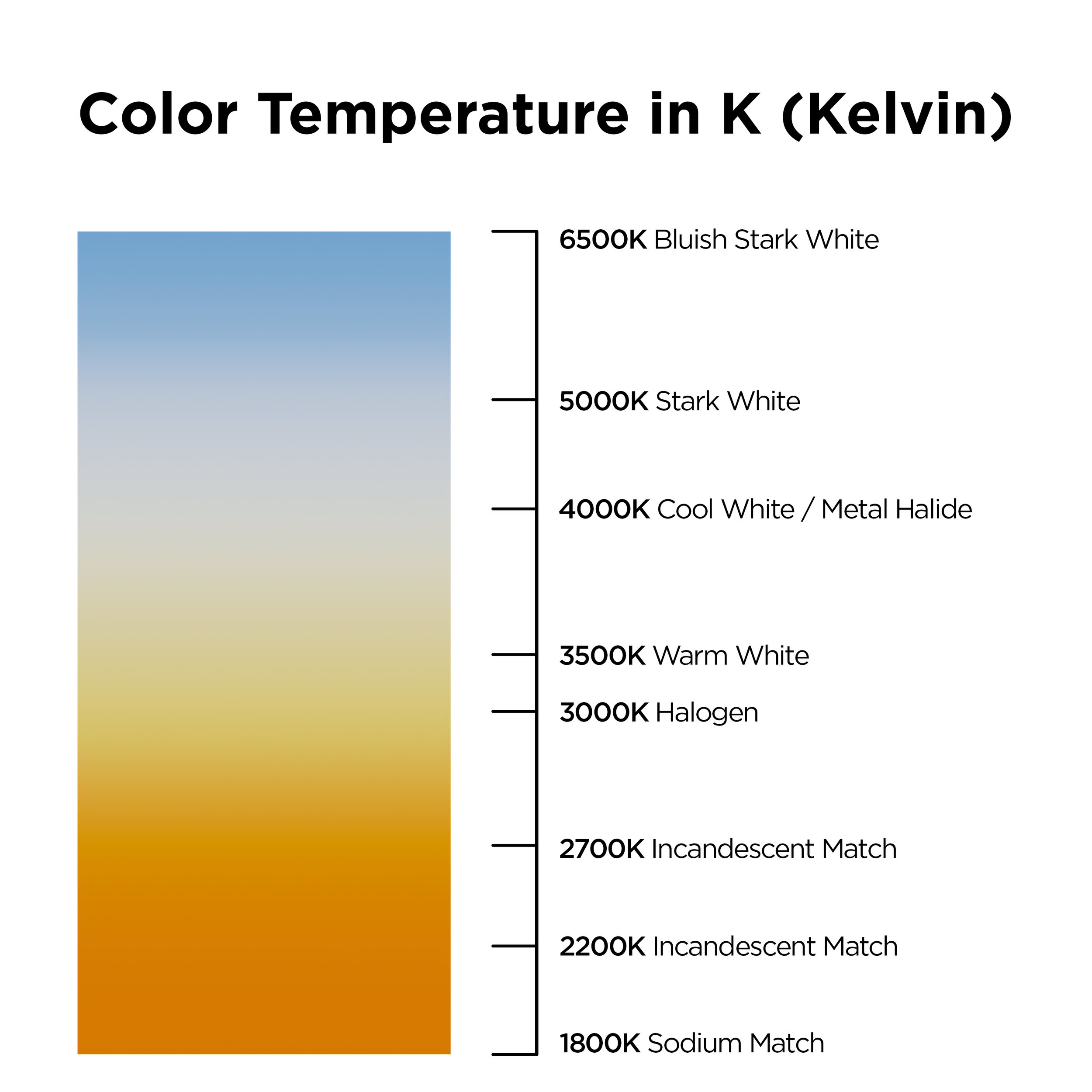
Choose the Right Color Temperature
When switching to LED bulbs, always consider the color temperature. Measured in Kelvin, color temperature is the term used to describe the color of the light produced by the bulb. The wrong color temperature can affect the way objects or the room as a whole looks and feels.
Traditional xenon and halogen bulbs deliver light that ranges from warm white 2700K to halogen white 3000K.
Check Compartment Dimensions Against the LED Bulb Dimensions
Because LED mini indicator lights come in a variety of shapes and sizes, it is best to measure the inside of your fixture to ensure that the new LED bulb will fit. The LED bulb may be longer or have a larger dimension than the halogen bulb. If you can't find a close enough match to your halogen bulb or xenon bulb, speak with one of our customer service representatives at 1-800-624-4488 to see if a bulb can be special ordered.

When installing halogen bulbs, use gloves to prevent damage to bulbs.
Step 3: Install Your New Light Bulbs
Once you have the halogen, xenon, or LED bulb you need, the installation is simple. After removing the fixture's glass lens, insert the new bulb into the socket and replace the lens.
Handling Halogens vs LEDs
If installing a halogen bulb, be careful not to touch the bulb itself, as the oils on your fingers will damage the bulb, shortening its life and maybe even causing it to melt. Some halogen bulbs come with a wrapping around the bulb to prevent damage when installing them. If your bulb didn't come with a wrapping, wear gloves or use something to wrap around the bulb. Be sure to remove the wrapping after installation if applicable.
Unlike halogen bulbs, LED mini lights are not affected by the oils on your hands, so these light bulbs can be handled freely without gloves.
Location Ratings
Some LED mini indicator light bulbs are rated for use in dry locations and should not come into contact with any moisture. For applications where there may be moisture, look for wet-location or waterproof light bulbs, which can be exposed to water but not submerged. LED indicator light bulbs are not designed to withstand heat and cannot be used in applications such as microwaves or ovens.
Dimmer Compatibility
Also, remember that not all LED mini-indicator bulbs are capable of dimming. You will need to look specifically for light bulbs labeled as dimmable if you want your lights to dim. Be sure to check the product details page and specification sheets for dimming information.
Project Complete
That's all there is to it. Remember, when it comes to fixtures that use these less common bulbs, investing a little time in finding the right bulb is a small price to pay, and it is certainly much cheaper than replacing the whole fixture. Initially, replacing the bulb may not be as easy, but you are sure to be satisfied with the results and the money savings if you follow these steps.
If you have any questions about these light bulbs or just questions in general, drop us a comment in the box below or reach out to us on Facebook, Twitter, LinkedIn, or Pinterest
At 1000bulbs.com, we can help you find the right bulb and ship it right to your front door. Just call 1-800-624-4488 or try our convenient “pop-up chat feature” at the bottom right corner of our web pages.
FAQs
What is a mini bi-pin bulb?
Mini bi-pin bulbs are small, capsule-like bulbs commonly used in compact fixtures such as under-cabinet lights and landscape lighting fixtures. Historically, they have been mostly xenon and halogen bulbs, but LED options are becoming more readily available.
How do I measure a bi-pin bulb's base size?
To measure a mini bi-pin bulb's base size, you need to measure the spacing between the pins. This can be done with a ruler or a digital caliper. We recommend using a digital caliper to get the most accurate measurement.
What's the difference between G6.35 and GY6.35 bi-pin bulbs?
The difference between G6.35 and GY6.35 bi-pin bulbs is the diameter of the pin. G6.35 pins have a diameter of 1 millimeter, and GY6.35 pins have a diameter of 1.25 millimeters. We recommend using a digital caliper to ensure you have the most accurate measurement.
Can I replace a xenon or halogen bi-pin bulb with an LED?
Yes, you can replace xenon or halogen bulbs with mini bi-pin LED bulbs as long as the new bulb matches the base, voltage, and physical size.
Why do my under-cabinet lights keep burning out?
Your under-cabinet lights can be burning out for multiple reasons. Heat buildup inside the fixture can reduce bulb lifespans. Handling halogen bulbs with bare hands can also cause premature failure. Switching to LED bulbs can help reduce failures.
Are GU10 and G5.3 bulbs the same as mini bi-pin bulbs?
Not necessarily. While a G5.3 bulb base can be used on both mini bi-pin bulbs and MR16 lamps, they are not the same thing. A mini bi-pin lamp is a small, capsule-link bulb, while MR16s are larger reflector bulbs. GU10 bases are primarily used on MR16 and PAR16 bulbs, and not mini bi-pin lamps.
Do I need to match the exact voltage when replacing bi-pin bulbs?
Yes, you need to match the exact voltage when replacing mini bi-pin bulbs. Using the wrong voltage can cause the bulb to burn out immediately or damage the fixture. Always verify the voltage before ordering an under-cabinet light bulb replacement.