


Landscape Lighting 101: Types, Techniques & Outdoor Lighting Effects Explained
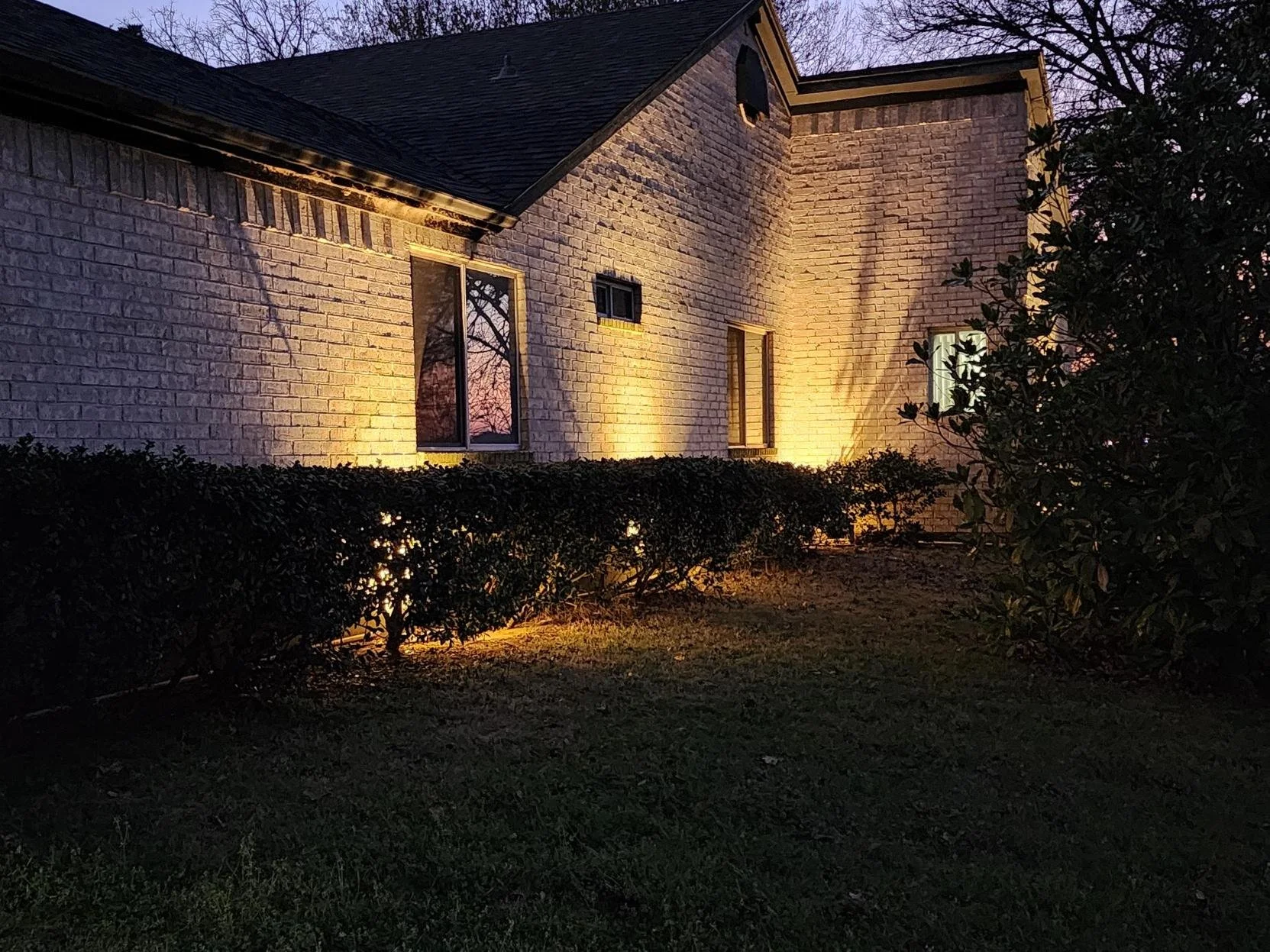
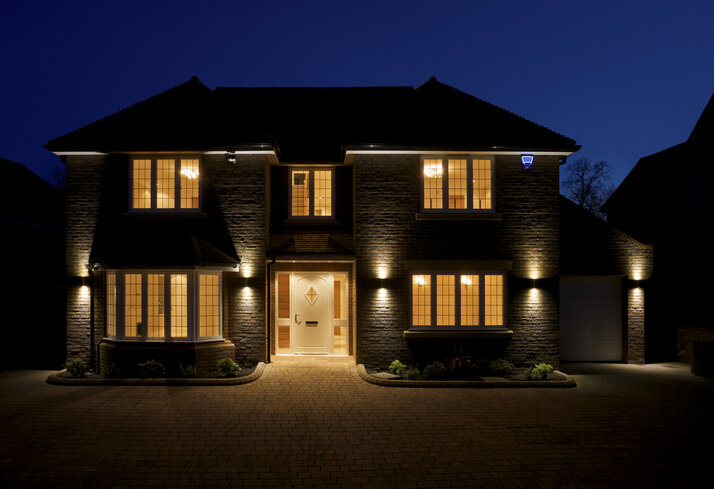
Residential home with wall washing outdoor lighting.
Updated 5/20/26 by Angela Rogers
Getting ready to spend time outdoors for the summer? Make sure your outdoor spaces look their absolute best by adding or upgrading your landscape lighting. Well-lit yards provide excellent curb appeal, increased security, and a comfortable ambiance.
This ultimate landscape lighting guide covers everything you need to know, including the most common landscape fixtures, popular outdoor lighting techniques, low-voltage vs. line-voltage, how to place landscape lights for curb appeal, and much more. Let's jump in!
Landscape Lighting Fixture Types
When you start looking for lights for your outdoor spaces, you'll quickly find that there are lots of different types of landscape lighting fixtures to choose from. So many, in fact, that it might be a bit overwhelming. Let's take a deep dive into the most common fixtures you'll need.
Flood Fixtures
Usually, when people think of landscape lights, they first think of flood light fixtures. These fixtures cast a wide spread of light to illuminate large areas. They are commonly used to illuminate trees, building facades, and other landscape features. When paired with landscape lighting techniques, floodlights can both accentuate and add depth to landscape features.
Landscape flood light fixtures come in a variety of styles, ranging from bullet shapes to more traditional square fixtures. You can learn more about how to properly use them in this blog post: 5 Ways You're Using LED Flood Lights Wrong.
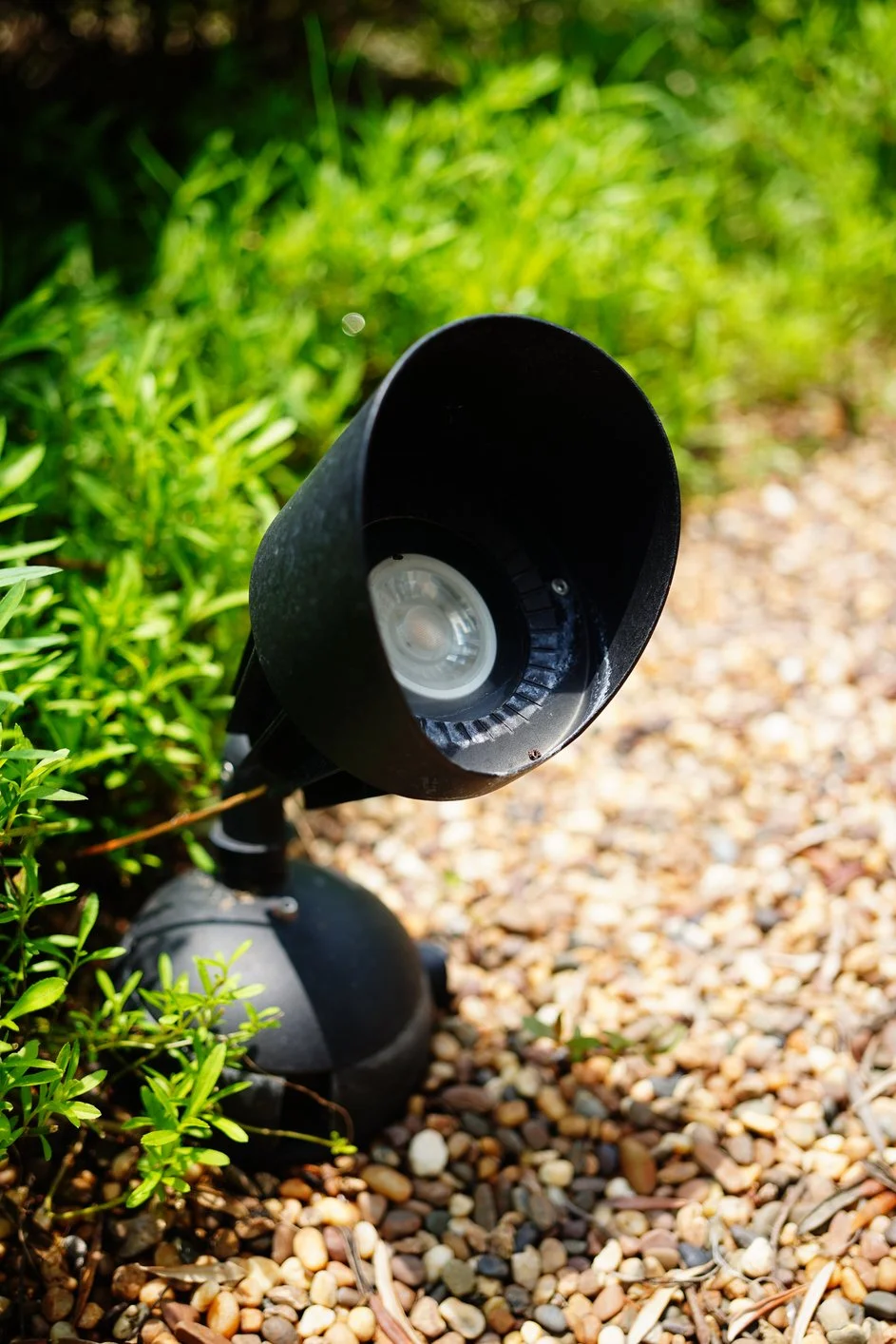
Small bullet light placed along a gravel walkway.
Bullets and Spot Lights
While similar to floodlights, outdoor bullet lights (also called landscape spotlights) have narrower beam angles to light up focal points rather than larger areas. Their name comes from their cylindrical shape, and they are among the most common landscape lights. Extremely versatile, these lights are available in LED and bulb-ready versions.
Wall Light Fixtures
Whether it's guiding the pizza delivery driver to the door or helping you locate the keyhole at night, wall light fixtures are an essential part of landscape lighting. These fixtures are mounted next to entryways, like front and back doors. They should be bright enough to see from the street, driveway, or sidewalk without being so bright that it's blinding. Look for fixtures that are shielded or have a frosted cover to help reduce the glare.
Security Lights
Security lights are fixtures placed strategically around homes and businesses. These functional landscape lights are used to light dark areas, deter intruders, and increase safety at entry points. Many security lights could fall under other landscape lighting types. What makes a security light different from other types of landscape lighting? The answer is a combination of photocells, motion sensors, color temperature, and timers.
Photocells and timers allow the lights to come on as the sun goes down and turn back off as the sun rises, giving you light just when you need it without the risk of forgetting to flip that switch. Motion sensors (spoiler alert) sense motion. These handy devices just turn on when a person, a car, or possibly a cat comes into range. Just be sure the light isn't aimed into your neighbor's windows.
The color temperature of the light may not seem too important, but studies have shown that security lighting with cooler color temperatures of at least 4000K is more effective since the white isn't too yellow or too blue to affect how colors are perceived.
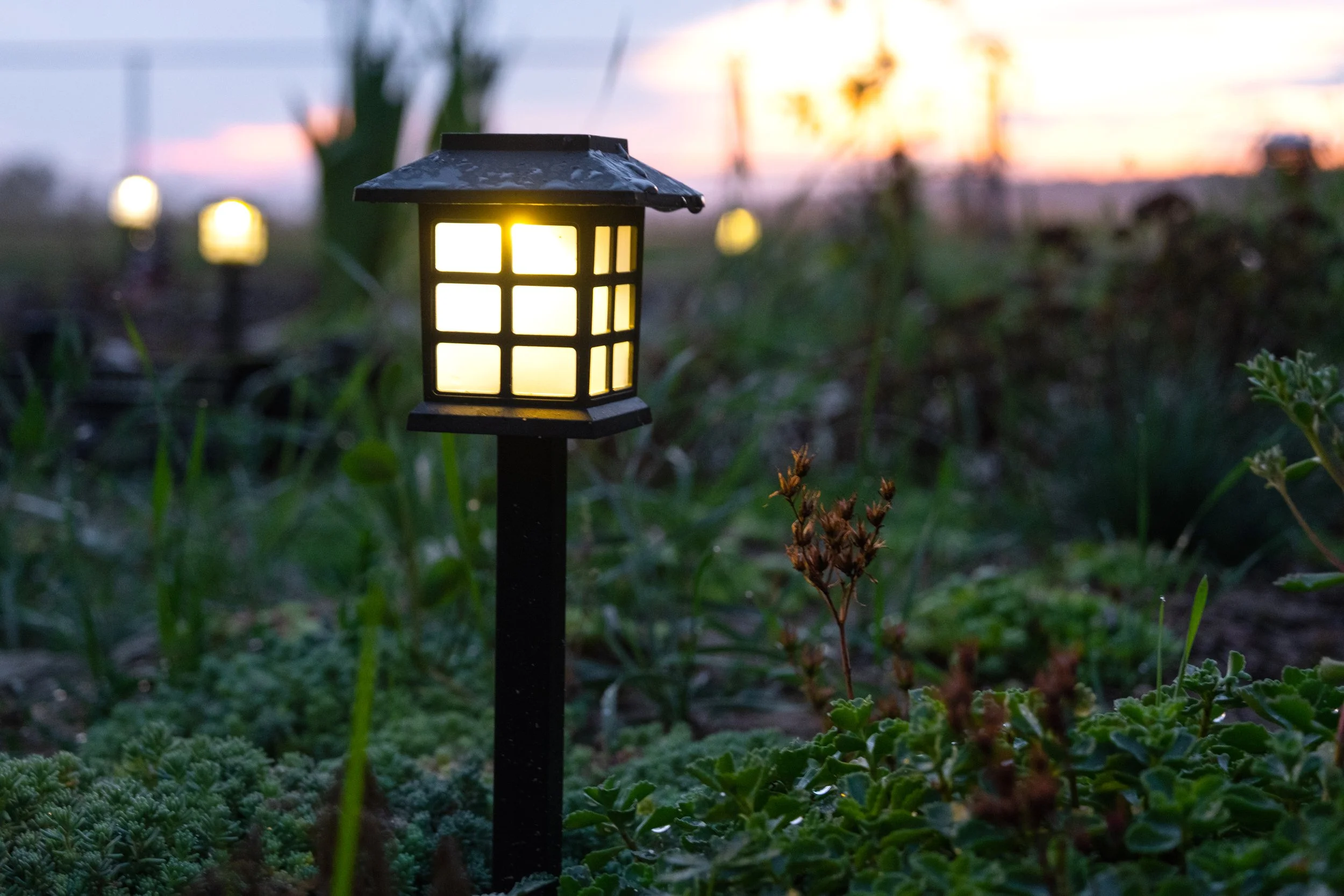
Solar pathway light
Pathway Lights
As the name implies, pathway lights illuminate sidewalks, driveways, pathways, and other walking paths. Typically 12 to 18 inches tall, they provide low-level lighting by casting light down onto the ground to prevent glare. The most common pathway lights are either solar-powered or low-voltage, and they come in a wide assortment of designs and finishes.
Bollards
Bollards are vertical post lights used for pathways, driveways, gardens, and commercial pedestrian lighting. Available in a variety of sizes and styles, these fixtures provide low-level illumination. You may be most familiar with seeing them at businesses and parks, where they are commonly used to prevent vehicles from entering pedestrian areas.
Lightning Fact: Before the term "bollard" became associated with lighting, they were a well-known feature of the nautical world. At docks, ships have historically tied up to sturdy bollards in harbors.
In-Ground Well Lights
In-ground well lights are used to illuminate permanent and semi-permanent installations such as sidewalks, large trees, and walls, enhancing the overall landscape design. They can also be used along pathways, but since the light is directed upward, these fixtures are better suited for uplighting. These fixtures are the best choice when you don't want the light source to be visible, as they sit flush with the ground.
Solar Landscape Lights
Solar landscape lights have steadily grown in popularity over the years due to their cost-effectiveness and ease of installation. These luminaires operate directly off sunlight, providing automatic dusk-to-dawn operation. They come in a variety of fixture types, from bullets to wall lights, finishes, and styles to match any landscaping.
Outdoor Landscape Lighting Techniques & Effects
Now that you know what the standard landscape fixtures are, it's time to take a look at what outdoor lighting techniques and effects you can create. You may already be somewhat familiar with many of these, as they are also used as accent lighting techniques indoors.
Wall Washing
Wall washing is a simple technique that spreads smooth, uniform illumination across a flat vertical surface. This eliminates shadows while enhancing the structural uniformity. This type of outdoor accent lighting is ideal for use when you have outdoor signs, decorative features such as wall hangings, and other focal points you want to highlight.
To achieve a wall washing effect, the light source needs to have a wide beam angle (typically 85 to 120 degrees) and be placed at least 12 inches away from the surface being lit. Ideal fixtures include flood light fixtures and other wash-specific landscape fixtures.

Visual comparison of wall washing vs wall grazing
Lighting Fact: Wall washing is used for interior as well, and is a popular choice of lighting designers for making a room look more spacious.
Wall Grazing
Wall grazing landscape lighting is essentially the opposite of wall washing. This lighting effect creates dramatic shadows to highlight textured surfaces. It is commonly used for tree trunks, textured walls, brick, and even greenery.
For proper wall grazing, place the fixture within a few inches of whatever object you're highlighting and point the light straight up. Commonly used outdoor fixtures include landscape bullets and well lights. This technique works best when fixtures have a narrow beam angle (10 to 36 degrees).
Additional Reading: For a more in-depth look at wall washing and grazing, read this blog: Wall Washing vs Wall Grazing.
Uplighting
The uplighting landscape lighting technique is very similar to wall grazing, but is focused more on spotlighting decorative objects or features rather than texture. For this technique, lights are installed on the ground and aimed upwards. It is ideal for highlighting statues, columns, trees, flag poles, and other notable or architectural features. Depending on what you are lighting, flood lights, bullets, and well lights can be used.

Comparison showing moonlighting vs uplighting
Moonlighting
Moonlighting is a specialized technique that involves placing lights in tall trees to create a natural moonlight effect while gently illuminating the ground below. The effect gives trees added depth and dimension, enhancing the overall ambiance of the space below.
Flood fixtures are placed in the trees (at least 20 to 30 feet up) and aimed downward. They can also be placed on high eaves and other structures. If you want the light to mimic the color of moonlight, choose fixtures with a 4000 to 5000K color temperature. For a warmer look, go with 2700 to 3000K color temperatures.
Lighting Fact: Moonlighting is a great way to light yards and patios.
Shadowing
The shadowing technique places an object between the light source and the wall to create, you guessed it, shadows. The visual impact is striking, especially when it is breezy, and helps improve the look of blank walls. This is most commonly used with plants and trees, but it also works well with sculptures, art pieces, and other decorative objects.
Flood lights or bullet lights are placed in front of the object, and aimed toward the wall at an angle to create layered shadows. In-ground well lights can also be used when you don't want the light fixture to be visible.

Visual comparison of shadowing vs silhouette lighting
Silhouette Lighting
While shadowing lights objects from the front, the silhouetteing technique lights objects from the back. The light is placed behind the object so that it's darkened against the brightly lit wall or backdrop. This creates a strong outline for high contrast, adding a bold look to your landscape.
This effect is ideal for statues, trees, and other structures that are relatively close to walls. It can be achieved using narrow spotlight bullets (15 to 30-degree beam spreads), small flood light fixtures, or in-ground lights. Place the light directly behind the object (6 to 12 inches) you wish to feature. Keep the light focused on an adjoining wall to create a luminous outline of the object.

Path & Spread Lighting
This technique is meant to illuminate walkways, stairs, and garden beds with low-level illumination that improves visibility and guides movement. This is achieved in most cases with pathway lights, however, any directional landscape fixture can be used. Fixtures are spaced widely apart along the edges of the path or bed for consistent coverage. The light output should be aimed downwards with a wide spread to cover that section of the path.
Mirror and Pond Lighting
Mirror and point lighting are two different techniques using water. Mirror lighting reflects the landscape design off the water's surface to create a dramatic layered lighting effect. This effect can also be done with glass or polished stone. To create this effect, the objects and/or landscaping must be close to the edge of the reflective surface. Place spotlight bullets, in-ground well lights, or small flood lights in front of the objects and landscaping, with the light aimed directly at them. Once lit, they will be reflected on the smooth surface.
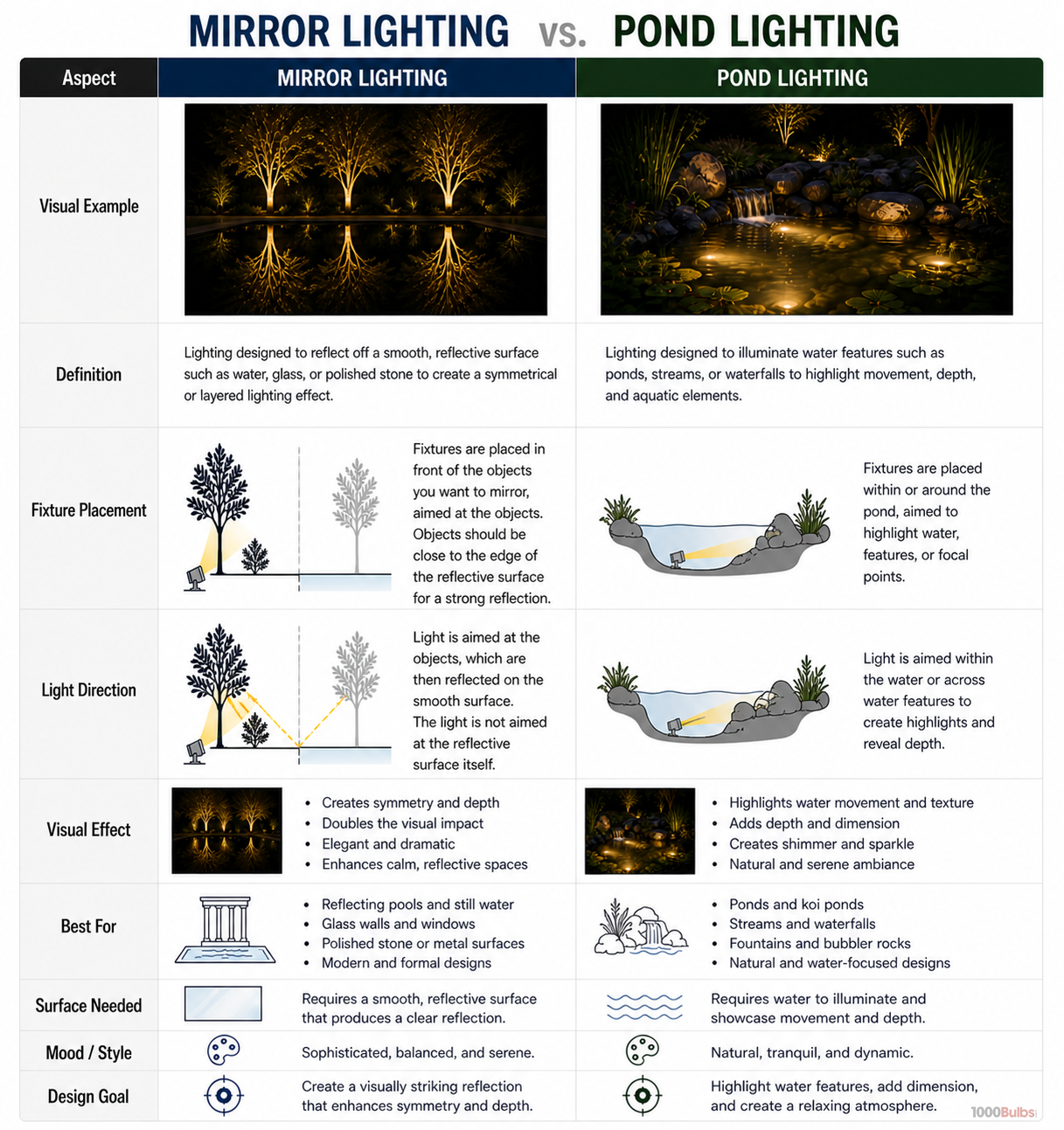
Visual comparison of mirror and pond lighting
Pond lighting enhances water features, drawing attention to water movement and any fish or plants you may have. The completed effect adds dimension while creating a tranquil atmosphere, and is perfect for decorative ponds and fountains. You will need a combination of fixtures to complete this multi-layered effect, including underwater lighting. To begin, underwater lighting is placed in the water and aimed at features and focal points. This creates highlights, adds depth, and showcases aquatic life. Next, place spotlight bullets around the perimeter. These lights highlight additional features while defining the perimeter of the water for added safety. Finally, highlight any waterfalls or water features by placing spotlights at their base.
Lighting Tip: When choosing fixtures for pond lighting, pay close attention to fixture ratings. Lights around the edge of the water should be wet location rated, while any used in the water itself need to be specifically made for underwater use.
Color Lighting
One last landscape lighting technique is color lighting. This technique is pretty simple: using colored bulbs to add splashes of color and enhance landscaping. A good example is using blue PAR lamps to highlight pools at night. Different colors can be used for specific tasks:
Red/Amber - adds warmth; can also be used to accentuate brick, stone, and warm colors on patios
Blue - best for highlighting water features, ponds, and pools
Green - ideal for enhancing foliage on trees and shrubs
Purple - used to highlight architecture with a modern or dramatic look
If your fixtures utilize replaceable bulbs, simply swap them for colored bulbs. Some newer LED bulbs are color-selectable, allowing you to change between different colors with a sliding switch. You can also use RGB or smart fixtures that let you adjust the light colors as needed.
Choosing the Right Color Temperature
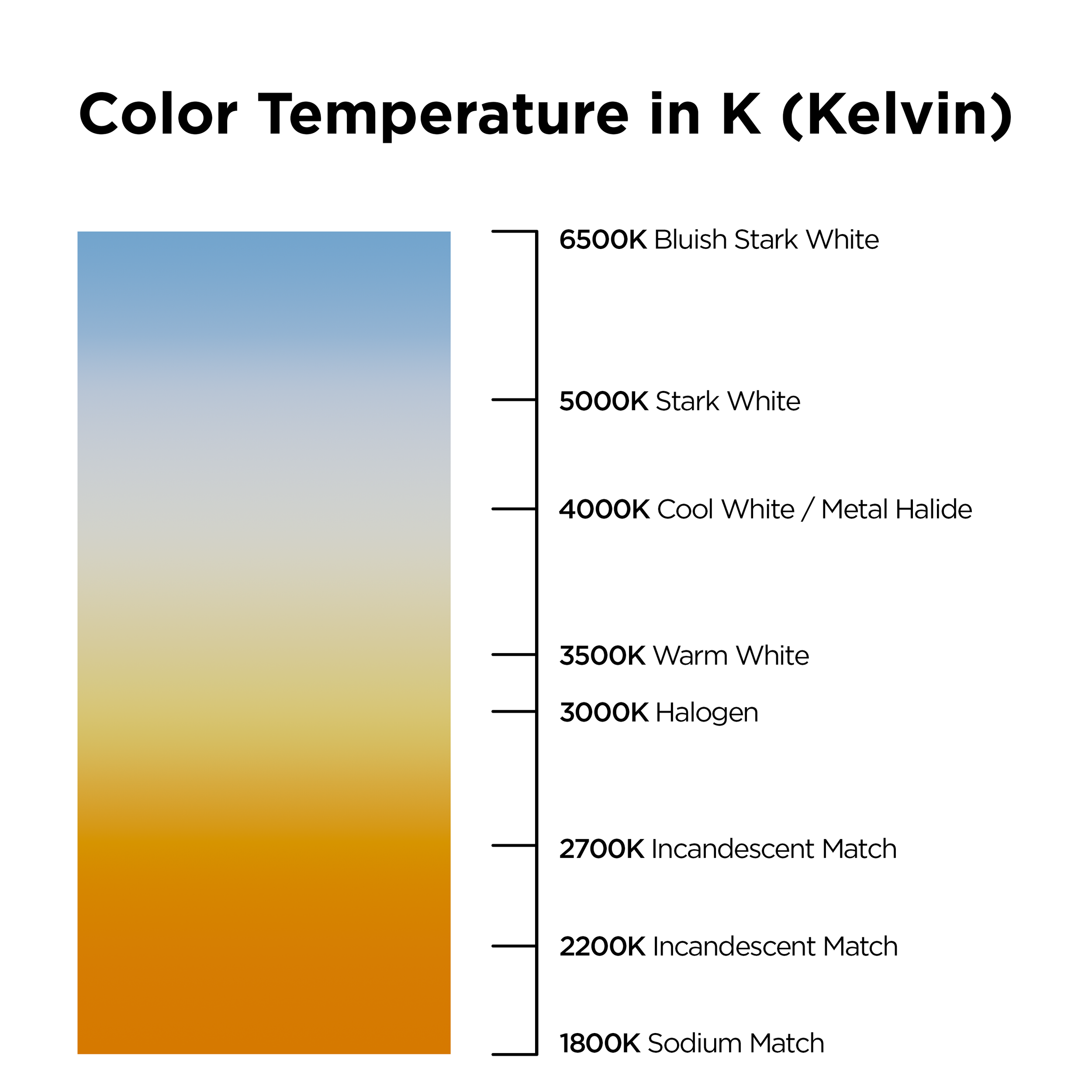
Choosing the right color temperature (Kelvin) for your landscape lighting is important to ensure your outdoor spaces have the right ambiance and aesthetic appeal. The right Kelvin also ensures that all of your features, from architectural to plants, are enhanced and do not look distorted.
For most landscape lighting projects, especially residential ones, 2700 to 3000K color temperatures are best. This provides a warm light with a cozy atmosphere, perfect for patios and other outdoor spaces. 4000K and higher are best for security lighting and areas where high visibility is needed. You will primarily see this range used in commercial applications. Both halogen and LED landscape lighting bulbs fall within these ranges, as well as many LED landscape lighting fixtures.
Low Voltage vs. Line Voltage
Now that you have a better idea of the fixtures you need, it's time to decide how to power your lights. There are two options: low voltage or line voltage. This is a very important choice, as it will affect what fixtures you can use and how they will be installed.
Low Voltage
Low-voltage landscape lighting operates at 12V (sometimes 24V, depending on the fixture). A transformer steps down (reduces) the household power (120V) and is connected to the fixtures using direct-burial wire, which is simple to install and maintain.

Line voltage vs low voltage landscape lighting
Low-voltage lighting is the most popular choice for landscape lighting and is strongly recommended for residential landscaping installations. Due to the low shock risk, it is safer to work with, making it a better choice for installations involving water. It is also extremely versatile, offers a wide assortment of fixture types for added flexibility, and is beginner- and DIY-friendly.
Lighting Tip: Low voltage burial wire only requires a shallow burial, no more than 6 inches into the ground.
Line Voltage
Line voltage is the same as standard household power, or 120V. You will primarily see this used for commercial properties, areas needing longer runs of lights, or where high-intensity flood lighting is used. Due to the higher voltage being carried, the installation will need to be meticulously planned, and professional installation by a licensed electrician is required.
Professional installation is required for several reasons, the primary being the risk factor. Since line voltage is involved, strict safety guidelines need to be followed. Supply wires must be protected by conduit and require deep burial (at least 18 inches). Additionally, line voltage is not recommended for use in wet locations.
Tips for Choosing the Right Transformers for Low Voltage Applications
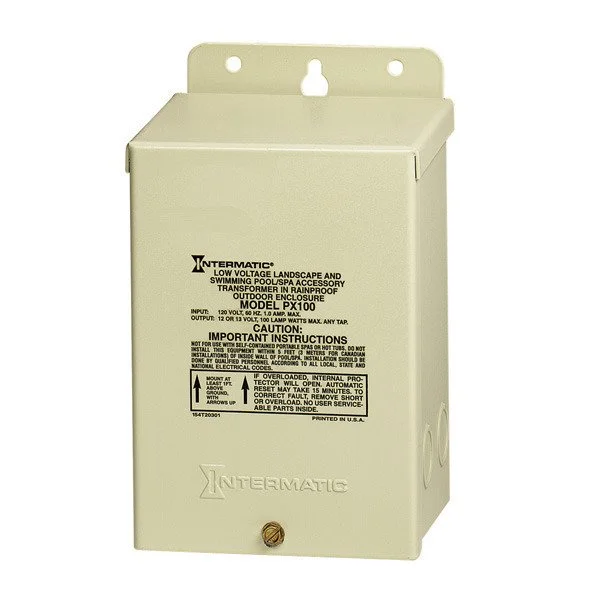
For most residential installations, low-voltage landscape lighting is the best choice. As mentioned earlier, you will need a transformer to provide the correct voltage to your fixtures. Here are a few tips to help you choose the right one:
To avoid an overload, calculate the total wattage of all your fixtures, then choose a transformer with a wattage capacity 20% to 30% higher. For example, if you have 100 watts of lights, look for transformers that are at least 120 or 150 watts.
If your transformer will be outdoors (i.e., on the side of your house), look for one that is stainless steel or weather-resistant with an IP65 rating or higher.
To help alleviate voltage drop over longer runs, consider transformers with multiple voltage taps. This ensures that the last fixture in the line receives the proper voltage.
Smart Controls & Automation
Automating your landscape lighting not only adds convenience but also improves energy efficiency and enhances the overall ambiance of your outdoor spaces. With a variety of smart controls available—ranging from simple timers to advanced sensors and fully integrated smart lighting systems—you can customize your lighting to suit your lifestyle and needs.
Timers, Photocells, and Motion Sensors
The easiest way to automate your landscape lighting is with timers, photocells, and motion sensors:
Timers: Allows you to set your lights to turn on and off at preset times. Choose from simple plug-in timers to astronomic timers.
Photocells: Automatically turn lights on at sunset and off again at sunrise. If you have LED fixtures, you will need to use LED-compatible photocontrols.
Motion Sensors: Lights automatically turn on when motion is detected. The lights will turn off again once motion is no longer detected. Many landscape lights, such as security lights, may have built-in motion sensors with adjustable on/off settings.
Each of these devices helps manage on/off times without you having to do anything after the initial installation (photocells & motion sensors) or programming (timers, depending on the type). They ensure the lights are on only when needed, helping reduce energy costs and extend the life of bulbs and fixtures.
Smart Landscape Lighting Systems
Smart lighting can be found just about everywhere nowadays, and landscape lighting is no exception. If you aren't familiar with smart lighting, these are lights that can be controlled with a smartphone app via WiFi, Bluetooth, or smart hubs. Smart landscape lighting systems allow you to control all aspects of the lighting, including on/off times, colors, and brightness. Many systems even allow you to break sections into 'zones' that have their own settings.
Much like sensors and timers, smart landscape lighting systems give you total control of when the lights are on, helping reduce energy costs. And depending on the fixtures, you can have near limitless customization options.
Dimmers for Outdoor Fixtures
If you want further control of how your lights look, consider pairing dimmers with your landscape lights. While dimmers can't control on/off times, they can adjust the brightness as needed. This allows you to change the lighting to match different activities and enhance the aesthetic appeal. For example, you can lower the lights to give a more romantic feel for a dinner, or brighten them for a party.
Aside from customizable ambience, dimming helps reduce energy costs. It also helps extend the life of landscape bulbs and fixtures, and can reduce glare. When selecting a dimmer to pair with your lights, be sure to keep the following in mind:
The dimmer has to be compatible with both the transformer (if used) and the lights.
Make sure the dimmer can handle the wattage load of the lighting. Look for dimmers with a capacity that exceeds the load by at least 20%.
If installed outdoors, the dimmer must be enclosed in weather-rated boxes.

Breakdown of the Rule of Thirds and other 'rules of thumb' for landscape lighting fixture placement.
Landscape Lighting Design Tips
Good outdoor lighting doesn’t happen by accident—it’s all about smart planning and thoughtful choices. From balancing the placement of fixtures to reducing glare and adapting to seasonal changes, these tips will help you bring warmth, depth, and style to your landscape after dark.
Rule of Thirds for Fixture Placement: A design principle for creating balanced, layered outdoor lighting. It's comprised of several key concepts and 'rules of thumb', including focal point placement, the 1:3 rule for uplighting trees, and asymmetrical balance.
Layering Light Sources: Layering your landscape lights adds depth, interest, and dimension. This is achieved by using a combination of fixtures to light the background, midground, and foreground.
Avoiding Light Pollution and Glare: Reducing glare and light pollution eliminates blinding brightness, improves overall visibility, and minimizes disruption to nocturnal wildlife. Utilizing shielded fixtures (also referred to as cutoff lighting), aiming fixtures downwards where possible, controlling brightness with dimmers, and using warmer color temperatures (2700K or warmer) are easy ways to combat glare and light pollution.
Seasonal Considerations: Consider the seasons when planning your landscape design. This can include adjusting light positions as the year progresses to highlight plans, ensuring fixtures are designed to withstand snow and ice, and potentially integrating controls to adjust for time changes.
Further Reading: Looking for additional resources for your landscape lighting project? Here are some aditional blog posts that you'll find very helpful:
Expert Outdoor Lighting Design Tips
We've covered fixture types, lighting techniques, voltage options, and even design tips. You now have a better idea of how to set up your landscape lighting. 1000Bulbs has everything you need to get started, including fixtures, transformers, and burial wire.
Need help figuring out where to start, or simply need to refresh your existing landscape lighting? Our team of US-based lighting experts is here to help you find everything you need. Call 1-800-624-4488 today!
Frequently Asked Questions (FAQs)
What is the difference between wall washing and wall grazing?
The primary difference between wall washing and wall grazing is how they are used. Wall washing eliminates shadows on flat vertical surfaces. Wall grazing does the opposite, casting extreme shadows that highlight the surface texture.
What is the difference between shadowing and silhouette lighting?
Shadowing lights objects from the front to cast shadows on a wall directly behind. Silhouetting lights objects from the back, so that the objects are darkened against a bright, well-lit background.
What is the difference between uplighting and moonlighting?
Uplighting lights objects from the ground for a dramatic effect. Moonlighting lights trees from the uppermost branches, creating a realistic moonlight effect.
What is the best color temperature for landscape lighting techniques?
The best color temperature for landscape lighting will vary depending on the main goal of your setup. For most general residential setups, color temperatures in the 2700 to 3000 Kelvin range are perfect. For commercial settings or areas where improved security is needed, choose fixtures with 4000K or higher.
Do I need a professional electrician to set up my landscape lighting?
Whether or not you need a professional electrician to install your landscape lights will depend on the voltage being used. 12V low-voltage systems are safe for regular installation due to the lower risk of shock. 120V systems, however, do require professional installation as these fixtures carry a higher voltage.


