

Light Bulb Shape Guide: BR & R Shapes
| What This Article Covers |
|---|
BR and R bulbs are both reflector lamps built for directional lighting, but the naming system, sizing conventions, and differences between them confuse a lot of buyers — especially when it comes to replacing older recessed bulbs or deciding between BR and PAR reflectors. This guide explains what BR and R stand for, how reflector bulb sizing works (and why the number matters for fixture fit), and how BR bulbs compare to both older R-style lamps and PAR reflectors. It also covers LED replacement considerations, including dimming compatibility, enclosed fixture ratings, lumen equivalency, and color temperature selection for residential and commercial applications. Best for: homeowners replacing recessed lighting, DIY remodelers, electricians and contractors, facility managers, hospitality maintenance teams, and commercial buyers choosing reflector bulbs for retrofit or new construction projects. |
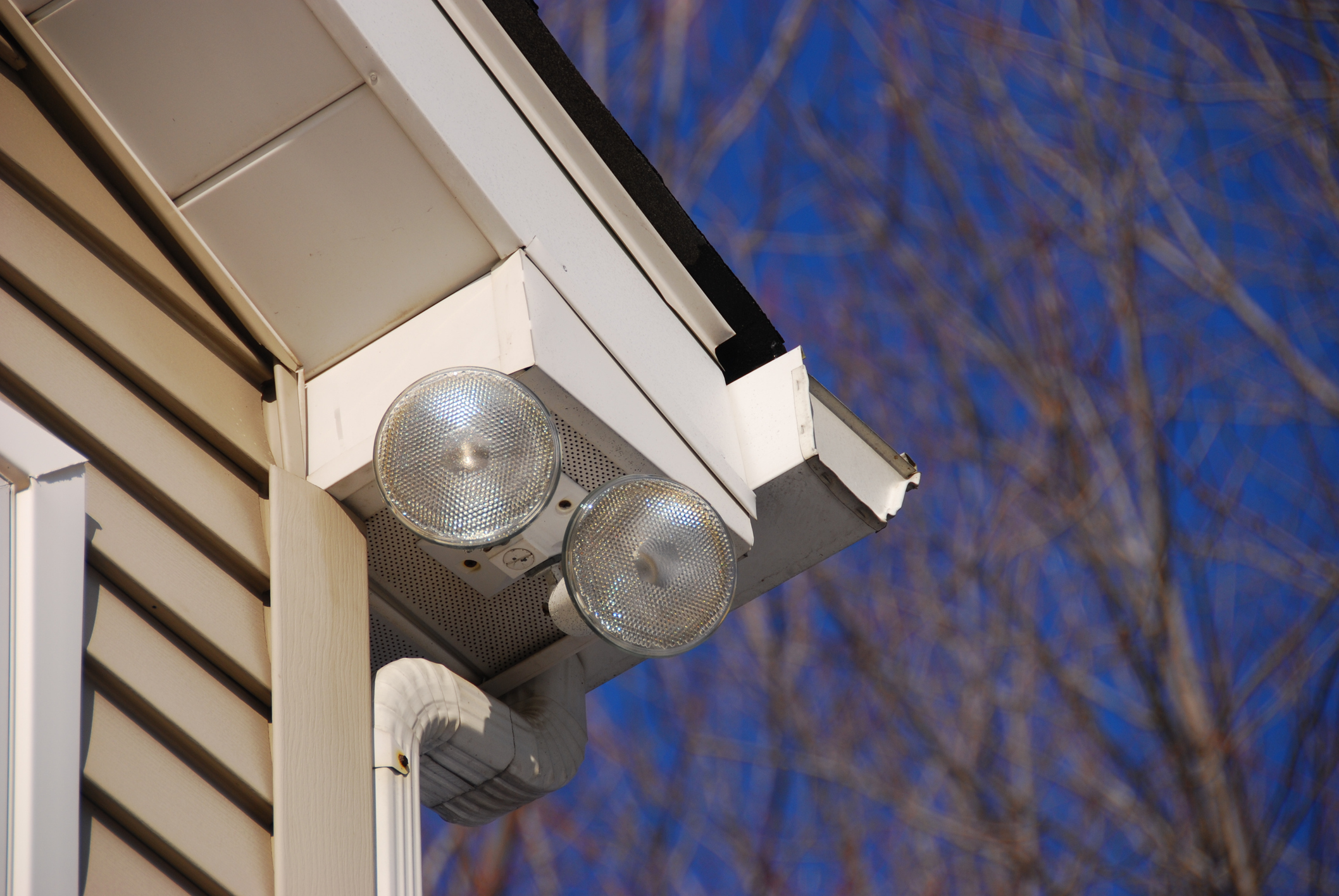
Home security light fixture which uses BR light bulbs or R light bulbs.
Updated 8/3/26 by 1000Bulbs Staff
Reflector bulbs are extremely common in residential and commercial lighting, but the naming system still confuses many buyers. Homeowners replacing recessed lighting often are not sure whether they need a BR30 or BR40.
Contractors working on retrofit projects regularly encounter older R bulbs and need to determine whether modern LED replacements will fit correctly. Commercial buyers may need reflector bulbs that balance beam spread, dimming compatibility, efficiency, and fixture fit across larger lighting systems.
The terminology sounds more complicated than it really is. Once you understand what BR and R mean, how reflector bulb sizing works, and how beam spread affects light distribution, choosing the correct replacement becomes much easier.
This guide explains the differences between BR and R bulbs, how reflector bulb sizes are measured, where these bulbs are commonly used, and what buyers should know before replacing recessed or directional lighting systems.
What Are BR and R Light Bulbs?
BR and R bulbs are reflector lamps designed to direct light forward in a controlled beam instead of distributing light evenly in all directions like standard household bulbs. They are commonly used in recessed lighting, flood lighting, track lighting, and directional accent applications where focused illumination is needed.
Reflector bulbs use an internal reflective coating that redirects light outward through the face of the bulb. This design helps:
Concentrate light into a directional beam
Reduce wasted side output
Improve flood lighting performance
Create more controlled illumination
Because of this directional output, reflector bulbs became standard in applications such as:
Recessed can lighting
Kitchen downlights
Living room ceiling cans
Retail display lighting
Hospitality lighting
Track lighting systems
Unlike standard A-shape household bulbs that spread light broadly throughout a room, reflector bulbs are designed to illuminate specific target areas more effectively.
Modern reflector bulbs are now overwhelmingly LED-based because LED technology offers lower energy consumption, longer lifespan, reduced heat output, and better beam control than older incandescent reflector lamps.
What Does BR Mean on a Light Bulb?
BR stands for “Bulged Reflector.”
A BR bulb uses a curved reflector profile that spreads light outward in a softer, wider flood pattern. The bulged shape is what separates BR bulbs from older straight-sided reflector lamps.
Compared to traditional reflector bulbs, BR lamps generally create:
Softer beam transitions
Wider flood coverage
More even room illumination
Less harsh directional lighting
That broader beam spread made BR bulbs especially popular in residential recessed lighting applications, including kitchens, living rooms, bedrooms, and hospitality environments.
The most common residential BR bulb sizes are:
BR20
BR30
BR40
Today, most BR bulbs use LED technology, but the “BR” designation still refers to the reflector shape rather than the lighting technology inside the bulb.
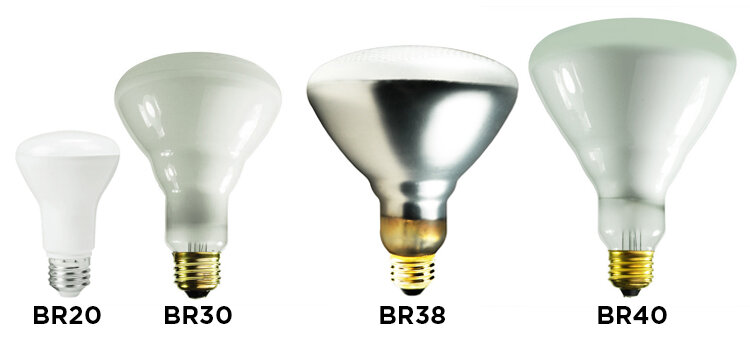
The differences in BR20, BR30, BR38, and BR40 bulbs.
What Does R Mean on a Light Bulb?
R stands for “Reflector.”
R bulbs are older-style reflector lamps that direct light forward using an internal reflective coating. Compared to BR bulbs, traditional R lamps usually have a straighter profile and produce a somewhat narrower, more directional beam spread.
R bulbs were once extremely common in:
Older recessed lighting systems
Flood lighting fixtures
Track lighting
Directional ceiling applications
Compared to BR bulbs, traditional R lamps typically produce:
Sharper beam edges
Narrower flood distribution
More concentrated directional light
Many older recessed cans originally used R20, R30, or R40 incandescent reflector lamps. Today, these bulbs are still commonly encountered during remodel projects, commercial maintenance replacements, and lighting retrofits.
However, modern LED BR bulbs now replace many older R lamps because they provide better efficiency, lower heat output, softer beam distribution, and stronger dimming performance while maintaining compatible sizing in many fixtures. This shift has accelerated as many common household incandescent and halogen R bulbs have been phased out under current energy efficiency regulations, making LED replacements the primary option for many applications.
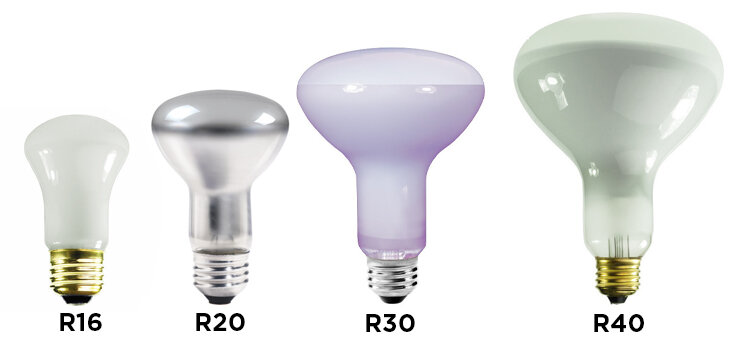
R shaped bulbs caparison, including R16, R20, R30, and R40 light bulbs.
BR vs. R Bulbs: What’s the Difference?
At first glance, BR and R bulbs look very similar. Both are reflector lamps designed for directional lighting applications, and both commonly appear in recessed lighting and flood lighting systems.
The primary differences involve:
Bulb shape
Beam spread
Light distribution
Modern replacement availability
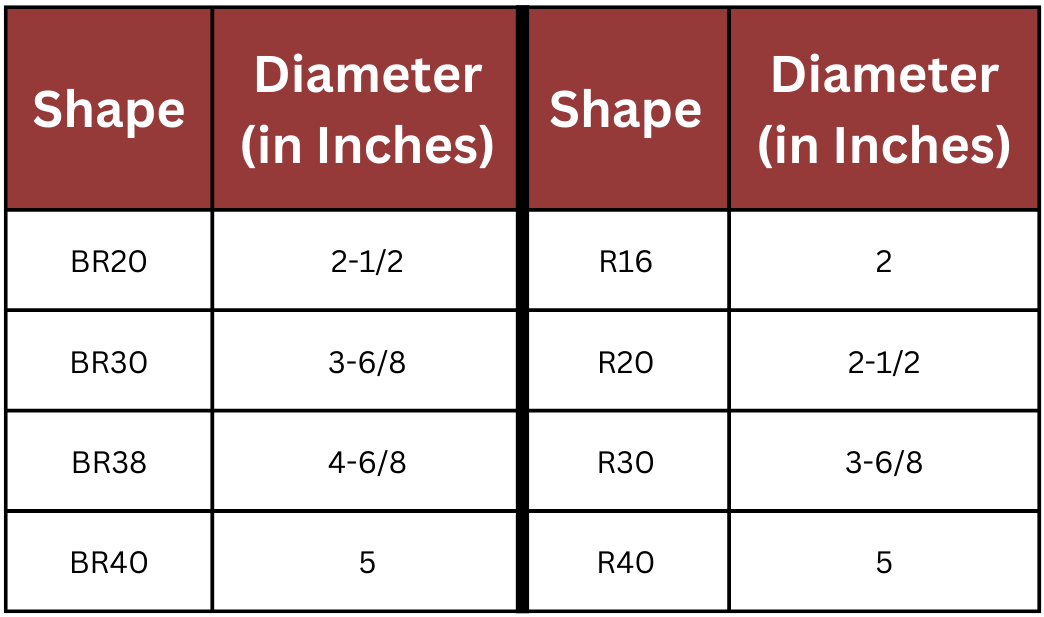
Chart showing diameter in inches of the most common BR and R shaped bulbs.
Shape Differences
Traditional R bulbs use a straighter reflector profile with less curvature near the face of the lamp. BR bulbs use a bulged shape that softens and widens the beam spread.
The physical difference may appear subtle, but it noticeably changes how the light behaves once installed in a recessed fixture.
Beam Spread Differences
R bulbs generally create narrower flood patterns with sharper beam edges and more directional output.
BR bulbs create broader flood coverage with softer transitions and more comfortable ambient downlighting. This softer beam pattern is one of the main reasons BR bulbs became dominant in residential recessed lighting.
Modern LED Replacements
Historically, both BR and R bulbs were primarily incandescent reflector lamps. Over time, BR bulbs became the preferred residential reflector style because their broader beam spread worked better for general room lighting and ambient recessed illumination.
Today, most reflector replacements use LED BR bulbs rather than traditional incandescent R lamps. Many LED BR bulbs are specifically designed to replace older R20, R30, and R40 incandescent bulbs.
BR vs. R Comparison Chart
| Feature | BR Bulbs | R Bulbs |
|---|---|---|
| Full Name | Bulged Reflector | Reflector |
| Shape | Curved bulged profile | Straighter reflector profile |
| Beam Spread | Wider, softer flood | Narrower directional flood |
| Common Applications | Recessed lighting, ambient floods | Older recessed lighting, directional floods |
| Residential Popularity | Very common | Less common today |
| LED Replacement Availability | Extensive | More limited |
| Light Appearance | Softer edge transitions | Sharper beam edges |
Which Should You Choose?
For most modern residential recessed lighting applications, BR bulbs are usually the better choice because they provide more even illumination, softer downlighting, and broader room coverage.
R bulbs may still be found in existing lighting systems or older commercial installations that require compatible replacement lamps. However, many traditional incandescent and halogen R bulbs can no longer be manufactured or sold in the United States under current energy efficiency regulations.
As a result, most replacement projects now use LED BR bulbs, which offer greater energy efficiency, broad availability, a comfortable beam spread, and excellent compatibility with recessed lighting applications.
How to Read BR and R Bulb Sizes
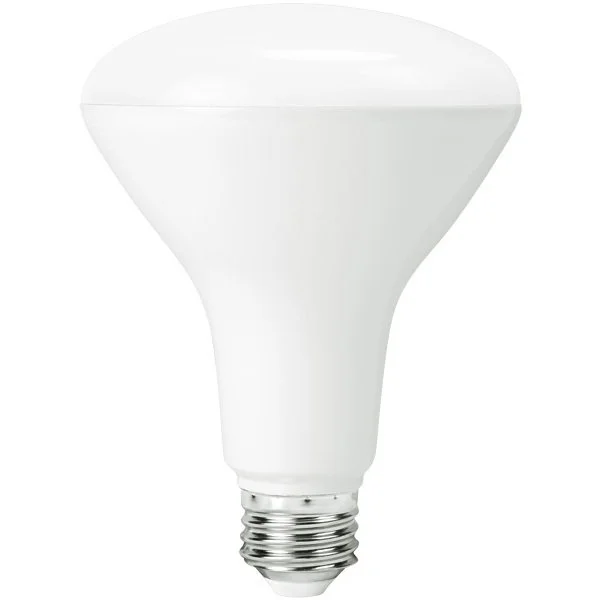
LED BR30 Lamp
One of the biggest sources of confusion with reflector bulbs is the sizing system. Names like BR20, BR30, BR40, R20, and R40 can seem arbitrary at first, but the numbering system is actually straightforward once you understand how it works.
The number refers to the bulb diameter measured in eighths of an inch.
For example:
BR20 = 20/8 inches = 2.5 inches wide
BR30 = 30/8 inches = 3.75 inches wide
BR40 = 40/8 inches = 5 inches wide
The number does not refer to brightness, wattage, beam angle, or socket size. It only describes the bulb’s widest diameter.
That diameter matters because recessed lighting fixtures are designed around specific reflector bulb sizes. A BR40 bulb may not fit properly inside a housing designed for BR30 lamps, while a bulb that is too small may create uneven coverage or deep trim shadows.
BR20 vs. BR30 vs. BR40
The three most common residential BR bulb sizes are BR20, BR30, and BR40. Each size is associated with different fixture types, room sizes, and lighting applications.
BR20 Bulbs
BR20 bulbs are the smallest common residential reflector lamps. At approximately 2.5 inches wide, they work well in:
Smaller recessed cans
Hallways
Accent lighting
Narrow ceiling layouts
Compact fixtures
Because they are smaller, BR20 lamps usually produce narrower beam coverage and lower lumen output than larger reflector bulbs.
BR30 Bulbs
BR30 bulbs are one of the most common recessed lighting sizes used in residential ceilings. At roughly 3.75 inches wide, they balance fixture compatibility, brightness, and beam spread effectively.
BR30 bulbs are extremely common in:
Kitchens
Living rooms
Bedrooms
Dining rooms
Standard recessed can lighting
Many LED recessed retrofits are specifically designed around BR30 dimensions because the size works well in standard residential ceiling cans.
BR40 Bulbs
BR40 bulbs are larger reflector lamps measuring approximately 5 inches wide. These bulbs generally provide broader flood coverage, higher lumen output, and wider room illumination.
BR40 lamps are commonly used in:
Large recessed cans
Tall ceilings
Open living areas
Commercial flood lighting
Hospitality spaces
Because the reflector surface is larger, BR40 bulbs can distribute light across wider areas more effectively than smaller reflector lamps.
Reflector Bulb Size Chart
| Bulb Type | Diameter | Common Applications |
|---|---|---|
| R20 | 2.5 inches | Small recessed cans, accent lighting |
| R30 | 3.75 inches | Older recessed lighting systems |
| R40 | 5 inches | Flood lighting, large recessed fixtures |
| BR20 | 2.5 inches | Hallways, compact recessed lighting |
| BR30 | 3.75 inches | Kitchens, living rooms, recessed lighting |
| BR40 | 5 inches | Tall ceilings, large rooms, wide flood lighting |
Why Reflector Bulb Size Matters
Choosing the wrong reflector bulb size can create several problems, including poor fixture fit, uneven beam distribution, excessive glare, trim compatibility issues, and reduced efficiency.
A bulb that is physically too large may protrude below the trim, trap excess heat, or fail to seat correctly inside the housing. A bulb that is too small may create uneven light spread, reduced coverage, or visible shadows around the trim.
Most recessed lighting housings are specifically labeled for reflector formats such as:
BR30
BR40
PAR30
PAR38
Checking fixture labeling before purchasing replacements helps avoid compatibility issues.
Reflector Bulb Size vs. Brightness
Larger reflector bulbs often produce more light output, but size alone does not determine brightness.
Modern LED reflector bulbs can vary dramatically in lumen output even within the same size category. For example, one LED BR30 may produce 650 lumens while another produces more than 1,000 lumens depending on the LED design, wattage, beam angle, and intended application.
That is why modern reflector bulb selection should focus on lumens, beam spread, fixture compatibility, and color temperature rather than assuming larger bulbs automatically produce brighter light.
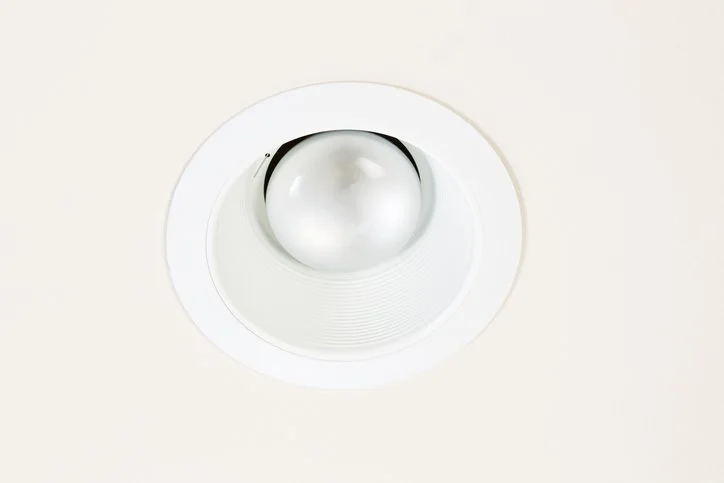
Recessed Lighting Compatibility Considerations
Reflector bulb sizing matters most in recessed lighting because housing dimensions affect trim fit, beam positioning, airflow, and overall appearance.
Most residential recessed systems commonly use BR30 or BR40 bulbs depending on ceiling height, room size, and fixture diameter.
Smaller 4-inch recessed cans often pair well with:
BR20 bulbs
Smaller PAR lamps
Larger 5-inch and 6-inch recessed cans more commonly use:
BR30
BR40
PAR30
PAR38
When replacing older incandescent reflector bulbs with LED versions, buyers should also verify:
Overall bulb length
Heat sink clearance
Enclosed fixture compatibility
Dimming compatibility
Some LED reflector designs are physically different from the incandescent lamps they replace, especially in older recessed housings.
Where Are BR and R Bulbs Used?
BR and R bulbs are used anywhere directional flood lighting is needed instead of broad omnidirectional room lighting.
Their reflector design makes them especially effective for recessed can lighting, accent lighting, track lighting, flood lighting, and display illumination because the light projects forward in a controlled pattern rather than dispersing evenly in all directions.
Recessed Can Lighting
Recessed lighting is the most common application for BR bulbs.
In residential ceilings, BR30 and BR40 bulbs are widely used in:
Kitchens
Living rooms
Bedrooms
Hallways
Dining rooms
Finished basements
The broad flood distribution created by BR bulbs helps produce softer ambient lighting and more even room coverage without the harsher hotspots associated with tighter directional lamps.
BR30 bulbs are especially common in standard 5-inch and 6-inch recessed cans because they balance fixture fit, beam spread, brightness, and residential comfort.
Kitchen Lighting
Kitchens rely heavily on reflector bulbs because task visibility matters more than in many other residential spaces.
BR bulbs are commonly installed above:
Islands
Countertops
Walkways
Prep areas
Sink zones
The wider flood pattern helps reduce harsh shadowing while maintaining strong downward illumination.
Many modern kitchens now use dimmable LED BR30 bulbs because they provide lower heat output, stronger efficiency, longer lifespan, and smooth brightness adjustment compared to older incandescent reflector lamps.
Living Rooms and Ambient Lighting
BR reflector bulbs are also widely used in living rooms, family rooms, media rooms, and open-concept spaces because the broader beam spread creates softer ceiling illumination than narrower directional lamps.
Warm color temperatures such as 2700K and 3000K are especially common in these spaces because they create a more comfortable residential atmosphere.
Hallway and Downlighting Applications
Hallways and transitional spaces frequently use BR20 or BR30 reflector bulbs for recessed downlighting. Smaller reflector lamps work well in narrow ceiling layouts because they provide controlled downward illumination without overwhelming the space visually.
These bulbs are often chosen for:
Hallways
Entry corridors
Stair transitions
Utility passageways
Compact ceiling layouts
Compared to larger flood lamps, smaller reflector bulbs allow more flexible spacing and better glare control in tighter areas.
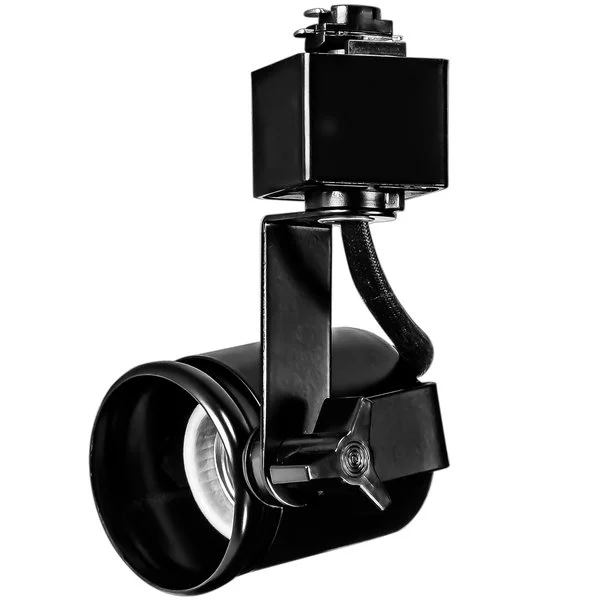
Track Lighting and Accent Lighting
R and BR bulbs also appear in track lighting systems and directional accent applications, although PAR lamps are often preferred when tighter beam control is required.
In these applications, reflector bulbs help direct light toward:
Artwork
Decorative surfaces
Retail displays
Architectural features
Merchandise shelving
Rather than broadly illuminating the entire room, reflector bulbs concentrate light on specific visual targets.
Hospitality and Restaurant Lighting
Hospitality environments rely heavily on reflector lighting because lighting directly affects atmosphere, guest comfort, and visual experience.
Restaurants, hotels, lounges, and bars commonly use:
Warm-dim LED BR bulbs
Dimmable reflector lamps
Recessed directional lighting
The softer flood pattern produced by BR bulbs helps create layered lighting without the harsh spotlight effect associated with tighter directional lamps.

Often BR shaped, heat lamp bulbs are used to keep food warm in commercial restaurants.
Retail and Commercial Lighting
Commercial spaces frequently use reflector bulbs for:
Display lighting
Retail ceiling cans
Lobby lighting
Waiting areas
Merchandise highlighting
General commercial downlighting
LED reflector bulbs became especially popular in commercial retrofit projects because they significantly reduce maintenance frequency, energy usage, relamping labor, and HVAC heat load compared to older incandescent and halogen reflector lamps.
Facilities replacing older R30, R40, BR30, or BR40 incandescent lamps now commonly upgrade to LED reflector bulbs with comparable beam spreads and dramatically lower wattage requirements.
Flood Lighting Applications
Larger reflector bulbs such as BR40 and R40 are commonly used for wider flood lighting applications where broad coverage matters more than tight directional focus.
These applications may include:
Large living rooms
Hospitality lobbies
Open commercial spaces
Entryways
General flood illumination
The larger reflector surface helps spread light across a wider area while maintaining softer beam transitions.
Indoor vs. Outdoor Reflector Bulb Use
Some reflector bulbs are rated for damp locations, enclosed fixtures, or outdoor flood applications, while others are designed strictly for indoor recessed lighting.
Before installing reflector bulbs outdoors, buyers should verify:
Damp or wet location ratings
Fixture enclosure requirements
Temperature limitations
Dimmer compatibility
Many outdoor flood fixtures now use PAR bulbs instead of BR or R lamps because PAR optics provide tighter beam control and stronger weather resistance for exterior directional lighting.
BR vs. PAR Bulbs: Which Should You Choose?
BR and PAR bulbs are both reflector lamps, but they are designed for different lighting goals. BR (Bulged Reflector) bulbs produce a wide, soft beam that works well for general ambient lighting, making them a popular choice for recessed lighting in living rooms, kitchens, bedrooms, and other residential spaces.
PAR (Parabolic Aluminized Reflector) bulbs create a tighter, more controlled beam that's better suited for accent lighting, spotlights, outdoor floodlights, retail displays, and other applications where directional lighting is important.
| Feature | BR Bulbs | PAR Bulbs |
|---|---|---|
| Beam pattern | Wide, soft flood | Focused, directional |
| Best for | Ambient lighting | Accent and task lighting |
| Common applications | Recessed residential lighting | Spotlights, outdoor lighting, displays |
| Beam control | Broad coverage | Greater precision |
If you're trying to choose between the two, BR bulbs are typically the better option for everyday room lighting, while PAR bulbs are designed for applications that require more precise beam control.
Which Reflector Bulb Should You Choose?
For most residential recessed lighting applications, BR bulbs are usually the better choice because they prioritize softer room coverage and more comfortable ambient illumination.
For directional accent lighting and outdoor spotlighting, PAR bulbs are often the better option because they provide stronger beam precision and tighter directional control.
The right reflector bulb ultimately depends on whether the goal is broad ambient lighting or focused directional illumination.
Can You Replace Incandescent BR or R Bulbs With LED?
Yes. Most incandescent BR and R bulbs can be replaced with LED reflector bulbs as long as the replacement matches the bulb size, base type, voltage, and fixture compatibility requirements.
LED reflector bulbs are now the standard replacement option for recessed lighting and directional flood applications because they use significantly less energy while producing comparable or better usable light output.
Why Many Homeowners Upgrade to LED Reflector Bulbs
Older incandescent reflector bulbs generate substantial heat and consume far more electricity than modern LED replacements. In addition, many incandescent reflector bulbs are no longer manufactured or sold because federal energy efficiency standards have phased out most general service incandescent lamps. While some specialty incandescent bulbs remain available, finding replacements has become increasingly difficult, making LED the practical long-term choice for most homeowners.
For example, a traditional incandescent BR30 bulb may consume around 65 watts, while a comparable LED BR30 may only use 8 to 12 watts while delivering similar brightness.
That reduction creates several advantages, including lower utility costs, reduced HVAC heat load, cooler operation, longer replacement intervals, and improved energy efficiency.
For homes with large recessed lighting layouts, switching to LED reflector bulbs can noticeably reduce overall lighting energy usage.
LED Reflector Bulb Lifespan Advantages
One of the biggest reasons homeowners and commercial facilities upgrade to LED reflector bulbs is maintenance reduction.
Incandescent reflector lamps often require replacement after roughly 1,000 to 2,000 hours of operation. Many LED reflector bulbs are rated for 15,000 to 25,000 hours or more.
That dramatically reduces relamping frequency, maintenance labor, replacement costs, and fixture downtime.
Longer lifespan becomes especially important in tall ceilings, commercial properties, hospitality environments, and large recessed lighting systems where bulb replacement labor adds up quickly.
LED Reflector Bulbs Produce Less Heat
Incandescent reflector bulbs release a considerable amount of heat during operation. That heat buildup can become especially noticeable in kitchens, recessed can lighting, enclosed fixtures, commercial ceilings, and hospitality environments with numerous fixtures operating simultaneously.
LED reflector bulbs operate substantially cooler, which helps reduce ceiling heat buildup, HVAC workload, fixture temperature stress, and room heat accumulation.
Lower heat output also makes LED lighting more comfortable in spaces with lower ceilings or heavy daily lighting use.
Understanding LED Lumen Equivalency
Modern LED reflector bulbs are often marketed using wattage equivalency labels instead of actual power consumption.
For example, a 10W LED BR30 may be marketed as a replacement for a 65W incandescent BR30 because the visible light output is similar.
However, buyers should focus more on lumens than on wattage equivalency alone.
Lumens measure actual visible light output. Two LED BR30 bulbs both labeled as “65W replacements” may still produce very different brightness levels, beam spreads, and visual performance depending on the bulb design and optics.
When comparing LED reflector bulbs, it is best to evaluate:
Lumens
Beam angle
Color temperature
Fixture compatibility
Dimming performance

LED Dimming Compatibility
Many recessed lighting systems use dimmer switches, but not all LED reflector bulbs dim the same way.
Some LED reflector lamps are specifically labeled as dimmable, while others are not compatible with dimming controls at all.
Even dimmable LEDs may experience flickering, reduced dimming range, delayed startup, or buzzing when paired with older incandescent dimmer switches or with LED dimmers not listed as compatible with the bulb.
Modern LED-compatible dimmers generally provide smoother low-end dimming, better flicker control, and stronger compatibility with LED reflector lamps.
Enclosed Fixture Compatibility Matters
Some recessed lighting housings are considered enclosed fixtures because airflow around the bulb is limited.
Not every LED reflector bulb is rated for enclosed fixture use. Installing a non-enclosed-rated LED inside a sealed recessed can may lead to overheating, reduced lifespan, driver failure, color shifting, or premature burnout.
Before purchasing replacements, buyers should always verify enclosed fixture compatibility if the recessed housing restricts airflow around the lamp.
LED BR and R Replacement Sizing
LED reflector bulbs are designed to replace common incandescent sizes, such as BR20, BR30, BR40, R20, R30, and R40. However, physical dimensions still matter.
Some LED reflector bulbs use larger heat sinks, different neck shapes, shorter body lengths, or wider trim profiles than the incandescent lamps they replace.
Before purchasing replacements, buyers should verify:
Fixture diameter compatibility
Trim clearance
Overall bulb length
Recess depth
This is especially important when working with older recessed lighting systems.
Choosing the Right Color Temperature for Reflector Bulbs
Color temperature plays a major role in how reflector lighting feels inside a space. Measured in Kelvin (K), color temperature determines whether light appears warm, neutral, or cool.
The same recessed lighting layout can feel dramatically different depending on the selected color temperature.
2700K Reflector Bulbs
2700K lighting produces a warm appearance similar to traditional incandescent lamps. It remains one of the most common choices for living rooms, bedrooms, dining rooms, hospitality spaces, and residential recessed lighting because it creates a softer, more comfortable atmosphere.
Many homeowners replacing older incandescent BR bulbs choose 2700K LED reflector bulbs because the color closely resembles the warm lighting they are already familiar with.
3000K Reflector Bulbs
3000K lighting still appears warm but introduces slightly cleaner white tones compared to 2700K.
This color temperature is extremely popular in:
Modern kitchens
Open-concept homes
Hallways
Residential recessed lighting
Hospitality environments
Many designers consider 3000K the safest all-purpose reflector bulb color temperature because it balances warmth and visibility effectively across both residential and light commercial spaces.
4000K Reflector Bulbs
4000K lighting creates a more neutral white appearance. Compared to warmer reflector bulbs, it generally provides sharper visual clarity, cleaner surface appearance, and stronger task visibility.
This range is commonly used in offices, retail environments, utility spaces, commercial kitchens, workshops, and healthcare environments where visibility is prioritized over warmth.
5000K Reflector Bulbs
5000K lighting produces a cool daylight-style appearance and is commonly used in commercial applications, security lighting, retail display lighting, task-oriented spaces, and utility environments.
The cooler color temperature creates brighter perceived illumination and stronger visual contrast. However, 5000K lighting can sometimes feel overly harsh in residential living spaces, especially when paired with warm interior finishes.
Color Temperature and Recessed Lighting Design
Reflector bulb color temperature should coordinate with wall colors, flooring, cabinetry, decorative fixtures, and ambient lighting throughout the space.
Mixing drastically different color temperatures within the same room can create an uneven appearance and visual discomfort. For example, pairing 2700K recessed lighting with 5000K pendant fixtures often creates lighting that feels visually disconnected.
Commercial and hospitality environments frequently use different color temperatures depending on the desired atmosphere. Restaurants and hospitality spaces often favor warmer lighting, while offices, retail environments, and utility spaces commonly use more neutral or cooler color temperatures for stronger visibility.
Common Mistakes When Replacing Reflector Bulbs
Many reflector bulb replacement issues happen because buyers focus only on bulb size or wattage without considering the other factors that affect lighting performance.
Some of the most common mistakes include:
| Mistake | Why It Causes Problems |
|---|---|
| Choosing the wrong bulb size | Larger bulbs may not fit properly inside recessed housings designed for smaller lamps. |
| Ignoring beam spread | Different reflector bulbs distribute light very differently even at similar brightness levels. |
| Focusing only on wattage | Modern LED brightness should be evaluated using lumens instead of wattage alone. |
| Using non-dimmable LEDs on dimmer circuits | This can create flickering, buzzing, or dimming failure. |
| Ignoring enclosed fixture ratings | Some recessed housings trap heat and require enclosed-rated LED bulbs. |
| Mixing color temperatures | Different Kelvin ratings can create inconsistent room appearance. |
| Assuming PAR and BR bulbs behave the same way | PAR bulbs create tighter directional beams than BR flood lamps. |
| Ignoring trim compatibility | Some LED reflector bulbs use larger heat sinks or different housing dimensions. |
Many of these issues become frustrating only after installation is complete, especially in larger recessed lighting layouts where replacing multiple bulbs repeatedly becomes time-consuming.
When to Upgrade Instead of Simply Replacing
Sometimes replacing a single reflector bulb is enough. In other cases, upgrading the entire lighting setup makes more sense long-term.
This is especially true when older recessed lighting systems still rely heavily on incandescent reflector bulbs, aging dimmers, outdated trim systems, or high-maintenance commercial lighting layouts.
Frequent reflector bulb burnout can sometimes indicate larger issues such as excessive heat buildup, poor ventilation, voltage instability, aging fixtures, or heavy daily runtime.
Modern LED reflector upgrades can significantly reduce maintenance frequency while improving energy efficiency, beam consistency, and thermal performance.
Energy Costs and Maintenance Savings
Older incandescent reflector bulbs consume substantially more electricity and release significantly more heat than LED replacements.
Homes and commercial spaces using large recessed lighting layouts may benefit noticeably from upgrading to LED BR bulbs, LED PAR lamps, or integrated LED retrofit systems, especially when lights operate daily or cooling costs are a concern.
Commercial facilities often upgrade reflector lighting primarily to reduce relamping labor, maintenance scheduling, inventory management, and lift equipment usage.
Long-life LED reflector bulbs help reduce maintenance interruptions across hotels, restaurants, offices, retail spaces, and multifamily properties where dozens or hundreds of recessed fixtures may operate continuously.
Retrofit Opportunities
Many older recessed cans can be upgraded using either LED reflector bulbs or integrated LED down lights. Retrofit upgrades often improve:
Beam consistency
Energy efficiency
Color quality
Dimming performance
Overall ceiling appearance
In many cases, these upgrades improve lighting performance without requiring complete fixture replacement.
Choosing the Right Reflector Bulb Gets Easier Once You Understand the System
Reflector bulb terminology can seem confusing at first, but the system becomes much easier to understand once you know what the naming actually means.
BR and R bulbs are simply reflector lamps designed to direct light forward for recessed lighting, flood lighting, accent illumination, and directional applications. The bulb number identifies the diameter, while the reflector design affects beam spread, coverage, and overall lighting appearance.
For most modern recessed lighting applications, LED BR bulbs remain one of the most practical and widely compatible solutions because they combine broad flood coverage, lower energy usage, reduced heat output, long lifespan, and modern dimming compatibility.
Whether you are replacing a single recessed bulb, upgrading an entire home to LED, retrofitting commercial lighting, or comparing BR vs. PAR reflector options, understanding sizing, beam spread, and compatibility makes the buying process much simpler.
1000Bulbs carries a wide range of BR bulbs, LED reflector lamps, recessed lighting products, PAR bulbs, dimmable LED reflector bulbs, and commercial lighting solutions for residential and commercial applications. To speak with a U.S.-based lighting specialist, call 1-800-624-4488 Monday through Friday from 7 a.m. to 5 p.m. CST.
FAQs
What does BR mean on a light bulb?
BR stands for “Bulged Reflector.” The curved reflector design creates a wider, softer flood beam commonly used in recessed lighting applications.
Are BR and PAR bulbs interchangeable?
Sometimes, but they distribute light differently. BR bulbs generally create softer wide flood lighting, while PAR bulbs provide tighter directional beam control.
Can I use BR30 instead of BR40?
Only if the fixture supports the smaller bulb size and the reduced beam coverage still meets the lighting needs of the space.
What size bulb fits recessed lighting?
Many residential recessed fixtures commonly use BR30 or BR40 bulbs depending on fixture size, ceiling height, and desired coverage.
Are BR bulbs dimmable?
Many LED BR bulbs are dimmable, but compatibility depends on both the bulb and the dimmer switch being used.
Can I replace reflector bulbs with LED?
Yes. Most incandescent reflector bulbs can be replaced with LED versions as long as the bulb size, base type, voltage, and fixture compatibility are matched correctly.
What is the difference between BR30 and PAR30?
BR30 bulbs create broader, softer flood lighting, while PAR30 bulbs provide tighter directional beam control for accent and spotlighting applications.