

Lighting Terms 101: A Practical Guide to Modern Lighting

Updated 12/18/25 by 1000Bulbs Staff
Lighting has come a long way over the years. When incandescent bulbs were the standard, choosing the right light was straightforward. You looked at the wattage, matched the base, and replaced the bulb.
Today, LED lighting is the standard across homes, businesses, and industrial facilities. While LEDs offer higher efficiency, longer lifespan, and greater control, they also introduce new terminology that can make product selection more complex.
This guide explains the most common lighting terms you will see across 1000Bulbs.com. Whether you are replacing a household bulb, planning a commercial retrofit, or designing a new space, these definitions will help you understand how modern lighting works and why certain specifications matter.
Core Lighting Technologies
Incandescent
Incandescent lamps produce light by heating a metal filament until it glows. Most of the energy used by an incandescent bulb is released as heat rather than light. Because of their low efficiency and short lifespan, incandescent bulbs are now largely phased out.
Halogen
Halogen bulbs are a variation of incandescent lighting that use halogen gas to extend lamp life and slightly improve efficiency. They still run hot and consume significantly more energy than LEDs.
Fluorescent
Fluorescent lighting uses an electric discharge through mercury vapor to generate ultraviolet energy, which excites a phosphor coating inside the lamp to produce visible light. Fluorescent lamps were once common in offices and warehouses, but are now widely replaced by LED solutions.
High Intensity Discharge (HID)
HID lighting includes metal halide, high-pressure sodium, and mercury vapor lamps. These lamps produce high light output for large areas but require warm up time and ongoing ballast maintenance. Many HID systems are now being replaced by LED high bays and LED area lights.
Light Emitting Diode (LED)
LEDs are solid-state light sources that convert electrical energy directly into light. Modern LEDs use far less energy than legacy technologies, last significantly longer, and require minimal maintenance. LEDs are now the primary lighting technology for nearly all applications.
Integrated LED
Integrated LED fixtures have LED chips built directly into the fixture. These fixtures are designed as a complete system and do not use replaceable bulbs. They often provide better performance and longer life than traditional socket-based fixtures.
Performance Metrics That Matter Today
Watt (W)
Wattage measures how much electrical power a lamp or fixture consumes. Lower wattage LEDs can now produce the same brightness as much higher wattage incandescent, fluorescent, or HID lamps.
Lumens (lm)
Lumens measure total visible light output. Lumens are the best way to compare brightness between different lighting products.

Lumens per Watt (Efficacy)
Efficacy describes how efficiently a product converts electricity into light. Higher lumens per watt means better efficiency. Many modern LED fixtures exceed 140 lumens per watt.
Footcandles and Lux
Footcandles and lux measure how much light reaches a surface.
One footcandle equals one lumen per square foot.
One lux equals one lumen per square meter.
One footcandle equals approximately 10.76 lux.
Color Rendering Index (CRI)
CRI measures how accurately a light source reveals colors.
A CRI of 80 is standard for most commercial lighting.
A CRI of 90 or higher is preferred for retail, healthcare, and residential spaces.

CRI comparison

Kelvin chart.
Color Temperature (Kelvin)
Color temperature describes the appearance of white light.
2700K to 3000K produces a warm, yellow tone similar to incandescent light.
3500K to 4100K produces a neutral white light.
5000K and above produces a cooler, daylight-style light.
LED Life and L70 Rating
LED life is commonly expressed using an L70 rating. This indicates the number of hours until the LED reaches 70 percent of its original light output. Many LED products are rated for 50,000 hours or more.
Flicker
Flicker refers to rapid fluctuations in light output that may not be visible to the eye but can cause eye strain, headaches, or fatigue. High-quality LED drivers reduce flicker and improve visual comfort.
Power Factor
Power factor measures how effectively electrical power is used. Commercial-grade lighting typically has a power factor of 0.90 or higher.
Total Harmonic Distortion (THD)
THD measures electrical noise created by a lighting product. Lower THD improves electrical system performance and reliability, especially in commercial and industrial facilities.
Optics, Beam Control, and Visual Comfort
Beam Angle
Beam angle describes how widely light spreads from a source. Narrow beam angles concentrate light, while wide beam angles provide broader coverage.
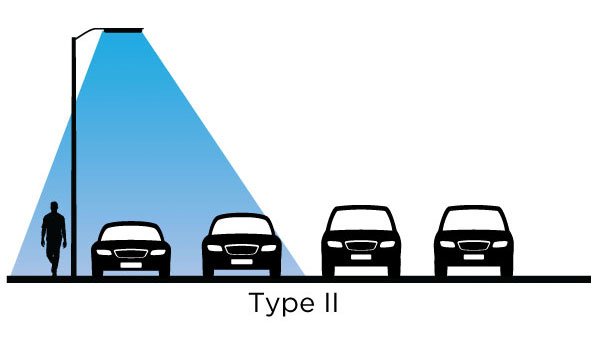
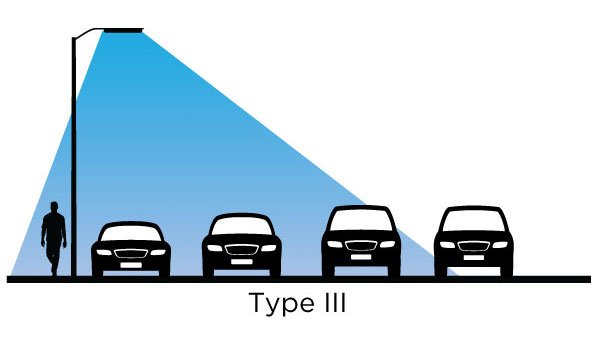
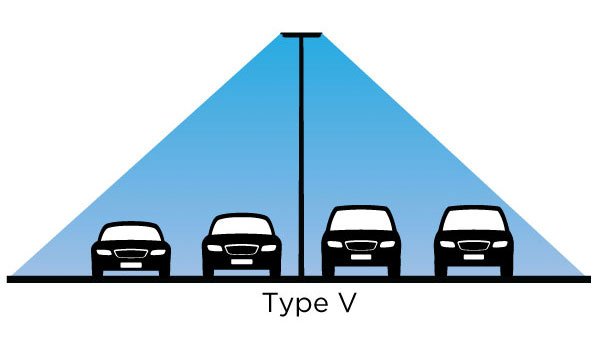
Light Distribution Types
Area lighting fixtures are classified by distribution patterns:
Type I is used for walkways and aisles.
Type II provides a narrow forward throw for paths and edges.
Type III is commonly used for roadways and parking aisles.
Type IV directs light forward for perimeter and security lighting.
Type V distributes light evenly in all directions for open areas.
Tunable White
Tunable white lighting allows the color temperature to be adjusted during the day. This feature is often used in offices, healthcare facilities, and educational spaces to support comfort and productivity.
Unified Glare Rating (UGR)
UGR measures glare discomfort. Lower UGR values help reduce eye strain in offices, classrooms, and healthcare environments.
LED Tube Types and Retrofit Options

Types of LED tube lights
Type A LED Tubes
Type A tubes work with existing compatible fluorescent ballasts. Installation is simple, but performance depends on ballast condition and compatibility.
Type B LED Tubes
Type B tubes operate directly from line voltage and require the ballast to be removed or bypassed. This option reduces long-term maintenance and improves efficiency. Installation should be performed by a licensed electrician.
Type C LED Tubes
Type C tubes use an external LED driver instead of a ballast. They provide consistent performance, long life, and support advanced dimming options such as 0 to 10 volt controls.
Hybrid LED Tubes
Hybrid tubes can operate with a compatible ballast initially and later be converted to direct wire operation after the ballast is removed.

LED troffers in an office space.
Common Fixture Types
Common modern fixtures include high bays, area lights, troffers, LED panels, strip lights, linear suspended fixtures, recessed downlights, vapor-tight fixtures, and track lighting systems. Each fixture type is designed for specific ceiling heights, environments, and lighting needs.
Lighting Controls and Automation
Dimmers
Dimmers adjust light output and improve energy savings. Common dimming types include TRIAC, ELV, and 0 to 10 volt systems.

LED dimmer
Sensors
Occupancy sensors, vacancy sensors, motion sensors, and photocells automatically control lighting based on movement or available daylight.
Smart Lighting Systems
Smart lighting systems enable control of lights via apps, schedules, or networks. These systems improve energy efficiency and simplify lighting management.
Networked Lighting Controls
Networked lighting controls allow fixtures and sensors to communicate with each other. These systems support advanced scheduling, daylight harvesting, and energy monitoring, and are often required for utility rebates.

Ballast for HID lamps
Drivers, Ballasts, and Power Components
LED Drivers
LED drivers convert incoming AC power to the low-voltage DC power required by LEDs. Drivers are designed as either constant current or constant voltage, depending on the fixture.
Ballasts
Ballasts regulate current for fluorescent and HID lamps. As facilities convert to LED lighting, ballasts are increasingly eliminated to reduce maintenance and failure points.
Ratings, Certifications, and Compliance



UL and ETL
Safety certifications that indicate a product meets established electrical standards.
DesignLights Consortium (DLC)
DLC certification identifies high-performance LED fixtures and controls that qualify for many commercial energy rebates.
Energy Star
Energy Star certification applies to many residential and select commercial lighting products.
Title 20 and Title 24
California energy regulations governing lighting efficiency and building codes.
JA8
A Title 24 lighting standard focused on residential applications.
IP and IK Ratings
IP ratings indicate protection against dust and water.
IK ratings indicate resistance to physical impact.
Wet, Damp, and Enclosed Ratings
These ratings define where a lamp or fixture can be safely installed based on exposure to moisture and airflow.
Frequently Asked Questions
Are LED lights environmentally friendly?
Yes. LEDs use less energy, last longer, and reduce waste compared to traditional lighting.
Do LEDs get hot?
LEDs generate heat at the heat sink, but far less radiant heat than incandescent or halogen bulbs.
Are all LED bulbs dimmable?
No. Only LEDs labeled as dimmable and listed as compatible with specific dimmers should be dimmed.
Are LED Christmas lights replaceable?
Most LED string lights are sealed and do not have replaceable bulbs to improve durability and weather resistance.
If one LED bulb fails, will the rest stay lit?
Yes. LED string lights are wired in parallel and remain lit if one bulb fails.