
Best Outdoor Christmas Lights for Your Home
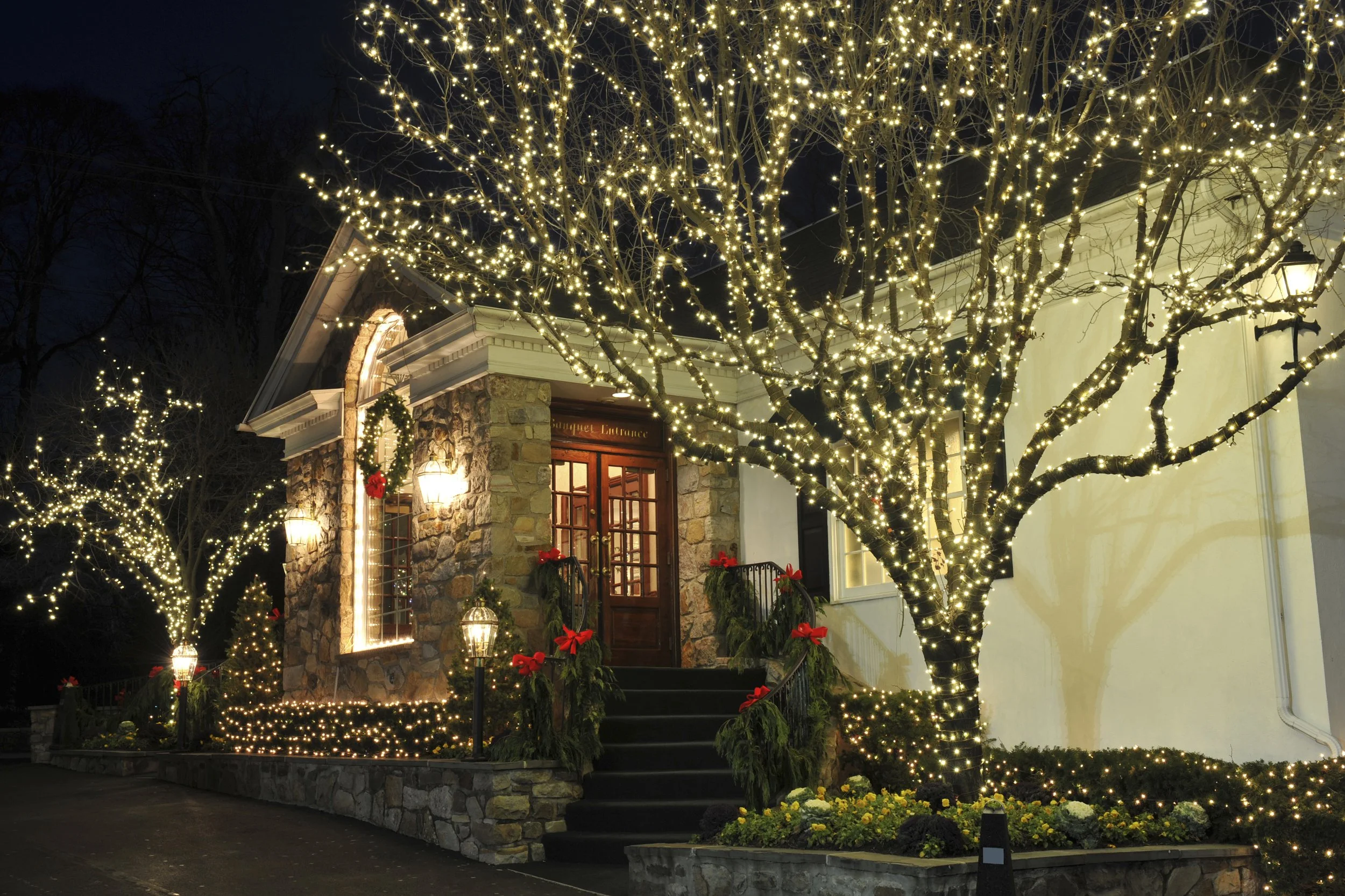
The best outdoor Christmas lights for your home depend on where you’ll hang them, the look you want, and the installation requirements. Outdoor-rated LED C7 or C9 lights suit rooflines, mini lights wrap trees and garland, and net lights cover shrubs. Check outdoor suitability, dimensions, and connection limits before buying.
A coordinated display starts with a few practical decisions. Which features do you want to highlight? Where will the power come from? This guide helps you compare Christmas lights, choose colors, and plan the accessories and care your display needs.
Types of Outdoor Christmas Lights
Christmas string lights come in several shapes and configurations. The table below compares the most common outdoor options by appearance, typical application, and the main detail to check before buying.
| Light Type | Appearance | Typical Application | Main Buying Consideration |
|---|---|---|---|
| Mini Lights | Small bulbs along a strand | Trees, garland, small accents | Outdoor suitability and lighting length |
| C7 and C9 Lights | Larger, classic bulb shapes | Rooflines and outlines | Bulb/socket compatibility and spacing |
| Icicle Lights | Hanging drops of varied lengths | Eaves and gutters | Drop dimensions and mounting |
| Net Lights | Prearranged grid | Bushes and hedges | Net dimensions and shrub shape |
| Rope Lights | Continuous line inside a tube | Borders and architectural accents | Mounting, permitted cuts, connections |
| Tape Lights | Flat strip | Selected architectural accents | Outdoor suitability of the complete system |
| Smart RGB Lights | Selectable colors and effects | Dynamic displays | Controls and component ratings |
| Commercial-grade Stringers |
Separate sockets on specified wire | Custom residential outlines | Wire, bulb, plug, and load compatibility |
Mini Lights
Mini lights are small bulbs spaced evenly along a standard light string. They add a soft sparkle without making individual bulbs the focus, which makes them a natural fit for wrapping branches, weaving through Christmas garland, or outlining smaller accents like railings and planters. For tree trunks, compare standard strands with tree-wrap lights, which are designed to spiral around a trunk more easily. Bulb spacing affects how full the finished look appears, so check the lighted length and spacing rather than choosing by bulb count alone. Confirm that each strand is labeled for outdoor use before hanging it outside.
C7 and C9 Bulb Lights
C9 Christmas lights have larger bulbs that create a bold, classic outline that is easy to see from the street. C7 Christmas lights offer a smaller version of the same shape, which works well for windows, porch railings, and other accents viewed up close. Both sizes are available in LED and incandescent options, so bulb size and bulb technology are separate choices.
C7 and C9 lights also come in two formats. Integrated sets have bulbs permanently attached to the wire, so individual bulbs cannot be replaced. Replaceable bulbs screw into separate stringers, which lets you swap out a single broken or burned-out bulb. When buying replaceable bulbs, confirm that the base size, socket fit, voltage, and wattage match your stringer.
Icicle Lights
Icicle lights hang in drops of varying lengths below a horizontal strand, recreating the look of icicles along the edge of a roof. They add depth along eaves, gutters, and porch edges, and they pair well with a C9 or mini light outline above them. Drop lengths and spacing vary between sets, so compare the horizontal lighted length, the longest drop, and the unlit lead wire before buying. Make sure the drops will clear doors, windows, and walkways once installed.
Net Lights
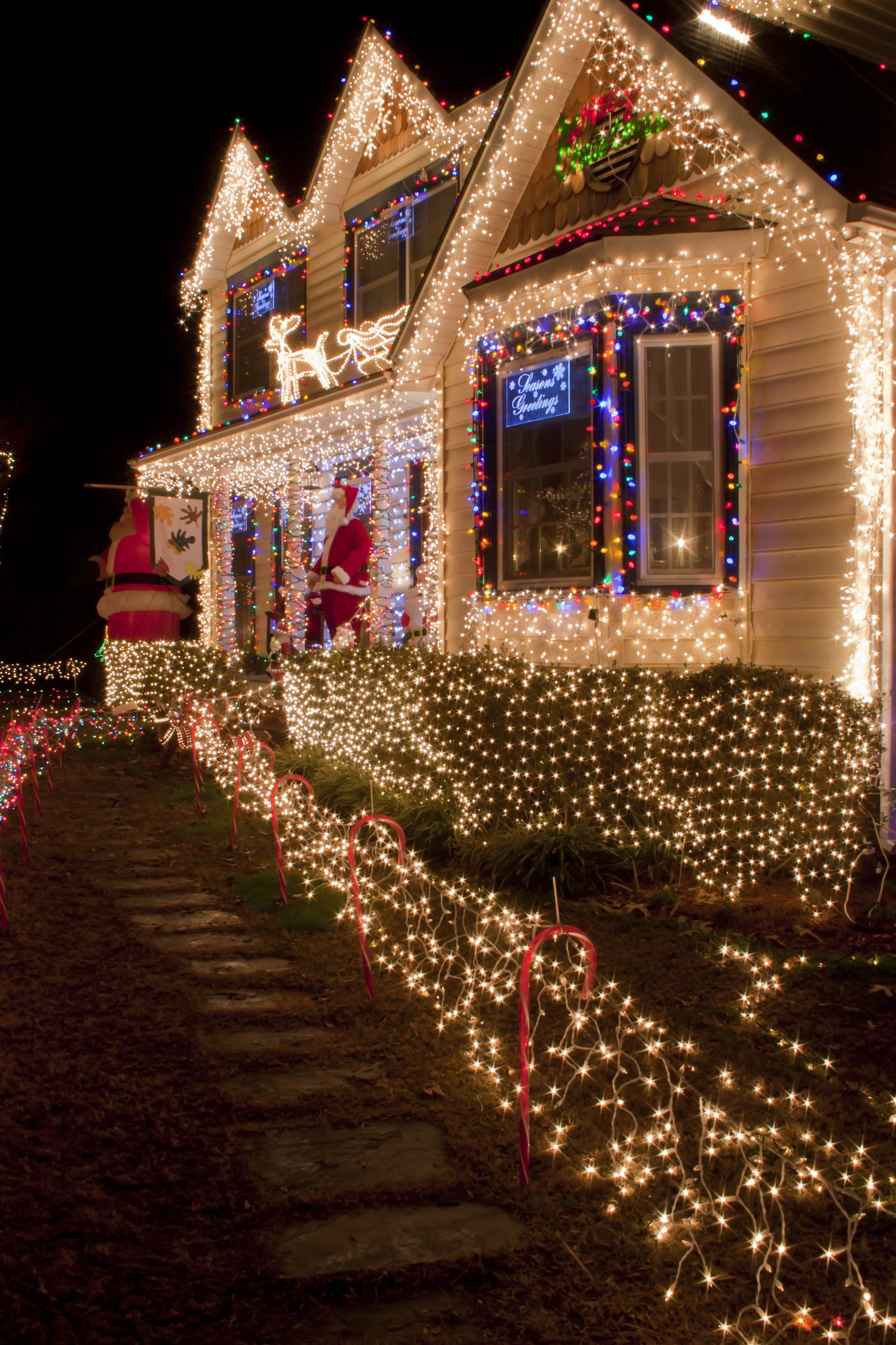
Net lights arrange evenly spaced bulbs in a connected grid that drapes over bushes and hedges in one step. They save time compared to wrapping individual strands and give shrubs a uniform, finished look. Net lights work best on relatively uniform greenery. Measure the shrub’s width and height and allow for its depth before choosing net dimensions. For longer hedges, you can place several nets side by side as long as you stay within the product’s connection limits.
Rope Lights and Tape Lights
Rope lights enclose small bulbs or LEDs inside a flexible, clear tube to create a continuous line of light. They are often used to outline walkways, railings, and architectural features. Tape lights use a flat strip of LEDs that typically mounts with adhesive backing. The two products use different mounting hardware, connectors, and power supplies, so plan each one as its own system.
Tape light accessories and power supplies are not all weather-resistant, and adhesive backing alone does not make a tape light suitable for outdoor use. Check that every component in the installed system is rated for the intended outdoor exposure.
Cutting rope light compromises its water and weather resistance. Only cut products whose instructions permit it, and seal every cut end and splice with manufacturer-approved components before outdoor use.
Smart RGB and Color-Changing Lights
RGB stands for red, green, and blue, the three colors these lights combine to create a wide range of shades. Standard RGB lights typically change the color of the entire strand at once. Addressable RGB lights can control individual pixels or specified groups, which allows chasing, twinkling, and other multicolor effects. Smart RGB Christmas lights also vary in app requirements, connectivity, effects, and controllers. RGB does not automatically mean a product is addressable or compatible with your smart-home system, so check each of those features separately. Confirm that the controller and power supply are rated for outdoor use as well.
Commercial-Grade Stringer Lights
Commercial-grade stringer lights separate the bulbs from the wire. You choose replacement bulbs and stringers separately, which lets you control bulb spacing, replace individual parts, and reuse the same layout from season to season. Because the wire can be matched to the exact length of a space, commercial-grade Christmas lights work well for custom rooflines. Construction and load limits vary by product, so compare the wire gauge, socket spacing, plug type, and maximum connected load in the specifications. Use bulk Christmas wire or custom assembly only where the product instructions permit it.
LED vs. Incandescent Outdoor Christmas Lights
Durability matters when bulbs are being installed, removed, and stored. Incandescent Christmas bulbs have fragile glass envelopes. Many LED Christmas bulbs use more break-resistant polycarbonate lenses, but confirm the material in the specifications.
| Buying Factor | LED | Incandescent |
|---|---|---|
| Energy Use | Generally lower; compare labeled watts | Generally higher for comparable displays |
| Heat | Generally cooler, but still produces heat | Typically runs hotter |
| Appearance | Multiple white tones, colors, and finishes | Familiar warm glow |
| Ownership Cost | Consider purchase price, energy, and repairability | Consider purchase price, energy, and bulb replacement |
For example, imagine an incandescent display and an LED display that each run six hours a day for 30 days at an electricity rate of $0.15 per kilowatt-hour. If the incandescent display draws 200 watts, it would cost about $5.40 to operate over that period. If a comparable LED display draws 40 watts, it would cost about $1.08 on the same schedule.
The formula is watts ÷ 1,000 × operating hours × electricity rate. These wattages are hypothetical examples, not claims about particular products. For your own comparison, use the labeled wattage of the lights you’re considering and your local electricity rate. Keep in mind that rated operating hours do not guarantee a fixed number of outdoor seasons, and lower LED wattage does not remove the connection limits listed on each product.
Choosing Colors for Your Outdoor Christmas Display
When comparing warm white vs multicolor Christmas lights, picture the entire house. A consistent roofline can tie together several differently decorated areas.
Warm White Christmas Lights
Warm white gives brick, wood, and cream siding a soft glow that works well with traditional greenery. Compare the warm-white options with existing strands before buying more. Color names alone do not guarantee a match across product lines.
Cool White Christmas Lights
Cool white creates a crisp, wintry effect against gray or white exteriors. It can look noticeably different beside warm white, so choose intentionally. Check product specifications and compare samples when coordinating purchases.
Multicolor Christmas Lights
Multicolor Christmas lights create a lively, nostalgic display. Palettes, bulb finishes, and brightness vary, so compare sets before mixing them. Keeping each feature consistent, such as matching all the lights on one hedge, helps the arrangement feel deliberate.
Color-Changing Displays
Color-changing lights offer flexibility for different holiday scenes. Check which white and multicolor modes are available, whether effects cover the entire strand or individual pixels, and what setup requires. Music synchronization is a separate feature to verify.
The Best Outdoor Christmas Lights for Each Area of Your Home
Choose residential holiday lighting by location first, then coordinate color and spacing across the display.
Rooflines and Gutters
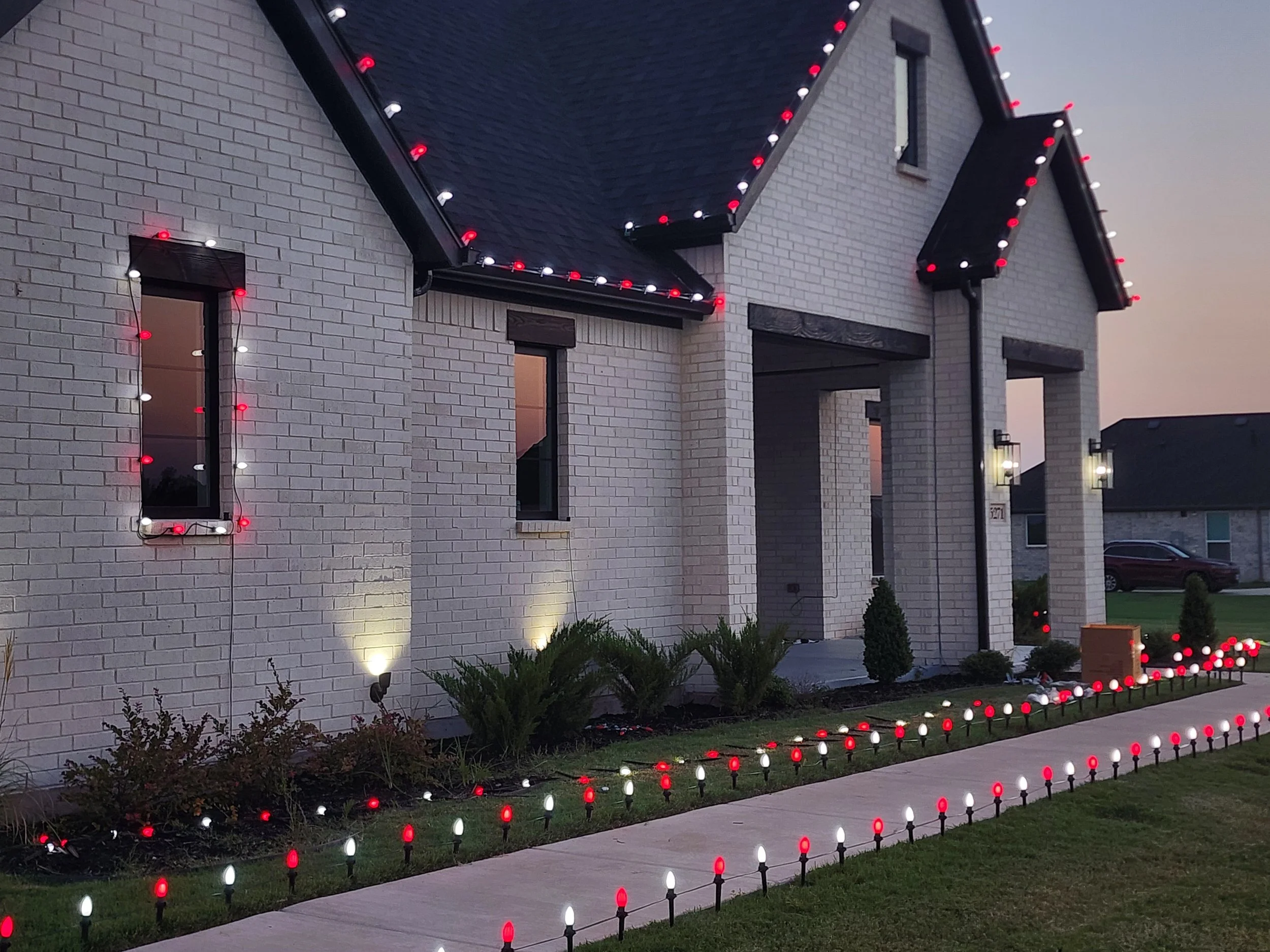
Rooflines are usually the most visible part of an outdoor display. Choose C9 bulbs for a bold outline that reads clearly from the street, C7 bulbs for a smaller and more detailed look, or icicle lights for a hanging effect along the eaves. Before buying, measure each run and compare it with the socket spacing and lighted length of the strands you’re considering. Match your mounting clips to your gutter or shingle type and to the bulb style so the lights sit evenly. If your roofline is steep, high, or otherwise difficult to reach safely, hire a professional installer rather than climbing up yourself.
Trees, Bushes, and Hedges
Mini lights are the most versatile choice for trees. Wrap them around trunks or weave them through branches for a fuller look. Net lights are a faster option for shrubs and hedges that are close to the net’s dimensions. Uneven or irregularly shaped shrubs may look better with mini lights draped by hand. To estimate how many lights you’ll need for a tree, wrap a small test section and use it as a guide for the rest of the project. Trunk circumference, wrapping height, spacing between wraps, and how densely you want to cover the branches all affect the total.
Walkways and Pathways
Rope lights or decorative path markers can outline walkways and guide visitors to your front door. Place them along the edges of the path, and keep stakes and cords out of the walking route so no one trips. Decorative holiday lights are designed for appearance, so they may not provide enough light for guests to see steps, curbs, or other obstacles. Keep your regular walkway or landscape lighting on alongside the holiday display, especially near stairs.
Porches, Patios, and Decks
Porches, patios, and decks are where guests gather, so aim for a warm, inviting glow. Outdoor-rated string lights, lanterns, and prelit garland work well along railings, posts, and overhangs. Check each product’s location rating, since not every lantern or garland is suitable for outdoor use. Follow the mounting and support requirements for anything you hang, and keep doors, stairs, and handrails clear so people can move through the space safely.
Covered-porch tip: Battery-operated Christmas lights can decorate a covered porch where there’s no nearby outlet. However, most battery-operated lights are not weather-resistant. Check the location ratings for the lights, battery box, and any other components. A covered porch does not make indoor-only products suitable for outdoor use.
Windows and Doors
Outlining windows and doors frames your entryway and helps tie the whole display together. Use outdoor-rated mini lights or a properly rated strip light system around exterior frames. Prelit wreaths and garland add a traditional touch around the front door, but they need appropriate outdoor ratings too. For a classic look without exterior wiring, consider indoor candle-style window lights. They stay safely inside the home while creating a warm glow that is visible from the street.
Weatherproof and Safety Ratings: What to Check
“Weatherproof outdoor lights” is too broad to guide a purchase. Look for documented protection and installation limits instead:
Outdoor-use labeling: Match the permitted location and exposure to your installation. Follow indoor/outdoor instructions rather than assuming covered-only use.
Safety certification: Look for UL-listed outdoor lights or lights that have been ETL tested. These marks show that the product has undergone the appropriate safety tests to achieve its rating. Confirm that the listing covers outdoor use in the location where you plan to install the lights.
Complete-system suitability: Check plugs, controllers, transformers, timers, and connectors as well as the lights.
Outdoor-use and wet-location labels are not interchangeable across every product category. If specifications leave the intended exposure unclear, ask for clarification before purchasing.
How to Install Outdoor Christmas Lights Safely
A little planning before you hang the first strand makes your Christmas light installation faster and safer. The Electrical Safety Foundation International recommends inspecting decorations, following location labels, and using GFCI-protected circuits outdoors. The steps below walk through the process from start to finish.
1. Measure the Display and Plan Power
Start with a simple sketch of your home that marks each area you plan to decorate, along with the location of every outdoor outlet. Then measure the rooflines, windows, doors, and other features you want to outline.
When comparing products, pay attention to the difference between lighted length and total length. Lighted length is the section of the strand that actually holds bulbs. Total length can also include unlit lead wire at one or both ends, so buying by total length alone can leave gaps in your display.
Finally, add up the wattage of the lights you plan to connect and compare it with the capacity of your outlets and circuits. Spreading the display across more than one circuit can help you stay within those limits. For larger or more complex layouts, a Lighting Specialist can help you plan.
2. Inspect and Test Each Strand
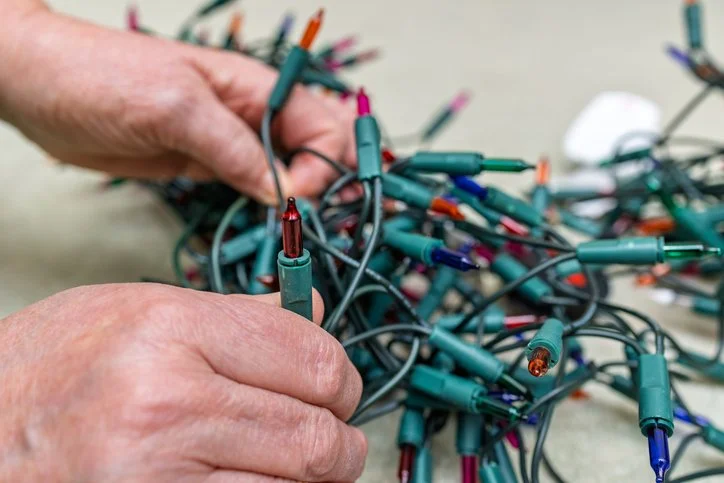
Before hanging anything, unplug each strand and look it over carefully. Check for cracked or frayed insulation, broken or empty sockets, and damaged plugs. Next, plug in each undamaged strand according to its instructions and confirm that every section lights up. Testing on the ground is much easier than troubleshooting from a ladder. If a strand has damaged wiring, remove it from use. Electrical tape is not a safe repair for damaged insulation.
3. Use Suitable Clips and Safe Access
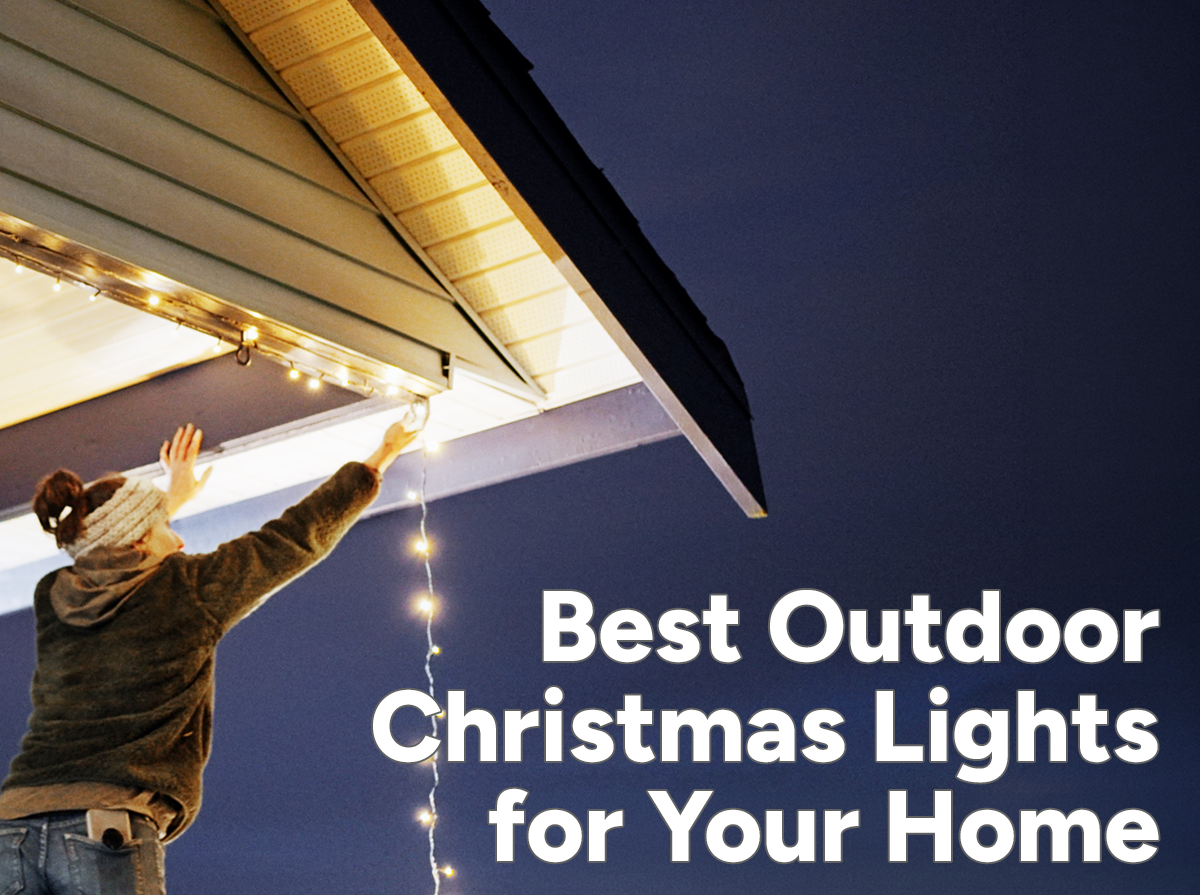
The right clips hold lights securely without damaging your home or the wiring. Choose mounting clips and stakes that match both the surface and the product. Gutter clips, shingle tabs, and all-in-one clips each fit different surfaces, and some are designed for a specific bulb orientation, such as bulbs that point straight up along a roofline. Use brick clips only on brick profiles they are designed to grip, and always follow the mounting instructions. Avoid nails, staples, and tacks, which can puncture or crush wires.
When working at heights, set your ladder on firm, level ground and have a helper steady it and pass up lights. Keep ladders and strands well away from overhead power lines. If a location is too high or too difficult to reach safely, arrange professional installation instead.
4. Use GFCI Protection and Respect Electrical Limits
Ground fault circuit interrupter (GFCI) protection helps reduce the risk of electric shock by cutting power when it detects a ground fault, such as current leaking through water. Plug outdoor lights into GFCI-protected outlets or use outdoor-rated accessories that provide GFCI protection.
Every part of the display has its own electrical limit. Check the maximum number of connected strands or the maximum wattage listed on each product, and make sure your extension cords, timers, outlets, and circuits can handle the total load. Choose outdoor-rated extension cords sized for both the load and the distance they need to run. Protect connections according to the product instructions and keep them out of standing water. Turn the lights off when you’re away from home or asleep. A timer can handle this automatically, but it does not add circuit capacity.
5. Check the Finished Display
Once everything is hung, walk the display before turning it on for the season. Confirm that clips and supports are secure, connections are protected, and cords are routed away from foot traffic. Then turn the lights on and verify that your timer works as expected. If you notice abnormal heating, a burning smell, flickering, or a GFCI that trips repeatedly, turn the display off and find the cause before using it again. Have an electrician evaluate any electrical problem you can’t resolve.
Accessories That Make Outdoor Decorating Easier
The right accessories make your display easier to install, control, and maintain. Build your list around your actual layout and the products you plan to use.
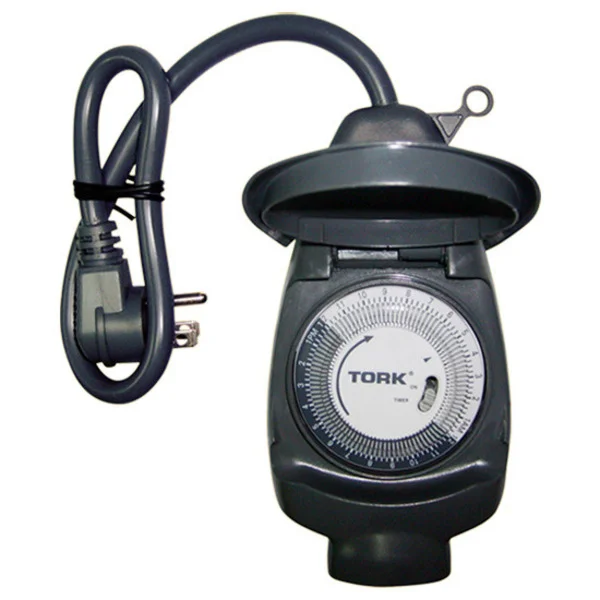
Outdoor Timers and Smart Plugs
Outdoor timers turn your display on and off automatically, so you don’t have to remember to plug lights in each evening or unplug them at bedtime. Manual timers run on a set schedule, photocell timers switch on at dusk, and app-based smart plugs let you adjust schedules from your phone. When comparing Christmas light timers, confirm that the timer is rated for outdoor use and can handle the electrical load you plan to connect. Smart plugs may also require a specific Wi-Fi network or app, and not every model works with voice assistants.
Outdoor Extension Cords and Connection Protection
Choose outdoor-rated extension cords and protectors based on their rating, capacity, and length rather than a “heavy-duty” label alone. Each cord should be rated for outdoor use and sized for the total wattage it will carry over its full length. Route cords away from foot traffic, doorways, and pinch points where they could be crushed.
Moisture protection and pedestrian cable protection serve different purposes. Weather-resistant connection covers help keep plug connections dry, while cable protectors shield cords where people walk. Use products designed for each job and avoid improvised waterproofing, such as plastic bags or tape. Connection covers are not designed to be submerged, so keep all connections out of standing water.

Replacement Bulbs and Fuses
Keeping a few spare bulbs and fuses on hand makes it easy to fix a dark section mid-season. Replacement bulbs need to match the base size, voltage, and wattage specified for your strand or stringer. Many light strands also include small replaceable fuses in the plug. Always disconnect power before replacing a bulb or fuse, and never substitute a fuse with a higher rating than the one specified. Integrated sets, including many LED strands, have bulbs that cannot be replaced, so follow the manufacturer’s instructions for those products.
Have your product numbers and measurements ready when asking a Lighting Specialist to check compatibility.
Maintaining and Storing Outdoor Christmas Lights
Outdoor lights face wind, rain, snow, and freezing temperatures throughout the season, so a quick check every week or two helps you catch problems early. Look for loose clips, sagging strands, and damaged wiring, especially after storms or heavy snow. Always disconnect power before adjusting or repairing anything. Follow each product’s seasonal-use limits, and take the display down according to the removal instructions.
When it’s time to take your lights down, wait for a dry day and safe conditions. Release clips carefully rather than pulling strands down by the wire, which can loosen sockets and damage insulation. Inspect each strand as you remove it, and set aside any that need repair or replacement. Let everything dry completely before packing it away to prevent moisture damage.
To prevent tangles, wrap strands loosely around a reel or a piece of sturdy cardboard, and avoid tight coils that strain the wire. Label each strand by its location, such as “front roofline” or “porch railing,” so next year’s setup goes faster. Store the lights in a sturdy bin along with their product specifications, spare bulbs, and fuses. Keep the bin in a cool, dry place where it won’t be crushed or exposed to excessive heat.
Find Outdoor Christmas Lights and Accessories at 1000Bulbs
Choosing the best outdoor Christmas lights for your home comes down to a few key decisions. Match each light type to the area it suits best, from C9 bulbs along the roofline to mini lights in the trees and net lights over the shrubs. Pick a color scheme that complements your home, and choose LED or incandescent based on the look, energy use, and durability you want. Then measure carefully, confirm outdoor ratings, and plan your power before you buy. The 1000Bulbs catalog includes LED and incandescent lights, replacement bulbs and stringers, and installation accessories to help you build a coordinated display.
Browse the Christmas and Events category, or call 1-800-624-4488 to speak with a Lighting Specialist about choosing compatible lights, stringers, and accessories for your home.
Frequently Asked Questions About Outdoor Christmas Lights
What are the best outdoor Christmas lights for most homes?
Outdoor-rated LED C7 or C9 lights suit rooflines, mini lights work for trees, and net lights simplify shrub coverage. The right choice depends on the appearance you want, outdoor exposure, measurements, and installation requirements.
Are LED or incandescent Christmas lights better outdoors?
LED lights generally use less electricity, run cooler, and often have more break-resistant bulbs, which makes them a practical choice for most outdoor displays. Incandescent lights remain a good option if you prefer their traditional warm glow. Whichever you choose, make sure the product is rated for outdoor use in the location where you plan to install it.
Should I choose C7 or C9 Christmas lights?
Choose larger C9 bulbs for prominent outlines or smaller C7 bulbs for more restrained accents. Shape alone does not establish brightness. Compare actual output, spacing, and bulb/socket compatibility before buying.
What Christmas lights do professional installers use?
Replaceable LED C9 bulbs with compatible stringers are an option for custom rooflines. This approach supports planned spacing, serviceable parts, and repeatable layouts. Installers choose systems for the project, so there is no single setup used everywhere.
How many outdoor Christmas light strands can I connect?
Follow the product’s labeled maximum connections or connected wattage. You must also stay within cord, timer, outlet, and circuit limits. Lower LED wattage does not eliminate those restrictions.
Can outdoor Christmas lights stay up all year?
Only if the product permits that installation duration. Seasonal outdoor lights are not designed for permanent use, and long-term exposure to weather and sunlight can damage them. For a year-round project, choose a system designed for permanent installation.
What are permanent outdoor Christmas lights?
Permanent outdoor Christmas lights are systems designed for permanent mounting and year-round operation. They may use tracks or other purpose-built supports. Installation methods, controls, and maintenance requirements differ from seasonal strands.
Can outdoor Christmas lights get wet?
They can tolerate only the exposure allowed by their labeling and instructions. Check every powered component, including controllers and power supplies. Rain resistance does not establish submersion protection, and connections should remain out of standing water.