


Finding the Perfect LED Lighting for Diwali Celebrations
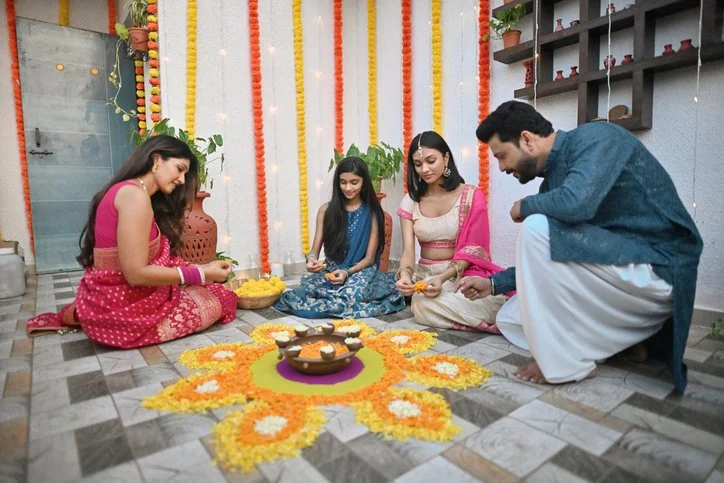
Indian family making floral rangoli for Diwali
As fall approaches, the air fills with the anticipation of several festive holidays. While many people immediately think of Halloween and Thanksgiving, there are numerous vibrant celebrations observed by cultures around the world. One of the most spectacular upcoming festivals is Diwali.
Diwali is a multi-day festival and the largest religious and cultural celebration in India. For Hindus, it holds a significance comparable to that of Christmas for Christians. The holiday is marked by families coming together, sharing delicious food, and illuminating their homes with countless lights.
In this post, we’ll explore the origins and traditions of Diwali, how it’s celebrated, and practical ways you can incorporate beautiful, energy-efficient LED lighting into your festivities.
What is Diwali?
Also known as the Festival of Lights, Diwali is a five-day Hindu festival. The name originates from the Sanskrit word dipavali, or "row of lights". Diwali signifies the symbolic victory of light over darkness, good over evil, and knowledge over ignorance.
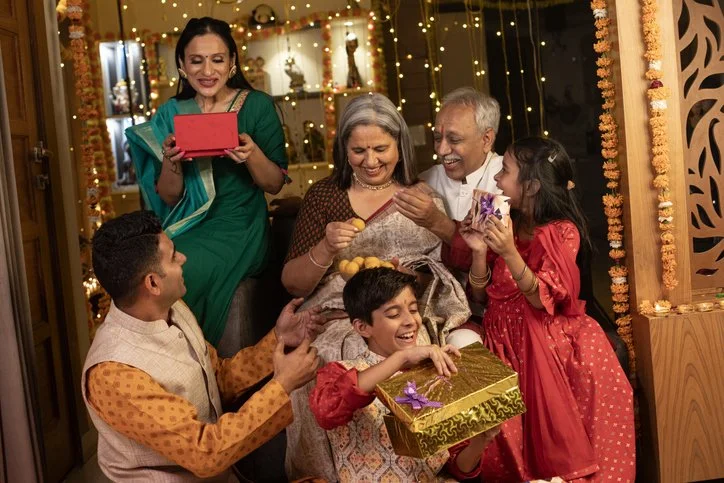
Diwali Traditions: Family exchanging gifts during the Festival of Lights
Diwali is celebrated during the Hindu Lunisolar months of Ashvin and Kārtika. The main day of Diwali is celebrated on the third day, known as the main Diwali. Since the festival follows the Hindu lunar calendar, the dates change every year. For 2025, the festival starts on October 18th, with the third day (main Diwali) falling on October 20th.
It is connected to a variety of religious events, personalties, and deities. It is widely associated with the day Lord Rama returned to his kingdom in Ayodhya with Sita (his wife) and Lakshmana (his brother) after defeating the demon king Ravana. It also celebrates the day Lord Krishna defeated the demon Narakasura. It is also a day to worship Goddess Lakshmi, the Hindu goddess of wealth and prosperity, and Ganesha, the Hindu god of wisdom and remover of obstacles.
Diwali Fact: The story of Lord Rama's 14 year exile and return to Ayodhya is told in the Hindu epic Ramayana. This epic hold religious and cultural signifigance, as it's a foundational text of Hinduism and souce of moral and ethicla guidance.
Other Faiths that Celebrate Diwali
Several other faiths also celebrate Diwali. Each has its variations. Jainism's version of Diwali marks the final liberation of Mahavira. The Sikhs commemorate the release of Guru Hargobind from a Mughal prison (this celebration is called Bandi Chhor Divas). Newar Buddhists worship Lakshmi, while Hindus of Eastern Indian heritage worship the goddess Kali.
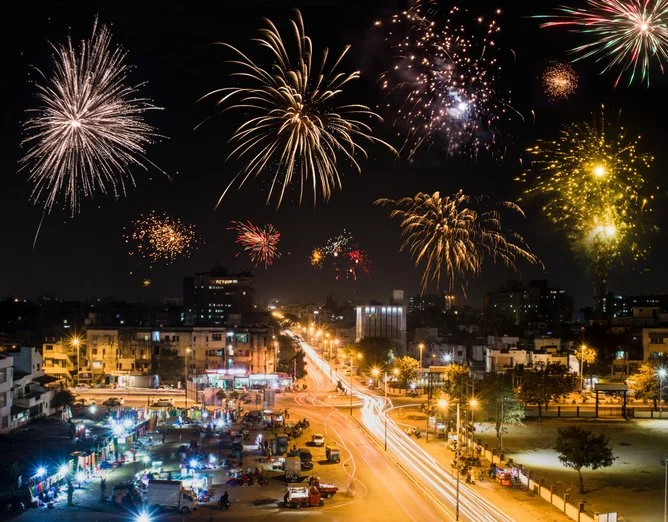
Fireworks during Diwali
How is Diwali Celebrated?
During the Diwali festival, people gather together with their families to celebrate. Diwali traditions include exchanging gifts, feasting, cleaning, sharing Diwali greeting cards, wearing new clothes, and setting off fireworks. Each day of the festival has its unique rituals:
Day 1, or Dhanteras: Homes are cleaned, and people shop for gold or kitchen utensils to help bring good fortune for the upcoming year.
Day 2, or Choti Diwali: Homes are decorated with clay oil lamps, and rangoli designs are made on the floor using colored powders or sand.
Day 3, or Lakshmi Puja: For the main day of celebration, the family gathers to send prayers to the Goddess Lakshmi, then they enjoy a family feast and set off fireworks.
Day 4, or Govardhan Puja: Friends and relatives visit to exchange gifts and best wishes. In some regions, this also marks the start of the New Year on the Hindu calendar.
Day 5, or Bhai Duji: On the last day of the Festival of Lights, brothers visit their married sisters to celebrate their bond as siblings and enjoy delicious food.
Diwali Fact: The oil lamps lit during the Diwali festival are called diya. They are placed at the entrances and boundaries of homes, representing the triumph of light over darkness.
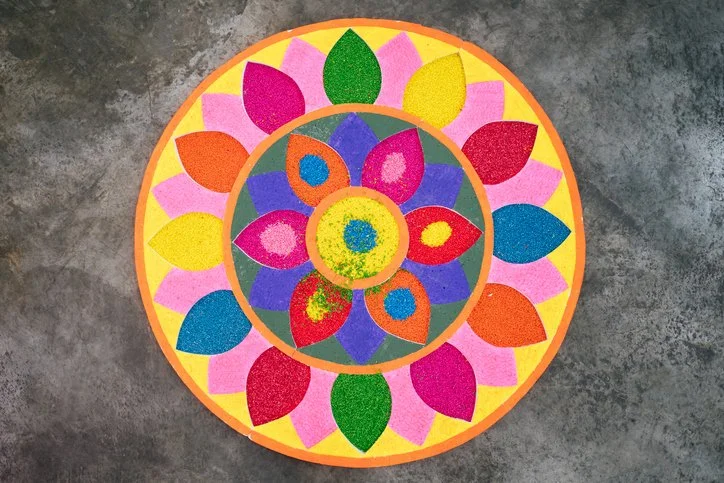
Diwali rangoli featuring a variety of bright, vibrant colors
What Colors Represent Diwali?
There are a variety of colors that are used to represent Diwali. Each color represents a range of meanings. Here are a few of the most common colors and meanings:
Gold and Yellow - wealth and prosperity, and the victory of light over darkness; these colors are frequently used in rangoli patterns
Red - love, passion, and the victory of good over evil; it is also believed to invite the blessings of the Goddess Lakshmi
Orange - warmth, enthusiasm, and joy; can also be associated wth spirituality
Green - new beginnings, growth, and happiness; it's also a reminder of nature and balance
Blue - peace, serenity, and the infinite; blue is also associated with the god Krishna
Purple - spirituality; represents the balance between the physical and spiritual realms
White or Cream - purity and peace
Pink - happiness and romance
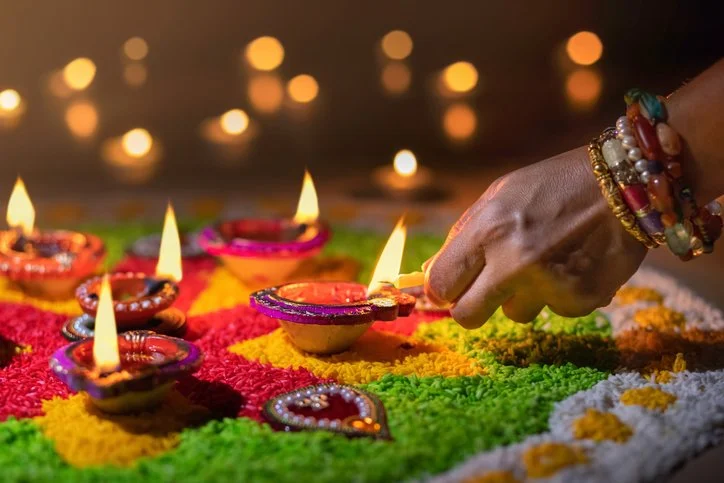
Lighting lamps during Diwali
LED Lights for Celebrating Diwali
Lighting lamps while celebrating Diwali is a traditional practice. Diyas are traditionally lit after sunset and left burning throughout the night, as this is the best time to welcome the Goddess Lakshmi into your home. Other types of lights, such as incandescents and other decorative lights, have been incorporated over the years. Today, LED lights are a popular addition to the Festival of Lights.
Diwali Safety Tip: Once diyas are lit, there is no set time for how long they should burn. However, they should not be left unattended as the oil can pose a potential fire hazard.
Benefits of Using LED Lights for Diwali
LED lighting provides a range of benefits over traditional lighting. They last longer and are more energy efficient. They generate far less heat, allowing you to use them with fabric decorations such as tablecloths and tulle. Unlike incandescent lights, LED lights also come in a wide range of colors and shapes.
Popular LED Lights for Diwali
Numerous LED lights are perfect for Diwali. Here is a quick list of the most popular:
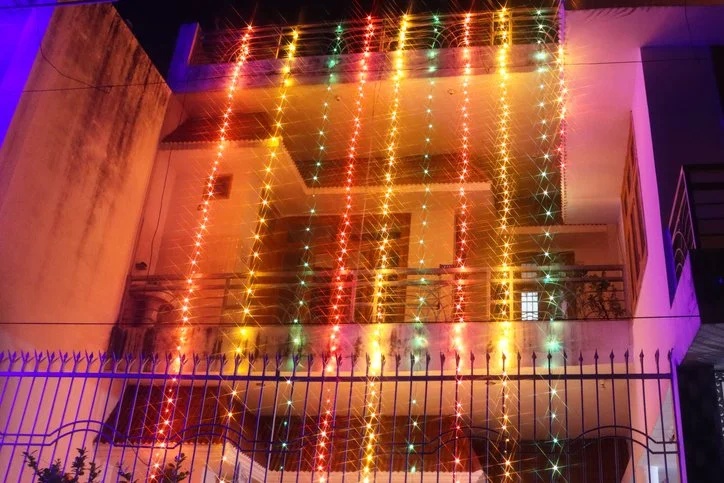
LED Mini Lights - Mini lights are available in all of the colors associated with Diwali, and can be strung in homes, around windows, and in outdoor spaces.
LED C6, C7, and C9 String Lights - Like mini lights, these strings are available in a wide range of colors. The larger size of these bulbs makes them far more visible, making them ideal for decorating the fronts of homes.
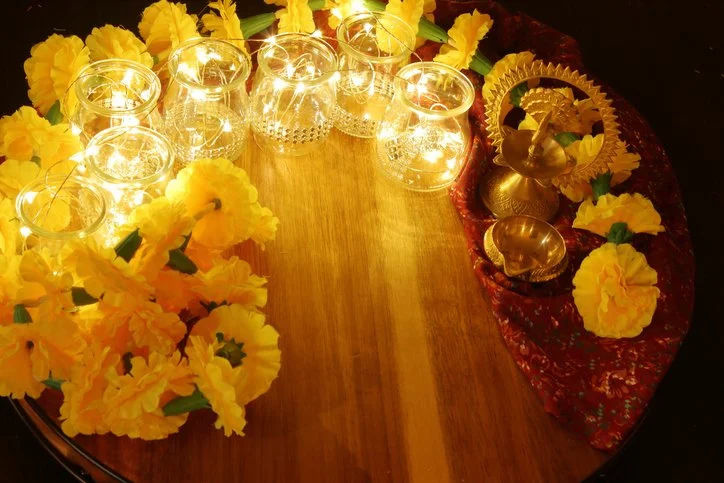
LED Tea Lights - Tea lights can be used in diyas as a safer alternative to burning oil. This allows you to leave them on all night.
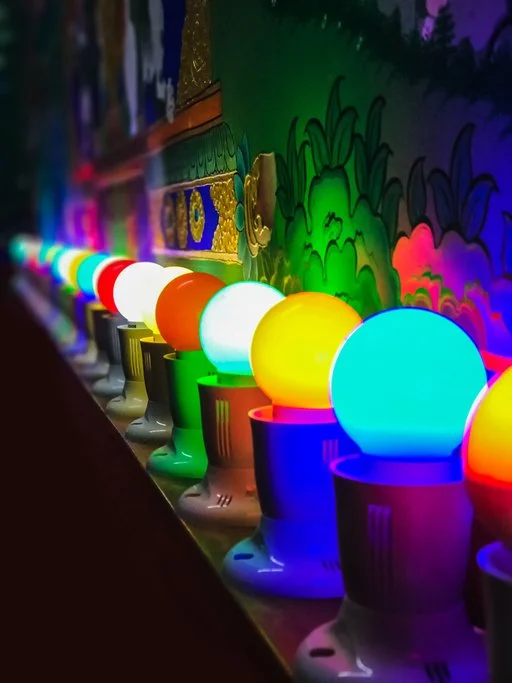
Patio String Lights - Patio lights paired with globes or colored LED bulbs can be suspended across large rooms and open outdoor spaces.
LED Curtain Lights - Curtain lights can be hung on interior and exterior walls for beautiful lighting.
Smart Lights - Perfect for any space, smart light strings can be set to virtually any color, making them a versatile addition to Diwali decorations. Some smart lights include pre-programmed Diwali themes.
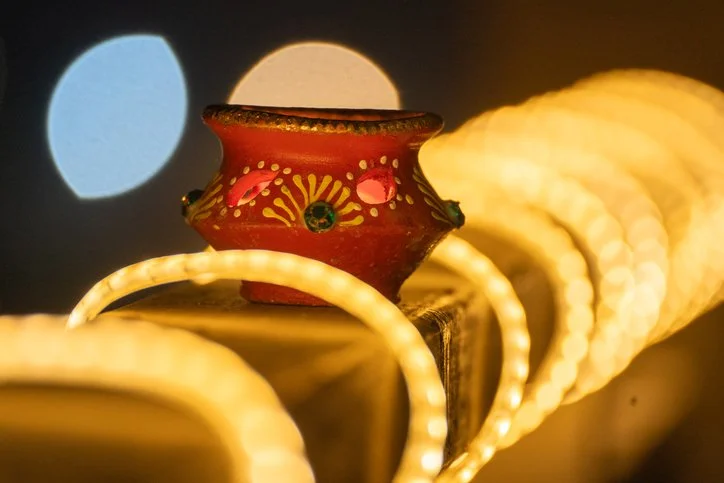
LED Rope Lights - Rope lights are flexible and versatile, perfect for indoor and outdoor lighting.
LED Diwali Lights - These LED light strings are specifically for Diwali. Many feature bulbs shaped like oil lamps, lotus flowers, and stars.
Battery Operated Lights - When you need to add lights to an area without access to power outlets, battery-operated lights are the perfect solution. Use them for centerpieces, mantels, and more.
Now that you have a better understanding of Diwali and the different lights that can be used, it should be very easy to find the perfect LED lights. Need help looking for lights to help you celebrate Diwali? Our helpful team of lighting experts is here to help. Call 1-800-624-4488 today or visit 1000Bulbs.com! Happy Diwali!
FAQs About Diwali Celebrations
When did Diwali originate? While the date of the first celebration is unknown, it likely originated over 2,500 years ago as a harvest festival.
How long do Diwali celebrations last? Diwali celebrations last five days.
Can LED lights be used for Diwali? Yes, LED lights can be used for Diwali.
What are the benefits of using LED lights for Diwali? LED lights are a safer, more energy-efficient alternative to traditional lighting. Plus, they offer a wider range of colors and designs.
What other dieties are associated with Diwali? Diwali is also associated with Ganesha, Vishnu, Durga, Shiva, Kali, Hanuman, Kubera, Yama, Dhanvantari, and Vishvaharman.
What foods do Hindus eat during Diwali celebrations? Hindus celebrate Diwali by eating vegetarian food. Traditional foods include poori (fried round bread), sheer (rice pudding), aloo curry (potato curry in tomato sauce), and malpua (sweet wheat-based pancakes). Many also eat sweets.
What is the difference between Diwali and Deepavali? There is no difference, as both are words used for the Festival of Lights. People in Northern India call it Diwali, while it is called Deepavali in Southern India.
Sources:
Almanac.com - Diwali 2025: What is Diwali?
Britanica - Diwali
National Geographic Kids - Diwali: Festival of Lights
Lashkaraa - Diwali Colors & How To Style Each Color
The Times of India - Colors to Wear this Diwali: Adding Radiance to Your Festival Wardrobe
SinarDaily - Decoding Deepavali and Diwali: A celebration of lights


