
T8 vs T5 vs T12 Bulbs: Key Differences + LED Upgrade Guide
| What This Article Covers |
|---|
T8 and T12 fluorescent tubes share the same bi-pin base and physically fit in the same fixtures — but they are not interchangeable, and confusing them is one of the most common and costly mistakes in commercial fluorescent retrofits. This guide explains what the T-designation system actually means, how T8 and T12 compare on efficiency, lifespan, and availability, and why businesses are moving away from T12. It covers all three LED retrofit options (Type A ballast-compatible, Type B ballast bypass, and Type C external driver), walks through the most common conversion mistakes to avoid, and provides a clear decision framework for choosing between a T8 fluorescent upgrade and a full LED conversion. Best for: facility managers, electrical contractors, maintenance supervisors, warehouse operators, school administrators, and office managers evaluating fluorescent tube replacements in commercial, institutional, and industrial settings. |
Updated 7/7/26 by 1000Bulbs Staff
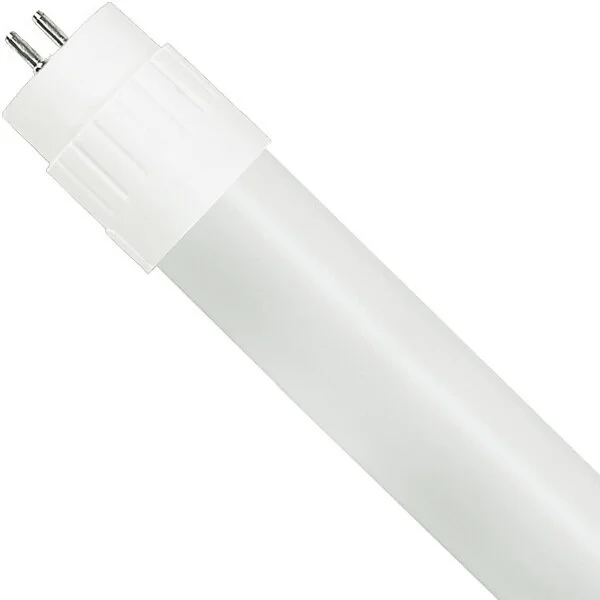
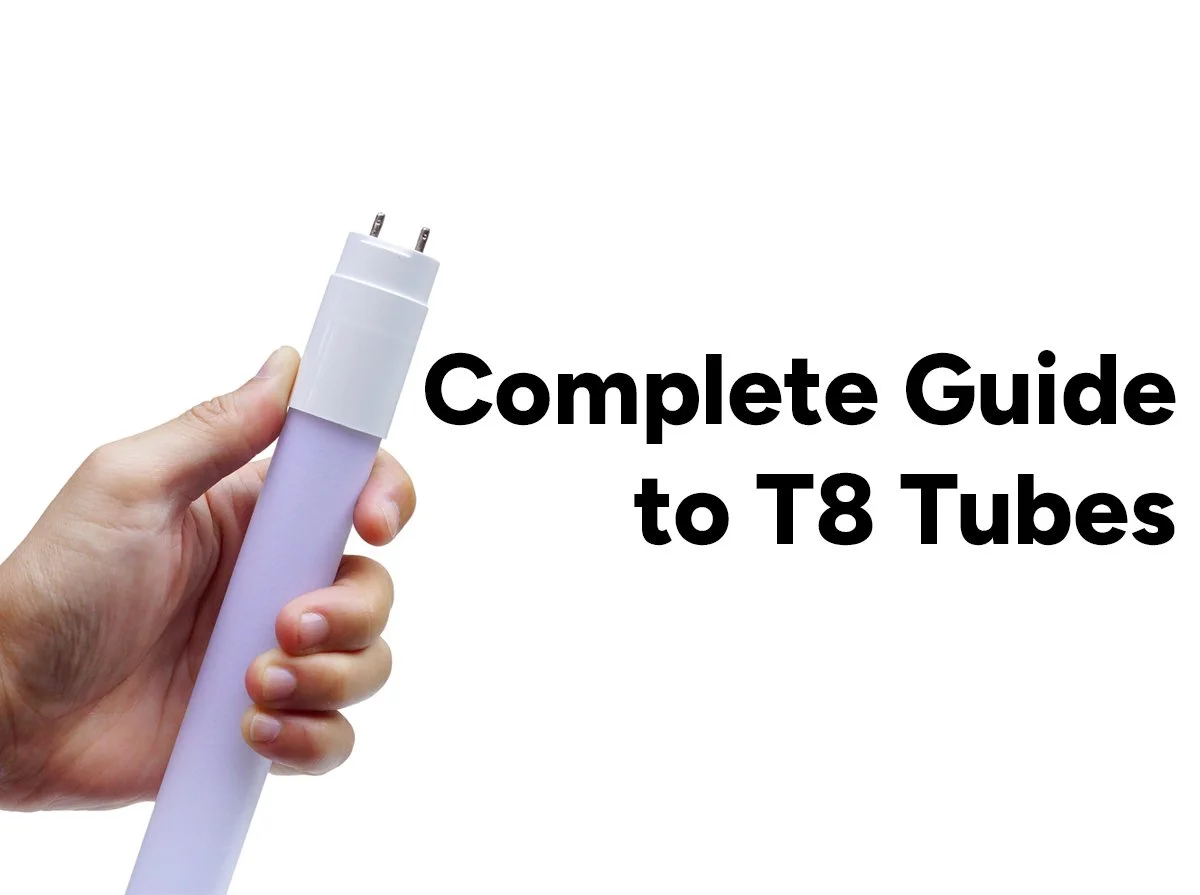
LED T8 Tube
Still running older T12 fluorescent tubes in your warehouse, office, school, or shop? Sorting out T8 vs T5 vs T12 bulbs is the first step to making a smart retrofit decision. These tube types are not interchangeable, and picking the wrong one means flickering, early failures, or wasted money on incompatible products.
The challenge is no longer deciding whether to upgrade. It is determining which path actually makes sense for your facility. Some businesses want the lowest upfront retrofit cost. Others want to reduce maintenance calls, lower energy usage, or move away from fluorescent lighting entirely.
This guide breaks down the differences between T5, T8, and T12 fluorescent tubes, explains why they are not interchangeable, covers how ballast compatibility works, and lays out the most common LED conversion paths, including plug-and-play and ballast bypass options.
Whether you are managing a large-scale retrofit or replacing a single fixture, you will find the information needed to evaluate your options and determine the best upgrade path. If you are ready to move beyond fluorescent lighting, explore our selection of LED retrofit tubes and replacement solutions.
What Do T5, T8, and T12 Actually Mean?
Direct Answer: T5 vs T8 vs T12 Size and Efficiency
The “T” designation is part of a standardized fluorescent sizing system. The number following the letter represents the tube diameter in eighths of an inch:
T5 = 5/8 inch (approximately 16mm) diameter
T8 = 8/8 inch = 1 inch
T12 = 12/8 inch = 1.5 inches
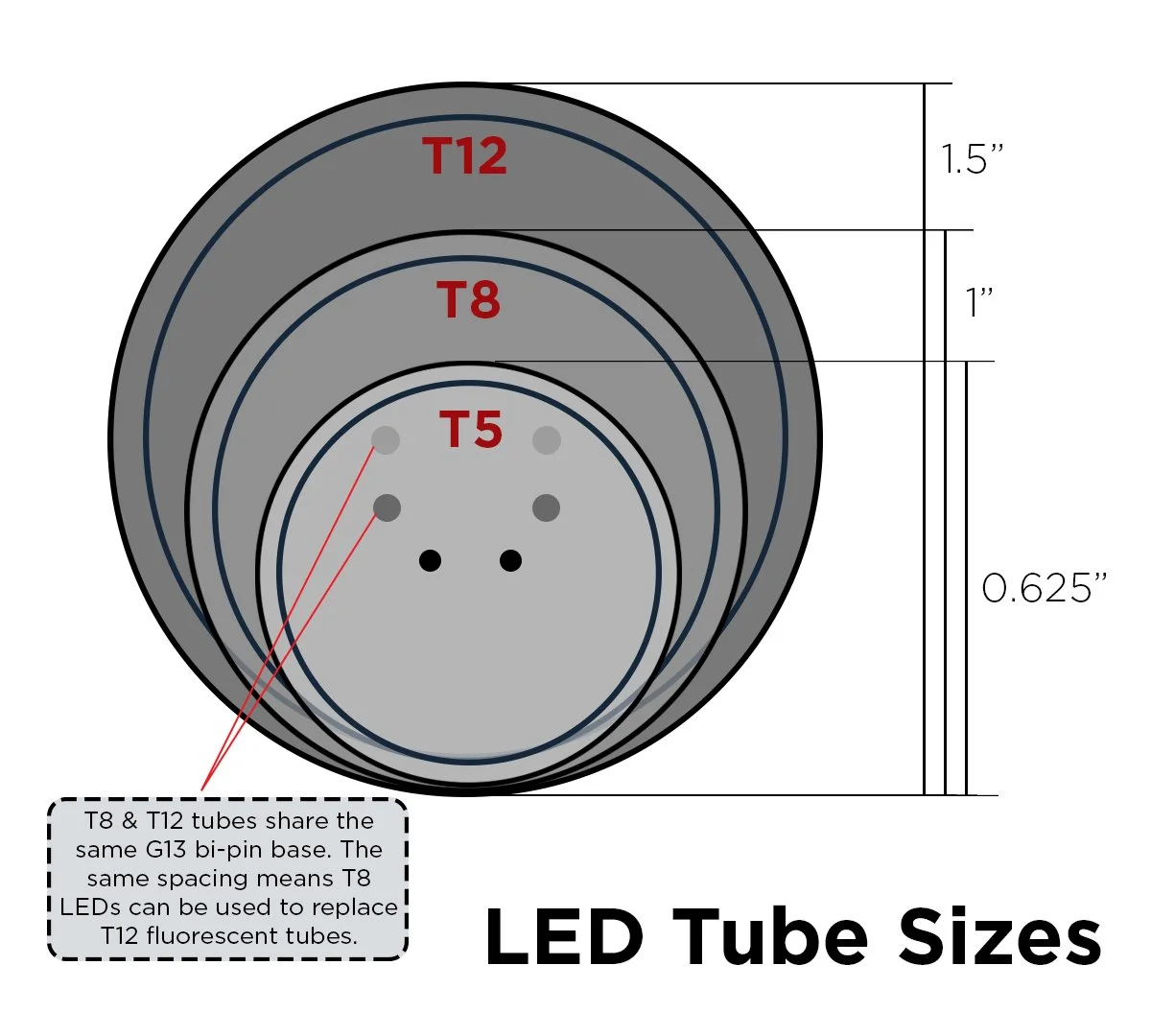
When the tubes are placed side by side, the size difference is immediately noticeable. T12 tubes are the thickest, T8 tubes are intermediate in size, and T5 tubes are the smallest.
T12 fluorescent systems dominated offices, schools, warehouses, and retail spaces for decades because they were inexpensive and widely available. Over time, however, fluorescent technology improved significantly.
T8 fluorescent tubes were developed as a more energy-efficient alternative to T12 systems. Compared to T12 systems, T8 tubes:
Use less electricity
Produce more light per watt
Last longer
Maintain brightness more consistently over time
A typical 32-watt T8 tube can produce similar light output to a 40-watt T12 while consuming noticeably less energy.
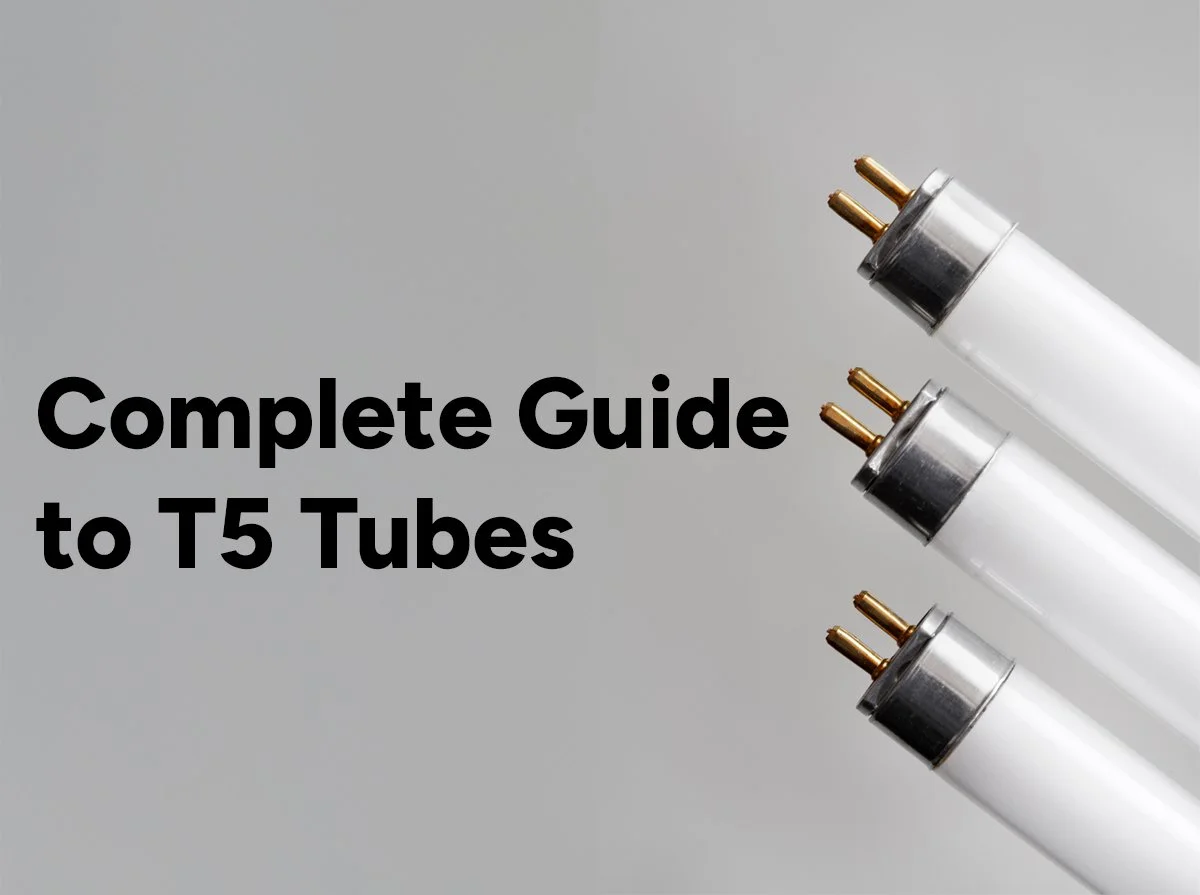
T5 fluorescent tubes represent a further step in fluorescent efficiency. Their smaller diameter allows for improved performance and fixture design flexibility, making them popular in certain commercial, industrial, and high-output lighting applications.
However, T5 lamps generally require fixtures and ballasts designed specifically for T5 technology and are not direct replacements for T8 or T12 lamps.
That efficiency progression—from T12 to T8 to T5—is one reason many facilities upgraded fluorescent systems throughout the 1990s and 2000s. Today, many buildings still operating T12 systems are using fixtures and ballasts that may be decades old.
The shift from T12 to T8, T5, and now LED technology reflects broader improvements in energy efficiency, maintenance reduction, and long-term operating cost management.
T5 vs T8 vs T12: Side-By-Side Comparison
T5, T8, and T12 fluorescent lamps may appear similar, but they differ significantly in size, efficiency, light output, and application. Understanding these differences can help facility managers evaluate retrofit options and long-term operating costs.
The comparison below highlights the factors that matter most during retrofit planning.
|
Factor |
T12 Fluorescent |
T8 Fluorescent |
T5 Fluorescent |
|
Diameter |
1.5 inches |
1 inch |
5/8 inch |
|
Typical 4-foot wattage |
40W |
32W |
28W |
|
Efficiency |
Lower |
Higher |
Highest of the three |
|
Typical ballast type |
Magnetic or older electronic |
Electronic |
Electronic |
|
Product availability |
Declining |
Widely available |
Available but less common in retrofit applications |
|
Maintenance frequency |
Higher |
Lower |
Lower |
|
Common installation era |
Pre-2000 |
2000s onward |
Commercial and high-bay applications |
|
LED retrofit compatibility |
Yes |
Yes |
Yes |
T8 systems generally provide lower operating costs, longer service life, and improved efficiency compared to older T12 installations. T5 lamps offer even greater efficiency and a smaller form factor, but they are typically used in fixtures specifically designed for T5 technology and are less common as a direct replacement for T12 systems.
T12 product availability is also becoming more limited as manufacturers continue shifting away from older fluorescent technologies. Many facilities now upgrade proactively because sourcing replacement T12 products has become less predictable than it once was.

Are T8 and T12 Bulbs Interchangeable?
No. T8 and T12 fluorescent tubes are not interchangeable, even though they use the same medium bi-pin base and physically fit into the same sockets.
This is one of the most common fluorescent lighting misconceptions.
A T8 tube will physically install into a T12 fixture because both use the same G13 bi-pin base. That physical fit often creates the false impression that the systems are compatible.
The problem is the ballast.
T12 tubes are designed to operate on T12 ballasts, while T8 tubes require T8 electronic ballasts matched to their electrical characteristics. Even though the socket connection is the same, the electrical requirements are different.
Installing a T8 tube on a T12 ballast may cause:
Flickering
Reduced brightness
Startup problems
Premature tube failure
Improper operation
The same issue occurs in reverse if a T12 tube is installed on a T8 ballast.
The incompatibility is electrical, not mechanical.
The correct way to convert a T12 fixture to T8 fluorescent is to replace both:
The fluorescent tubes
The ballast
This allows the fixture to operate correctly while delivering the efficiency and performance improvements associated with T8 technology.
Simply swapping tubes without addressing ballast compatibility usually wastes time and money because the system cannot operate as intended.
Why Businesses Are Moving Away From T12 Lighting
Energy efficiency is one of the biggest reasons facilities continue phasing out T12 lighting systems.
Compared to T8 fluorescent and modern LED systems, T12 fixtures consume substantially more electricity for similar light output. Across large facilities operating dozens or hundreds of fixtures daily, that difference creates significant long-term operating cost increases.
Maintenance is another major factor.
Older T12 systems commonly rely on aging magnetic ballasts that are increasingly difficult to maintain as components wear out and replacement availability declines. Frequent relamping and ballast replacement create ongoing labor costs that many facilities no longer want to absorb.
Product availability also continues shrinking.
Many T12 fluorescent products have been phased out or reduced significantly as manufacturers focus on newer fluorescent and LED technologies. Facilities relying heavily on T12 systems may eventually face sourcing challenges for both lamps and compatible ballasts.
Mercury disposal requirements also complicate fluorescent maintenance programs.
Like all fluorescent lamps, T12 tubes contain mercury and require proper recycling or hazardous waste handling depending on local regulations. LED retrofit systems eliminate that concern entirely because they contain no mercury.
For many businesses, the decision to move away from T12 is not only about energy savings. It is about reducing maintenance headaches, modernizing the facility, improving lighting quality, and avoiding long-term support problems with aging fluorescent infrastructure.
T12 to T8 Conversion Options
There is no single “best” T12 retrofit path for every facility.
Some businesses prioritize minimizing upfront labor. Others want the lowest long-term operating cost possible. The right solution depends on fixture condition, maintenance goals, energy priorities, and how long the facility plans to keep the existing lighting system in place.
The three most common upgrade paths are:
Ballast-compatible fluorescent retrofits
Full T8 ballast replacement
Full LED conversion
Ballast-compatible T8 Retrofits
Some retrofit products are designed to operate with existing T12 magnetic ballasts, allowing facilities to upgrade tubes without replacing the ballast itself.
This approach is attractive because installation is relatively simple. In many cases, the old T12 tube is removed and the retrofit tube is installed directly into the existing fixture.
The main advantage is reduced labor and minimal disruption.
However, the existing ballast remains part of the system. That means:
Ballast failures can still occur
Ballast energy losses remain
Long-term efficiency gains are limited compared to newer systems
This type of retrofit often makes the most sense for:
Temporary upgrade plans
Tight maintenance budgets
Facilities preparing for larger future renovations
Buildings nearing full fixture replacement
It can extend the usable life of older fixtures, but it does not fully modernize the lighting system.
Full Ballast Replacement With T8
A more comprehensive fluorescent upgrade involves replacing both the existing T12 lamps and ballast with a modern T8 lighting system that uses compatible T8 lamps and an electronic ballast.
This retrofit path delivers the full performance benefits associated with T8 fluorescent technology.
Compared to older T12 systems, electronic T8 ballasts typically provide:
Better efficiency
Reduced flicker
Quieter operation
Faster startup
Improved light consistency
Because the ballast is replaced, the system operates correctly and reliably with the new T8 lamps.
This approach usually requires an electrician because the ballast wiring must be updated inside the fixture.
For facilities planning to continue using fluorescent lighting for several more years, full T8 conversion often represents a practical middle-ground upgrade between maintaining aging T12 systems and fully converting to LED.
Full LED Conversion
Many facilities now skip T8 fluorescent entirely and convert directly from T12 to LED.
LED retrofit tubes dramatically reduce energy usage while also minimizing maintenance requirements compared to fluorescent systems.
Additional benefits include:
Longer lifespan
Instant startup
No mercury
Reduced maintenance frequency
Lower long-term operating costs
LED retrofit systems are available in several configurations depending on how they interact with the existing ballast system.
Some work with existing ballasts. Others bypass the ballast entirely.
For facilities focused on long-term efficiency and maintenance reduction, LED usually provides the strongest overall return on investment.
T12 to LED Conversion Explained
LED tube retrofits generally fall into three main categories:
Type A ballast-compatible
Type B ballast bypass
Type A/B hybrid
Type C external driver systems
The difference between them is determined by how the LED tube interacts with the existing fluorescent ballast.
Understanding these categories is important because installation complexity, maintenance expectations, and long-term efficiency vary significantly between them.
Type A: Ballast-Compatible LED Tubes
Type A LED tubes operate using the existing fluorescent ballast.
Installation is relatively simple:
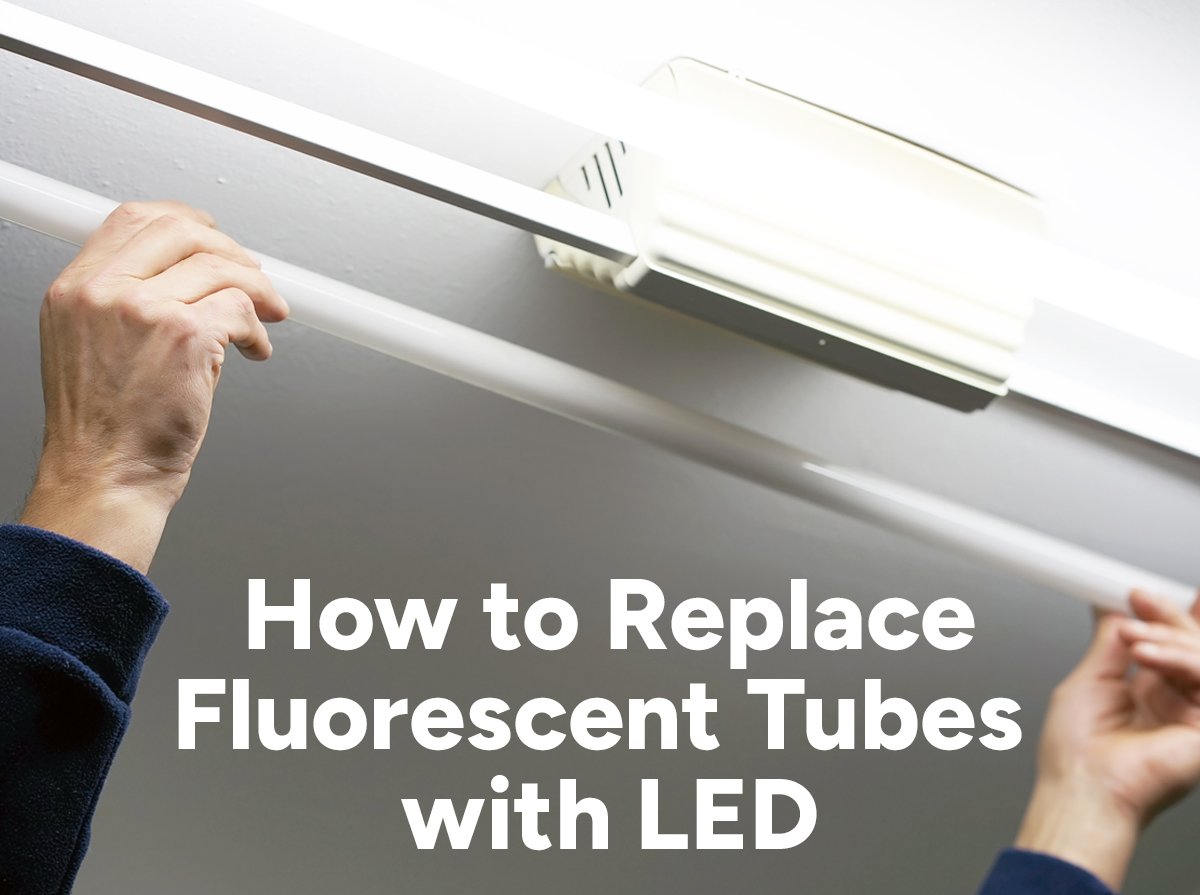
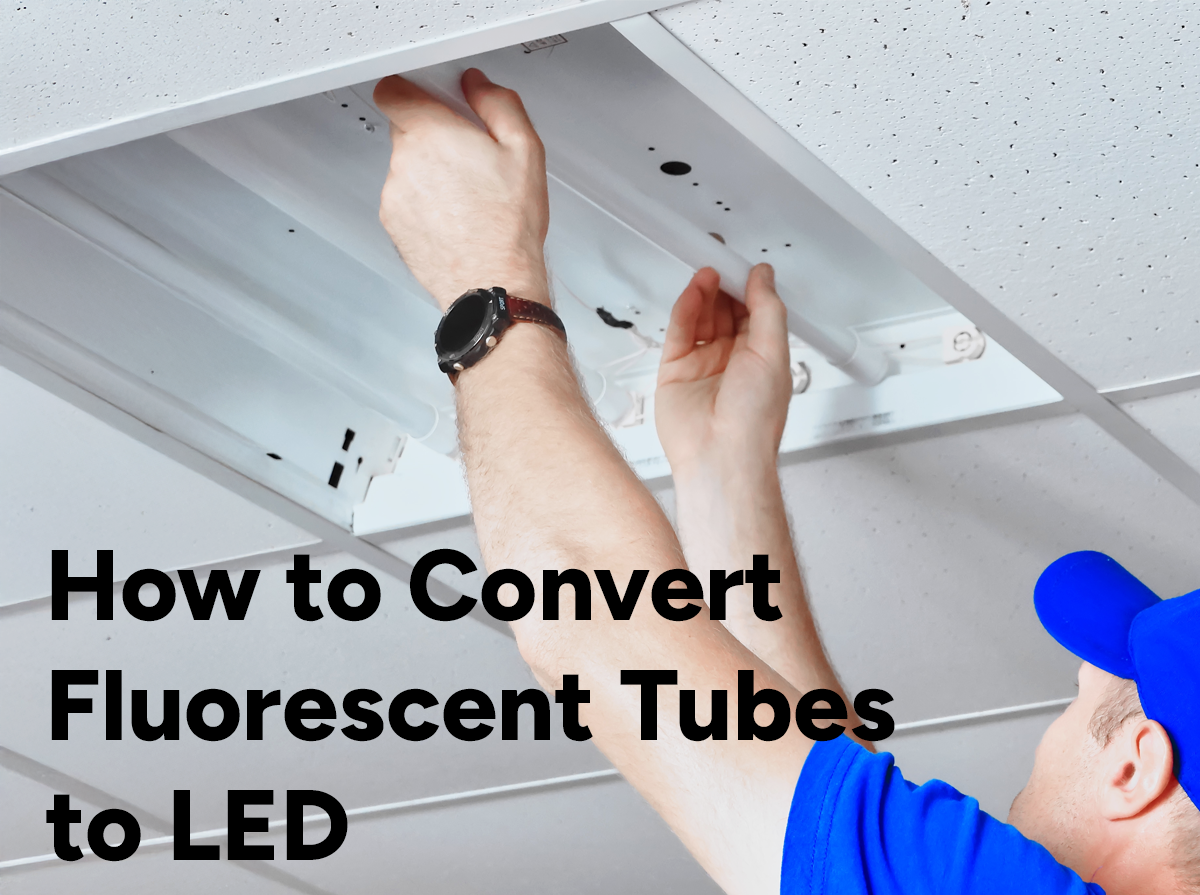
Remove the fluorescent tube
Install the LED replacement tube
No rewiring is required as long as the ballast is compatible with the LED tube manufacturer’s approved compatibility list.
This is one of the easiest LED retrofit paths because it minimizes labor and disruption.
However, the ballast remains part of the system. If the ballast eventually fails, the LED tube will stop operating even if the LED itself still functions correctly.
Type A systems are commonly used when:
Labor reduction is the top priority
The existing ballast system is still in good condition
The retrofit is relatively small-scale
Facilities want a simpler installation process
It is important to verify ballast compatibility carefully before purchasing Type A LED tubes. LED tubes are not universally compatible with every fluorescent ballast.
Type B: Ballast Bypass LED Tubes
Type B LED tubes bypass the ballast entirely.
During installation, the ballast is disconnected or removed from the electrical circuit, and line voltage wiring is connected directly to the lamp holders according to the LED tube manufacturer’s wiring diagram.
This retrofit path requires rewiring and should be performed by a qualified electrician familiar with local electrical codes and commercial lighting systems.
Type B systems are popular because they eliminate ballast-related maintenance entirely.
Benefits include:
Higher overall efficiency
No ballast failure risk
Lower maintenance long-term
Simplified future tube replacement
Type B tubes are available in both:
Single-ended wiring configurations
Double-ended wiring configurations
Socket type also matters. Some Type B systems require non-shunted sockets depending on the wiring design.
Because ballast bypass retrofits permanently change the fixture wiring, fluorescent tubes can no longer operate in the fixture afterward.
Type A/B Hybrid: Flexible Retrofit Tubes
Type A/B hybrid LED tubes offer a middle path between the two approaches above.
These tubes are designed to operate with a compatible fluorescent ballast initially, functioning just like a Type A tube during that phase. When the ballast eventually fails, the same tube can be rewired for direct line voltage operation, converting it to a Type B bypass setup.
This staged approach is useful because:
It reduces upfront labor costs by avoiding rewiring at initial installation
The existing LED tube does not need to be replaced when the ballast fails
It extends the useful life of the tube across both phases of the fixture's life
It gives facilities a clear upgrade path without a second round of tube purchases
Type A/B hybrids are a practical choice for facilities that want to minimize immediate disruption but plan to phase out ballasts over time as they reach end of life. As with Type A tubes, verifying ballast compatibility before installation is still required.
Type C: External Driver LED Tubes
Type C systems use an external LED driver instead of a fluorescent ballast.
The driver supplies regulated power to the LED tubes similarly to how an LED fixture driver operates in integrated commercial fixtures.
Unlike Type A and Type B options, Type C LED tubes are designed to work with a specific compatible driver. The driver and tubes must be selected together according to the manufacturer's specifications, as Type C tubes are not universally compatible with all LED drivers.
Type C systems are less common in standard retrofit projects, but they are sometimes used in applications requiring:
Advanced dimming
Specialized controls
Driver replacement flexibility
Certain commercial lighting systems
Compared to Type A and Type B retrofits, Type C systems usually involve more components, require driver selection during the planning process, and may involve more installation coordination.
|
LED Type |
Installation Complexity |
Ballast Required |
Best Fit |
|
Type A |
Easiest |
Yes (existing ballast) |
Small retrofits, minimal labor, quick upgrades |
|
Type A/B (Hybrid) |
Moderate |
Works with or without a ballast |
Facilities that want installation flexibility and a future path away from ballast dependence |
|
Type B |
Moderate |
No |
Long-term efficiency, ballast elimination, and reduced maintenance |
|
Type C |
Moderate to Advanced |
External driver |
Specialized commercial systems requiring maximum control and performance |
Important Safety Note
Ballast bypass LED retrofits involve line-voltage electrical work.
If you are not comfortable working with commercial electrical systems, hire a licensed electrician. Improper wiring can create shock hazards, fire risks, code violations, or permanent fixture damage.
Always follow the LED tube manufacturer’s wiring instructions and verify compatibility requirements before installation.
Ballast Bypass Explained
Ballast bypass is a retrofit method that removes the fluorescent ballast from the fixture's electrical circuit and allows compatible LED tubes to operate directly from line voltage.
In a fluorescent system, the ballast regulates power to the lamp. Ballast bypass LED tubes contain their own internal driver, making the ballast unnecessary.
This approach is popular because it eliminates one of the most common failure points in fluorescent lighting systems. Benefits can include:
Reduced energy consumption
Elimination of ballast power losses
Fewer maintenance issues
Simplified long-term servicing
In facilities with hundreds of fixtures, ballast failures can create significant maintenance costs over time. By removing the ballast from the system, facility managers can reduce ongoing service requirements while improving overall system reliability.
Because ballast bypass modifies the fixture's wiring, the retrofit should be performed by a qualified electrician and according to the manufacturer's installation instructions.
Energy Savings: T12 vs T8 vs T5 vs LED
Energy savings are one of the biggest reasons facilities move away from older fluorescent lighting systems.
The difference becomes especially noticeable in buildings operating large numbers of fixtures for long hours every day, such as:
Warehouses
Offices
Schools
Retail stores
Manufacturing facilities
Compared to T12 systems:
T8 fluorescent retrofits typically reduce energy usage while maintaining similar light output
T5 systems can provide additional efficiency improvements in applications designed for T5 technology
LED retrofits typically deliver the greatest energy savings
The savings come from several combined factors:
Lower lamp wattage
Improved efficiency
Reduced ballast losses
Longer operating lifespan
Lower maintenance requirements
A typical T8 lamp can produce comparable light output to a T12 lamp while using less electricity. T5 lamps offer even greater fluorescent efficiency, though they generally require fixtures and ballasts designed specifically for T5 operation.
LED systems take efficiency a step further by converting more energy into usable light while reducing maintenance requirements. Ballast bypass LED retrofits are especially efficient because the ballast no longer consumes power.
Maintenance savings often become just as important as the electrical savings themselves.
In fluorescent systems, maintenance teams must eventually replace:
Lamps
Ballasts
Failed starters in some older systems
LED retrofits dramatically reduce the frequency of those service calls.
For facilities with high ceilings or difficult fixture access, reducing relamping frequency can significantly lower labor costs and operational disruption over time.
The larger the facility and the longer the operating hours, the greater the long-term financial impact of the retrofit. As LED prices have continued to decline, many organizations find that the long-term energy and maintenance savings justify upgrading directly from T12, T8, or T5 fluorescent systems to LED technology.
How to Identify Your Current Fluorescent System
Before purchasing replacement tubes or retrofit products, it is important to identify the existing fluorescent system correctly.
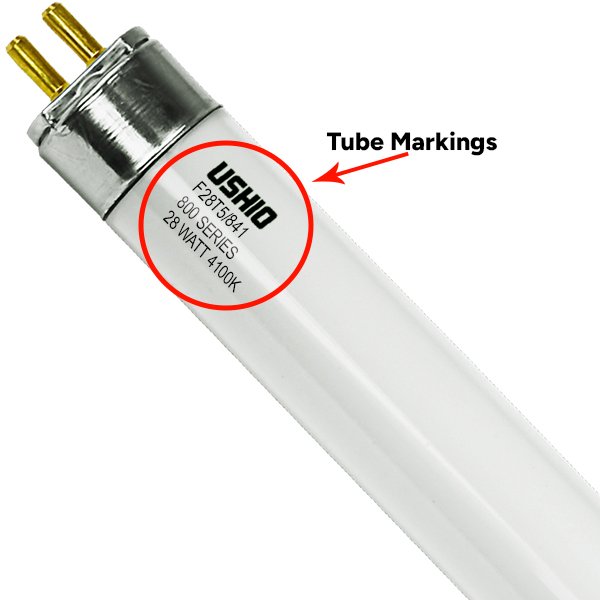
Check the Tube Markings
Most fluorescent tubes include identifying information printed directly on the glass.
Common markings include:
Tube type
Wattage
Length
Color temperature
For example:
F28T5 = 28-watt T5 fluorescent tube
F32T8 = 32-watt T8 fluorescent tube
F40T12 = 40-watt T12 fluorescent tube
The T5, T8, or T12 designation is usually clearly visible somewhere along the lamp.
Measure the Tube Diameter
If the markings are worn off or unreadable, measuring the tube diameter is usually the simplest identification method.
T5 tubes measure 5/8 inch in diameter
T8 tubes measure 1 inch in diameter
T12 tubes measure 1.5 inches in diameter
The size differences are generally easy to identify visually once the tubes are compared side by side.
Check the Ballast Label
The ballast label inside the fixture also provides important compatibility information.
The ballast typically specifies:
Supported tube types
Voltage
Lamp quantity
Wiring configuration
T5, T8, and T12 systems use different ballast designs, so the ballast label can often confirm the lamp type even if the tube markings are difficult to read. Fixtures using magnetic T12 ballasts are typically older systems installed before T8 became standard.
Use Fixture Age as a Clue
Fixture age can also help narrow down the system type.
In general:
Fixtures installed before 2000 are commonly T12
Fixtures installed during the 2000s are often T8
T5 systems became popular in certain commercial, industrial, and high-output applications during the 2000s and 2010s
Modern installations are usually LED, though some T5 and T8 systems remain in service
If there is still uncertainty after checking the tubes and ballast, a lighting professional or electrician can help identify the system before replacement products are purchased.
Common Conversion Mistakes to Avoid
Whether you're replacing fluorescent tubes or planning an LED retrofit, avoiding a few common mistakes can save time, reduce costs, and prevent compatibility problems down the road.
Assuming Physical Fit Means Compatibility
One of the biggest mistakes is assuming that fluorescent tubes are interchangeable because they appear similar or are used in similar applications.
They are not.
T5, T8, and T12 systems use different lamp sizes, ballasts, and fixture designs. The ballast and fixture must be compatible with the lamp type unless the retrofit system is specifically designed otherwise.
Ignoring Ballast Compatibility With LED Tubes
Not all ballast-compatible LED tubes work with every fluorescent ballast.
Before purchasing Type A LED tubes, always verify that the ballast appears on the manufacturer's compatibility list.
Choosing the Wrong Retrofit Path
Small facilities may prioritize easy installation, while large commercial retrofits usually benefit more from long-term maintenance reduction.
For example, installing hundreds of Type A LED tubes still leaves hundreds of aging ballasts operating throughout the facility. This consideration applies whether the existing system uses T5, T8, or T12 fluorescent technology.
In many large-scale projects, Type B ballast bypass systems provide better long-term value despite the higher upfront labor.
Unsafe Rewiring Practices
Ballast bypass rewiring involves line-voltage electrical work.
Improper installation can create:
Shock hazards
Fire risks
Fixture damage
Code violations
If there is any uncertainty about the wiring process, hire a licensed electrician.
Forgetting Fluorescent Disposal Requirements
Fluorescent lamps, including T5, T8, and T12 tubes, contain mercury and must be handled according to local disposal regulations.
Many facilities use certified recycling services for fluorescent tube disposal during large retrofit projects.
Should You Convert to T8 or Go Straight to Led?
For most facilities today, the answer is straightforward: go directly to LED. LED technology has become the standard choice for lighting upgrades thanks to lower operating costs, longer lifespans, and declining product prices.
In addition, several states have enacted restrictions or bans on the sale of certain fluorescent lamps as part of broader energy-efficiency initiatives. As these regulations expand, many facility managers are choosing LED solutions to avoid investing in technology with a shrinking future.
Choose T8 if:
You already maintain a large fluorescent lighting system and need a short-term replacement strategy
The existing fixtures are still in good condition
You plan to continue using fluorescent systems for the near future
You want a simpler upgrade path from T12
Choose LED if:
Long-term energy savings are the priority
You want to reduce maintenance calls
The facility operates long daily hours
You want to eliminate ballast failures
You are planning a long-term lighting upgrade strategy
You want a solution that aligns with current energy regulations and market trends
Consider full fixture replacement if:
The fixture housings are deteriorating
Lenses are yellowed or damaged
The fixtures are over 20 years old
You want modern lighting appearance and controls integration
For most facilities, LED provides the strongest overall long-term value because it combines energy efficiency, maintenance reduction, longer operating life, and a future-ready lighting platform in a single upgrade.
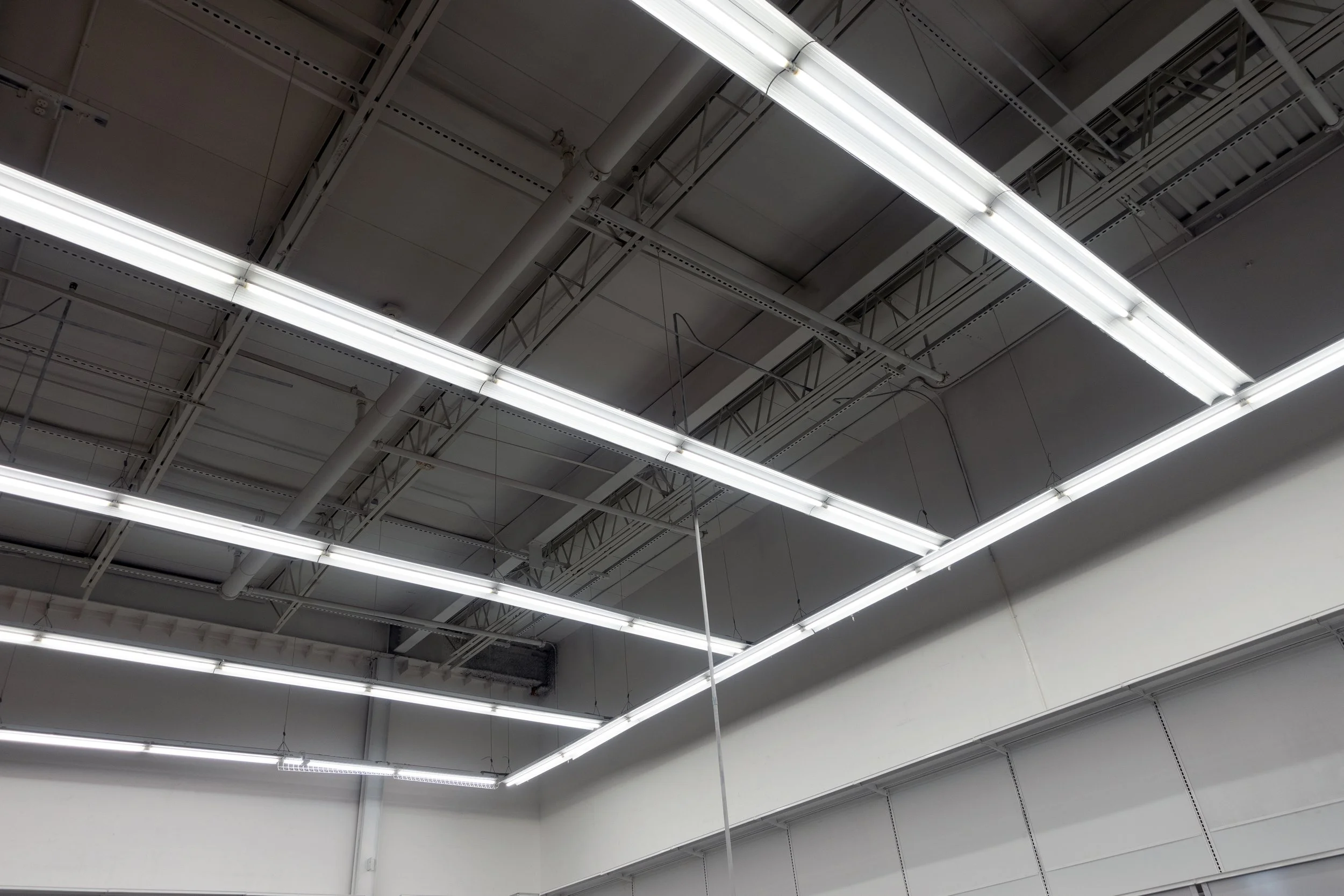
Best Applications for Each Tube Type
Not sure which tube type is right for your space? Here is a quick breakdown by application.
Warehouses and Industrial Facilities
Recommended: LED T8 Type B (direct-wire/ballast-bypass) for facilities doing large-scale retrofits. Specify 5000K for maximum visibility on the warehouse floor and 2,200 lm per tube minimum.
For ceilings above 20 feet, use 4-lamp fixtures to maintain adequate footcandle levels at the work surface. T5 HO is also a strong choice for very high-ceiling applications where maximum lumen density per tube is the priority.
Offices
Recommended: LED T8 Type A (plug-and-play) for offices with electronic ballasts in good condition. This minimizes rewiring cost and disruption in occupied spaces. Specify 4000K neutral white for a clean, professional appearance and 80+ CRI minimum.
For design or color-sensitive environments, upgrade to 90+ CRI. Always specify flicker-free tubes for office use, as fluorescent-range flicker is associated with eye fatigue.
Schools
Recommended: Type A LED plug-and-play for budget-constrained retrofits where ballast replacement is not in scope.
Flicker-free is important in educational settings. Specify enclosed-fixture-rated tubes where fixtures include covers or lenses, and confirm compatibility with any existing dimming controls in smart-classroom setups.
Retail Stores
Recommended: 90+ CRI LED T8 tubes at 3500K to 4000K for retail environments where merchandise color rendering matters.
Mismatched CCT tubes in adjacent fixtures create visible color variation that looks unprofessional and can misrepresent product colors. When doing a phased retrofit, maintain consistent CCT and CRI across all tubes in any single visible space. T5 HO in dedicated display case fixtures works well for high-intensity product highlighting.

The Smarter Path for Aging Fluorescent Systems
As lighting technology has evolved from T12 to T8, T5, and now LED, facility managers have gained access to more efficient and cost-effective lighting solutions. While many T8 and T5 systems remain in service, older fluorescent installations can become more expensive to maintain as lamps, ballasts, and replacement components become less readily available.
The right upgrade path depends on your facility's goals, budget, and existing lighting system.
Ballast-compatible LED upgrades minimize installation labor. Full T8 retrofits can modernize older T12 systems. Ballast bypass LED conversions often provide the strongest long-term efficiency, reliability, and maintenance savings for facilities planning to keep their fixtures in service for years to come.
As fluorescent products continue to be phased out in some markets and LED pricing becomes increasingly competitive, many organizations are choosing to upgrade directly to LED rather than invest further in aging fluorescent technology.
For large retrofit projects, ballast compatibility questions, or uncertainty about which conversion path makes the most sense, 1000Bulbs lighting specialists can help evaluate the available options.
Call 1-800-624-4488 Monday through Friday, 7 a.m. to 5 p.m. CST, or browse T5 and T8 fluorescent tubes, LED tube replacements, ballasts, and retrofit accessories at 1000Bulbs.com.
FAQs
Are T8 and T12 bulbs interchangeable?
No. T8 and T12 tubes may physically fit into the same sockets, but they require different ballasts to operate correctly.
Can I replace T12 fluorescent tubes with LED?
Yes. LED retrofit tubes are available for replacing T12 fluorescent systems using ballast-compatible or ballast bypass configurations, depending on the fixture and retrofit goals.
Do I need to replace the ballast when converting to LED?
It depends on the LED tube type. Type A LED tubes use compatible existing ballasts, while Type B ballast bypass tubes eliminate the ballast entirely.
What is ballast bypass?
Ballast bypass means removing or disconnecting the fluorescent ballast so the LED tube operates directly from line voltage.
Is T8 more efficient than T12?
Yes. T8 fluorescent systems use less energy and generally provide better efficiency and longer lifespan than T12 systems.
How do I know if I have T8 or T12 tubes?
Check the tube markings or measure the tube diameter. T8 tubes are 1 inch in diameter, while T12 tubes are 1.5 inches.
Are T12 bulbs being phased out?
Yes. Many T12 products have already been phased out or reduced significantly as manufacturers transition toward newer fluorescent and LED technologies.
Is it better to upgrade directly to LED?
For many facilities, yes. LED retrofits generally provide the best long-term combination of efficiency, maintenance reduction, and operating cost savings.