
The Complete Guide to LED Wall Pack Fixtures
| What This Article Covers |
|---|
LED wall pack fixtures are the most common commercial exterior lighting solution, but choosing the right one involves more than picking a wattage. The wrong fixture type, mounting height, beam distribution, or controls setup can create glare problems, compliance issues, and costly corrections after installation. This guide explains the four main wall pack types (traditional, full cutoff, adjustable, and decorative), how to choose the right lumen output for your application and mounting height, how photocells and motion sensors reduce energy costs, and what to know about dark sky compliance, IP ratings, and corrosion resistance for commercial properties. It also covers the most common specification mistakes and how LED wall packs compare to older metal halide and high-pressure sodium systems. Best for: facility managers, lighting contractors, electricians, commercial property owners, warehouse and industrial operators, retail and hospitality property managers, and anyone planning a commercial exterior lighting upgrade or retrofit. |
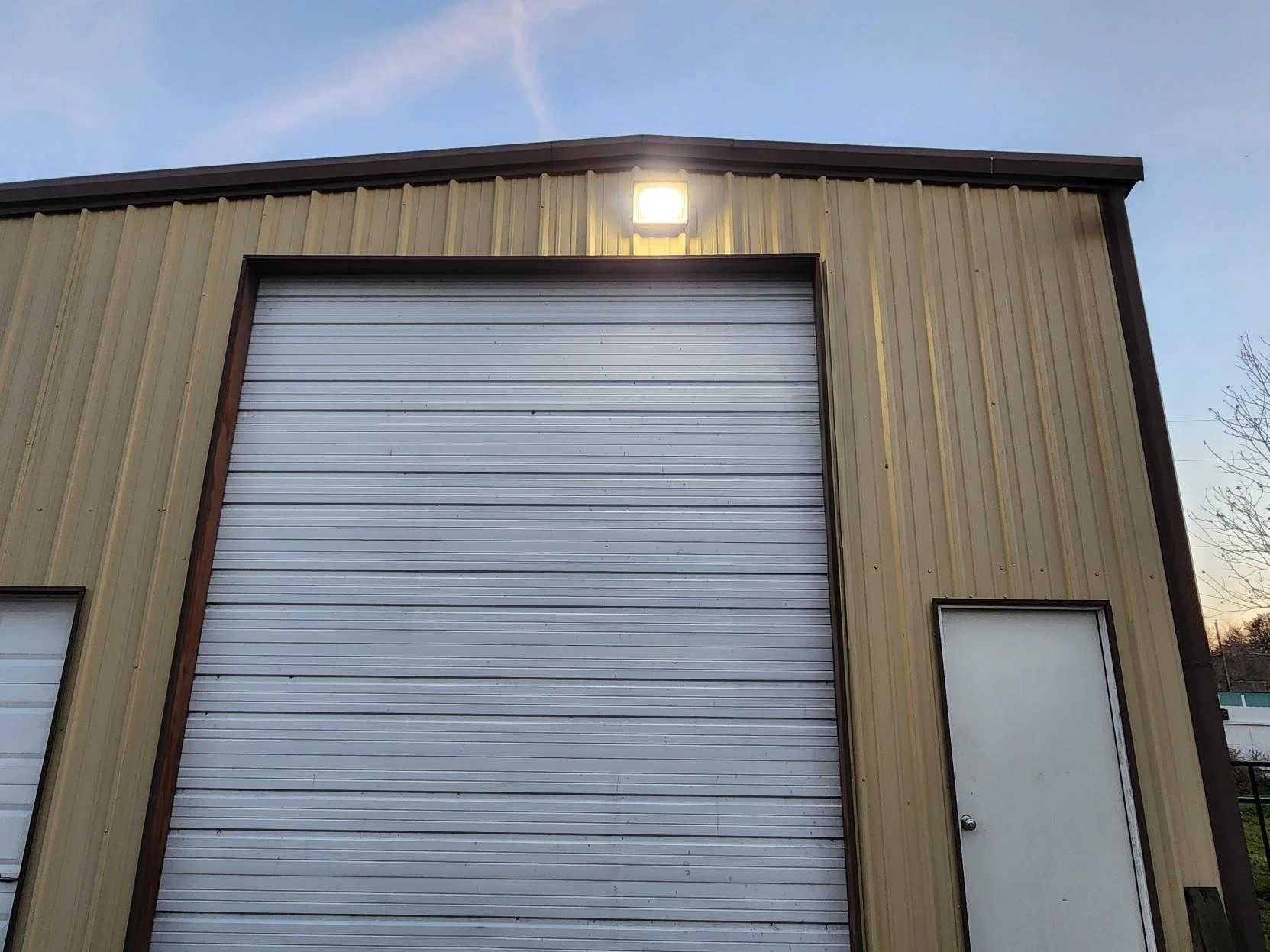
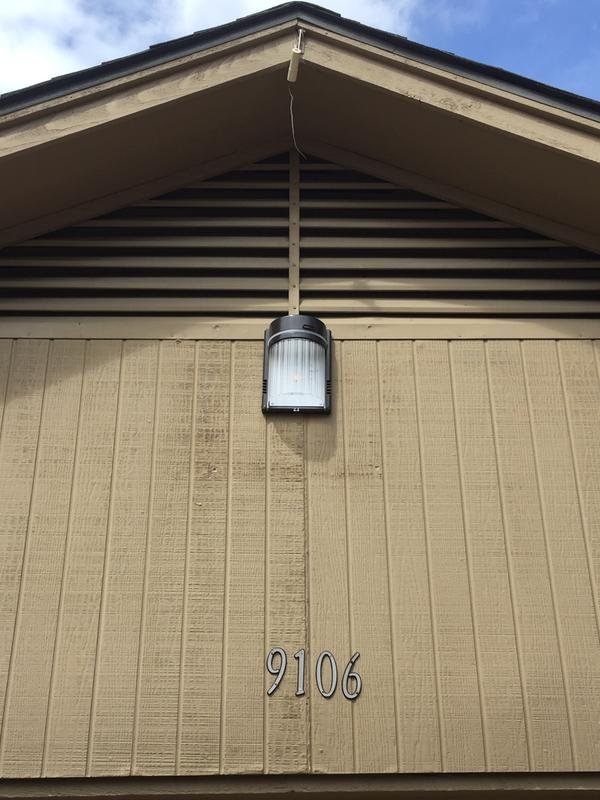
LED wall pack used as security lighting on a residential workshop.
Updated 8/3/26 by 1000Bulbs Staff
LED wall pack fixtures are one of the most common commercial exterior lighting solutions because they solve several problems at once. Facility managers and contractors need reliable perimeter lighting, strong visibility around entrances and loading areas, straightforward installation, and manageable long-term operating costs.
At the same time, fixture selection has become more complicated as buyers now have to consider dark sky compliance, glare control, mounting height, beam distribution, automation features, and energy efficiency targets.
Choosing the right wall pack involves more than selecting a wattage from a product list. Fixture type, lumen output, mounting location, spacing, control options, and environmental ratings all affect how the lighting performs once installed. A fixture that works perfectly for a warehouse perimeter may be completely wrong for a hospitality property or office entrance.
This guide explains the major LED wall pack fixture types, how to choose the right wattage and mounting approach, how controls and photocells affect operation, and what commercial buyers should know before specifying exterior building lighting.
Direct Answer: What Is an LED Wall Pack Fixture?
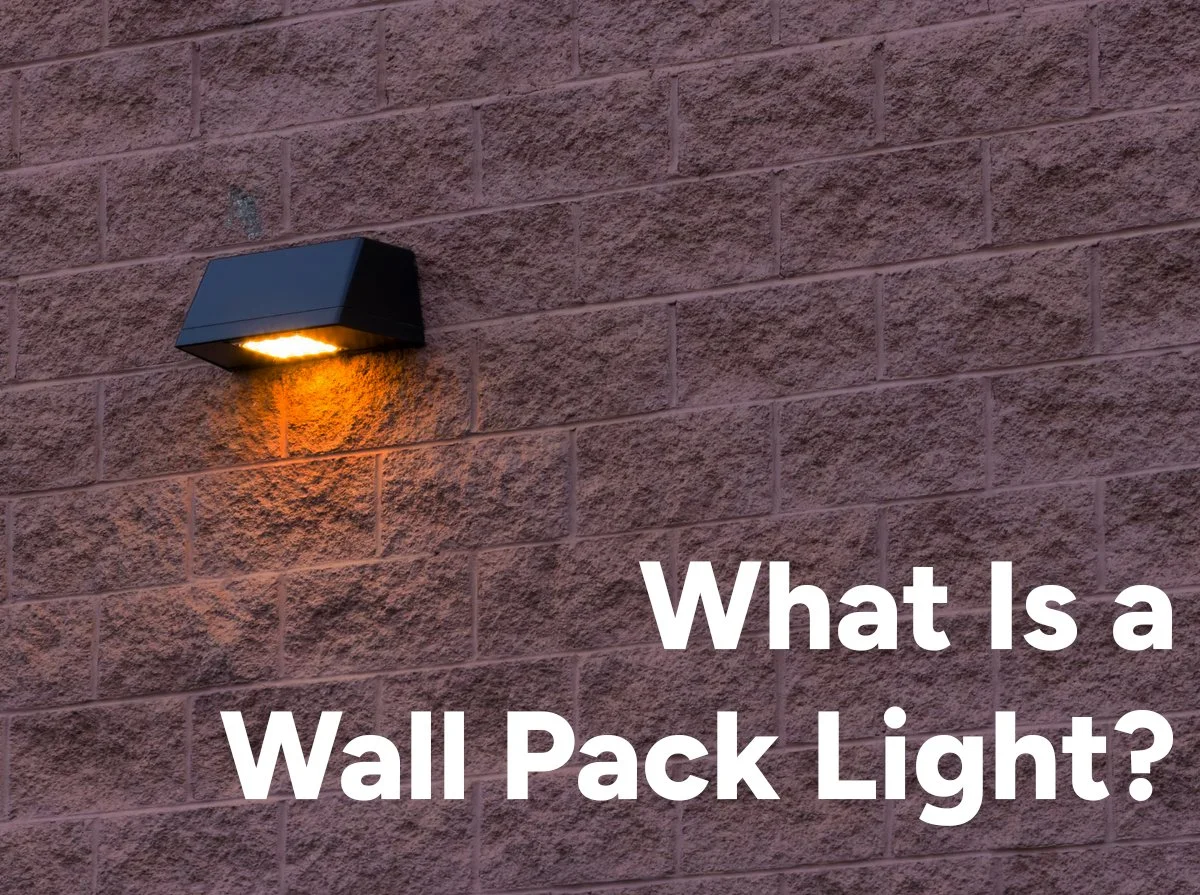
An LED wall pack fixture is a wall-mounted commercial exterior light designed for perimeter lighting, security illumination, entryways, loading areas, and exterior building visibility. Wall packs mount directly to exterior building surfaces and project light outward and downward to illuminate the surrounding area.
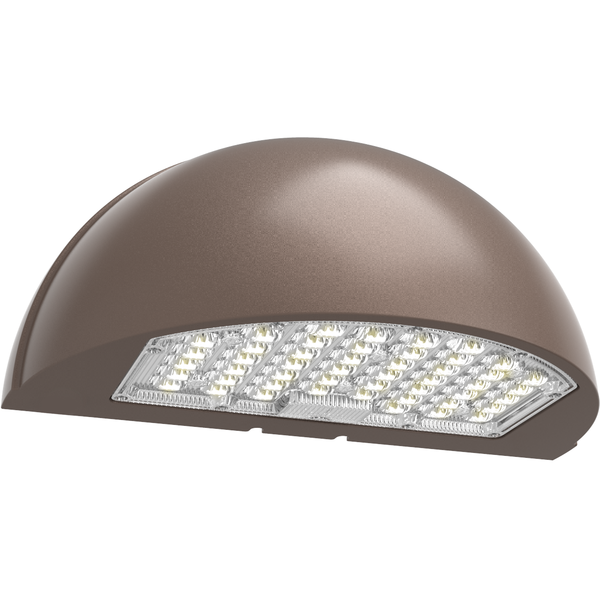
Modern LED wall packs replace older HID technologies such as metal halide and high-pressure sodium with more energy-efficient, longer-lasting LED systems.
Wall pack fixtures use a relatively simple design:
Weatherproof housing
Integrated LED light engine
Internal driver
Wall-mounted junction box connection
Optical system directing light outward from the building
That simplicity is part of why wall packs remain so common in commercial exterior lighting. They are relatively straightforward to specify, easy to install on most building types, and adaptable across a wide range of applications.
LED wall packs are widely used for:
Warehouse exteriors
Office buildings
Retail properties
Schools
Hospitality facilities
Industrial buildings
Multifamily housing
Municipal properties
Modern LED technology has significantly improved wall pack performance compared to older HID systems.
Compared to metal halide and high-pressure sodium fixtures, LED wall packs provide:
Lower energy consumption
Longer lifespan
Instant-on operation
Better color consistency
Reduced maintenance
Improved control compatibility
A typical LED wall pack can provide equivalent or better usable light output than older HID fixtures while consuming substantially less power and requiring far fewer service calls over its operational lifespan.
Types of LED Wall Pack Fixtures
Not all LED wall pack fixtures distribute light the same way. Fixture type affects:
Beam spread
Glare control
Compliance friendliness
Visual appearance
Perimeter coverage
Mounting flexibility
For most commercial buyers, choosing the correct wall pack style is the first major specification decision because it influences nearly every other part of the lighting plan.
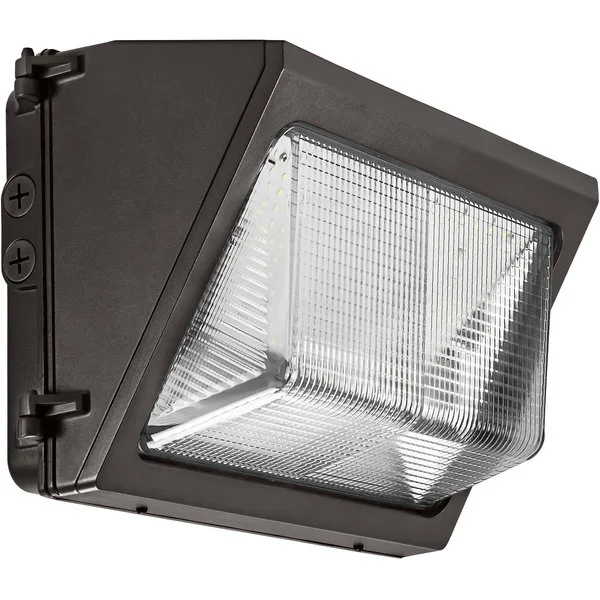
Traditional LED Wall Pack
Traditional Wall Packs
Traditional wall packs, sometimes called semi-cutoff wall packs, use a broad light distribution pattern that projects light outward from the building in a wide semicircular spread.
These fixtures direct light:
Downward toward the ground
Outward away from the building
Partially upward above the fixture plane
That broad distribution makes traditional wall packs effective for:
Warehouse perimeters
Industrial properties
Loading docks
Service yards
Utility corridors
Large commercial exteriors
Traditional wall packs generally provide:
Greater horizontal reach
Wider perimeter coverage
Stronger distance illumination
The tradeoff is reduced light control. Because some upward spill occurs above the horizontal plane, traditional wall packs may:
Increase glare
Contribute to light pollution
Create light trespass onto adjacent properties
In municipalities with dark sky regulations, traditional wall packs may not meet compliance requirements.
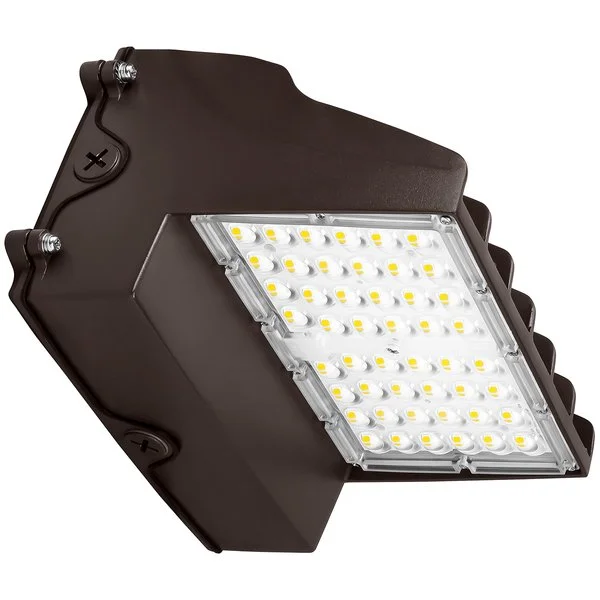
Full Cutoff Wall Pack
Full Cutoff Wall Packs
Full cutoff wall packs direct all light downward, below the fixture's horizontal plane.
No light projects upward into the sky, which helps reduce:
Light pollution
Glare
Sky glow
Neighboring property spill
Compared to traditional wall packs, full-cutoff fixtures create:
More controlled distribution
Cleaner beam shaping
Better glare management
Stronger compliance compatibility
These fixtures are commonly used in:
Office complexes
Retail properties
Multifamily housing
Schools
Hospitality environments
Mixed-use developments
Full cutoff fixtures are often required in areas with:
Dark sky ordinances
Exterior lighting restrictions
Local light trespass regulations
The tradeoff is that full cutoff wall packs generally provide:
Less horizontal reach
Narrower distribution
Reduced wide-area spill
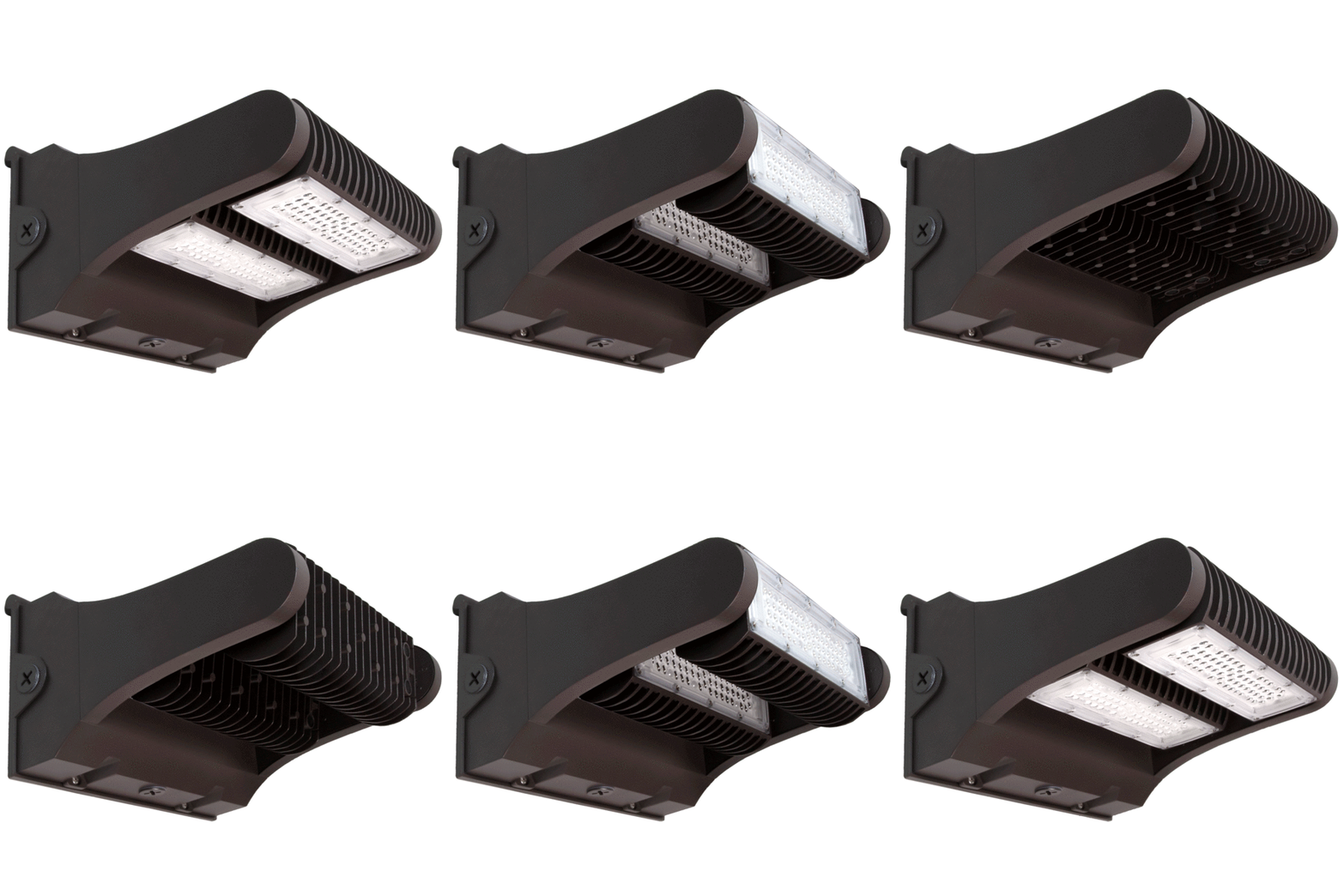
Wall Pack with Rotatable Panels
Adjustable Wall Packs
Adjustable LED wall packs are designed to give installers more flexibility than traditional fixed-output fixtures. Depending on the model, that flexibility may come from rotatable LED panels, selectable wattage, or adjustable beam patterns. This allows a single fixture to adapt to different property layouts or lighting requirements without replacing the entire fixture.
These fixtures are especially useful when lighting needs may change over time. After installation, a property owner can redirect light toward an entryway, loading dock, walkway, or parking area, while selectable-output models allow installers to fine-tune brightness during commissioning. Some fixtures also include selectable color temperatures, giving buyers additional flexibility without stocking multiple products.
Adjustable wall packs are commonly chosen for retrofit projects, mixed-use properties, irregular building layouts, and locations where future renovations may alter traffic patterns. Although these fixtures often cost slightly more than fixed-output models, the added versatility can simplify inventory management and reduce the need for fixture replacements later.
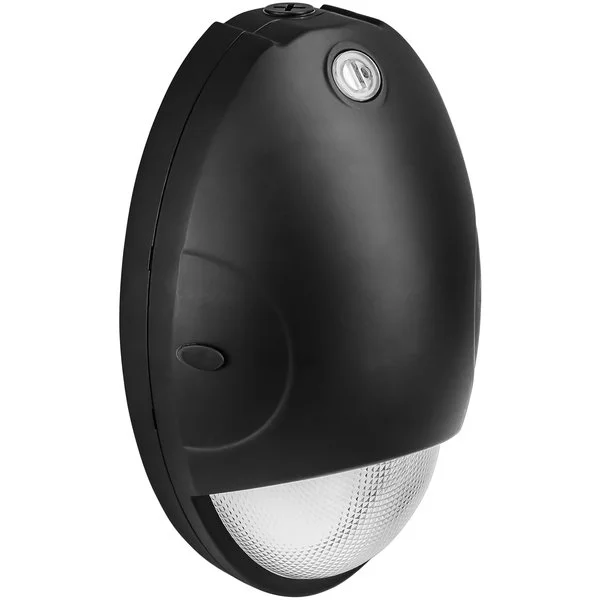
Decorative LED Wall Pack
Decorative LED Wall Packs
Decorative LED wall packs combine architectural styling with dependable exterior illumination, making them a popular choice when appearance is just as important as performance. Instead of emphasizing a purely utilitarian design, these fixtures complement a building's architecture while still providing reliable security and pathway lighting. They are commonly installed on hotels, restaurants, upscale retail centers, multifamily communities, and modern office buildings where the fixture itself becomes part of the property's visual design.
Many decorative wall packs feature sculpted housings, premium finishes, concealed optics, and modern design elements that blend into the building façade. While they often provide lighting performance comparable to standard wall packs, their primary advantage is creating an inviting exterior appearance without sacrificing energy efficiency or durability.
LED Wall Pack Fixture Comparison
| Fixture Type | Beam Distribution | Appearance | Best Applications | Compliance Friendliness |
|---|---|---|---|---|
| Traditional wall packs | Broad semi-cutoff distribution | Utilitarian | Warehouses, industrial sites, large perimeter coverage | Limited in dark sky areas |
| Full cutoff wall packs | Downward-only distribution | Utilitarian to modern | Compliance-sensitive properties, glare control | Strong dark sky compatibility |
| Adjustable wall packs | Directional adjustable beam | Functional | Targeted applications, flexible layouts | Varies by model |
| Decorative wall packs | Varies by optic design | Architectural | Hospitality, upscale retail, multifamily | Varies by model |
Where Are LED Wall Packs Used?
LED wall packs are installed anywhere a commercial property needs dependable exterior lighting mounted directly to a building instead of a pole. Their versatility makes them one of the most widely used outdoor lighting solutions for businesses because they provide reliable perimeter illumination while requiring relatively little maintenance.
Warehouses and industrial facilities often install wall packs around loading docks, service yards, truck routes, and building perimeters to improve visibility for overnight operations and security. Office buildings commonly use them around employee entrances, side walkways, and service corridors to provide safe access after business hours. Retail stores rely on wall packs to illuminate receiving areas, back entrances, and customer access points, while schools, healthcare facilities, apartment communities, and hospitality properties use them to improve visibility around sidewalks, parking transitions, and shared outdoor spaces.
Across all of these applications, wall packs offer several practical advantages. They mount directly to exterior walls, withstand year-round outdoor conditions, provide broad coverage with relatively simple installation, and can be scaled across properties of virtually any size.
How Bright Should LED Wall Pack Fixtures Be?
Brightness requirements for wall pack fixtures depend on:
Mounting height
Application type
Desired coverage area
Security expectations
Local lighting regulations
Fixture spacing
Choosing wall packs based only on wattage is one of the most common specification mistakes. Modern LED efficiency varies significantly between fixture designs, which means two fixtures using the same wattage can produce very different usable light output.
For exterior commercial lighting, lumen output and optical distribution matter far more than wattage alone.
Understanding Lumen Output
Wall pack fixtures are typically selected based on lumen output, mounting height, and beam distribution rather than raw wattage alone, since overall coverage and visibility matter more than power consumption by itself.
As a general commercial reference:
Smaller wall packs may produce 2,000 to 5,000 lumens
Mid-range commercial fixtures commonly operate between 6,000 and 12,000 lumens
Large perimeter and industrial fixtures may exceed 15,000 lumens
The correct output depends heavily on how the space is being used.
A hospitality walkway may require softer, glare-controlled lighting for visual comfort, while a loading dock may prioritize stronger illumination for safety and operational visibility.
Typical Applications By Output Range
| Application | Common Lumen Range |
|---|---|
| Small walkways and side entrances | 2,000 to 5,000 lumens |
| Office and retail exteriors | 5,000 to 10,000 lumens |
| Loading docks and service areas | 8,000 to 15,000 lumens |
| Large industrial perimeters | 12,000+ lumens |
| Hospitality and multifamily pathways | Moderate output with strong glare control |
Higher output is not always better.
Over-lighting exterior spaces can create:
Excessive glare
Visual discomfort
Harsh shadow transitions
Light trespass issues
Reduced nighttime visibility adaptation
A properly designed lighting layout balances visibility and uniformity rather than simply maximizing brightness.
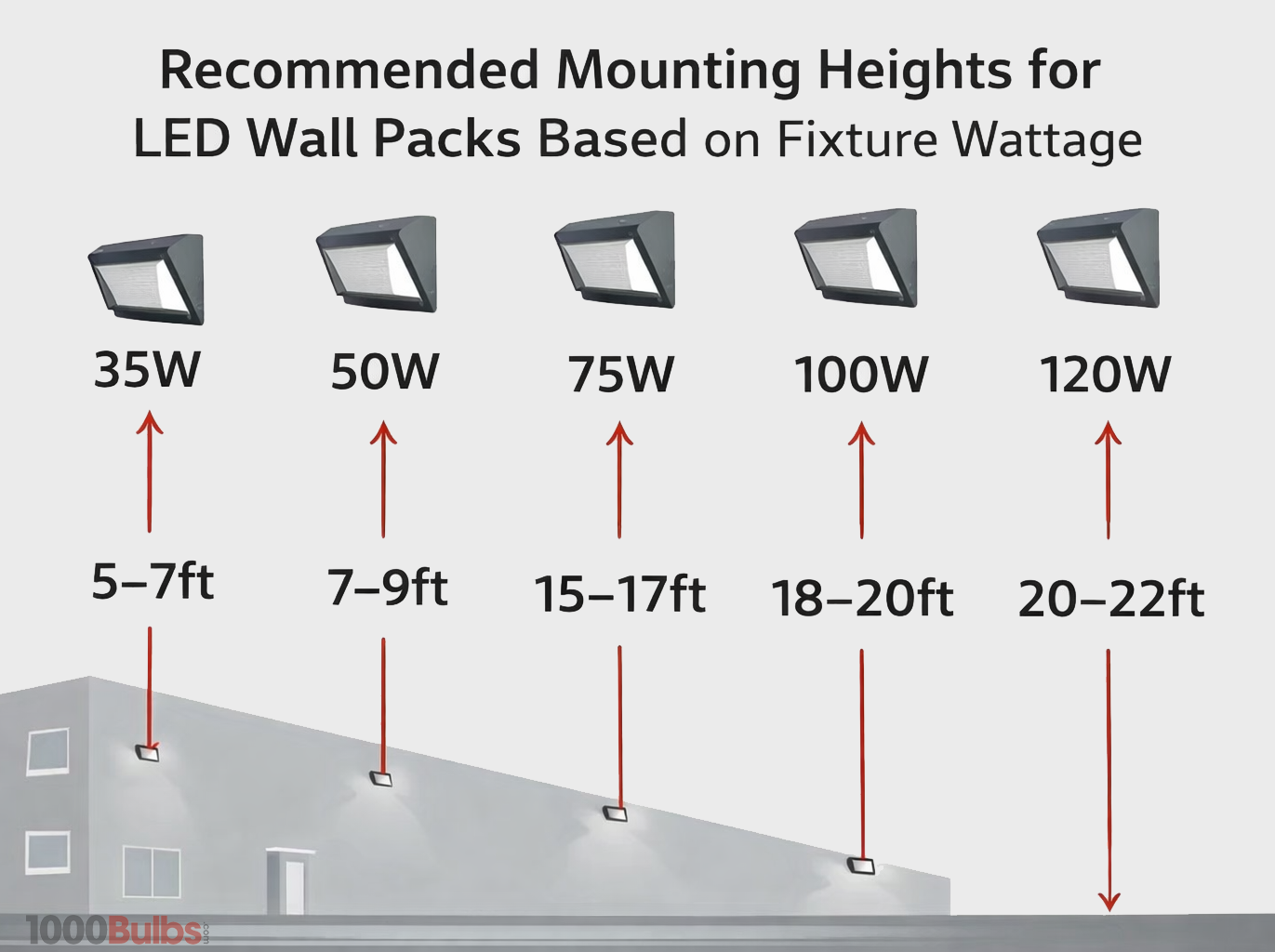
Mounting Height and Spacing Considerations
Mounting height dramatically affects how wall pack fixtures perform. A fixture installed at 8 feet distributes light very differently from the same fixture mounted at 20 feet because the beam spread changes as the distance to the ground increases.
Lower Mounting Heights
Lower mounting heights are commonly used for:
Pedestrian walkways
Building entrances
Hospitality pathways
Residential-style applications
Lower mounting positions generally create:
Softer light distribution
Reduced glare
Better pedestrian visibility
More comfortable visual environments
However, lower mounting heights also reduce total coverage area, which means:
More fixtures may be required
Fixture spacing becomes tighter
Higher Mounting Heights
Higher mounting positions are common for:
Warehouses
Industrial properties
Loading docks
Large perimeter walls
Service yards
Mounting fixtures higher increases:
Coverage area
Horizontal light spread
Overall perimeter reach
However, if the optics are not carefully controlled, higher mounting heights can also increase glare, create harsher beam contrast, and contribute to unwanted light spill beyond the intended coverage area.
Fixture Spacing
Proper wall pack spacing depends on:
Mounting height
Beam angle
Fixture output
Site layout
Uniformity targets
Fixtures spaced too far apart often create:
Dark gaps
Uneven perimeter visibility
Security blind spots
Fixtures spaced too closely may create:
Excessive brightness overlap
Wasted energy
Uncomfortable glare
For many commercial properties, photometric lighting plans are used to model:
Light levels
Fixture spacing
Uniformity ratios
Beam overlap
Property-line spill
Photometric planning becomes especially important for:
Large warehouse sites
Municipal projects
Multifamily developments
Compliance-sensitive installations
Photocells, Motion Sensors, and Smart Controls
Modern LED wall packs often include integrated control systems that improve both:
Energy efficiency
Operational automation
Compared to older HID systems, LED fixtures respond instantly to switching and dimming commands, which makes advanced controls far more practical.
Photocells
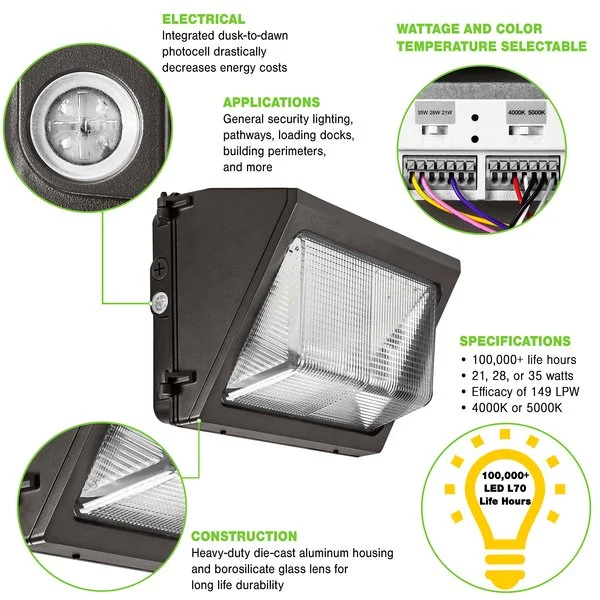
Photocells are one of the most common control options available for LED wall pack fixtures because they automatically turn lights on at dusk and off at dawn based on ambient light levels. This simple automation eliminates the need for manual switching or seasonal timer adjustments while helping ensure exterior lighting operates only when needed.
Many commercial wall packs include integrated photocells, twist-lock photocell receptacles, or compatibility with remote photocells. By preventing fixtures from operating during daylight hours, photocells help reduce unnecessary energy consumption while extending the useful life of the lighting system.
Motion Sensors
Motion sensors add another layer of energy savings by allowing LED wall packs to dim or remain off until activity is detected. Once movement occurs, the fixture automatically increases to full brightness, improving visibility only when it is needed.
This type of control works especially well in lower-traffic areas such as service alleys, dumpster enclosures, secondary entrances, storage yards, and employee access points. Because LEDs respond instantly, occupants receive immediate illumination without the startup delay associated with older HID technologies. Over time, reducing operating hours can lower energy costs while also extending the lifespan of the fixture.
Networked Lighting Controls
Larger commercial properties increasingly integrate LED wall packs into networked lighting control systems. These platforms allow facility managers to monitor fixture performance, adjust schedules, group fixtures into lighting zones, modify dimming levels, and receive maintenance alerts from a central interface.
Networked controls are especially valuable for campuses, municipalities, industrial facilities, and large retail properties where managing dozens or hundreds of fixtures manually would be inefficient. In addition to improving operational efficiency, these systems provide better visibility into energy use and make it easier to optimize lighting schedules across an entire property.
LED Wall Packs vs Metal Halide and High-Pressure Sodium
Many commercial properties still use older metal halide and high-pressure sodium wall packs, even though LED replacements now outperform them in nearly every category.
Energy Efficiency Improvements
Metal halide and high-pressure sodium (HID) wall packs were once the standard for commercial exterior lighting, but LED technology has dramatically improved energy efficiency. Modern LED wall packs often deliver equal or better illumination while using significantly less electricity, helping businesses lower operating costs without sacrificing visibility or safety.
For example, an LED fixture may replace a 175W, 250W, or even 400W HID wall pack while consuming 40% to 70% less energy. Facilities that operate dozens or hundreds of fixtures every night can see substantial reductions in utility expenses over the life of the lighting system.
In addition to using less power, LEDs direct light more efficiently through precision optics, allowing more of the generated light to reach the intended area instead of being wasted through uncontrolled spill or glare.
Maintenance Reduction
Maintenance costs are another major reason many facilities replace older HID wall packs with LEDs. Metal halide and high-pressure sodium fixtures require periodic lamp and ballast replacements, and their light output gradually decreases as the lamps age. In many commercial settings, replacing these components requires lifts, labor, and scheduled maintenance that increases operating costs over time.
LED wall packs eliminate many of these maintenance concerns by using integrated solid-state light engines that maintain more consistent light output throughout their lifespan. They also restart instantly after power interruptions, avoiding the warm-up and restrike delays common with HID fixtures. Many commercial-grade LED wall packs are rated to operate for 50,000 to 100,000 hours, reducing both planned maintenance and unexpected service calls.
Improved Color Rendering and Visibility
While high-pressure sodium fixtures provide adequate illumination, their distinctive orange-yellow light can make it difficult to distinguish colors or identify objects clearly. That reduced visibility can affect everything from security camera footage to pedestrian safety and vehicle navigation.
LED wall packs typically produce a more neutral white light with significantly better color rendering, allowing people and surveillance systems to see colors, shapes, and movement more accurately. Improved visibility helps support employee safety, property security, and overall nighttime awareness, making LED lighting a practical upgrade for warehouses, office buildings, retail centers, schools, and other commercial properties.
Dark Sky Compliance And Glare Control
As communities place greater emphasis on reducing light pollution, many municipalities have adopted outdoor lighting requirements that limit glare, sky glow, and unwanted light trespass. These regulations help preserve nighttime visibility while ensuring exterior lighting remains effective for safety and security.
For commercial property owners, understanding dark sky requirements has become an important part of selecting exterior lighting. Depending on the location, local ordinances may regulate fixture design, light distribution, mounting height, color temperature, or the amount of light allowed to cross a property line. Choosing fixtures that meet these requirements early in the planning process can help avoid costly redesigns or compliance issues after installation.
What Is Dark Sky Compliance?
Dark sky compliance refers to lighting practices designed to reduce:
Upward light spill
Excessive glare
Sky glow
Light trespass onto adjacent properties
The goal is not to reduce safety lighting. It is to direct light only where it is needed instead of wasting illumination into the sky or neighboring spaces.
Many municipalities now regulate:
Fixture cutoff classifications
Property-line spill levels
Maximum brightness
Mounting height
Operating schedules
Why Full Cutoff Fixtures Matter
Full cutoff wall packs are one of the most common solutions for meeting dark sky requirements because they direct light downward instead of allowing it to spill above the horizontal plane. This controlled distribution reduces glare, minimizes light trespass onto neighboring properties, and helps limit unnecessary sky glow while still providing effective illumination where people need it most.
These fixtures are especially popular around multifamily housing, schools, office complexes, hospitality properties, and mixed-use developments where visual comfort is just as important as nighttime security. Compared to older semi-cutoff designs, full cutoff fixtures create a cleaner lighting pattern that improves visibility without producing excessive brightness.
Color Temperature And Light Pollution
Color temperature can also affect perceived glare and environmental impact.
Many municipalities now prefer 3000K exterior lighting over cooler 5000K lighting because warmer light generally produces:
Less harsh visual glare
Reduced blue light content
A softer nighttime appearance
Some dark sky ordinances also restrict the maximum allowable color temperature for commercial exterior lighting systems.
Shielding And Optical Control
Modern LED wall packs use advanced optics to shape light far more precisely than older HID fixtures.
Instead of relying on broad, uncontrolled light distribution, many LED fixtures now include:
Precision lenses
Directional optics
Internal shielding
Glare-reduction diffusers
These features help focus light exactly where it is needed.
Better optical control improves:
Visibility
Energy efficiency
Compliance performance
Pedestrian comfort
It also reduces wasted light output and unnecessary glare.
Wet Location Ratings And Durability Considerations
Wall pack fixtures are exposed to rain, snow, dust, UV rays, temperature swings, and everyday outdoor wear throughout their service life. Choosing a fixture designed for these conditions helps maintain consistent performance while reducing maintenance and replacement costs over time.
Wet Location Ratings
Because wall pack fixtures remain outdoors year-round, they must withstand rain, snow, humidity, dust, and wide temperature swings without compromising performance. For this reason, most commercial LED wall packs are listed for wet locations and built with sealed housings, weather-resistant gaskets, and protected internal components that help prevent moisture intrusion.
Even fixtures installed beneath overhangs remain exposed to wind-driven rain, condensation, and changing weather conditions over time. Choosing a properly rated fixture helps improve long-term reliability while reducing the likelihood of premature failures caused by water or environmental exposure.
Understanding IP Ratings
Many commercial wall packs also include an Ingress Protection (IP) rating that indicates how well the fixture resists dust and water. Common ratings include IP65, IP66, and IP67, with higher numbers representing greater protection against environmental conditions.
While not every project requires the highest available rating, understanding IP classifications helps buyers select fixtures that match the conditions where they will be installed. Locations exposed to heavy rain, airborne dust, frequent washdowns, or other challenging environments often benefit from fixtures with more robust environmental protection.
Corrosion Resistance
Commercial LED wall packs are typically built with powder-coated aluminum housings, weather-resistant finishes, and durable mounting hardware to withstand years of outdoor exposure. These materials help resist fading, rust, and general wear caused by changing weather conditions.
For locations exposed to unusually harsh environments, such as coastal areas, chemical facilities, or heavy industrial sites, look for fixtures specifically designed for corrosive environments. These applications often require specialized finishes, sealed components, or marine-grade construction beyond what standard commercial wall packs provide.
Common LED Wall Pack Specification Mistakes
Many commercial exterior lighting problems come from specification decisions made too early without considering how the fixtures will actually perform on-site.
Here are some of the most common wall pack mistakes:
| Mistake | Why It Causes Problems |
|---|---|
| Choosing fixtures based only on wattage | Wattage alone does not determine usable brightness or beam distribution. |
| Over-lighting the property | Excessive brightness creates glare, harsh contrast, and unnecessary energy usage. |
| Ignoring dark sky requirements | Some municipalities restrict upward light spill and maximum color temperature. |
| Installing traditional wall packs near residential areas | Broad spill patterns may create neighbor complaints and light trespass violations. |
| Spacing fixtures too far apart | Poor spacing creates dark gaps and inconsistent perimeter visibility. |
| Skipping photometric planning | Without layout modeling, fixtures may produce uneven coverage or compliance issues. |
| Using cool 5000K fixtures everywhere | Cooler lighting can appear harsh in hospitality, multifamily, and pedestrian-focused environments. |
| Ignoring mounting height effects | Beam distribution changes significantly based on installation height. |
| Reusing incompatible controls during retrofits | Older photocells and control systems may not function correctly with new LED drivers. |
Many of these issues become expensive to correct after installation is complete, especially when lift equipment, rewiring, or permitting is required.
The Right LED Wall Pack Improves Safety, Efficiency, And Long-Term Reliability
Wall pack lighting affects far more than basic nighttime visibility. Fixture type, optical distribution, mounting height, controls strategy, color temperature, and compliance requirements all influence how commercial exterior spaces perform after dark.
The best LED wall pack systems balance:
Safety
Visibility
Energy efficiency
Glare control
Maintenance reduction
Compliance performance
At the same time, they avoid over-lighting the property or creating unnecessary visual discomfort.
Modern LED wall packs have become the standard for commercial exterior lighting because they offer:
Lower operating costs
Longer lifespan
Better optical control
Instant startup
Smart controls compatibility
Improved color rendering
Compared to older HID systems, LED fixtures provide more consistent performance while reducing maintenance and energy demands.
Whether you are upgrading warehouse perimeter lighting, replacing outdated metal halide wall packs, planning a multifamily retrofit, or designing a new commercial property, choosing the right fixture upfront can help prevent expensive lighting corrections later.
1000Bulbs carries a wide selection of LED wall pack fixtures, including full-cutoff wall packs, traditional commercial wall packs, architectural exterior fixtures, DLC-listed models, and smart-control-compatible lighting systems for commercial applications.
To speak with a U.S.-based lighting specialist, call 1-800-624-4488 Monday through Friday from 7 a.m. to 5 p.m. CST.
FAQS
What is an LED wall pack fixture?
An LED wall pack fixture is a wall-mounted exterior commercial light designed for perimeter lighting, building visibility, security illumination, and exterior access areas.
What is the difference between traditional and foll cutoff wall pack?
Traditional wall packs use broader semi-cutoff light distribution patterns, while full-cutoff fixtures direct all light downward below the horizontal plane for improved glare control and dark sky compliance.
How bright should commercial wall packs be?
Brightness depends on the application, mounting height, and coverage goals. Commercial wall packs commonly range from roughly 2,000 lumens to more than 15,000 lumens.
Are LED wall paks better than metal halide fixtures?
LED wall packs generally provide lower energy consumption, longer lifespan, reduced maintenance, instant startup, and better optical control than older metal halide systems.
What color temperature is best for exterior wall packs?
Many commercial properties use 3000K to 4000K wall packs because they balance visibility with glare control and visual comfort.
Do LED wall packs need photocells?
Not always, but photocells are extremely common because they automate dusk-to-dawn operation and help reduce unnecessary energy usage.