
Security Lighting for Homes and Businesses: A Complete Guide
| What This Article Covers |
|---|
Security lighting improves visibility, helps deter unwanted activity, and makes outdoor spaces safer to navigate after dark. Modern LED security lighting is the preferred choice because it provides bright, energy-efficient illumination, long service life, and compatibility with motion sensors, photocells, and smart controls. Common security lighting fixtures include LED flood lights, wall packs, parking lot lights, canopy lights, and bollard lights. While selecting the right fixture is important, proper placement, beam coverage, and lighting controls are equally critical for eliminating shadows, improving security camera performance, and creating a safer residential or commercial property. |
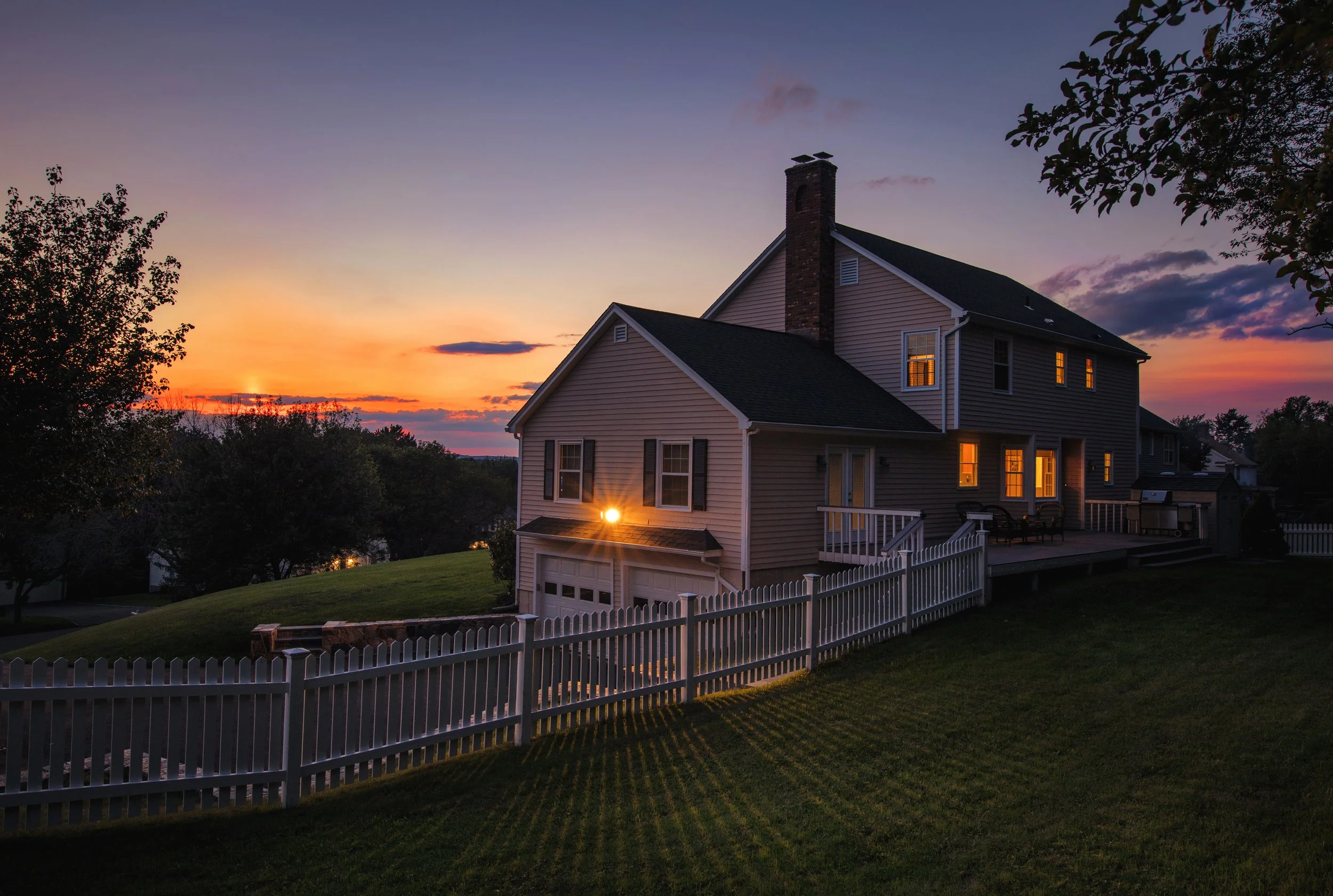
A dark parking lot or unlit side yard is an open invitation. Visibility changes behavior, and that's the core principle behind security lighting.
This guide covers fixture types, placement strategies, and controls for both residential and commercial properties, along with the specifications that affect real-world performance.
What Is Security Lighting?
Security lighting is outdoor lighting designed to increase visibility, discourage unwanted activity, and help people move safely around a property after dark. The most common fixture types include LED flood lights, wall packs, motion-activated lights, and dusk-to-dawn fixtures. Homeowners typically place them near entry doors, driveways, and backyards. Businesses focus on parking lots, loading docks, and building perimeters.
Here's something worth knowing early: brightness alone doesn't make lighting effective. A single overpowered flood light can actually create deep shadows where someone could hide. Several moderate fixtures with overlapping coverage eliminate those blind spots entirely.
Security cameras also perform better under consistent, even illumination. Harsh spotlights wash out footage or create glare, so pairing your lighting plan with your camera placement improves both systems at once.
Security lighting also plays an important role in wayfinding. Clearly illuminated walkways, entrances, drive lanes, and parking areas help residents, employees, customers, and visitors confidently navigate a property after dark while reducing the risk of trips and falls.
Rather than relying on a single bright fixture, effective security lighting combines the right fixture type, thoughtful placement, proper aiming, beam distribution, and lighting controls. These elements work together to improve visibility while minimizing glare, reducing shadows, and creating a more comfortable outdoor environment.
Lighting Professional Tip: One of the biggest misconceptions about security lighting is that brighter automatically means safer. In reality, strategically placed fixtures that provide even illumination and eliminate shadows are often more effective than installing one extremely bright light that creates glare and dark blind spots elsewhere.
How Lighting Professionals Design Effective Security Lighting
Start With Your Property's Vulnerabilities
Before picking any fixtures, walk your property at night. Look for areas where someone could approach unseen: side yards, gates, fence lines, equipment storage, and corners blocked from street view.
Entry points deserve the most attention. Front doors, side entrances, garage doors, and patio sliders are where visibility matters most. For commercial properties, add loading docks, dumpster enclosures, and utility areas to that list.
Professionals also evaluate landscaping, existing building lighting, neighboring properties, and how pedestrians and vehicles move throughout the space. Understanding how people naturally use a property helps identify locations where additional lighting improves both security and everyday usability.
Layer Lighting Instead of Relying on One Fixture
A common mistake is expecting one large flood light to cover an entire backyard or parking lot. That approach creates uneven coverage, with bright spots surrounded by darkness.
Layered lighting works better. You might combine ambient fixtures that provide general illumination with motion-activated lights that respond to movement. Then add task lighting near doors or work areas where people need to see clearly. This combination covers more ground while using less energy overall.
Commercial properties often benefit from an additional layer of perimeter lighting around fence lines, loading docks, equipment yards, or utility areas. Layering multiple fixture types creates consistent visibility across the property rather than concentrating all of the light in one location.
Eliminate Shadows Instead of Creating Glare
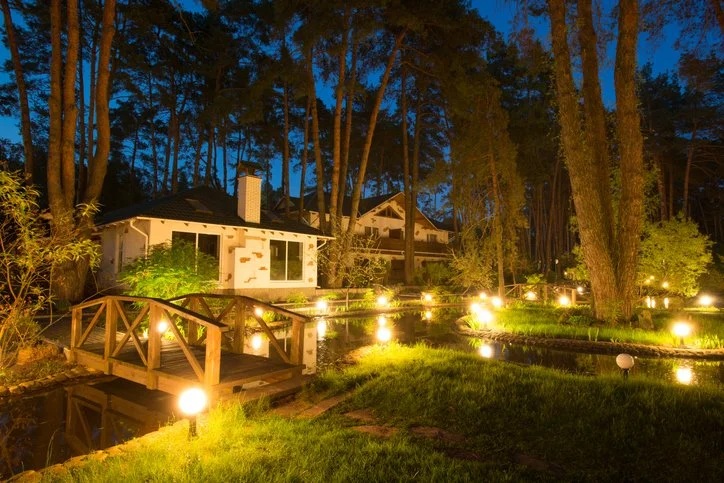
Uniform lighting across a space is more effective than a single intense source. When fixtures are spaced so their beams overlap slightly, shadows disappear, and the entire area stays visible.
Glare is the opposite problem. A fixture aimed directly at eye level can temporarily blind someone walking toward it, which defeats the purpose. Angling fixtures downward and using shielded housings keeps light where it belongs.
Lighting professionals also consider beam spread and mounting height to avoid "hot spots" where one area is excessively bright while surrounding spaces remain dark. Even illumination helps improve visibility for both occupants and security cameras.
Plan For Future Expansion
If you're adding security cameras later, run wiring now. The same applies to additional buildings, landscape changes, or smart controls. Planning ahead saves time and money compared to retrofitting later.
Future-proofing your lighting system also makes it easier to expand as your needs change. Whether you're adding parking spaces, constructing another building, installing automated gates, or integrating smart building controls, planning for future growth during the initial installation often reduces labor costs and simplifies future upgrades.
Benefits of LED Security Lighting
LED fixtures have become the standard for outdoor security lighting, and the reasons go beyond energy savings.
Lower operating costs: LEDs use 50–80% less electricity than metal halide or halogen equivalents.
Longer lifespan: Most LED security fixtures last 50,000 hours or more, which means fewer replacements.
Instant-on performance: Unlike metal halide, LEDs reach full brightness immediately. Motion-activated fixtures respond without delay.
Better camera compatibility: LEDs produce consistent light output without the flicker that can affect video quality.
Higher color rendering: Colors appear more accurate under LED light, which helps with identification on camera footage.
Better maintained brightness: High-quality LED fixtures maintain useful light output much longer than traditional technologies, helping security lighting remain effective throughout the fixture's service life.
Smart control compatibility: Most commercial LED fixtures integrate easily with photocells, occupancy sensors, timers, and smart lighting systems for improved efficiency and flexibility.
Lower maintenance costs: Longer operating life means fewer lamp replacements, lower labor costs, and reduced maintenance interruptions, particularly for parking lot and pole-mounted fixtures.
Fewer unexpected lamp failures: LEDs typically experience gradual lumen depreciation instead of sudden lamp burnout, helping maintain more consistent lighting across a property.
Lower operating temperatures: LEDs produce significantly less heat than many traditional lighting technologies, reducing stress on fixture components while improving overall efficiency.
For commercial facilities, the maintenance savings alone often justify the switch. Replacing a parking lot fixture requires a lift truck and labor, so longer lamp life translates directly to lower costs.
Types of Outdoor Security Lights
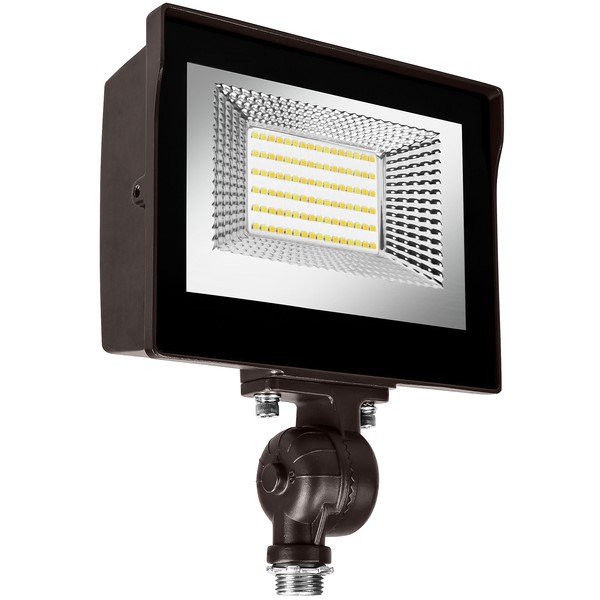
LED Flood Lights
Flood lights produce a wide beam that covers large areas. They work well mounted on eaves, poles, or building corners where broad coverage is needed. Residential flood lights typically range from 1,500 to 4,000 lumens, while commercial versions can exceed 20,000 lumens.
Flood lights are available with multiple beam spreads. Wider beam angles cover larger areas with fewer fixtures, while narrower beams concentrate light farther from the mounting location. Residential installations commonly use flood lights for driveways, backyards, patios, detached garages, and side yards. Commercial applications include loading docks, equipment yards, building perimeters, parking lots, and outdoor storage areas. Choosing the appropriate beam spread is just as important as selecting the correct lumen output.
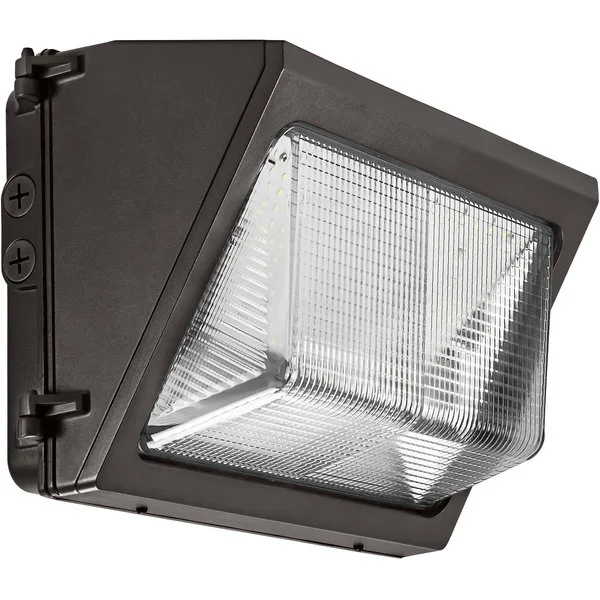
Wall Pack Lights
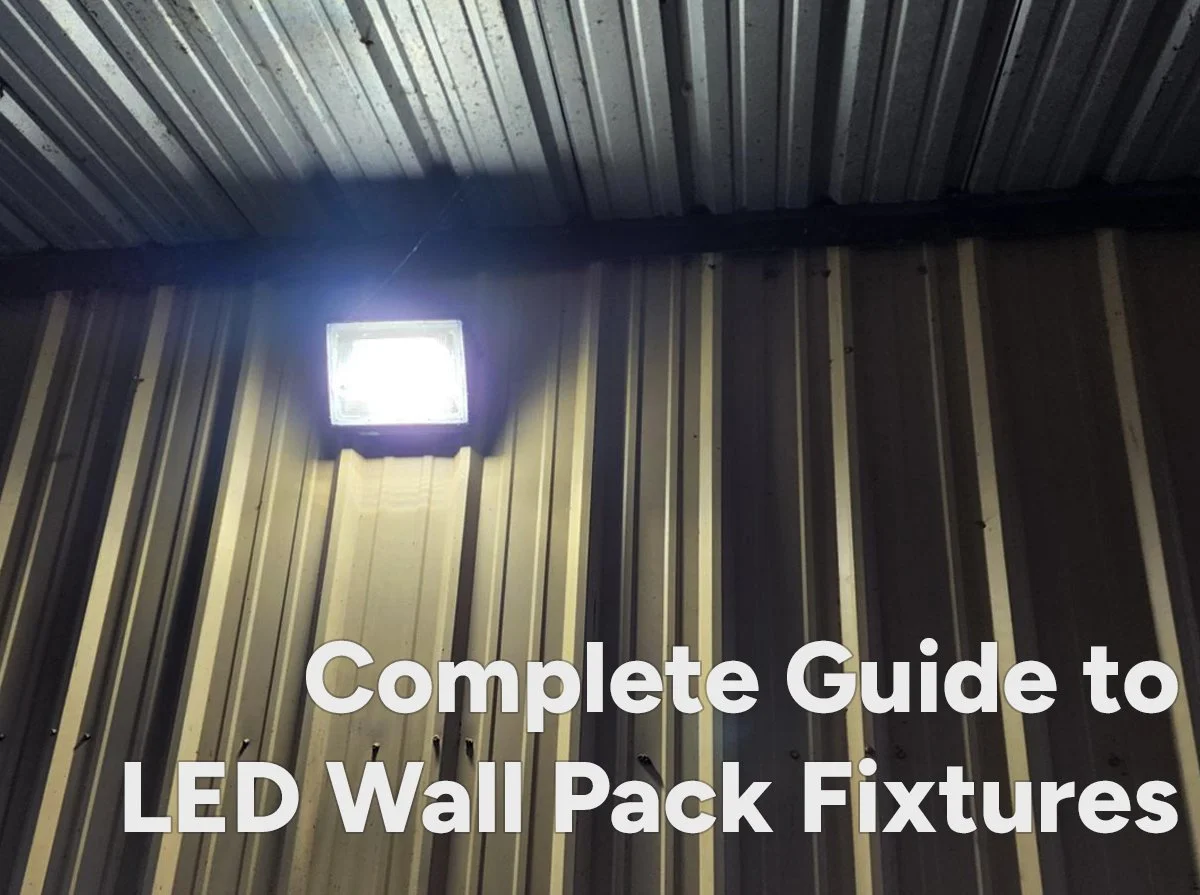
Wall packs mount directly to building exteriors and throw light forward and downward. You'll see them on warehouses, apartment buildings, and retail storefronts. Full-cutoff versions direct all light below the fixture, reducing light pollution and glare.
Wall packs are especially effective anywhere consistent perimeter lighting is needed. They help illuminate entrances, sidewalks, emergency exits, breezeways, and service areas while minimizing shadows around building exteriors. Full-cutoff fixtures are often preferred because they improve visibility without directing unnecessary light upward or onto neighboring properties.
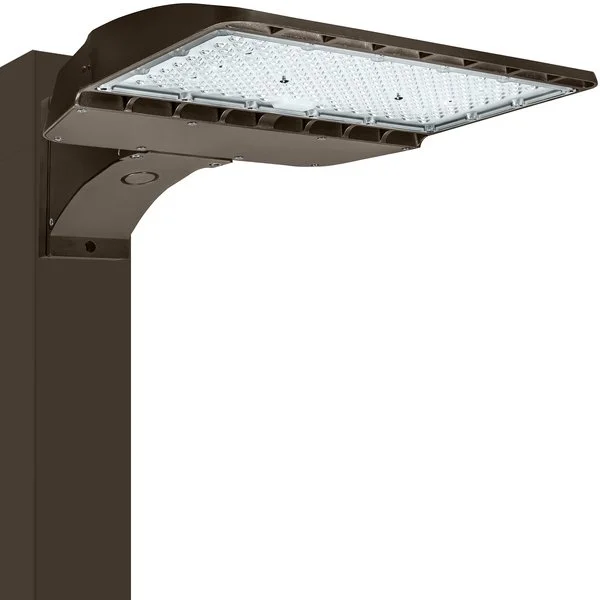
Area and Parking Lot Lights
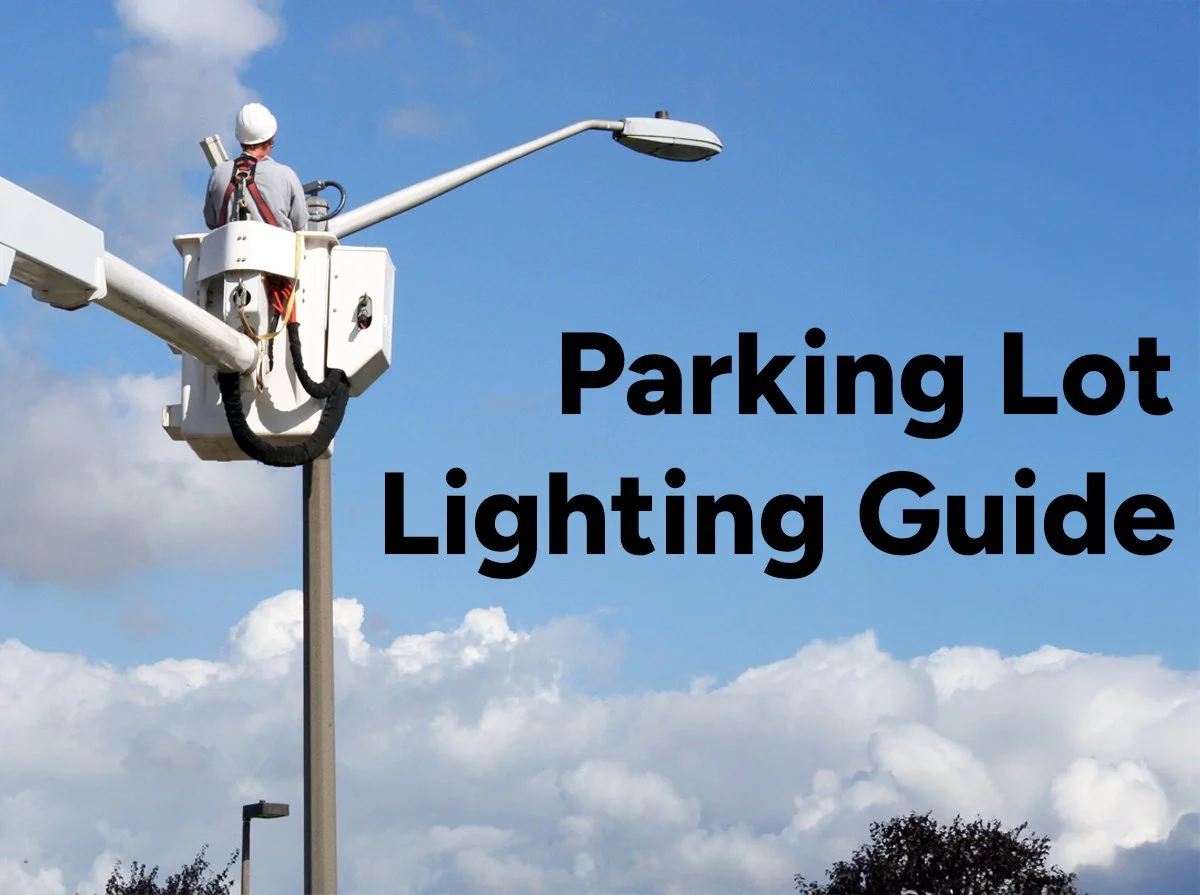
Pole-mounted area lights illuminate parking lots, sports courts, and commercial campuses. Mounting height affects beam spread, so taller poles require fixtures with wider distribution patterns.
These fixtures are engineered to distribute light evenly over large outdoor spaces. Proper pole spacing, fixture height, and distribution patterns work together to eliminate dark areas while maintaining consistent illumination for vehicles and pedestrians. Commercial properties often combine parking lot lighting with wall packs and flood lights to create layered security around the entire site.

Canopy and Soffit Lights
Canopy lights are recessed or surface-mounted fixtures that work under covered areas like carports, gas station canopies, and building overhangs. They provide downward illumination without exposed housings.
In addition to fuel stations, canopy lights perform well beneath apartment breezeways, covered walkways, outdoor shopping centers, warehouse loading areas, and building entrances. Their downward beam pattern helps improve visibility while reducing glare for pedestrians and drivers.
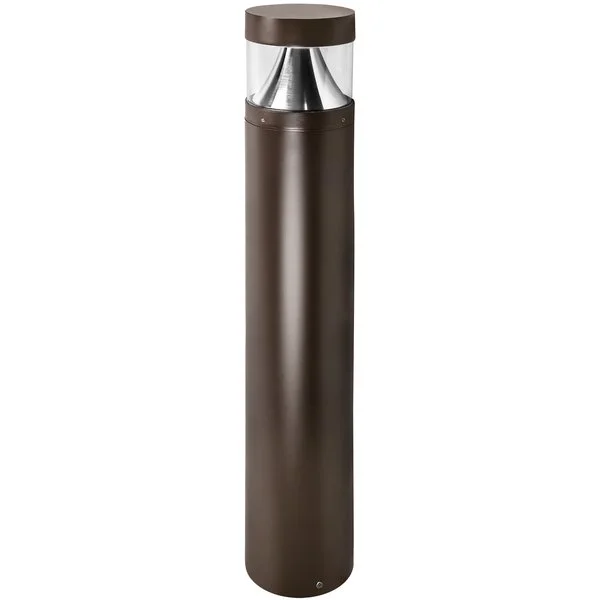
Bollard and Landscape Lighting
Bollards are short posts with integrated lights, typically used along pathways and property boundaries. They improve pedestrian safety while marking edges and transitions.
Although bollards are often associated with decorative landscape lighting, they also play an important role in security lighting. Properly placed bollards improve visibility along sidewalks, pathways, courtyards, and parking lot walkways while helping pedestrians safely navigate outdoor spaces after dark. When combined with larger security fixtures, they create a layered lighting design that balances safety with visual comfort.
| Fixture Type | Best Applications | Typical Lumen Range |
|---|---|---|
| Flood light | Backyards, building corners, large open areas | 1,500–20,000+ |
| Wall pack | Building perimeters, doorways, loading areas | 2,000–12,000 |
| Area light | Parking lots, sports courts, campuses | 10,000–40,000+ |
| Canopy light | Gas stations, carports, covered entries | 3,000–15,000 |
| Bollard | Pathways, driveways, property lines | 300–1,500 |
Which Security Light Is Right for Your Property?
If you're unsure where to begin, start by identifying the area you want to illuminate. Different fixtures are designed to solve different lighting challenges.
| If You're Lighting... | Recommended Fixtures |
|---|---|
| Backyard | LED flood lights with motion sensors provide broad coverage for patios, fences, pools, and detached structures. |
| Warehouse | Wall packs, pole-mounted area lights, and high-output flood lights help illuminate loading docks, equipment yards, and employee entrances. |
| Retail Storefront | Wall packs combined with canopy lights create safe, inviting entrances while improving visibility around storefronts and sidewalks. |
| Apartment Complex | Wall packs, bollards, canopy lights, and parking lot fixtures provide consistent lighting for residents, visitors, and maintenance staff. |
| Parking Lot | Pole-mounted area lights paired with perimeter wall packs create uniform lighting across driving lanes and pedestrian routes. |
| Loading Dock | Flood lights and wall packs provide bright task lighting for deliveries while maintaining visibility around equipment and vehicles. |
| Office Building | Wall packs, parking lot lights, bollards, and canopy fixtures help employees and visitors safely move between parking areas and entrances. |
Most properties benefit from combining multiple fixture types rather than relying on a single lighting solution. Layering fixtures provides more even illumination, reduces glare, and improves overall security.
Security Lighting For Homes
Homeowners often think about security lighting after experiencing a close call, replacing aging fixtures, or upgrading landscaping. The best residential lighting plans improve visibility without making a home feel overly bright or unwelcoming.
Good security lighting should help family members safely arrive home after dark, allow visitors to easily find entrances, discourage unwanted activity, and reduce the risk of trips and falls around the property.
Protect Entry Points First
Every exterior door benefits from dedicated lighting. A fixture mounted 6–8 feet high beside the front door provides enough illumination to see faces clearly without creating harsh shadows.
Garage doors and side entrances often get overlooked. Because they're less visible from the street, they're attractive to intruders.
Patio doors, basement entrances, and gates should receive the same attention. Keeping every point of entry consistently visible makes it easier for occupants to identify visitors while helping security cameras capture clearer images after dark.
Don't Overlook Side Yards And Backyards
Side yards are frequently the darkest parts of a residential property. A motion-activated flood light covering the gate and fence line addresses this vulnerability without running all night.
Backyards with pools, sheds, or detached garages benefit from multiple fixtures rather than one central light. Overlapping coverage eliminates the shadows where someone could hide.
Trees, fences, landscaping, and storage buildings can all create unexpected blind spots. Walking the property after sunset often reveals areas that appear well lit during the day but become difficult to see at night. Installing multiple lower-output fixtures generally provides better coverage than relying on one oversized flood light.
Balance Security With Neighborhood Comfort
Overly bright fixtures aimed horizontally can disturb neighbors and create light trespass. Shielded fixtures that direct light downward solve this problem while still providing security.
Some municipalities and HOAs have outdoor lighting ordinances. Checking local requirements before installation avoids potential conflicts.
Many homeowners also choose fixtures that follow Dark Sky principles by directing light only where it is needed. Reducing upward light helps minimize glare, decreases light pollution, and creates a more comfortable nighttime environment while still providing excellent security. Properly shielded fixtures improve visibility without overwhelming neighboring homes or washing out the night sky.
Tip: Motion sensors reduce energy use and prevent your property from becoming the brightest house on the block. Lights that activate only when needed draw less attention while still providing protection.
Common Residential Security Lighting Mistakes
Even quality fixtures can underperform when they're installed incorrectly. Some of the most common residential lighting mistakes include:
Using one flood light to illuminate an entire backyard instead of layering multiple fixtures
Mounting fixtures too low, which reduces coverage and makes them easier to tamper with
Aiming lights into neighboring windows instead of directing illumination downward
Ignoring side yards, gates, and fence lines where visibility is often weakest
Choosing decorative landscape fixtures when brighter security lighting is needed around entrances and vulnerable areas
Correcting these issues often improves security more than simply installing brighter fixtures. Thoughtful placement, proper aiming, and layered lighting typically produce better results than increasing lumen output alone.
Security Lighting For Businesses
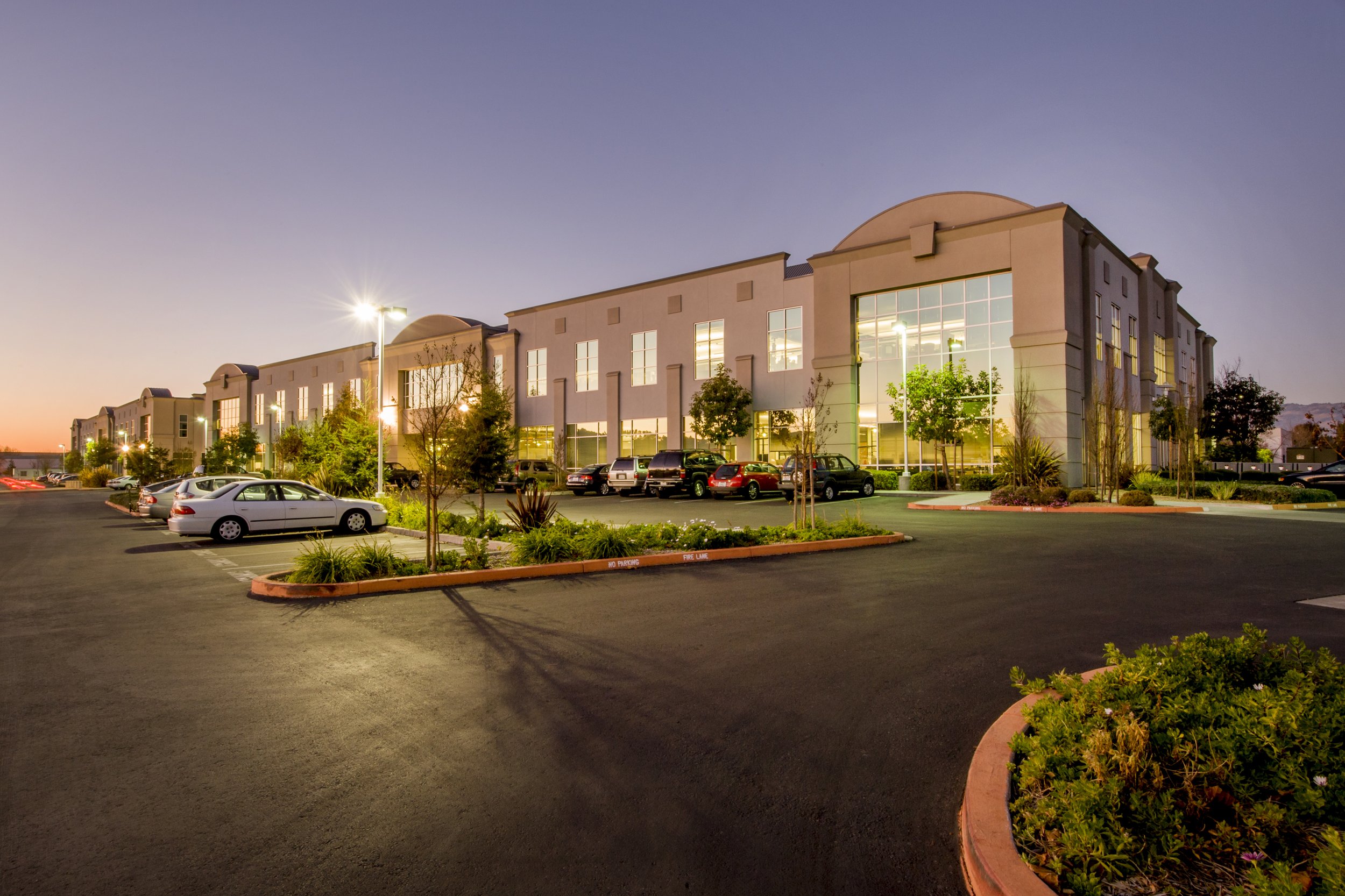
Commercial security lighting does more than illuminate parking lots. It helps employees safely navigate the property, supports security cameras, protects valuable assets, and creates a more secure environment for customers, visitors, and vendors.
The most effective commercial lighting plans use a layered approach that combines area lighting, perimeter lighting, task lighting, and motion-activated fixtures. Rather than concentrating light in one location, layered lighting provides consistent visibility throughout the property while minimizing glare and reducing deep shadows.
Protect Employees After Dark
Parking lots, sidewalks, and building entrances are where employees are most vulnerable. Consistent lighting from the parking space to the front door eliminates dark stretches where incidents could occur.
Stairways and breezeways in multi-tenant buildings often have inadequate lighting. Adding wall packs or ceiling-mounted fixtures in transition areas improves safety.
Businesses should also evaluate employee entrances, emergency exits, pedestrian walkways, smoking areas, bicycle storage, and designated pickup locations. These spaces often receive less attention than main entrances but remain active before sunrise, after sunset, or during overnight operations.
Protect Valuable Assets
Loading docks, outdoor inventory, and equipment yards represent significant investments. Motion-activated flood lights covering these areas deter theft while alerting staff to after-hours activity.
Dumpster enclosures and utility areas are easy to overlook but provide cover for unwanted activity. Including them in your lighting plan closes those gaps.
Facilities with outdoor storage should also evaluate trailer parking, fenced compounds, mechanical equipment, generators, HVAC systems, and utility infrastructure. Illuminating these areas improves visibility for maintenance personnel while making suspicious activity easier to identify.
Industry-Specific Considerations
| Business Type | Priority Areas |
|---|---|
| Retail | Storefront, parking, delivery entrances |
| Warehouse | Loading docks, trailer yards, exterior storage |
| Office | Entrances, sidewalks, parking lots |
| Apartments | Breezeways, mail kiosks, parking |
| Schools | Walkways, entrances, athletic fields |
How To Choose The Right Security Lights
Choosing security lighting involves more than comparing brightness ratings. Fixture output, beam distribution, mounting height, color temperature, weather resistance, and lighting controls all influence how well a system performs after installation.
Thinking through each specification before purchasing helps ensure the lighting system delivers consistent coverage while minimizing future maintenance and operating costs.
Choose The Right Lumen Output
Lumens measure total light output. Higher lumens mean brighter light, but the right amount depends on the area you're covering and how the fixture distributes its beam.
| Area | Suggested Lumens |
|---|---|
| Front door | 700–1,300 |
| Driveway | 1,500–3,000 |
| Backyard | 2,000–4,000 |
| Parking lot | Varies by pole spacing and height |
While lumen output is important, fixture layout often has an even greater impact on performance. Several properly positioned fixtures frequently provide better visibility than one extremely bright fixture with uneven coverage.
Select The Proper Color Temperature
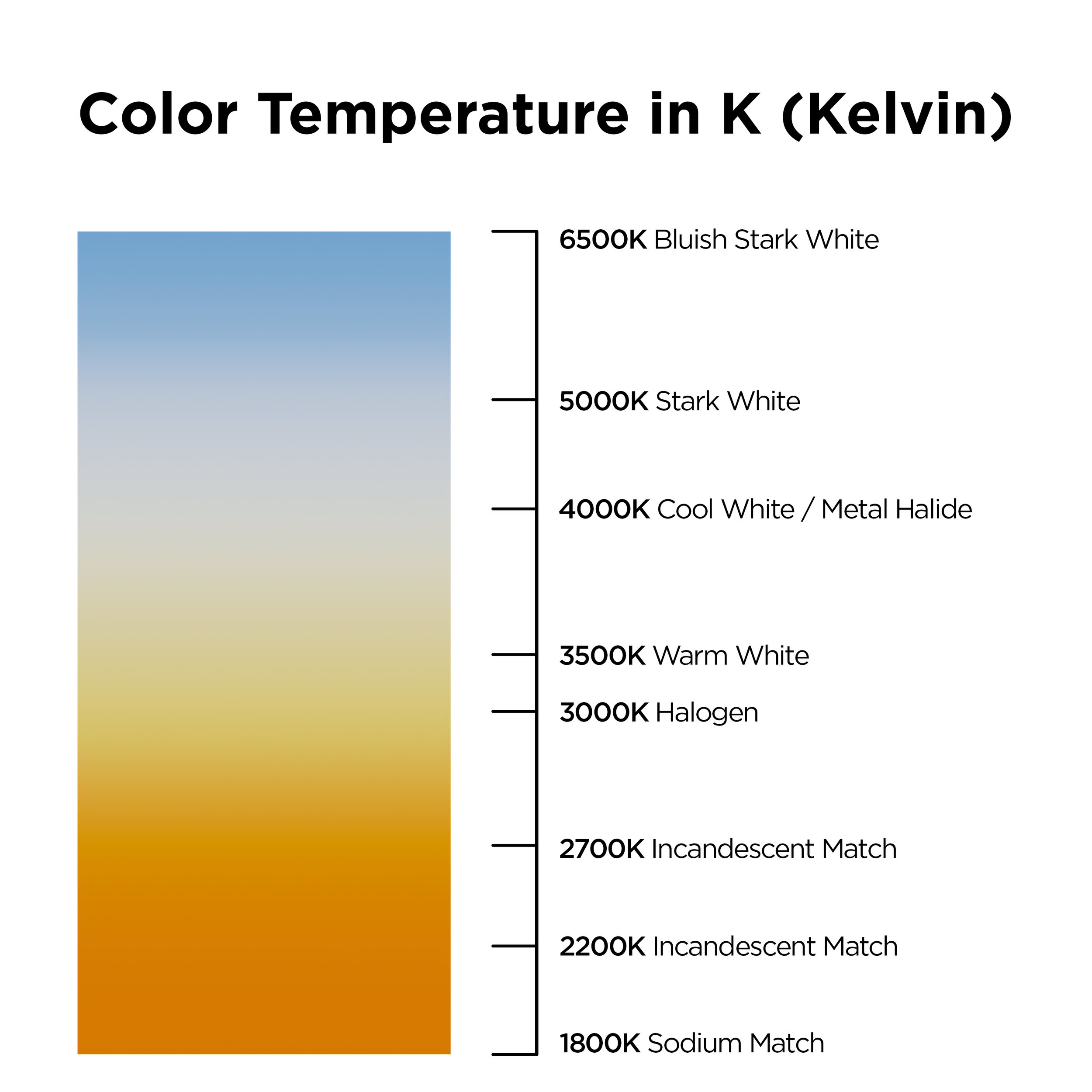
Color temperature, measured in Kelvin (K), affects how light appears. Warmer temperatures (3000K) produce a yellowish tone, while cooler temperatures (5000K) appear more blue-white.
For security applications, 4000K–5000K typically provides the best visibility and camera performance. Some residential properties prefer 3000K for a softer appearance that blends with landscape lighting.
Commercial facilities often select 5000K for maximum visibility around loading docks, warehouses, and parking lots, while homeowners frequently prefer 3000K or 4000K to maintain a warmer appearance around landscaping and outdoor living areas. Matching color temperature across nearby fixtures also creates a cleaner, more uniform appearance.
Understand Beam Angle
Beam angle determines how light is distributed across a space. Selecting the proper beam spread helps maximize coverage while minimizing unnecessary glare and wasted light.
Narrow beams (15°–40°) concentrate light over longer distances and work well for highlighting gates, building entrances, or specific equipment.
Medium beams (40°–80°) provide balanced coverage for driveways, walkways, patios, and residential security lighting.
Wide flood beams (90° and above) distribute light across large open areas such as parking lots, backyards, loading docks, and commercial campuses.
Choosing a beam angle that matches the mounting height and intended coverage area often improves lighting performance more than simply increasing lumen output.
Beam Angle Quick Guide
Narrow Beam → Long distances and focused illumination
Medium Beam → General residential security lighting
Wide Flood Beam → Large commercial and residential coverage areas
Consider Mounting Height
Mounting height directly affects how far light travels and how evenly it is distributed. Installing fixtures too low creates glare and limits coverage, while mounting fixtures too high may require greater light output to maintain visibility at ground level.
Typical mounting recommendations include:
Residential flood lights: approximately 8–10 feet above grade
Wall pack lights: generally 10–15 feet depending on building height
Parking lot fixtures: commonly 15–40 feet depending on the application
Canopy lights: mounted flush beneath covered structures to provide uniform downward illumination
Higher mounting positions generally improve beam overlap, reduce glare, and make fixtures more difficult to tamper with. Proper mounting height also improves security camera performance by creating more consistent lighting across the monitored area.
Verify Outdoor Ratings
Outdoor fixtures face rain, humidity, temperature swings, and UV exposure. Look for wet-location ratings for exposed installations or damp-location ratings for covered areas.
IP ratings indicate dust and water resistance. IP65 or higher handles direct rain exposure. Coastal environments may require fixtures with additional corrosion resistance.
Facilities located near saltwater or harsh industrial environments should also consider fixtures specifically designed with corrosion-resistant housings, finishes, and hardware. Choosing the appropriate environmental rating helps maximize fixture lifespan while reducing long-term maintenance costs.
Where To Place Security Lights Around A Property
Even the highest-quality security fixtures can underperform if they're installed in the wrong locations. Proper placement creates consistent illumination, reduces blind spots, and helps security cameras capture clearer images.
Entryways
Mount fixtures beside or above each exterior door at a height that illuminates faces without creating glare. Overlapping coverage from two fixtures eliminates shadows cast by people standing at the door.
Don't overlook secondary entrances such as side doors, basement entrances, patio doors, and service entrances. Every point of entry should remain visible throughout the night to improve safety and discourage unwanted activity.
Driveways and Garages
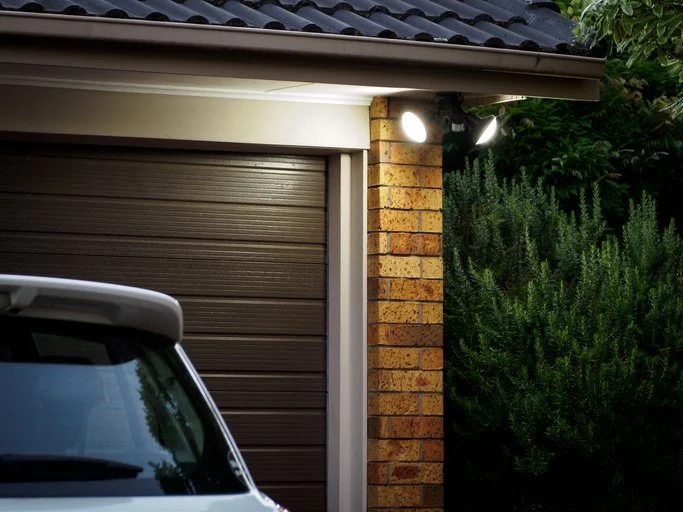
A fixture at the garage and another partway down the driveway provides continuous coverage. Motion activation works well here since driveways see intermittent use.
If the driveway curves or includes landscaping, additional fixtures may be needed to eliminate dark areas created by trees, retaining walls, or detached structures. Proper lighting also improves visibility for visitors and delivery drivers after dark.
Backyards and Fence Lines
Backyards often contain the largest concentration of hidden areas on a residential property. Gates, fences, trees, sheds, detached garages, pools, and landscaping can all create shadows that reduce visibility after sunset.
Rather than relying on one powerful flood light, install multiple fixtures that slightly overlap their beam patterns. Motion-activated flood lights near gates, storage buildings, or fence lines provide additional security without operating continuously throughout the night.
Parking Lots and Building Perimeters
Commercial properties benefit from a lighting layout that maintains consistent foot-candle levels across the entire lot. Corners, dumpster areas, and utility equipment often need supplemental fixtures beyond the main pole lights.
Building perimeters should also include employee entrances, emergency exits, loading docks, outdoor storage areas, mechanical equipment, and utility yards. Layering wall packs with area lighting and flood lights helps maintain consistent visibility around the entire property.
Lighting For Security Cameras
Cameras perform best under even illumination without extreme bright spots or deep shadows. Position lights to illuminate the area the camera covers rather than pointing toward the camera lens, which causes glare and backlit subjects.
Security cameras are most effective when lighting provides consistent facial visibility rather than harsh spotlights. Avoid aiming fixtures directly into camera lenses, which can create lens flare and reduce image quality. Even illumination across the camera's field of view typically produces clearer footage than extremely bright lighting focused on one small area.
Security Lighting Controls And Sensors
Motion Sensors
Motion-activated fixtures conserve energy and draw attention to movement. Adjustable sensitivity settings help reduce false triggers from animals or passing cars.
Motion sensors work particularly well around side yards, detached garages, gates, storage buildings, loading docks, and employee entrances where continuous lighting may not be necessary. Properly adjusting detection zones helps reduce unnecessary activations while maintaining reliable coverage.
Photocells
Photocells turn lights on at dusk and off at dawn automatically. They're ideal for fixtures that run all night, like parking lot lights or building perimeter wall packs.

Photocells require very little maintenance and ensure outdoor lighting operates consistently throughout the year without seasonal schedule adjustments.
Timers
Timers allow lights to follow a set schedule regardless of daylight. They work well for businesses with consistent operating hours.
Commercial facilities often use timers to increase lighting during evening operating hours before reducing output after employees leave for the day.
Smart Lighting Systems
Smart controls enable remote monitoring, scheduling adjustments, and integration with other security systems. Some allow brightness adjustments or zone control from a smartphone app.
Many smart lighting systems also integrate with security cameras, building automation systems, occupancy sensors, and energy management platforms, giving property owners greater control over outdoor lighting while improving operational efficiency.
Layering Controls for Better Performance
Many properties achieve the best results by combining multiple lighting controls instead of relying on just one technology. Examples include:
Photocell + Motion Sensor: Lights operate automatically at night while increasing brightness when movement is detected.
Timer + Motion Sensor: Ideal for businesses with predictable operating hours and occasional overnight activity.
Smart Controls + Photocells: Allows remote scheduling while maintaining automatic dusk-to-dawn operation.
Layering controls improves security, reduces energy consumption, and extends fixture life by ensuring lights operate only when needed.
Common Security Lighting Mistakes To Avoid
Choosing the brightest fixture available: Excessive brightness creates glare that can temporarily blind people and wash out camera footage. Proper placement with moderate output usually works better.
Ignoring shadows: A single fixture creates shadows behind objects in its path. Multiple fixtures with overlapping beams eliminate hiding spots.
Mounting fixtures too low: Low-mounted lights are easier to tamper with and create more glare. Higher mounting positions improve coverage and reduce vandalism risk.
Skipping maintenance: Dirty lenses, overgrown vegetation, and failed LEDs reduce effectiveness over time. Periodic inspection keeps your system working as intended.
Forgetting Future Expansion: Security lighting should accommodate future needs whenever possible. Planning ahead for additional cameras, parking areas, landscape changes, new buildings, or smart controls often reduces installation costs and simplifies future upgrades. Running conduit or electrical service during the initial installation is typically much easier than retrofitting an existing system later.
Questions to Ask Before Buying Security Lighting
Before selecting fixtures, ask yourself:
What area am I trying to illuminate?
How large is the space?
Will the lights operate all night or only when motion is detected?
Are security cameras part of the lighting plan?
Is existing wiring already available?
What mounting height is available?
Would motion sensors, photocells, timers, or smart controls improve efficiency?
Are there HOA rules, local lighting ordinances, or Dark Sky requirements that should be considered?
Answering these questions before purchasing helps ensure you choose fixtures that provide the right balance of visibility, efficiency, and long-term performance.
Find The Right Security Lighting At 1000bulbs
Choosing security lighting involves matching fixture types, lumen output, color temperature, and controls to your specific property. Our lighting specialists can help you work through those decisions, whether you're lighting a single backyard or an entire commercial campus.
With more than 15,000 commercial and residential lighting products available, 1000Bulbs combines one of the industry's largest selections with decades of lighting expertise. Whether you're replacing a single fixture, upgrading an apartment complex, designing warehouse lighting, or planning a large commercial retrofit, our US-based lighting professionals can help you select products that fit your application and budget.
With thousands of LED flood lights, wall packs, and area lights in stock, we ship quickly from Texas. If you're managing multiple properties or planning a larger project, dedicated account representatives can help coordinate orders and ensure consistency across locations.
Contact us to speak with a lighting specialist about your security lighting project.
Frequently Asked Questions About Security Lighting
How High Should Security Lights Be Mounted?
Residential flood lights typically mount 8–10 feet high. Commercial wall packs often install at 12–15 feet. Higher mounting improves coverage and reduces tampering risk, though it may require brighter fixtures to maintain adequate ground-level illumination.
Can Security Lights Work With Security Cameras?
Yes, and they work best when planned together. Even, consistent lighting without harsh shadows or glare produces clearer footage. Position lights to illuminate the camera's field of view rather than pointing toward the lens.
Is It Better To Leave Security Lights On All Night Or Use Motion Sensors?
Both approaches have merit. Dusk-to-dawn operation provides continuous deterrence, while motion sensors conserve energy and draw attention to activity. Many properties combine both: constant low-level lighting with motion-activated fixtures that increase brightness when triggered.
What Is The Difference Between A Flood Light And A Security Light?
Flood light describes a beam pattern (wide coverage), while security light describes a purpose. Many security lights are flood lights, but security lighting also includes wall packs, area lights, and motion-activated fixtures with narrower beams.
What Is The Best Color Temperature For Outdoor Security Lighting?
4000K–5000K provides clear visibility and accurate color rendering for camera footage. Some residential applications use 3000K for a warmer appearance that complements landscape lighting.
Do LED security lights attract fewer bugs than halogen?
Generally, yes. While no outdoor light completely eliminates insects, LED fixtures produce less ultraviolet (UV) light than many traditional halogen or mercury vapor lamps, making them less attractive to many flying insects.
Do I need a licensed electrician to install security lighting?
Simple fixture replacements may be appropriate for experienced DIY homeowners, but new wiring, dedicated circuits, commercial installations, and code-related work should generally be completed by a qualified electrician.
How many lumens do I need for outdoor security lighting?
The ideal lumen output depends on the size of the area, mounting height, and beam angle. Residential entryways often require 700–1,300 lumens, while larger driveways, backyards, and commercial properties require substantially higher output.
Are motion sensor lights more effective than dusk-to-dawn lights?
Neither option is universally better. Motion sensors reduce energy consumption and highlight activity, while dusk-to-dawn fixtures provide continuous illumination. Many properties benefit from combining both technologies.
Can security lighting increase property value?
Quality outdoor lighting can improve curb appeal, enhance safety, and make a property more attractive to prospective buyers. While lighting alone doesn't guarantee a higher property value, it often contributes positively to the overall appearance and functionality of a home or commercial property.
How far apart should outdoor security lights be installed?
Spacing depends on fixture output, beam angle, and mounting height. The goal is to create slight overlap between adjacent fixtures so there are no significant dark areas while avoiding excessive glare or unnecessary brightness.