
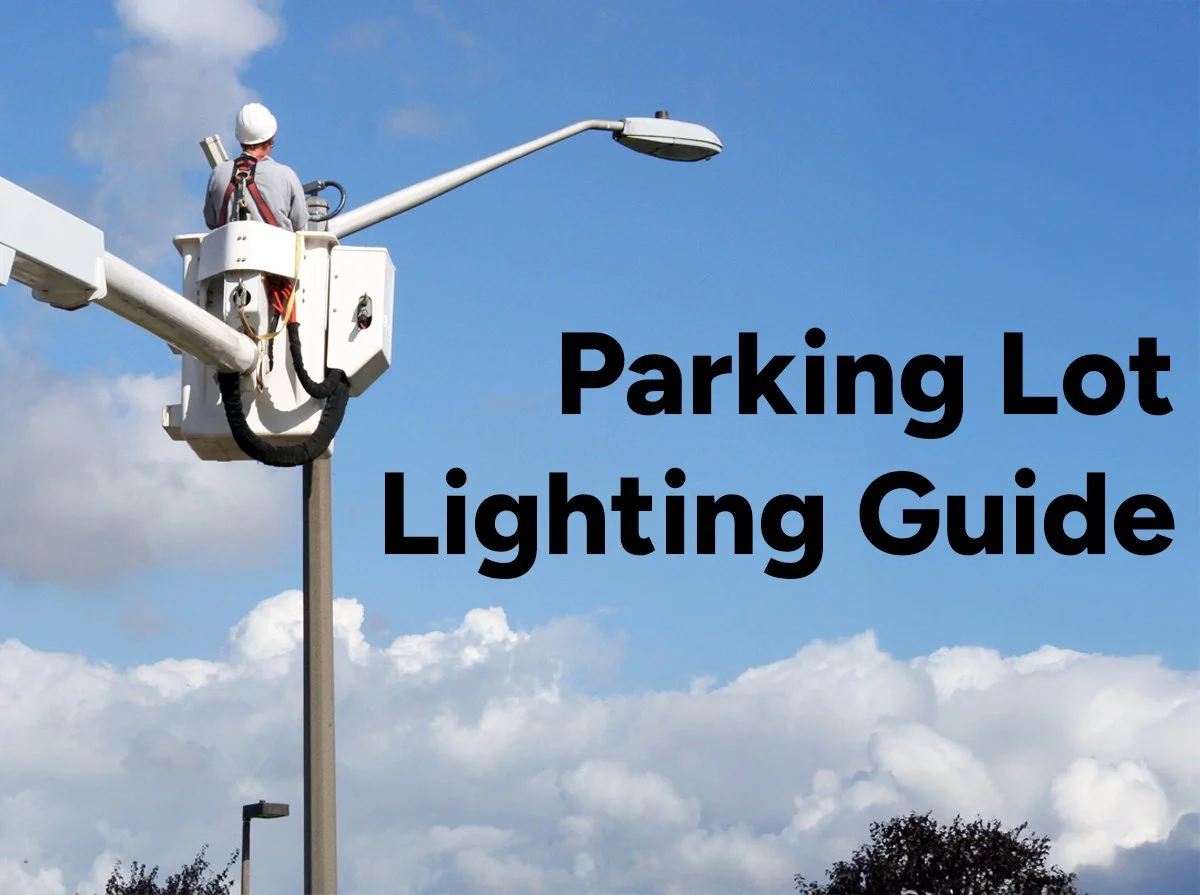
Parking Lot Lighting Guide: Safety & Compliance
| What This Article Covers |
|---|
Parking lot lighting is a safety, liability, and operational decision that affects commercial properties every night. Choosing the wrong fixtures — or skipping a lighting plan entirely — can create real financial and legal exposure. This guide covers how to select the right fixtures for your lot, what IES RP-20 brightness and uniformity standards actually require, how LED compares to metal halide in real energy cost terms, how smart controls and photocells reduce operating expenses, what Dark Sky compliance means for commercial properties, and the most common installation mistakes that lead to underlit or over-specified lots. Best for: facility managers, commercial property owners, lighting contractors, retail store operators, and warehouse or industrial facility operators planning a new installation or LED retrofit. |

A poorly lit parking lot creates problems long before someone files a complaint or reports an incident. Customers notice dark corners immediately.
Employees walking to their cars after closing notice uneven lighting and shadowed pathways. Insurance carriers notice liability exposure after an accident occurs. In many commercial properties, parking lot lighting quietly affects safety, customer perception, operating costs, and legal risk every single night.
That is why parking lot lighting should never be treated as a simple fixture replacement project.
The right outdoor commercial lighting system balances visibility, uniformity, compliance standards, energy efficiency, and long-term maintenance costs. Fixture type, mounting height, beam distribution, and lighting controls all influence how safely and effectively a parking lot operates after dark.
This guide breaks down what property owners and facility managers need to know about parking lot lighting, including fixture selection, brightness standards, LED upgrades, smart controls, Dark Sky compliance, and the most common installation mistakes seen in commercial lots.
Why Parking Lot Lighting Is About More Than Visibility
Parking lot lighting affects much more than whether drivers can physically see the pavement.
The quality and consistency of lighting throughout a commercial property influence customer perception, liability exposure, crime deterrence, and long-term operating costs in ways many property owners underestimate. A well-lit lot creates a very different experience than one with uneven coverage, dark pockets, or inconsistent fixture spacing.
According to Illuminating Society’s IES RP-20, the recommended standard for parking facilities, the minimum horizontal illuminance for a basic commercial lot typically falls within a moderate footcandle range depending on the property classification and usage requirements.
Most underlit parking lots are not the result of choosing the wrong fixture. The larger problem is usually the absence of a lighting plan altogether. Proper parking lot lighting depends on fixture placement, beam distribution, pole height, spacing, and uniformity working together as a system.
Liability Reduction
Property owners have a responsibility to maintain reasonably safe conditions for customers, employees, and visitors.
Poor parking lot lighting is frequently associated with environments where visibility problems increase the likelihood of:
Slip-and-fall incidents
Pedestrian accidents
Vehicle collisions
Security concerns near entrances and walkways
Uneven lighting is often a bigger problem than overall brightness alone. Dark gaps between fixtures, poorly illuminated pedestrian paths, and inconsistent coverage near building entrances can all create avoidable risk exposure.
A deliberate lighting layout helps reduce those issues while demonstrating that the property owner took practical steps to maintain a safer environment.
Customer Safety and Perception
Lighting shapes how customers perceive a property before they even enter the building.
A poorly lit parking lot often signals neglect, regardless of how professional the business itself may be inside. Well-designed lighting creates a stronger sense of:
Safety
Visibility
Cleanliness
Active property management
Retail stores, restaurants, healthcare facilities, hotels, and entertainment venues all rely heavily on parking lot visibility during evening operating hours.
Consistent lighting coverage also improves navigation throughout the property by helping drivers and pedestrians identify entrances, walkways, curbs, and helps traffic flow more easily.
Crime Deterrence
Lighting remains one of the most effective environmental deterrents for commercial properties.
Poorly lit areas create concealment opportunities around:
Parking rows
Stairwells
Dumpster enclosures
Building perimeters
Walkways and loading areas
Well-positioned LED parking lot lighting improves visibility for pedestrians, drivers, employees, and security cameras while reducing deep shadowing throughout the property.
Lighting alone cannot eliminate criminal activity, but properties with consistent illumination generally remove many of the environmental conditions that make concealment easier.
Compliance and Operating Costs
Commercial parking lots are also influenced by lighting standards, local ordinances, and energy considerations.
Organizations such as the Illuminating Engineering Society publish recommended guidance for parking facility illumination and lighting uniformity. Local municipalities may also enforce requirements involving:
Light trespass
Fixture shielding
Dark Sky compliance
Minimum illumination levels
At the same time, parking lot lighting can represent a major portion of a commercial property’s overnight energy usage.
Older metal halide systems, oversized fixtures, and poorly planned layouts often waste electricity while still failing to provide balanced visibility across the lot. The most effective parking lot lighting systems balance:
Safety
Uniformity
Energy efficiency
Code considerations
Long-term maintenance costs
That balance is usually the result of thoughtful lighting design rather than simply installing brighter fixtures.
Best Fixtures for Parking Lots
Different parking lot layouts require different fixture strategies. The best lighting system depends on factors such as lot size, pole spacing, mounting height, traffic volume, and surrounding property conditions.
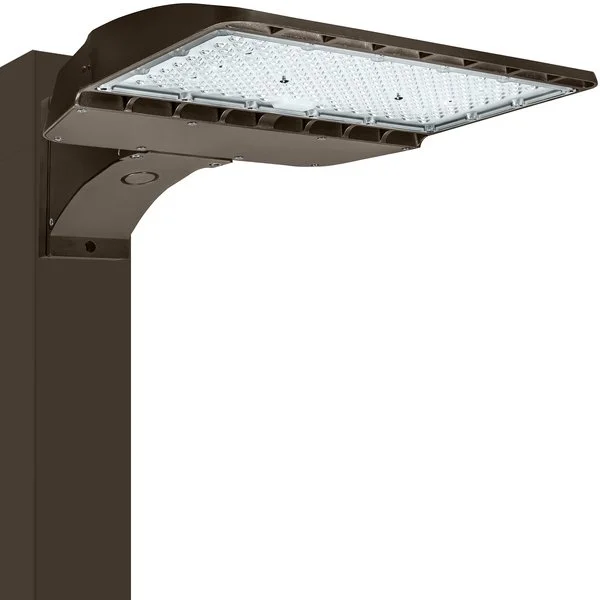
Area Lights
Area lights, often called shoebox fixtures, are the most common lighting solution for commercial parking lots.
Mounted on poles, these fixtures distribute broad, uniform illumination across open paved surfaces. Modern LED area lights commonly replace older metal halide systems while using significantly less energy and requiring less maintenance over time.
Pole height and optic design both affect overall coverage and visibility. Taller poles generally allow wider fixture spacing, while lower mounting heights create tighter, more concentrated lighting patterns.
Full-cutoff optics are especially important in commercial parking lots because they help direct light toward the pavement instead of scattering illumination into neighboring properties or the night sky.
Many commercial LED area lights also support:
Adjustable mounting arms
Photocell controls
Motion sensors
Type III, IV, or V light distribution patterns
DLC qualification for rebate eligibility
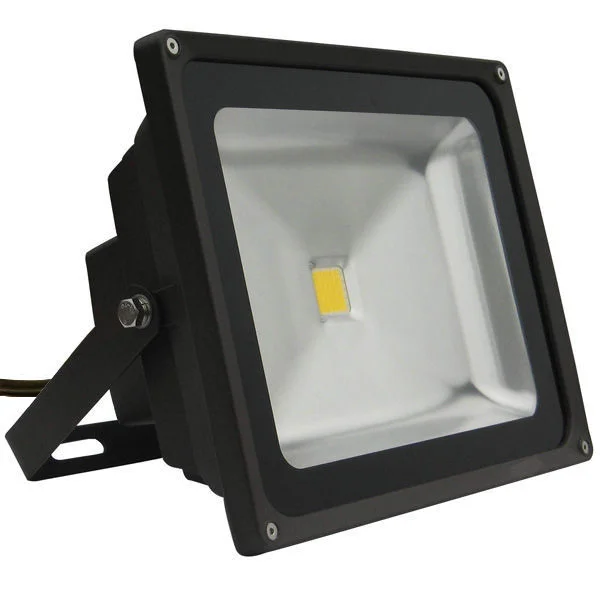
Flood Lights
Flood lights are commonly used in parking lots where targeted illumination is more important than broad uniform coverage.
Unlike area lights, flood fixtures are directional and designed to focus light toward specific zones such as:
Building perimeters
Loading docks
Entry points
Overflow parking areas
Security-sensitive locations
Flood lights are also frequently mounted on building exteriors instead of poles, making them useful for smaller commercial lots where full pole-mounted area lighting may not be necessary.
Beam angle selection matters significantly with flood lighting because overly narrow beams can create harsh hotspots, while overly wide beams may reduce useful visibility at ground level.
High-Mast Area Lights
High-mast lighting systems are used in very large outdoor areas requiring wide-area illumination from extremely tall mounting heights.
These systems typically use clusters of fixtures mounted on a circular ring high above the ground and are most commonly seen in:
Highway interchanges
Ports and shipping yards
Large industrial facilities
Transportation hubs
Stadium parking areas
Because of the extreme mounting heights involved, high-mast systems are designed to distribute light across very large coverage areas while minimizing excessive pole counts.
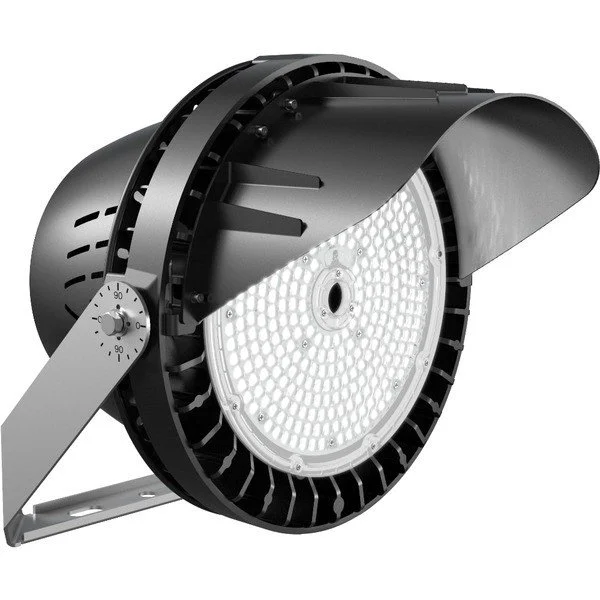
Sports Lighting for Parking Areas
Sports lighting fixtures are sometimes used in parking lots and large outdoor facilities where extremely high-output illumination is needed.
These fixtures are designed for long-throw performance and can work well in:
Stadium parking lots
Large event venues
Recreational complexes
Multi-purpose outdoor facilities
Compared to standard parking lot fixtures, sports lights are typically engineered for higher mounting heights and stronger directional control.
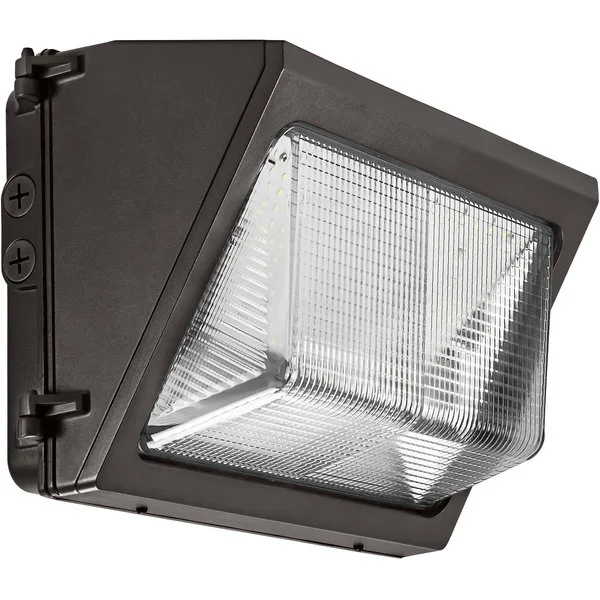
Wall Packs
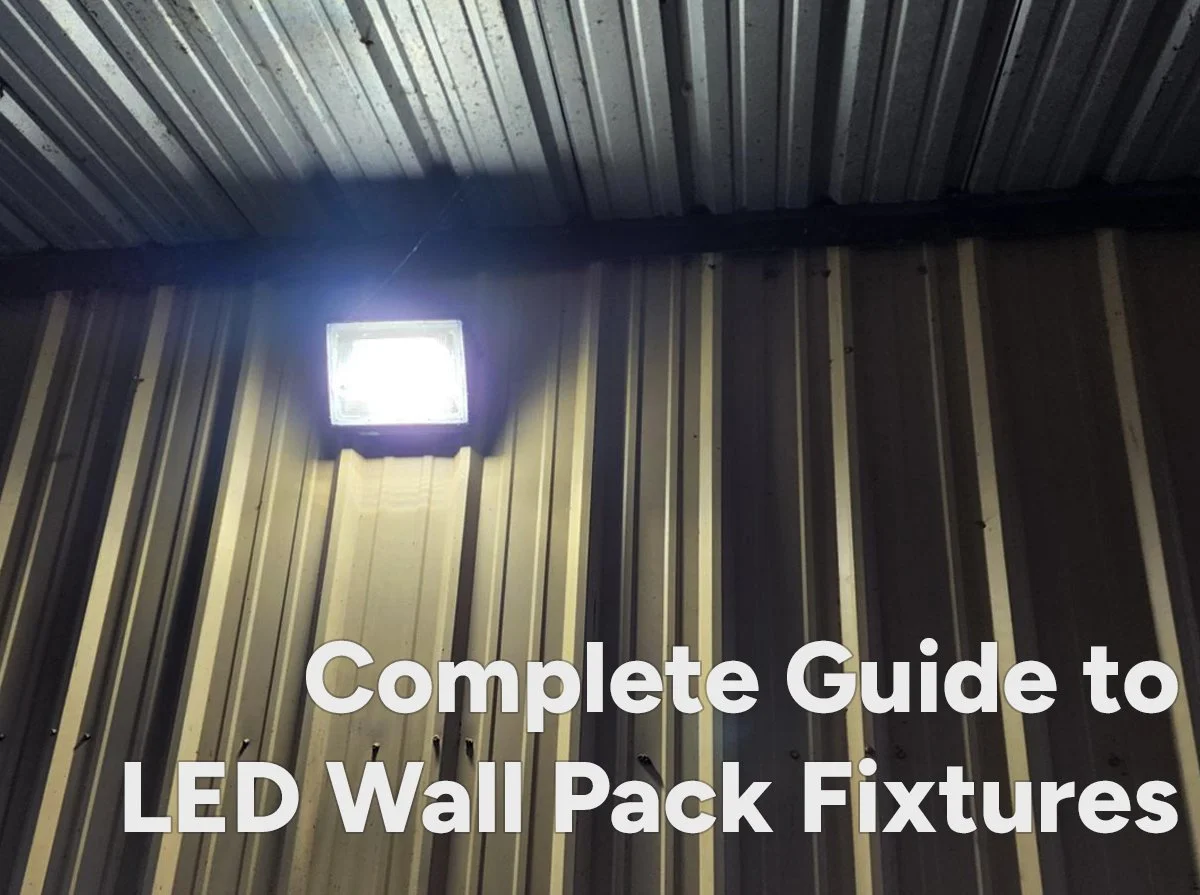
Wall pack fixtures mount directly to building exteriors and are commonly used around:
Entry points
Side walkways
Loading zones
Pedestrian paths
Building perimeters
These fixtures improve visibility near structures where pole-mounted lighting may not adequately eliminate shadows.
Modern LED wall packs with full-cutoff optics direct light downward instead of outward, helping reduce light trespass onto neighboring properties while supporting Dark Sky compliance requirements.
How Bright Should Parking Lots Be?
Parking lot brightness is measured in footcandles, which describe how much light reaches the pavement surface.
The Illuminating Engineering Society’s RP-20 standard is the primary reference used for commercial parking facility lighting recommendations. Rather than applying one universal brightness level to every property, IES guidelines adjust recommendations based on:
Traffic volume
Property type
Pedestrian activity
Security needs
Surrounding environment
A small suburban office lot does not require the same illumination level as a hospital parking structure or a busy retail center operating late into the evening.
Recommended Footcandle Ranges
Most standard commercial parking lots target average illumination levels between 0.5 and 1.0 footcandles. Higher-traffic properties often target 2.0 to 5.0 footcandles, such as:
Hospitals
Hotels
Transit facilities
Large retail centers
Here is a simplified reference based on common IES RP-20 recommendations:
| Parking Lot Type | Typical Average Footcandle Range |
|---|---|
| Basic commercial lots | 0.5 to 1.0 fc |
| Retail and mixed-use lots | 1.0 to 2.0 fc |
| Hospitals and high-traffic facilities | 2.0 to 5.0 fc |
| High-security areas | 5.0 fc and above |
Higher brightness alone does not automatically create a safer lot. Uniformity matters just as much.
Understanding Uniformity Ratios
Uniformity ratio measures the difference between the brightest and darkest areas of the parking lot.
A lot may technically hit the correct average footcandle target while still containing dangerously dark pockets between fixtures. IES recommendations generally target maximum-to-minimum uniformity ratios of 4:1 or better
Once ratios become excessively uneven, visibility suffers because the human eye constantly adjusts between bright and dark areas while drivers and pedestrians move throughout the property.
Poor uniformity often creates:
Concealment areas
Reduced camera visibility
Driver discomfort
Pedestrian safety concerns
This is why proper fixture spacing and beam distribution matter just as much as raw lumen output.
Vertical Illumination Matters Too
Many parking lot designs focus entirely on ground-level brightness while overlooking vertical illumination.
Ground-level footcandles alone do not guarantee:
Facial visibility
License plate recognition
Security camera performance
Fixtures with stronger vertical light distribution improve visibility at eye level, which is especially important for:
Security applications
Pedestrian-heavy lots
Surveillance coverage
Building entry areas
A parking lot can technically meet average pavement brightness standards while still performing poorly from a real-world safety perspective if vertical illumination is ignored.
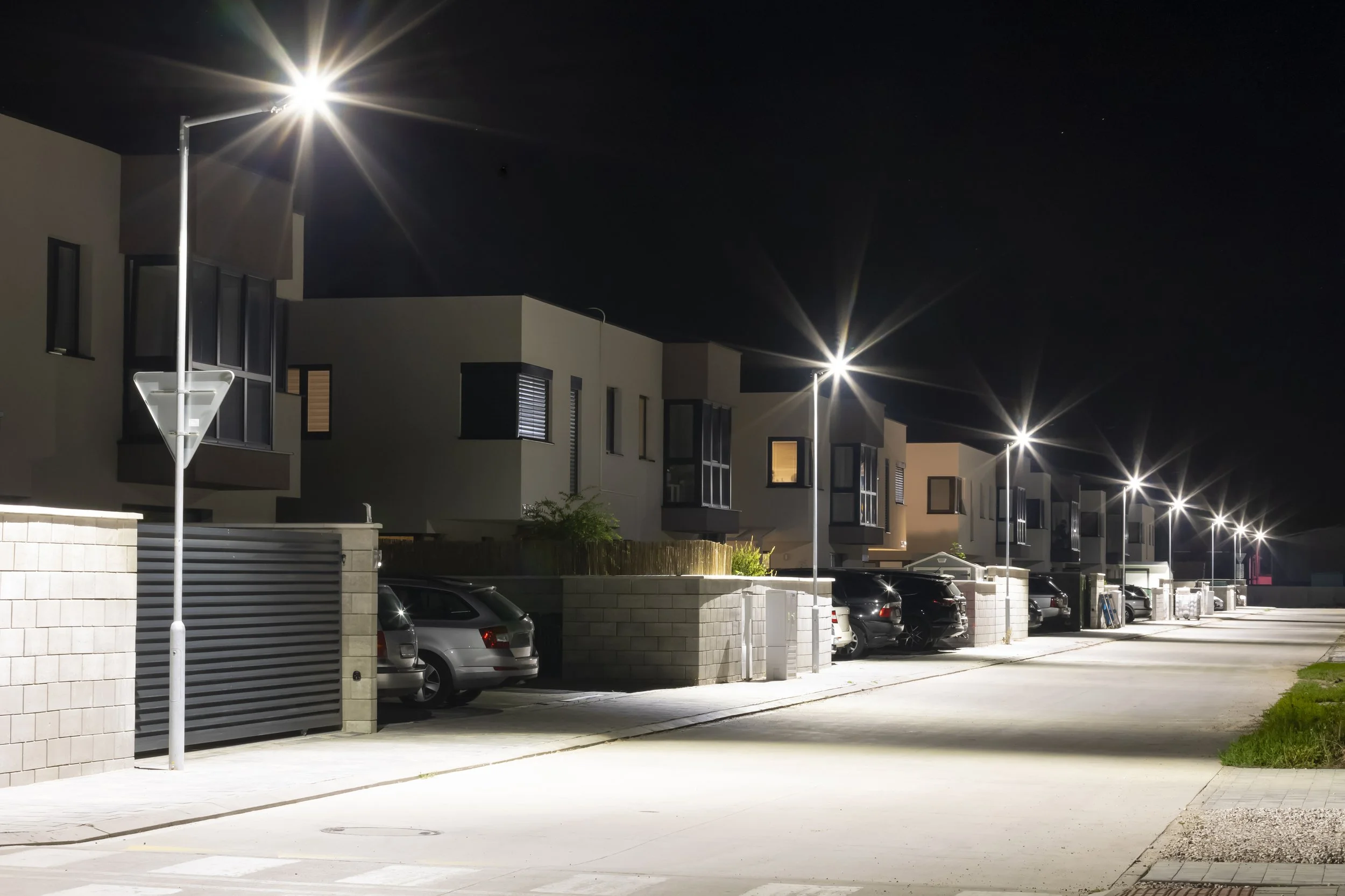
LED Parking Lot Lighting vs Metal Halide
Metal halide fixtures dominated commercial parking lot lighting for decades because they produced high lumen output and broad coverage patterns. Many existing lots still operate older metal halide systems installed years ago.
The issue is that metal halide lighting becomes increasingly expensive over time through:
Higher energy consumption
Lumen degradation
Lamp replacement costs
Maintenance labor
Restrike delays
LED parking lot lights address nearly all of those operational problems simultaneously.
Energy Efficiency Differences
Traditional metal halide parking lot fixtures commonly operate between 400W and 1,000W per fixture. Modern LED area lights often achieve comparable illumination using 150W to 300W fixtures.
A typical 150W LED shoebox fixture can often replace a 400W metal halide fixture while maintaining similar visibility throughout the lot.
That wattage reduction creates major long-term energy savings in commercial properties operating lights every night of the year.
Real-World Energy Savings Example
Consider a parking lot operating:
20 metal halide fixtures
400W each
12 hours per night
That system consumes roughly 35,040 kWh annually.
Replacing those fixtures with 150W LED parking lot lights reduces annual consumption to approximately 13,140 kWh. That represents an energy reduction of more than 60 percent.
For larger commercial properties running dozens or hundreds of fixtures, the operational difference becomes substantial.
Maintenance and Lifespan Advantages
Metal halide systems gradually lose lumen output as lamps age. A fixture that initially performs adequately may operate at significantly reduced brightness only a few years later.
Metal halide fixtures also require:
Lamp replacement
Ballast maintenance
Lift rentals
Ongoing service labor
LED parking lot lights eliminate many of those recurring maintenance demands.
Most commercial LED fixtures are rated between 50,000 and 100,000 hours, depending on driver quality and operating conditions.
LEDs also eliminate restrike delays. After a power interruption, metal halide fixtures may require 15 to 20 minutes to return to full brightness, while LED fixtures restore full output immediately.
Utility Rebates and DLC Certification
Many utility rebate programs prioritize:
DLC-listed fixtures
LED retrofits
Smart lighting controls
Energy-efficient outdoor commercial lighting systems
DLC certification verifies fixture efficiency and performance standards commonly required for rebate eligibility.
1000Bulbs carries a wide range of DLC-listed LED parking lot lights that may qualify for local or state rebate programs, depending on the utility provider and project scope.
Smart Controls and Motion Sensors
Lighting controls help commercial properties reduce operating costs without compromising safety or visibility.
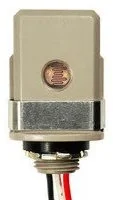
Photocells are the most common parking lot lighting control because they automatically activate fixtures at dusk and shut them off at dawn. This prevents unnecessary daytime operation while eliminating manual scheduling.
Occupancy and motion sensors create additional energy savings during lower-traffic periods. Many systems dim fixtures to reduced output levels when no movement is detected, then restore full brightness within seconds once activity resumes.
This strategy works especially well in:
Office complexes
Industrial facilities
Secondary parking areas
Low-traffic overnight lots
Some commercial properties reduce lighting energy usage by an additional 30 to 50 percent through occupancy-based dimming strategies alone.
Networked lighting controls add another layer of operational visibility by allowing facility managers to:
Monitor fixture status
Schedule dimming profiles
Receive outage alerts
Track energy usage remotely
For large commercial properties managing multiple parking areas, those systems can significantly simplify maintenance and operational oversight.
Most modern LED parking lot fixtures already support:
0-10V dimming compatibility (most LED fixtures include integrated drivers; a compatible 0-10V dimmer is what’s needed to enable this)
Sensor integration
Smart control compatibility
Dark Sky and Compliance Considerations
Dark Sky compliance refers to lighting practices designed to reduce unnecessary upward light scatter and minimize light trespass onto neighboring properties.
In practical terms, Dark Sky-compliant parking lot lighting focuses illumination where it is actually needed instead of allowing light to spill into the sky or surrounding areas.
This matters for several reasons:
Energy efficiency
Neighbor relations
Environmental impact
Municipal code compliance
Driver visibility
Many municipalities now enforce outdoor lighting ordinances that regulate how much light commercial properties can project beyond property lines.
Full-Cutoff Fixtures
Full-cutoff fixtures are the standard for modern Dark Sky-compliant outdoor commercial lighting.
These fixtures direct light below the horizontal plane instead of scattering illumination upward or outward. Properly designed full-cutoff LED area lights improve efficiency because more of the fixture’s output reaches the parking surface instead of being wasted into the sky.
Full-cutoff optics also help reduce:
Light trespass
Glare
Driver discomfort
Excessive sky glow
Wall packs and flood lights without controlled optics are among the most common sources of commercial lighting complaints and ordinance violations.
Local Code Requirements
Outdoor lighting requirements vary significantly depending on:
Municipality
Zoning classification
Property type
Proximity to residential areas
Some jurisdictions have adopted formal Dark Sky ordinances, while others regulate:
Fixture shielding
Pole height
Maximum brightness levels
Property-line light spill
Commercial properties located near residential neighborhoods often face stricter requirements for glare control and light trespass prevention.
Before purchasing fixtures, property owners should confirm:
Cutoff ratings
Local code requirements
Utility rebate eligibility
Pole height restrictions
Energy Savings Examples for Commercial Properties
For many commercial properties, parking lot lighting retrofits create measurable operational savings almost immediately.
A standard 20-fixture parking lot replacing older 400W metal halide fixtures with 150W LED parking lot lights can often reduce lighting energy consumption by more than 60 percent before maintenance savings are even considered.
Here is a simplified comparison example:
| Lighting system | Annual energy usage | Estimated annual electricity cost* |
|---|---|---|
| 20 x 400W metal halide fixtures | ~35,040 kWh | ~$4,205 |
| 20 x 150W LED fixtures | ~13,140 kWh | ~$1,577 |
*Estimated using hypothetical $0.12/kWh electricity rates.
That reduction represents annual savings of more than $2,600 per year through energy consumption alone.
Properties often see even faster payback periods because the fixtures operate continuously, such as in:
24-hour parking lots
Hospitals
Hotels
Transit facilities
Distribution centers
Maintenance savings strengthen the financial case further.
Metal halide systems typically require:
Lamp replacement every 3 to 5 years
Ballast servicing
Lift equipment rentals
Ongoing labor costs
LED fixtures rated between 50,000 and 100,000 hours dramatically reduce those recurring maintenance demands.
For large retrofit projects, 1000Bulbs can also help identify:
DLC-listed fixtures
Utility rebate eligibility
Bulk pricing opportunities
Commercial fixture packages
Facility managers considering a retrofit can call 1-800-624-4488 to speak with a US-based lighting professional about fixture selection and rough energy savings estimates.
Common Parking Lot Lighting Mistakes
Many parking lot lighting problems are caused by design mistakes rather than fixture quality itself.
Here are some of the most common issues seen in commercial parking lots:
| Mistake | Why It Creates Problems |
|---|---|
| Focusing only on average footcandles | A parking lot can technically hit the correct average brightness while still containing dangerously dark pockets between fixtures. Uniformity ratios matter just as much as average illumination levels. |
| Underspecifying fixture wattage | Choosing lower-output fixtures to reduce upfront costs often creates long-term visibility issues that are far more expensive to correct later. |
| Ignoring mounting height | Pole height directly affects coverage area and fixture spacing. A fixture designed for 25-foot mounting heights will not perform the same way at 15 feet. |
| Using non-dimmable fixtures with smart controls | Some property owners install motion controls or dimming systems only to discover their fixtures do not properly support low-level dimming. |
| Skipping a photometric plan | Photometric analysis confirms fixture spacing, expected footcandles, uniformity ratios, and pole placement before installation begins. Skipping this step is one of the leading causes of underlit or overlit lots. |
Many of these issues can be avoided during the planning stage with proper fixture selection and layout modeling before equipment is purchased.
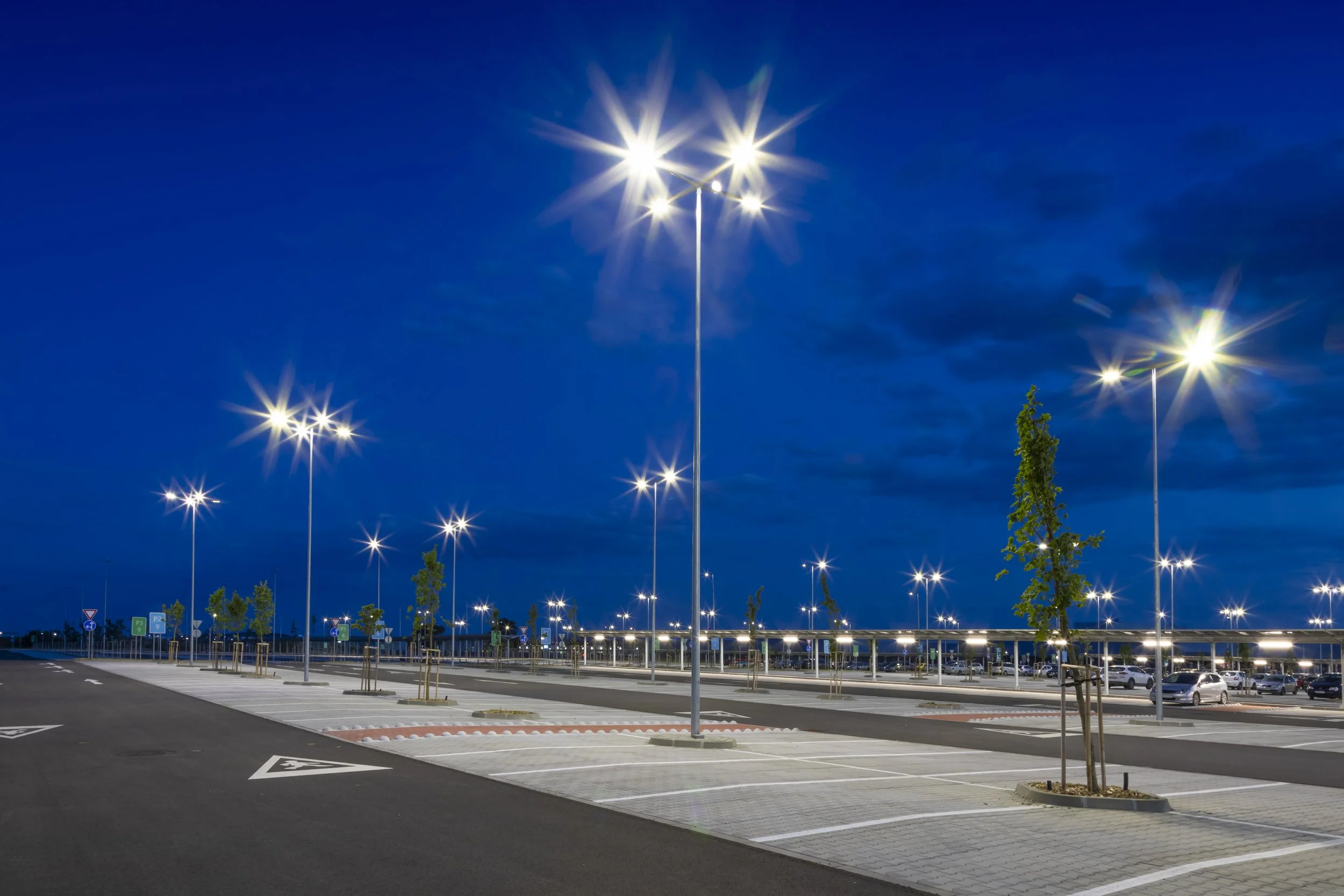
Safer Parking Lots Start with Better Lighting
Parking lot lighting is not just a product decision. It is a safety, liability, and operational infrastructure decision that affects how commercial properties function every night.
The right lighting system improves visibility, supports customer safety, reduces maintenance demands, and helps properties meet compliance standards without wasting energy on oversized or poorly designed fixtures.
Modern LED parking lot lights have become the standard for commercial outdoor lighting because they combine:
Lower operating costs
Longer lifespan
Better uniformity
Faster startup
Smart control compatibility
Whether you are planning a new installation or evaluating an LED retrofit, choosing the right fixtures, pole heights, beam patterns, and controls upfront helps avoid expensive correction costs later.
1000Bulbs carries a wide selection of commercial outdoor lighting products, including LED area lights, wall packs, flood lights, and DLC-listed retrofit fixtures designed for parking lot applications.
To speak with a US-based lighting professional, call 1-800-624-4488 Monday through Friday from 7 a.m. to 5 p.m. CST.
FAQs
What Lights Are Best for Parking Lots?
LED area lights, often called shoebox fixtures, are the most common and effective option for commercial parking lots because they provide broad, uniform illumination with lower energy consumption and reduced maintenance requirements.
How Bright Should Parking Lot Lights Be?
Most commercial parking lots target average illumination levels between 0.5 and 2.0 footcandles, depending on traffic volume and property type. High-security or high-traffic facilities may require higher levels based on IES RP-20 recommendations.
Are LED Parking Lot Lights Worth It?
LED parking lot lights typically reduce energy consumption by 50 to 60 percent compared to older metal halide systems while also lowering maintenance costs and improving fixture lifespan.
What Height Should Parking Lot Poles Be?
Most commercial parking lot poles range between 20 and 30 feet tall. The ideal mounting height depends on fixture output, lot size, spacing requirements, and uniformity goals.
What is Dark Sky Compliance?
Dark Sky compliance refers to outdoor lighting practices that reduce upward light scatter and minimize light trespass onto neighboring properties through controlled fixture optics and full-cutoff designs.
What is a Photometric Lighting Plan?
A photometric plan models fixture placement, brightness levels, beam spread, and uniformity throughout a parking lot before installation begins. It helps confirm that the lighting system will meet safety and performance goals.