
What Is Dark Sky Compliance in Outdoor Lighting?

Area with no light pollution.
Dark sky compliance refers to outdoor lighting designed and installed to minimize light pollution, glare, and energy waste by directing light downward where it's needed rather than letting it scatter into the night sky. DarkSky International sets the technical standards that define what qualifies as compliant, including requirements for shielding, color temperature, and controls.
This guide covers the specific requirements fixtures need to meet, the types of outdoor lights that qualify, how to verify compliance before you buy, and where to find local ordinances that may apply to your project.
What Dark Sky Compliance Means
Dark sky compliance describes outdoor lighting that's designed and installed to minimize light pollution, glare, and energy waste. In practice, a compliant fixture directs light only where you actually need it (usually downward, onto the ground) rather than letting it scatter upward into the night sky. DarkSky International, formerly called the International Dark-Sky Association, sets the technical standards that define what counts as compliant.
Interest in dark sky compliance has grown significantly over the past decade as more communities adopt outdoor lighting ordinances to reduce light pollution, improve nighttime visibility, protect wildlife, and lower unnecessary energy use. Commercial developments, municipalities, HOAs, and homeowners increasingly consider dark sky principles when planning new construction and outdoor lighting upgrades.
You'll sometimes see products labeled "dark sky friendly," which is a general marketing term. "DarkSky Approved," on the other hand, means a product passed third-party certification and appears in the official DarkSky Approved database. Both can satisfy local code requirements depending on where you are, but only certified products carry the seal.
It's also important to know that many outdoor lighting products can still satisfy local dark sky ordinances without carrying the official DarkSky Approved certification. Certification is voluntary, so a fixture may fully comply with local requirements even if it hasn't been submitted for third-party approval.
One thing worth knowing: DarkSky International rebranded from the International Dark-Sky Association in 2022. The organization kept the same technical standards, so you'll still see both names on older spec sheets and ordinance documents.

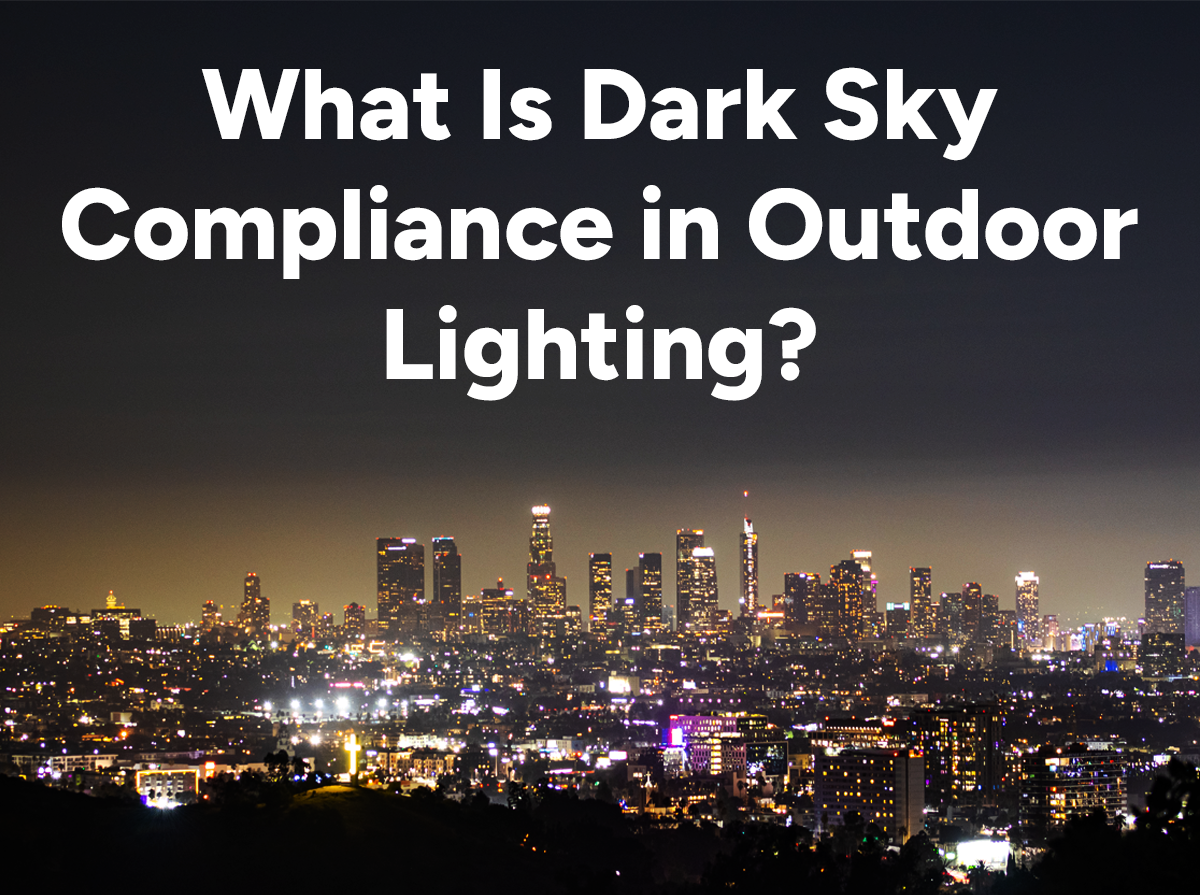
Example of light pollution in a large city.
Why Dark Sky Ordinances Exist
Artificial light at night creates problems that go beyond just washing out the stars. Nocturnal animals, migratory birds, sea turtle hatchlings, and pollinating insects all rely on natural darkness for navigation, nesting, and feeding. When outdoor lighting runs unchecked, it disrupts those behaviors in ways that ripple through local ecosystems.
Human health is part of the picture too. Blue-rich light, the kind you get from cool white LEDs, suppresses melatonin production and interferes with sleep. Fixtures with color temperatures at or below 3000K contain less blue wavelength output, which is why warm white light shows up in nearly every dark sky standard.
Then there's the visibility issue. Glare and light trespass (light spilling onto neighboring properties) actually make it harder to see, not easier. Poorly shielded fixtures create harsh contrast between bright spots and dark shadows, forcing your eyes to constantly readjust. That's the opposite of what good security lighting does.
Energy Efficiency and Sustainability
When a fixture sends all its output downward, you're not paying to illuminate the sky or empty space above a parking lot. That translates directly to lower electricity costs.
Compliant lighting also supports sustainability reporting. Facility managers can point to shielded, controlled fixtures when documenting LEED credits or corporate energy reduction targets. And when you pair compliant fixtures with motion sensors or timers, energy use drops further because lights draw full power only when someone's actually there.
By reducing wasted light and using controls that match lighting levels to actual occupancy, dark sky compliant systems can help organizations lower operating costs while supporting broader sustainability and energy efficiency goals.
Dark Sky Lighting Standards and Requirements
Four technical criteria show up in most dark sky standards and local ordinances. Understanding each one helps you evaluate whether a fixture will work for your project.
Full Cutoff Shielding and Zero Uplight
Compliant fixtures emit no light above a horizontal plane, meaning nothing goes above 90 degrees from straight down. Manufacturers verify this with photometric reports that measure what percentage of lumens escape above horizontal.
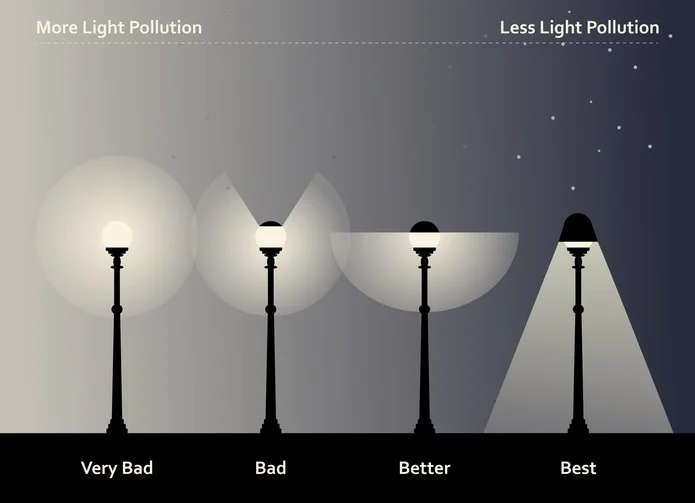
Illustration showing how full cutoff lighting works.
A fixture rated 0% uplight (sometimes labeled "0 ULR" for uplight rating) meets the strictest classification under the IES BUG rating system. If you see "full cutoff" on a spec sheet, that's what it means.
Full cutoff shielding does more than reduce sky glow. It also improves visual comfort by directing illumination where it's needed instead of allowing light to escape upward or into neighboring properties. Proper shielding helps create more consistent visibility while minimizing glare for drivers, pedestrians, and nearby residents.
Color Temperature of 3000K or Lower
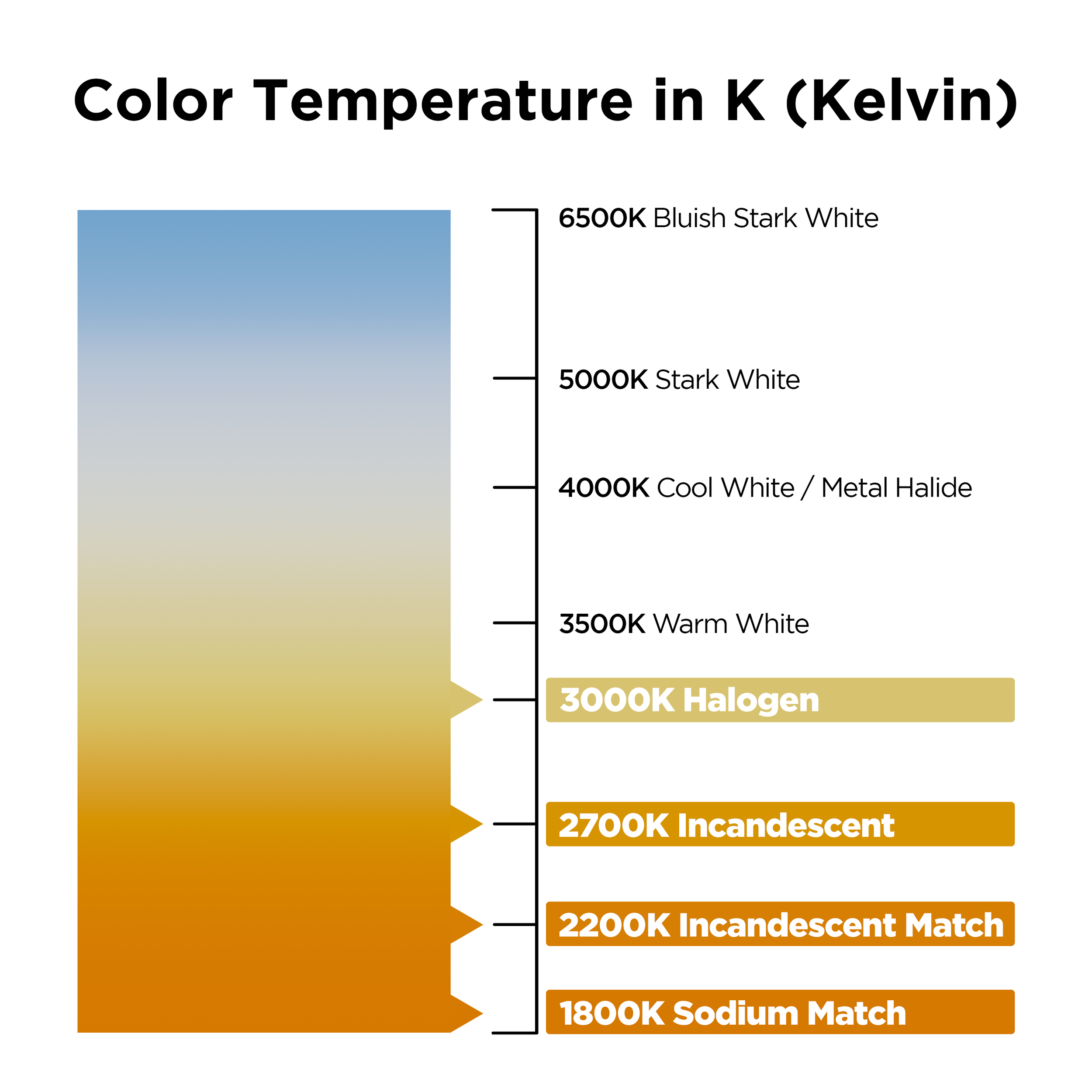
Correlated color temperature, or CCT, describes how warm or cool a light source appears. It's measured in Kelvin. Lower CCT values produce warmer, more amber light, while higher values look cooler and bluer.
Most dark sky standards require 3000K or lower, which looks similar to traditional incandescent light. Some ordinances near wildlife corridors or sea turtle nesting beaches go stricter, requiring 2200K or lower.
Warmer color temperatures contain less blue light, making them a better choice for protecting wildlife habitats and preserving natural nighttime conditions. They also create a more comfortable visual environment for people by reducing harsh, high-intensity light commonly associated with cooler color temperatures.
Dimming and Timed Controls
Many model ordinances require fixtures to dim or shut off during overnight hours. Timers, motion sensors, and dimmable drivers let light output match actual need rather than running at full brightness all night. This is where the "right amount of light" principle comes in: enough for safety and function, without excess.
Lighting controls also help extend fixture life by reducing operating hours and unnecessary energy consumption. Whether you're lighting a commercial parking lot or a residential pathway, using controls ensures outdoor lighting is available when needed without contributing to unnecessary light pollution during inactive hours.
BUG Rating and Lumen Limits
The BUG rating system (Backlight, Uplight, Glare) classifies outdoor fixtures using separate 0 to 5 ratings for each category. IES and DarkSky International introduced this system through technical memorandum TM-15-11 to replace older cutoff classifications.
Local ordinances set maximum BUG ratings by lighting zone:
| Lighting Zone | Typical Location | Maximum Uplight |
|---|---|---|
| LZ0 | Near national parks, observatories | 0% |
| LZ1 | Rural residential areas | 0% |
| LZ2 | Light commercial, suburban | 1.5% |
| LZ3 | Commercial districts | 3% |
| LZ4 | Entertainment districts | 6% |
You'll find BUG ratings on manufacturer spec sheets, usually near the photometric data.
Reviewing BUG ratings before purchasing helps confirm whether a fixture is likely to meet local ordinance requirements and perform as expected in your lighting zone. Rather than relying on appearance alone, the BUG system provides an objective way to compare fixtures based on how effectively they control backlight, uplight, and glare.
It's also important to remember that using more lumens than necessary doesn't improve visibility. Oversized fixtures often increase glare and reduce visual comfort, making it harder to distinguish objects and creating unnecessary light spill beyond the intended area. Selecting the appropriate lumen output for the application is just as important as choosing the correct fixture style.
Types of Dark Sky Compliant Outdoor Fixtures
Several fixture categories commonly meet dark sky requirements when properly specified. The key is matching the right fixture type to your application.
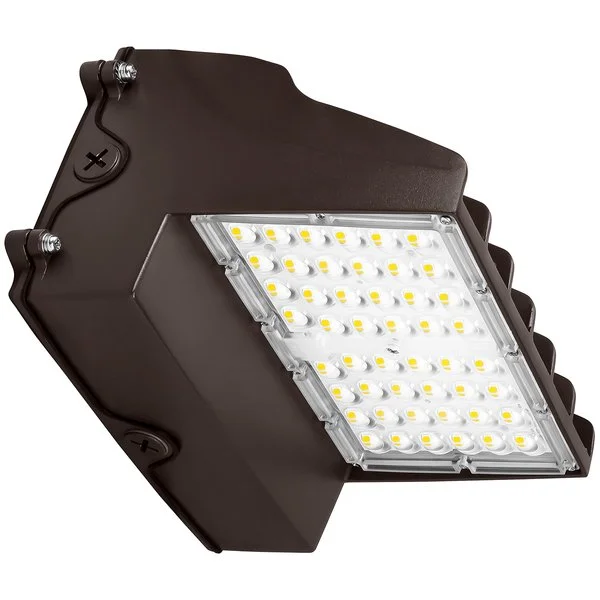
Full Cutoff Wall Pack
Wall Packs and Security Lights
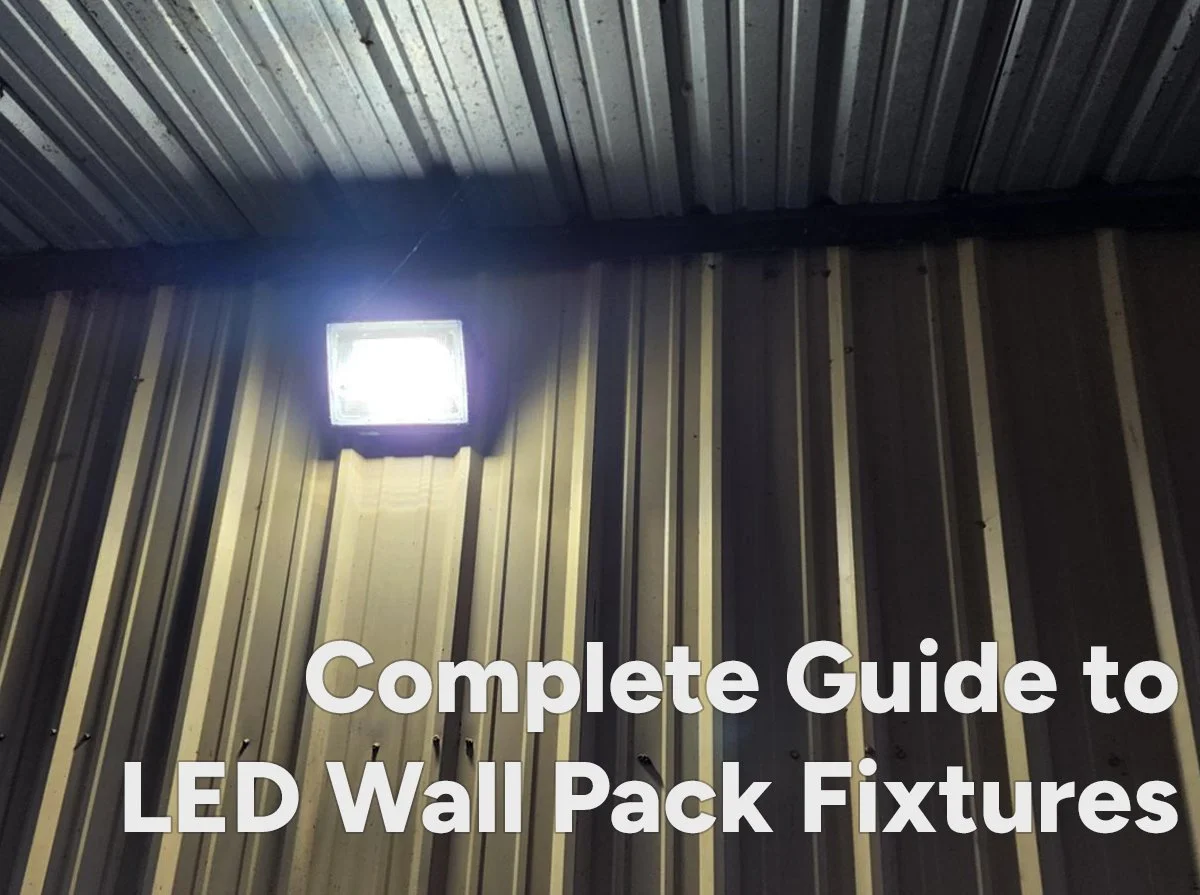
Shielded wall-mounted fixtures direct light onto walkways and building perimeters. Full cutoff wall packs replace older unshielded HID fixtures that used to spill light onto streets and neighboring properties.
Because these fixtures mount directly to buildings, selecting the correct beam pattern and shielding is just as important as choosing the proper brightness. Well-designed wall packs improve safety while keeping illumination focused on entrances, loading areas, and pedestrian pathways instead of neighboring properties.
Best for: Warehouses, schools, apartment buildings, loading docks, commercial entrances.
Example: A full cutoff LED wall pack installed above a warehouse loading dock provides employees with safe visibility during nighttime deliveries while preventing glare from spilling onto nearby streets and adjacent properties.
Area and Parking Lot Lights
Pole-mounted fixtures with full cutoff optics serve parking areas and campuses. They replace traditional cobra-head or drop-lens styles that emit light in all directions.
Modern LED area lights combine precision optics with full cutoff shielding to distribute light evenly across parking areas while minimizing glare and light trespass. Proper fixture placement often allows facilities to improve visibility using fewer fixtures than older HID systems.
Best for: Parking lots, municipal campuses, distribution centers, office complexes.
Example: A Type III LED parking lot fixture mounted on a 25-foot pole evenly illuminates a retail parking lot while keeping light contained within the property line instead of spilling into nearby residential neighborhoods.
Flood Lights
Directional fixtures provide accent or security lighting when aimed properly. Flood lights typically fall into four applications:
Security lighting for perimeters and entrances
Accent lighting for architectural or landscape features
Sign lighting for business signage
Building illumination for facades
A shielded, narrow-beam flood light aimed at a monument sign from ground level can meet compliance requirements. The same fixture aimed upward at a building facade typically cannot.
Dark sky compliance doesn't eliminate the use of flood lights. Instead, it emphasizes careful aiming, proper shielding, and selecting only the amount of light necessary for the application. Even small adjustments to beam angle or mounting position can significantly reduce glare and unnecessary sky glow.
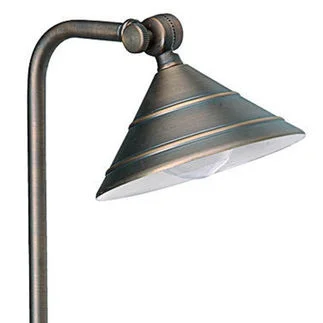
Pathway Light
Bollards and Pathway Lighting
Low-height fixtures serve walkways and gardens. Compliant bollards use internal reflectors or louvered designs that direct light downward onto the path surface rather than outward at eye level.
Because bollards sit close to pedestrians, reducing glare is especially important. Fixtures that hide the light source behind louvers or internal reflectors provide comfortable illumination while helping visitors clearly see walking surfaces, curbs, and landscaping.
Best for: Universities, hospitals, parks, HOA pathways.
Example: Louvered LED bollards installed along a hospital walkway direct light onto the walking surface, giving patients and visitors clear footing while minimizing glare at eye level.
Fixture Optics and Beam Control
Shielding controls where light doesn't go. Optics determine how evenly light covers the target area. Both matter.
Beam angle: The cone of light a fixture produces, measured in degrees. Narrow angles (15 to 30 degrees) concentrate light on specific targets. Wide angles (60+ degrees) spread illumination across broader areas with less intensity.
Optical lenses: Precision-molded lenses reshape light before it leaves the fixture. Type III, Type IV, and Type V distributions are common classifications for parking areas, roadways, and open yards.
Precision light distribution: Matching a fixture's optics to the shape and size of the area being illuminated helps reduce wasted light, eliminate dark spots, and improve overall visibility without increasing brightness.
Shielding determines where light should not go, while optics determine where it should. A properly shielded fixture with poor optics can still create uneven lighting, bright hotspots, and unnecessary glare. Selecting optics that match your application often improves performance more than simply installing brighter fixtures.
How to Identify a Dark Sky Compliant Fixture
Before purchasing, you'll want to verify that a fixture meets the requirements for your application. Here's what to check.
Look for the DarkSky Approved Seal
DarkSky International certifies compliant fixtures through their approval program. The seal appears on packaging and specification sheets.
That said, the absence of a seal doesn't automatically mean a fixture is noncompliant. Certification is optional and involves fees, so some manufacturers skip it even when their products meet the technical requirements.
If your municipality specifically references DarkSky Approved products, the certification seal provides the easiest way to verify compliance. Otherwise, reviewing the fixture's published specifications often provides enough information to determine whether it satisfies local ordinance requirements.
Check Photometric Reports and Cutoff Classification
Photometric reports show exactly how a fixture distributes light. Look for "full cutoff," "0% uplight," or a BUG rating with U0 (zero uplight). Manufacturers typically offer photometric reports as downloadable PDFs on product pages.
Photometric reports also show beam distribution, light intensity, and illumination patterns across a space. Reviewing these reports helps ensure the fixture delivers light where it's needed while minimizing glare and unwanted light spill before installation begins.
Verify Color Temperature and Dimming Support
Confirm the CCT is 3000K or lower on the product label or spec sheet. If your ordinance requires controls, check that the fixture supports 0-10V dimming or has sensor integration options.
Some municipalities also specify automatic shutoff times, occupancy sensors, or adaptive lighting controls. Confirming compatibility before purchasing helps avoid costly replacements later if local requirements become more restrictive than expected.
Quick Checklist:
Full cutoff or zero uplight rating
3000K or lower color temperature
Appropriate lumen output for the application
Motion sensing or dimming capability (when required)
Published photometric data available
If you're unsure whether a fixture satisfies local requirements, comparing its photometric data, BUG rating, and color temperature against your municipality's lighting ordinance can help you make a more confident purchasing decision.
Common Misconceptions About Dark Sky Lighting
Two misunderstandings frequently lead to noncompliant installations.
All Warm White LEDs Are Automatically Compliant
Color temperature is one requirement among several. An unshielded 2700K fixture still sends light directly into the sky and onto neighboring properties. Warm color temperature and proper shielding work together; you can't skip one and expect compliance.
A fixture must also control glare, limit uplight, and distribute illumination appropriately for its intended application. Simply installing a warm white bulb in an older, unshielded fixture typically won't satisfy dark sky requirements.
Any Shielded Fixture Qualifies
Shielding varies in effectiveness. A fixture with a small hood may reduce uplight without eliminating it. Partial shielding that still allows light above horizontal doesn't meet full cutoff requirements. Check the photometric report rather than relying on how a fixture looks.
Manufacturers verify fixture performance through photometric testing, making published specification sheets far more reliable than visual appearance alone. Whenever possible, compare a fixture's BUG rating, photometric data, and color temperature against your local ordinance before purchasing.
How to Find Local Outdoor Lighting Ordinances
Many states and municipalities have adopted dark sky ordinances, though requirements vary by location. Areas near observatories, national parks, and coastal wildlife habitats tend to have the strictest rules, sometimes requiring lower lumen caps or amber-only sources.
Your local building department is the best starting point. Search municipal codes for "outdoor lighting ordinance" or "dark sky."

Because outdoor lighting requirements continue to evolve, always verify current regulations with the authority having jurisdiction before beginning a project. Relying on specifications from an older installation or a neighboring municipality could result in unnecessary fixture replacements or failed inspections.
Benefits of Dark Sky Compliant Outdoor Lighting
Compliant fixtures offer practical advantages beyond code compliance:
Reduced energy costs: Using only the lumens a space actually needs, combined with controls, lowers electricity use across your entire outdoor lighting circuit.
Lower maintenance: Shielded LED fixtures generally run cooler and last longer than older HID or metal halide fixtures.
Improved neighbor relations: Eliminating light trespass prevents complaints about glare through windows or light spilling across property lines.
Code compliance: Meeting local lighting ordinances from the start helps avoid failed inspections, project delays, retrofit costs, and potential fines after installation.
Beyond these immediate benefits, dark sky compliant lighting often creates a more comfortable nighttime environment. Properly distributed light improves visibility without excessive brightness, helping pedestrians, drivers, employees, and residents navigate outdoor spaces more safely and comfortably.
Choosing the Right Dark Sky Compliant Lighting
Matching fixtures to your application involves balancing lumen output, beam distribution, mounting height, and color temperature. A parking lot has different requirements than a building entrance or garden pathway.
Every outdoor lighting project has unique performance requirements, which is why choosing fixtures involves more than simply selecting the brightest option. Considering optics, shielding, color temperature, mounting height, and lighting controls together helps create a system that delivers effective illumination while reducing glare and unnecessary light pollution.
1000Bulbs.com stocks shielded outdoor fixtures with warm color temperature options across wall packs, area lights, flood lights, and bollards.
Whether you're replacing outdated fixtures, planning a new commercial installation, or upgrading residential landscape lighting, selecting compliant products early can help prevent costly changes later in the project.
If you're unsure which fixtures best fit your application or local ordinance requirements, our U.S.-based Lighting Specialists are available to help. Call 1-800-624-4488 Monday through Friday from 7 a.m. to 7 p.m. CST for expert guidance on selecting dark-sky-compliant outdoor lighting.
Frequently Asked Questions About Dark Sky Compliance
Are dark sky compliant lights required by law?
Requirements depend on your location. Many states and municipalities have adopted outdoor lighting ordinances with dark sky provisions, while others have no regulations. Check local codes before starting your project.
Can flood lights be dark sky compliant?
Yes, when properly specified and aimed. A shielded flood light with 3000K or lower color temperature, aimed downward at a sign or landscape feature, can meet compliance requirements. The same fixture aimed upward at a building facade typically cannot.
Can existing outdoor fixtures be retrofitted for compliance?
Some fixtures can be retrofitted with shielding accessories or lower-CCT lamps. However, full compliance often requires fixture replacement, especially if the existing fixture lacks proper optical control or has an uplight component built into its design.
Which national parks have dark sky certification?
DarkSky International certifies parks, communities, and other locations through their International Dark Sky Places program. They maintain a searchable directory of certified locations on their website at darksky.org.
Does dark sky compliance apply to indoor lighting?
No. Dark sky compliance applies to outdoor lighting systems that contribute to light pollution, glare, and sky glow. Indoor lighting generally isn't regulated unless excessive light escapes outdoors and affects neighboring properties or protected areas.
What color temperature is best for dark sky compliant lighting?
Most dark sky standards recommend or require outdoor fixtures with a correlated color temperature (CCT) of 3000K or lower. Some environmentally sensitive areas, including wildlife habitats and coastal regions, may require even warmer lighting such as 2200K amber sources.
How do I know if an outdoor light fixture is DarkSky Approved?
Look for the official DarkSky Approved designation on the product packaging or specification sheet. If a fixture isn't certified, review its photometric report, BUG rating, shielding, and color temperature to determine whether it satisfies your local dark sky ordinance requirements.
Can homeowners benefit from dark sky compliant lighting?
Absolutely. Dark sky compliant lighting helps homeowners reduce glare, improve nighttime visibility, lower energy consumption, and minimize light spilling into neighboring properties. It also creates a more comfortable outdoor environment while preserving views of the night sky.