
OSHA Lighting Requirements for Workplaces: A Complete Guide

A single burned-out fixture in a warehouse aisle might seem like a minor inconvenience, but it can trigger an OSHA citation and, worse, contribute to a serious injury. Workplace lighting requirements exist because inadequate illumination is a recognized hazard that leads to slips, trips, falls, and struck-by incidents.
This guide covers the specific foot-candle minimums OSHA requires for different work environments, fixture safety standards, emergency lighting obligations, and how to measure and document compliance at your facility.
What OSHA Requires for Workplace Lighting
OSHA requires employers to provide safe, adequate lighting across all workspaces. Light levels are measured in foot-candles (fc), and the mandated minimum intensities vary by environment: 30 fc for offices and first-aid stations, 10 fc for general shops and warehouses, and 5 fc for construction and underground areas.
So what exactly is a foot-candle? It's the amount of light a single candle casts on one square foot of surface from one foot away. You'll see this unit throughout OSHA regulations, and it's what inspectors measure during compliance checks.
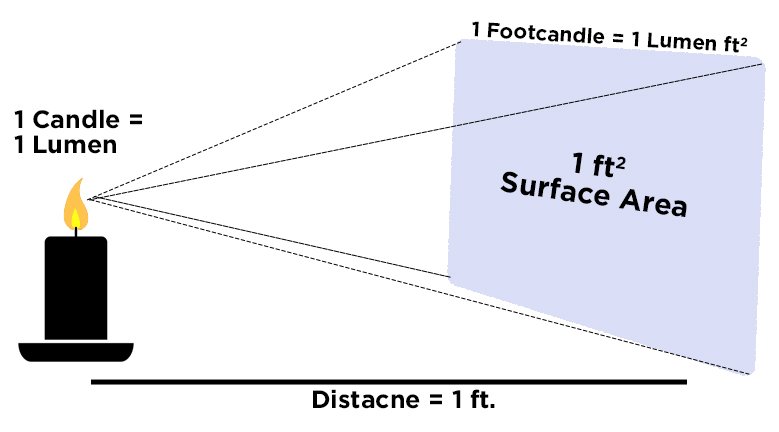
Here's something that trips people up: while construction and shipyard standards spell out exact foot-candle minimums, general industry facilities fall under a broader requirement for "adequate" illumination. When no specific number exists, the General Duty Clause (Section 5(a)(1) of the OSH Act) fills the gap by requiring employers to address recognized hazards, and insufficient lighting counts when it creates unsafe conditions.
OSHA Standards That Govern Workplace Lighting
Different parts of the Code of Federal Regulations (CFR) apply to different industries. Before looking at specific foot-candle numbers, the first step is figuring out which standard governs your facility.
General Industry Under 1910
29 CFR 1910 requires "adequate lighting" without specifying exact foot-candle levels for most work areas. When poor lighting creates a recognized hazard, the General Duty Clause covers the situation.
A few specific numbers do exist in Part 1910. Powered industrial trucks (1910.178(h)(2)) require auxiliary directional lighting when general lighting falls below 2 lumens per square foot. Exit routes (1910.37(b)) also require enough illumination for an employee with normal vision to see along the entire path.
Construction Under 1926.56
This regulation contains the specific foot-candle minimums most readers are searching for. Table D-3 in 29 CFR 1926.56 lists illumination requirements by area type, and the companion rule 29 CFR 1926.26 requires construction areas to be lighted with natural or artificial illumination.
Note: In July 2025, OSHA proposed rescinding the construction illumination standard (29 CFR 1926.26 and 1926.56), arguing the hazard is "obvious" and better handled under the General Duty Clause. As of this writing, that rulemaking remains open and the standard is still in force.
Shipyards Under 1915.82
Maritime facilities have additional requirements, including explosion-proof or grounded portable lights in hazardous or dark areas. 1915.82 splits requirements between landside areas (Table F-1) and vessels or vessel sections. Vessel lighting can alternatively meet ANSI/IESNA RP-7-01 by reference.
OSHA Minimum Illumination Levels by Foot-Candle
The construction table (Table D-3, 29 CFR 1926.56) provides the most commonly referenced foot-candle requirements:
| Work Area |
Minimum Foot-Candles |
|---|---|
| Offices, first-aid stations, infirmaries |
30 fc |
| General construction plants and shops |
10 fc |
| Warehouses, walkways, corridors, exitways |
5 fc |
| General construction areas, underground shafts |
5 fc |
| Loading platforms, refueling, excavation sites |
3 fc |
General Construction Areas
The 5 fc minimum applies to ramps, runways, corridors, and open construction zones under 29 CFR 1926.56(a). This baseline covers most active work areas where detailed visual tasks are not the primary activity.

Warehouses and Indoor Storage
Walkways, corridors, and exitways require 5 fc. Storage areas in back corners often get overlooked during walkthroughs, yet they still fall under this requirement whenever employees access them.
Plants, Shops, and Refueling Areas
Plants and shops require 10 fc because they typically involve more detailed work. Refueling and loading platforms require only 3 fc since employees spend less time in those areas and the tasks are less visually demanding.
First Aid Stations, Infirmaries, and Offices
At 30 fc, office and medical spaces have the highest OSHA construction-table requirement. Medical areas and offices involve precise visual work, whether reading labels, checking vitals, or reviewing documents.
Tunnels, Shafts, and Underground Work
A 5 fc minimum applies to most underground areas. However, drilling, mucking, and scaling at tunnel and shaft headings require 10 fc. ANSI A11.1 or IES RP-7 may provide additional guidance for underground environments.
Tip: The OSHA minimums above are the legal floor. For recommended foot-candle levels tailored to specific applications like warehouse aisles, assembly lines, or offices, see our guide on How Many Footcandles Do I Need?
OSHA Fixture and Light Cover Requirements
Beyond brightness levels, OSHA sets physical requirements for how fixtures are installed and protected:
Minimum mounting height: Fixtures located less than 7 feet above a work surface require a shatterproof shield to prevent injuries from broken glass or debris.
Enclosed electrical parts: All live electrical components in lighting fixtures require enclosure with no exposed parts.
Reflectors and guards: Temporary and portable lights require protection so bulbs cannot be accidentally contacted.
Heavy-duty cords: Temporary lighting cords require hard-usage ratings, and connections and insulation require safe condition maintenance (per 1915.82(b) for shipyards and comparable general practice elsewhere).
OSHA Lighting Requirements for Offices
Office spaces require 30 fc minimum, the highest general foot-candle figure in the construction table. This level supports reading, writing, and detailed computer work.
OSHA's computer workstation guidance recommends minimizing direct glare and reflected light on monitor screens. Task lighting at individual workstations can supplement ambient overhead lighting, especially in spaces where ceiling fixtures alone create shadows or uneven illumination. Rows of diffuse lights oriented parallel to the worker's line of sight help reduce glare, and positioning monitors perpendicular to windows minimizes screen reflections from natural light.
OSHA Requirements for Emergency and Exit Lighting
Every exit route requires reliable illumination so employees can safely evacuate, and this obligation continues when the power goes out.
Exit Route Illumination (29 Cfr 1910.37)

1910.37(b) requires exit routes to be lighted so an employee with normal vision can see along the route at all times the building is occupied. This covers the full path of egress: corridors, stairwells, and doorways, not just the exit door itself.
Low-light areas along an egress path (storage rooms used as a cut-through, mezzanines, back hallways) are a common inspection finding. If employees might use it to exit, it requires adequate lighting.
Emergency Backup Power and Duration
OSHA requires reliable illumination during power failures so workers can find exits. In practice, this means battery backup or generator-fed emergency fixtures on every egress path.
The specific backup duration (commonly 90 minutes) and the requirement for emergency lighting to activate automatically on power loss come from the NFPA 101 Life Safety Code, which most state and local fire codes adopt by reference. The exact duration and coverage requirement can vary by occupancy type, so checking with your local fire marshal or authority having jurisdiction (AHJ) is a good idea.
Exit Sign Illumination Requirements
Exit signs require distinctive, legible illumination at all times the space is occupied. Two common approaches exist: internally illuminated LED signs (the most common choice for new installs and retrofits) and self-luminous tritium signs (which require no electrical connection but have a finite radioactive half-life and specific disposal requirements). Exit signs also require their own backup power source, same as surrounding emergency lighting.
Testing and Maintenance Schedules
NFPA 101 and most fire codes require a two-tier testing cadence:
Monthly functional test: Roughly 30 seconds, verifying the unit switches to battery power
Annual full-duration test: Commonly 90 minutes of continuous operation
Keeping a dated test log for every emergency and exit unit is helpful because inspectors and fire marshals often ask to see documentation first. LED emergency units with self-diagnostic indicator lights make monthly checks faster and help catch failing batteries before they become citations.
Choosing the Right Exit and Emergency Fixtures
Facilities typically order LED exit signs, combination exit sign/emergency light units, and standalone emergency egress light heads (the familiar "bug eyes" that provide backup illumination along corridors).
Combo units are usually the most cost-effective choice for stairwells and corridors because they cover both requirements from a single fixture and test point. Before ordering, check environmental ratings: wet-location or damp-location ratings are required for parking garages, loading docks, and outdoor egress paths.
LED exit signs and emergency backup units from 1000Bulbs help facilities meet exit and emergency requirements while reducing long-term maintenance versus older fluorescent or incandescent emergency fixtures.
Common Lighting Compliance Gaps in Industrial Facilities
Even facilities that meet foot-candle minimums on paper can have compliance gaps in practice:
Inconsistent lighting across zones: Different areas may fall under different foot-candle requirements but get lit to a single blanket standard by mistake.
Forgotten storage areas: Back corners and seldom-used spaces still require adequate light even when foot traffic is low.
Blocked or obstructed fixtures: Stored materials, pallets, or racking can reduce effective illumination well below rated output.
Aging lamps below rated output: Lamps dim over time (lumen depreciation) and may fall below minimums long before replacement.
Glare causing temporary blindness: Lights aimed directly into equipment operators' eyes can violate the intent of adequate-illumination standards even where a foot-candle minimum is technically met.
How to Measure Workplace Lighting for OSHA Compliance
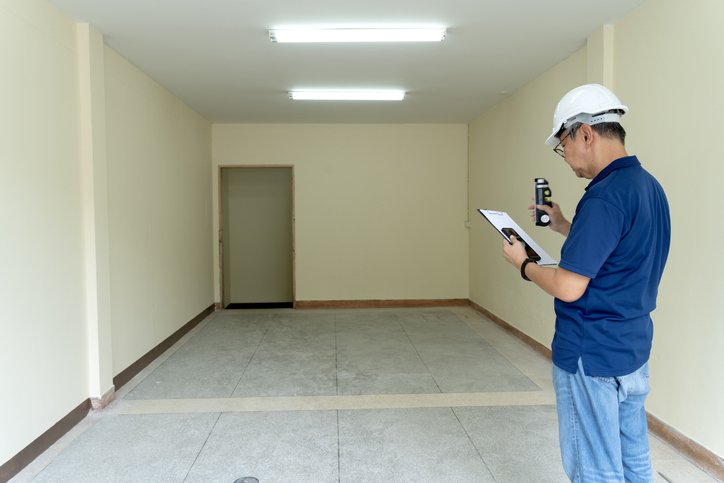
Man measuring light levels for OSHA compliance.
Step 1: Choose a Calibrated Light Meter
A light meter (also called a lux meter or foot-candle meter) measures illumination at a specific point. Calibration ensures the reading is accurate, so verifying your meter's calibration date before conducting a compliance survey is worth the extra minute.
Step 2: Map Your Work Areas and Task Zones
Identify zones with different foot-candle requirements and create a simple floor plan marking each area type: office, warehouse, shop, loading dock, and so on. This map becomes your measurement guide.
Step 3: Take Readings at Working Height
Measurements belong at the actual work surface where tasks are performed, not at the ceiling or floor level. For standing work, this is typically 30 to 36 inches above the floor. For desk work, measure at desk height.
Step 4: Document and Compare to OSHA Minimums
Record readings with dates and locations, then compare them against the foot-candle table above. Keep this documentation on file to support compliance during an inspection.
Risks and Penalties of Non-Compliance
OSHA can issue citations for inadequate lighting, and General Duty Clause violations apply even when a specific foot-candle standard does not. Citations can result in fines and required corrective action.
Poor lighting contributes to slips, trips, falls, and struck-by incidents, which are consistently among the costliest categories of workplace injury. Beyond regulatory penalties, inadequate lighting creates real safety risks for employees.
Benefits of Meeting OSHA Lighting Standards
Proper workplace lighting reduces accidents by helping employees see hazards, obstacles, and equipment clearly. Workers experience less eye strain and fatigue, which supports productivity throughout shifts. Adequate lighting also makes visual inspections easier, whether checking product quality, reading labels, or identifying maintenance issues.
Upgrading Your Facility to OSHA-Compliant Lighting
LED high bay lighting, LED panels, and exit/emergency lighting help facilities meet foot-candle requirements while reducing energy and maintenance costs. Modern LED fixtures deliver consistent light output over their lifespan, which helps maintain compliance as lamps age.
For facilities upgrading from metal halide, HPS, or fluorescent systems, LED retrofits often pay for themselves through energy savings while improving light quality and uniformity.
Need help determining the right lighting levels for your facility? Call our lighting experts at 1-800-624-4488 for personalized guidance and product recommendations that meet your OSHA lighting needs.
Frequently Asked Questions About OSHA Lighting Requirements
Is poor lighting an OSHA violation?
Yes. Even without specific foot-candle standards, the General Duty Clause requires employers to address recognized hazards. Inadequate lighting qualifies when it creates unsafe conditions like trip hazards or impaired visibility.
Does OSHA require LED lighting in workplaces?
OSHA specifies illumination levels, not light source type. Any lighting technology that meets the foot-candle requirements is acceptable, whether LED, fluorescent, or another source.
How often should workplace lighting be inspected?
OSHA does not mandate a specific inspection frequency. Regular checks, especially when replacing lamps or after facility changes, help maintain compliance and catch issues before they become violations.
Does OSHA have a lightning policy?
OSHA addresses lightning (weather) separately from lighting (illumination). Lightning safety falls under outdoor work guidelines, not the illumination standards covered in this article.
What is the most common OSHA workplace lighting requirement?
The requirement for "adequate lighting" to perform work safely applies universally. For specific minimums, 5 foot-candles is the most frequently applied standard across construction and warehouse environments.