
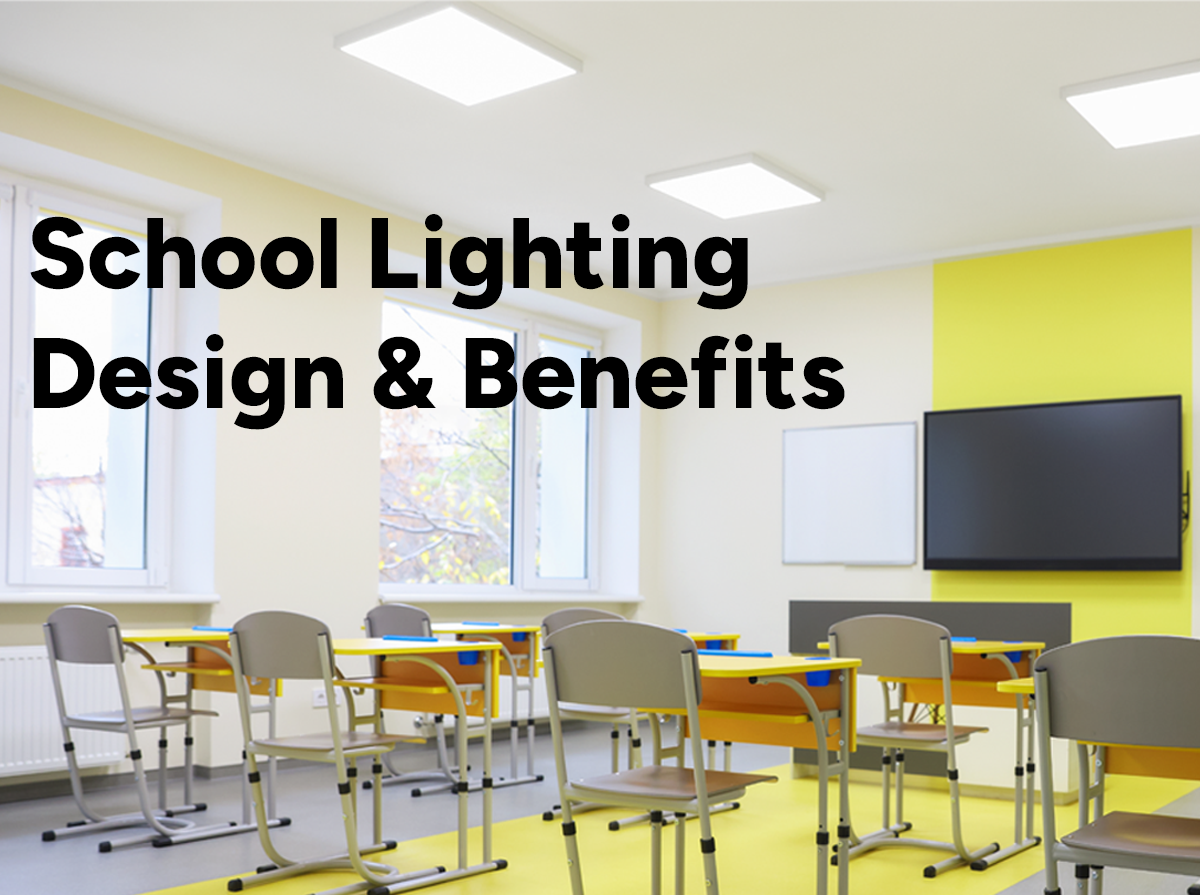
School Lighting Design & Benefits: A Guide to Classroom Lighting Best Practices
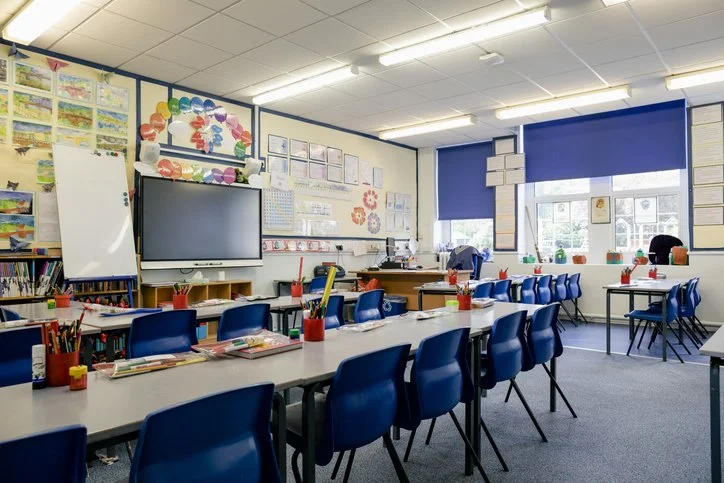
Walk into most classrooms built before 2010, and you'll find the same setup: rows of fluorescent troffers humming overhead, a few tubes flickering, and light that hasn't changed since the building opened. That static approach to lighting misses what we now know about how light affects focus, comfort, and even student behavior throughout the day.
This guide covers the IES standards behind classroom lighting requirements, the benefits of switching to LED, and the specific best practices that help schools get lighting right, from color temperature and glare control to sensors and emergency fixtures.
The Benefits of Thoughtful School Lighting Design
Good classroom lighting balances student comfort, focus, and energy efficiency. Tunable LED lighting works well here because cooler color temperatures (around 5000K) support morning alertness, while warmer tones (around 3500K) help students relax during afternoon activities. A Color Rendering Index (CRI) of 80 or higher ensures accurate colors for reading and diagrams.
When districts plan lighting deliberately rather than defaulting to whatever was already installed, the payoff shows up in a few places. Light levels that match recommended ranges are linked to better reading accuracy and longer attention spans. Even, glare-free light improves whiteboard and screen visibility while reducing eye strain for teachers during long days.
Consistent light levels in hallways and stairwells also reduce slip-and-trip incidents during passing periods. And over time, a well-designed lighting plan cuts relamping labor and energy waste, often offsetting the upfront cost of an upgrade.
Classroom Lighting Requirements and Regulations
Classroom lighting requirements start with foot-candles, a measure of how much visible light reaches a surface. One foot-candle equals one lumen per square foot. The Illuminating Engineering Society (IES) publishes the foot-candle ranges most school districts reference when writing lighting specifications.
Local energy codes such as ASHRAE 90.1 add a second layer of regulation, capping how much wattage a school can use per square foot. So fixture wattage and layout both matter, not just brightness. A light meter reading, not a guess, is the right way to drive any upgrade decision.
Learn more in our article on how many foot-candles you need.
|
Space Type |
Recommended Foot-Candles |
|
General Classroom |
30–50 fc |
|
Art Room / Lab |
50–75 fc |
|
Gymnasium |
30–50 fc |
|
Library |
30–50 fc |
|
Hallway / Corridor |
10–20 fc |
|
Cafeteria |
20–30 fc |
7 Best Practices for School Lighting Design
Once you know the light level target for a space, the following seven practices cover the decisions that turn that number into a classroom that actually works.
1. Meet IES Foot-candle Levels for Each Space
Different areas require different light levels, so treat the table above as a checklist rather than a single classroom-wide target. Measure existing light with a handheld light meter before ordering fixtures, since fixture spacing and ceiling height change actual output at desk height.
After installation, recheck levels. Reflectance from wall and floor color can raise or lower measured foot-candles by 10 percent or more.
2. Choose the Right Color Temperature and CRI for Classrooms
Color temperature is measured in Kelvin (K) and describes how warm or cool a light appears. Most classrooms perform best with lighting between 4000K and 5000K, since this range supports alertness and reading accuracy without feeling harsh.

CRI, or Color Rendering Index, measures how accurately a light source reveals true colors. A CRI of 80 or higher is recommended so students can read color-coded materials and artwork correctly. Elementary reading corners can use a slightly warmer 3500K to 4000K light to create a calmer sub-space without changing the rest of the room.
3. Switch to LED Lighting for Schools
Many schools still run T8 or T12 fluorescent troffers that flicker as ballasts age. Those older tubes also lose 20 to 30 percent of their output well before the rated lamp life ends. LED lighting for schools lasts longer than fluorescent tubes and holds its output more consistently, which reduces relamping labor for maintenance staff.
You have two main paths here:
LED tube retrofits: Lower upfront cost, and they work well when existing troffer housings are still in good condition.
Full LED panel replacement: Higher initial investment, but better light distribution and lower glare, making it worth considering for high-use spaces like classrooms and libraries.
4. Use Tunable White Lighting to Support Focus and Circadian Health
Tunable white fixtures let a teacher or building system shift color temperature throughout the day instead of running one fixed setting. Cooler light in the morning (around 5000K) supports alertness during core instruction. Warmer light in the afternoon (around 3000K to 3500K) reduces strain during quiet or transition periods.
Elementary schools tend to see the most benefit from tunable systems, since younger students respond more visibly to lighting changes tied to focus and mood.
5. Choose the Right Classroom Light Covers to Cut Glare
Classroom light covers are the lens or diffuser panel on the underside of a fixture. They control how harsh or soft the light feels in a room. The wrong cover is one of the most common causes of glare on whiteboards, screens, and student desks, and it's also one of the easiest fixes.
Here's how different cover types compare:
Frosted or prismatic covers: Spread light more evenly than clear covers, cutting down on hot spots and reducing reflected glare off shiny surfaces.
Parabolic covers: Use a grid of small cells to direct light straight down, which is useful in computer labs and media rooms where screen glare is a bigger concern.
Fixture placement matters too. Position fixtures so direct light does not reflect off whiteboards or monitors into a seated student's line of sight. Aligning fixture rows parallel to windows (rather than perpendicular) helps daylight and electric light work together instead of competing.
Replacing a damaged or yellowed light cover is often a low-cost way to improve a room's light quality without replacing the whole fixture.
6. Add Daylight Harvesting and Occupancy Sensors
Daylight harvesting sensors dim fixtures automatically when natural light from windows already meets the foot-candle target. Occupancy sensors turn lights off in restrooms, storage rooms, and other intermittently used spaces, which is where most schools see the fastest payback.
Many utilities offer rebates for adding controls alongside an LED upgrade, so check with your local utility before finalizing a project budget.
Tip: See our guide on 5 places in schools that need LED lighting for more ideas on where to prioritize upgrades.
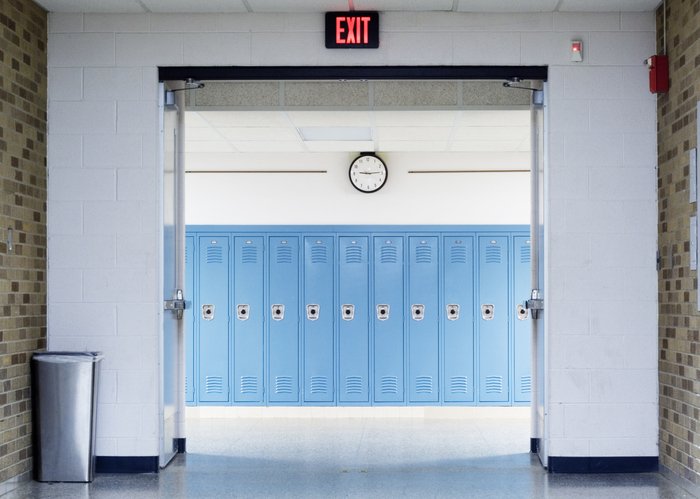
7. Plan for Emergency, Exit, and Outdoor Lighting
Exit signs and emergency egress lighting are required by code in every occupied school building. Battery backup fixtures or dedicated emergency LED units are typically tested monthly for a function test and annually for a 90-minute duration test, depending on local fire code.
Outdoor lighting around entrances, parking lots, and bus loops supports both safety and security for evening events like sports and parent meetings. Dusk-to-dawn sensors or photocells keep outdoor fixtures running automatically without staff needing to manually switch them on.
Recommended Lighting for Other School Spaces
Different areas of a school building have their own lighting needs beyond the standard classroom.
Gymnasiums and Auditoriums
High bay LED fixtures work well for gyms with ceilings above 20 feet, delivering even light without an excessive fixture count. Dimmable options support both athletic events and auditorium use for assemblies or performances. Even light distribution reduces shadows on courts and stages, which matters for both safety and video recording of events.
Hallways, Stairwells, and Cafeterias
Consistent light levels across hallway runs help students moving between classrooms avoid noticeably dim or bright zones. Vandal-resistant fixtures in high-traffic corridors and stairwells reduce damage and replacement costs. Motion sensors in stairwells save energy during off-peak hours while still meeting code minimums when triggered.
Libraries, Labs, and Art Rooms
Libraries, labs, and art rooms typically need higher foot-candles (around 50 to 75 fc) since students are reading fine print or doing detailed work. High-CRI fixtures (90 or above) are worth the added cost in art rooms where accurate color perception affects the work itself. Task lighting at lab benches supplements ambient light for detailed or hands-on work.
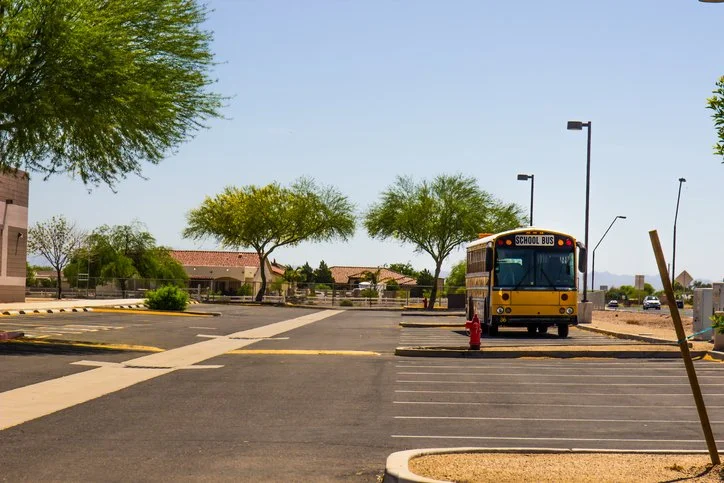
Outdoor Walkways and Parking Areas
LED wall packs on building exteriors and LED bollards along walkways provide even, glare-free coverage. Prioritize safety over decorative effect in outdoor areas, since visibility for pedestrians and vehicles is the primary goal.
Common School Lighting Mistakes to Avoid
A few missteps come up again and again in school lighting projects:
Over-lighting or under-lighting: More light is not always better. Excess brightness can cause glare just as easily as insufficient light causes eye strain.
Ignoring color temperature: Mixing warm and cool fixtures in the same space creates a visibly inconsistent look and can make color-based materials harder to read accurately.
Skipping controls: Manual-only systems waste energy in unoccupied rooms and miss out on rebates tied to daylight harvesting and occupancy sensors.
Forgetting maintenance access: Fixtures that allow easy lamp or driver replacement keep long-term maintenance costs lower than difficult-to-service alternatives.
Upgrade Your School Lighting with 1000Bulbs.com
1000Bulbs.com carries LED lighting for schools, from panels to high bay fixtures and emergency lighting, all built to meet the requirements and regulations covered in this guide. Our team ships fast and can help you plan a phased retrofit that fits your district's budget and timeline.
Over 15,000 lighting products in stock, including LED panels, light covers, troffers, and high bay fixtures sized for school spaces
US-based lighting professionals available Monday through Friday, 7 a.m. to 5 p.m. CST
Bulk pricing and special order support for districts planning multi-building retrofits
Call 800-624-4488 to talk through your school's lighting plan with one of our lighting experts, or visit our contact page to get started.
FAQs
What Are Classroom Light Covers and Why Do They Matter?
Classroom light covers are the lens or diffuser panels on the underside of a fixture. They control how evenly light spreads across a room. Frosted or prismatic covers reduce glare on whiteboards and screens, while a damaged or yellowed cover can dim a room and create uneven hot spots even if the bulb or LED behind it is working fine.
What Regulations and Standards Apply to Classroom Lighting?
Classroom lighting regulations and standards are set primarily by the Illuminating Engineering Society (IES), which publishes recommended foot-candle ranges by space type. Local energy codes such as ASHRAE 90.1 cap how much wattage a school can use per square foot. Most state and district facility codes reference one or both of these sources.
What is the Best Color Temperature for a Classroom?
Most classrooms perform best with LED lighting between 4000K and 5000K, since this range supports alertness and reading accuracy without the harsh feel of higher Kelvin outputs. Elementary reading corners sometimes use a warmer 3500K to 4000K light to create a calmer sub-space.
How Many Foot-Candles Does a Standard Classroom Need?
The Illuminating Engineering Society recommends 30 to 50 foot-candles for a general classroom, measured at desk height. Art rooms and labs need higher levels (typically 50 to 75 foot-candles), while hallways can operate safely at 10 to 20 foot-candles.
Are LED Tube Retrofits or Full LED Panel Replacements Better for Schools?
LED tube retrofits are the lower-cost option and work well when existing troffer housings are still in good condition. Full LED panel replacements cost more upfront but deliver better light distribution, lower glare, and a longer service life.
Do Schools Qualify for Utility Rebates on LED Lighting Upgrades?
Many utility companies offer rebates for schools that switch to LED lighting, since the wattage reduction lowers strain on the grid. Rebate amounts and eligibility vary by state and utility provider, so check with your local utility or energy office before starting a retrofit project.
Is Tunable White Lighting Worth the Investment for Schools?
Tunable white lighting costs more than standard fixed-temperature LEDs, but it lets teachers shift from energizing cool light in the morning to calmer warm light later in the day. Elementary schools tend to see the most benefit, since younger students respond more visibly to lighting changes.
What is the Difference Between Ambient and Task Lighting in a Classroom?
Ambient lighting is the general overhead light that fills a classroom, usually from LED panels or troffers sized to the IES foot-candle target. Task lighting adds focused light to a specific work area, such as a reading nook or lab bench, to supplement ambient light where students need extra visibility.
How Often Should School Lighting Fixtures Be Inspected or Replaced?
Facility teams typically inspect fixtures at least once a year, checking for flickering, uneven color, or physical damage to lenses and housings. Quality LED fixtures often last 25,000 to 50,000 hours, so most schools only plan for full fixture replacement once every 10 to 15 years.