
Grow Lights: How to Choose the Best Type for Your Plants
Most houseplants and indoor gardens don't fail because of watering or soil. They fail because they're not getting enough light. Even plants placed near windows may not receive the light intensity or duration they need, especially during winter, in north-facing rooms, or in homes with limited natural sunlight. Grow lights provide the supplemental light plants need to continue photosynthesis, helping them grow healthier year-round regardless of the season.
For most indoor gardeners, full-spectrum LED grow lights are the best choice. They combine excellent energy efficiency, low heat output, long operating life, and a balanced light spectrum that supports nearly every stage of plant growth. While fluorescent, HID, and incandescent grow lights still have niche applications, LEDs have become the preferred solution for most home gardeners and an increasing number of commercial growers.
This guide compares the four primary grow light technologies, explains how light spectrum affects plant growth, walks you through fixture selection and setup, and helps you choose the right grow light based on what you're growing and where you're growing it.
Types of Grow Lights for Indoor Plants
Full-spectrum LED grow lights are the best option for most indoor plants. They use less power than other grow light types, run cool to the touch, and last far longer than fluorescent or incandescent alternatives. Full-spectrum white LEDs mimic natural sunlight by combining blue and red wavelengths, which means they support both leafy growth and flowering without the harsh purple glow of older "blurple" lights.
While LEDs are the industry standard today, fluorescent, incandescent, and HID (high-intensity discharge) grow lights can still be useful in specific growing environments. Understanding how each technology works, along with its strengths and limitations, makes it easier to choose the right lighting system for your plants, growing space, and budget.
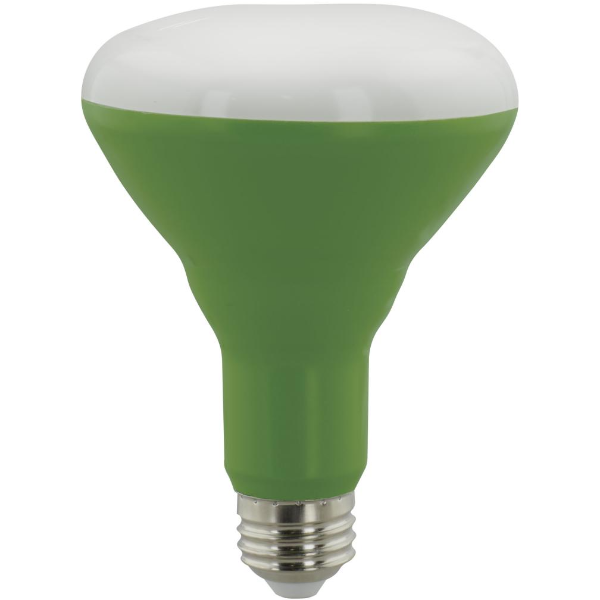
LED Grow Lights
LEDs have become the go-to choice for indoor growing because they deliver high light output without wasting energy as heat. A typical LED grow light lasts 50,000 hours or more, which translates to years of daily use before you'll think about replacing it. And because LEDs run cool, you can position them closer to your plants without worrying about scorched leaves.
Full-spectrum white LEDs are the most versatile. They provide the red and blue wavelengths plants rely on for photosynthesis, while also producing light that looks natural to your eyes. Many LED fixtures offer adjustable spectrum settings or dimming controls, too, which gives you flexibility as your plants move through different growth stages.
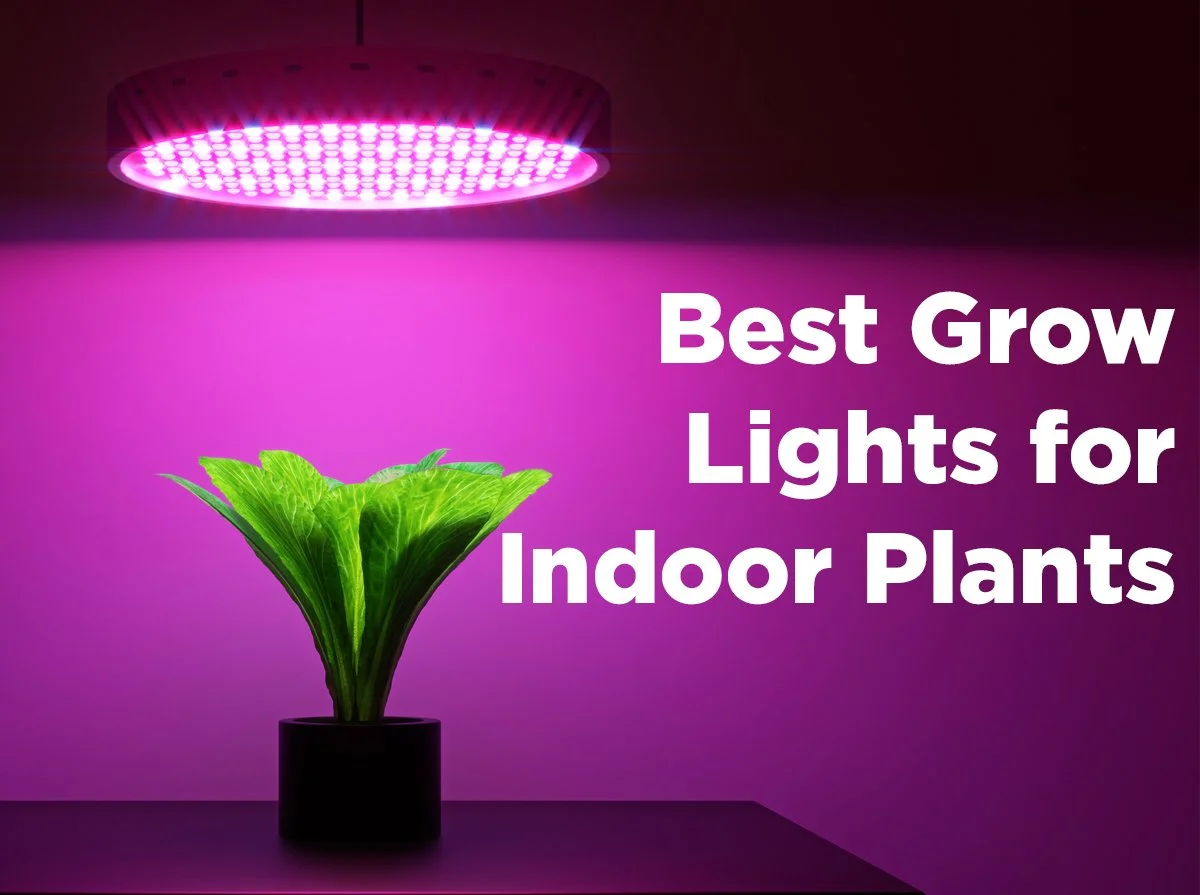
Earlier LED grow lights often produced a noticeable purple or pink glow, commonly called "blurple" lighting, because they focused almost entirely on red and blue wavelengths. While effective for photosynthesis, these fixtures made it difficult to accurately see plant color and health. Today's full-spectrum LEDs provide those same important wavelengths while producing a natural white light that's more comfortable to work under and easier to integrate into homes, offices, greenhouses, and grow rooms.
The upfront cost of LED grow lights tends to be higher than fluorescent or incandescent bulbs. However, the energy savings and long lifespan usually make up that difference within the first year of regular use.
LED grow lights are also available in a wide variety of fixture styles, from simple screw-in bulbs for a single houseplant to high-output panels and commercial fixtures capable of covering entire shelving systems or indoor farms. This versatility makes LEDs an excellent option for beginners and experienced growers alike.
Fluorescent Grow Lights
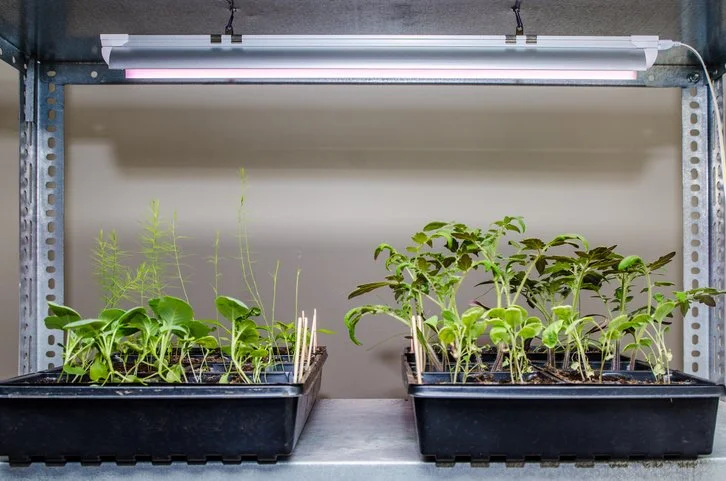
Fluorescent lights remain a practical choice for seed starting, propagation, and low-light houseplants. T5 high-output fluorescent tubes, in particular, deliver decent light intensity in a slim profile that fits easily above shelving or inside grow tents.
CFLs (compact fluorescent lamps) are another option for small-scale growing. They screw into standard sockets and work well for supplementing natural light around a single plant or small cluster.
Fluorescent lights do produce more heat than LEDs and have shorter lifespans, typically around 10,000–20,000 hours. They also consume more electricity for the same light output. For larger setups or long-term use, LEDs are usually the better investment. But if you're just getting started with seed trays or a few cuttings, fluorescents can do the job without a big upfront expense.
Among fluorescent options, T5 high-output fixtures generally produce more usable light than compact fluorescent bulbs, making them the preferred choice for seed trays, propagation stations, and shelves with multiple young plants. Although fluorescent technology has become less common as LED prices have fallen, it continues to be a dependable option for growers looking for an affordable starting point.
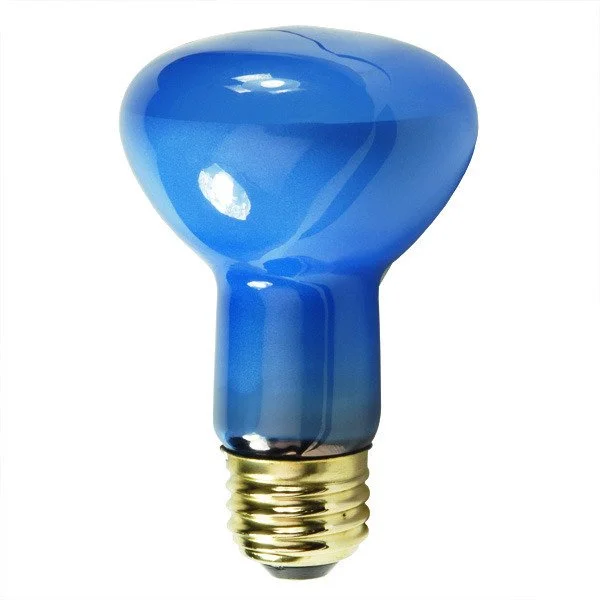
Incandescent Grow Lights
Incandescent grow bulbs are the least efficient option you'll find. They convert most of their energy into heat rather than light, which raises the risk of burning foliage and can increase cooling costs in enclosed spaces.
Some growers still use incandescent bulbs to add warmth for tropical plants or to supplement red-spectrum light during flowering. The high operating cost and short lifespan (around 1,000 hours) make incandescent lights impractical for primary grow lighting, though. If you're looking for a dedicated grow light, LEDs or fluorescents will serve you better.
Because incandescent bulbs produce relatively little usable light for photosynthesis, they have largely disappeared from modern indoor gardening. Most growers can achieve better plant growth, lower operating costs, and easier temperature management by switching to LED grow lights instead.
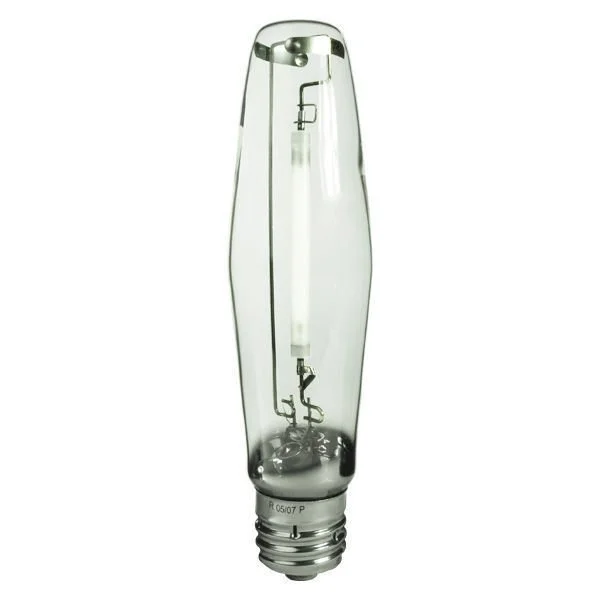
HID Grow Lights
HID systems, including metal halide (MH) and high-pressure sodium (HPS) lamps, were once the gold standard for commercial growers and serious hobbyists. Metal halide bulbs produce blue-heavy light suited for vegetative growth, while HPS bulbs emit red-heavy light that promotes flowering and fruiting.
HID lights deliver intense output, but they come with trade-offs:
External ballasts: HID lamps require a separate ballast to regulate electrical current, which adds cost and complexity.
Heat production: These lights run hot, often requiring additional ventilation or cooling.
Higher energy use: HID systems consume far more electricity than LEDs for comparable light output.
Many commercial operations have transitioned to LED fixtures for these reasons. Still, some growers prefer HPS for flowering crops where maximum light intensity matters most.
Commercial greenhouses, hydroponic operations, and indoor farms continue to use some HID systems, particularly in facilities with existing infrastructure. However, many businesses are replacing HID fixtures with high-output LED grow lights because LEDs reduce electricity consumption, generate less heat, require less maintenance, and often lower overall operating costs without sacrificing plant performance.
LED vs. Fluorescent vs. HID
| Feature | LED | Fluorescent | HID |
|---|---|---|---|
| Energy Efficiency | Highest | Moderate | Lowest |
| Heat Output | Low | Moderate | High |
| Lifespan | 50,000+ Hours | 10,000-20,000 Hours | 10,000-24,000 House |
| Upfront Cost | Higher | Lower | Moderate |
| Best For | All-purpose Growing | Seed starting, small setups | Large-scale Flowering |
For most home growers, full-spectrum LEDs offer the best balance of performance, efficiency, and ease of use. If you're starting seeds or working with a tight budget, T5 fluorescents can fill the gap until you're ready to upgrade.
Choosing the Right Grow Light
Selecting a grow light involves more than picking a technology. You'll also want to consider whether a replacement bulb or a dedicated fixture makes more sense for your setup, what light spectrum your plants prefer, and how much coverage your growing area requires.
Grow Bulbs vs. Grow Light Fixtures
Grow bulbs screw into standard lamp sockets, making them an easy way to add supplemental light to a single plant or small group. They're affordable and simple to install, but they typically cover a limited area (usually 1–2 square feet).
Dedicated grow light fixtures are designed for larger growing areas, including shelving units, grow tents, and indoor gardens with multiple plants. Depending on the fixture, they can evenly illuminate anywhere from 4 to 16 square feet or more while offering features such as adjustable mounting, timers, and spectrum controls.
Light Spectrum and Color Temperature
Plants use specific wavelengths of light for photosynthesis. Blue light (around 400–500 nm) encourages compact, leafy growth, while red light (around 600–700 nm) promotes flowering and fruiting. Full-spectrum LEDs combine both, plus green and other wavelengths, to approximate natural sunlight.
Color temperature, measured in Kelvin (K), offers a shorthand for understanding spectrum:
Cool white (5000K–6500K): Leans toward blue. Works well for seedlings and leafy greens.
Warm white (2700K–3500K): Leans toward red. Supports flowering and fruiting.
Full-spectrum (4000K–5000K): Covers most plants through all growth stages.
If you're growing a mix of houseplants, herbs, and vegetables, a full-spectrum LED in the 4000K–5000K range simplifies your setup considerably.
Match the Grow Light to Your Plants
Different plants benefit from different lighting setups. Seedlings typically perform best under LED or T5 fluorescent fixtures because they provide gentle, even light that encourages sturdy early growth. Most common houseplants and indoor herbs thrive under full-spectrum LED lighting, while fruiting vegetables such as tomatoes and peppers usually require higher-output LED fixtures to produce enough light for healthy flowering and fruit production. Succulents also perform well under cool white or full-spectrum LEDs because they naturally prefer bright conditions.
How to Set Up Grow Lights
Placement and timing both affect how well your plants respond to artificial light. Getting these details right helps you avoid common problems like leggy seedlings or scorched leaves.
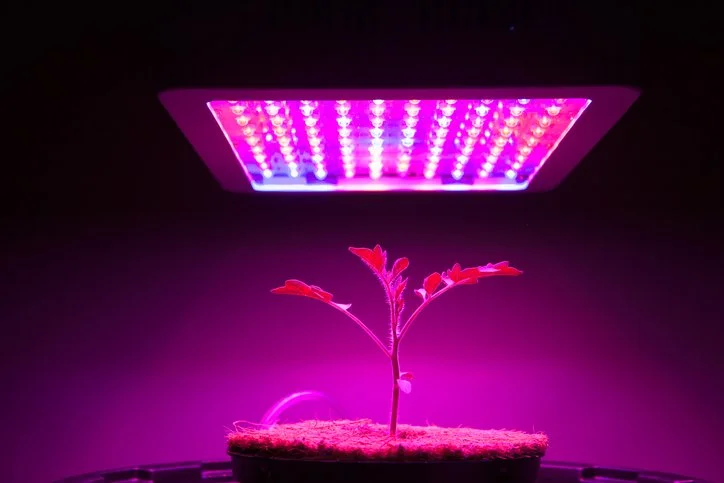
Placement and Distance
The ideal distance between your grow light and your plants depends on the fixture's intensity. LEDs typically sit 12–24 inches above the canopy, though some high-output fixtures require more distance. Fluorescents can often be positioned closer, around 6–12 inches, because they produce less heat.
Watch your plants for signs of trouble. Leaves that bleach or curl may be too close to the light. Stems that stretch and lean toward the light source are probably too far away. Adjusting height as your plants grow is part of the process.
Keep in mind that these distances are general starting points. Every grow light is different, so it's always best to follow the manufacturer's recommendations and then adjust based on how your plants respond. Healthy plants typically produce compact growth, vibrant foliage, and sturdy stems, while poor light placement often leads to slow growth or stretching.
Daily Light Schedule
Most plants require between 10 and 16 hours of light each day, depending on the species and growth stage. Seedlings generally need the longest exposure, around 14 to 16 hours daily, while herbs typically grow well with 12 to 16 hours. Most houseplants only require 10 to 14 hours of supplemental light. Flowering plants vary by species, so it's best to follow the recommendations for the specific plant you're growing.
A simple plug-in timer takes the guesswork out of maintaining a consistent schedule. Your plants will thank you for the routine.
Avoid leaving grow lights on around the clock. Like people, plants need periods of darkness to complete important biological processes. Providing a consistent day-and-night cycle encourages healthier growth while preventing unnecessary energy use.
Common Grow Light Problems and How to Fix Them
Even with the right grow light, improper placement or scheduling can affect plant health. Learning to recognize common lighting problems makes it easier to adjust your setup before long-term damage occurs.
| Problem | Likely Cause | Possible Solution |
|---|---|---|
| Tall, weak, or "leggy" growth | Light is too far away or not bright enough | Move the fixture closer or upgrade to a higher-output grow light. |
| Bleached or curled leaves | Light is too close or too intense | Raise the fixture or reduce the light intensity if your fixture offers dimming. |
| Slow growth | Plants aren't receiving enough usable light or daily exposure | Increase daily runtime or consider a higher-output fixture. |
| Poor flowering or fruit production | Insufficient red-spectrum light or too little daily light | Use a full-spectrum grow light and verify your photoperiod matches your plant's needs. |
| Uneven growth | Light coverage isn't reaching all plants evenly | Rotate plants regularly or upgrade to a fixture with broader coverage. |
Most lighting issues can be corrected with small adjustments. Monitoring your plants every few days allows you to fine-tune fixture height, runtime, and coverage before problems become more serious.
Can You Use a Regular LED Bulb as a Grow Light?
Standard household LED bulbs do produce some light that plants can use, but they're not optimized for growing. Most general-purpose LEDs lack the intensity and spectral balance that dedicated grow lights provide.
For low-light houseplants in a bright room, a regular LED bulb might offer enough supplemental light to keep foliage healthy. For seedlings, herbs, or anything you want to actively grow, a purpose-built grow light will deliver noticeably better results. The difference comes down to spectrum and intensity, both of which dedicated grow lights are designed to maximize.
If you're only supplementing natural daylight for a pothos, peace lily, or snake plant, a standard LED bulb may be sufficient. However, if you're starting seeds, growing herbs indoors, cultivating vegetables, or encouraging flowering plants to bloom, investing in a dedicated grow light will produce healthier plants, faster growth, and more consistent results over time.
Grow lights are specifically engineered to deliver the wavelengths plants use most during photosynthesis. They also provide more consistent coverage across the growing area, making them a better long-term investment for anyone planning to grow indoors on a regular basis.
Find the Right Grow Light at 1000bulbs
Whether you're growing herbs on a kitchen counter, starting vegetable seedlings for your garden, maintaining tropical houseplants year-round, or operating a larger hydroponic setup, choosing the right grow light makes all the difference. The right fixture helps plants receive consistent, reliable light while improving growth, reducing maintenance, and lowering long-term energy costs.
1000Bulbs offers a wide selection of grow lighting solutions for every stage of indoor gardening, including:
Full-spectrum LED grow lights
LED grow bulbs
HPS fluorescent grow lights
Hydroponic lighting supplies
Timers and lighting controls
Grow light accessories
Whether you're lighting a single houseplant or outfitting an entire grow room, you'll find products designed for residential, commercial, and hydroponic applications.
1000Bulbs.com stocks a wide selection of LED grow lights, from screw-in grow bulbs for single plants to full fixtures for shelving and grow tents. If you're unsure which option fits your setup, our Lighting Specialists can help you match the right product to your space and plants.
We keep over 15,000 lighting products in stock at our Texas warehouse, with fast shipping across the United States.
Not sure where to start? Our US-based Lighting Specialists can answer questions about fixture selection, light spectrum, coverage area, timers, and compatible accessories so you can build a system that fits your growing goals with confidence.
Browse our selection of grow lights, hydroponic supplies, and accessories, or contact a Lighting Specialist for personalized guidance. Whether you're growing one plant or hundreds, we're here to help you find the right lighting solution.
FAQs
Do Grow Lights Work For Aloe Vera And Succulents?
Yes. Succulents and aloe prefer bright, direct light. A full-spectrum or cool white LED positioned 12–18 inches above the plant for 10–14 hours daily can supplement low natural light effectively.
Can Grow Lights Burn Plants?
Grow lights can cause leaf burn if positioned too close, especially high-intensity LEDs or HID fixtures. Maintaining the manufacturer's recommended distance and watching for bleaching or curling leaves helps prevent damage.
Is It Safe To Leave Grow Lights On Overnight?
Most plants benefit from a dark period each day, which supports healthy growth cycles. Running lights 24 hours a day can stress plants and increase energy costs without improving results.
Using an inexpensive plug-in timer helps maintain a consistent schedule while ensuring your plants receive the rest period they naturally require.
Can Grow Lights Fully Replace Sunlight?
Full-spectrum grow lights can provide all the light energy plants need for photosynthesis. Many indoor growers raise healthy plants entirely under artificial light, though matching the intensity and duration to each plant's requirements is important.
For plants that naturally require full sun, you'll generally need higher-output grow lights than those used for low-light houseplants. Choosing the proper fixture is just as important as providing enough hours of daily light.
What Does PAR Mean For Grow Lights?
PAR stands for photosynthetically active radiation, the range of light wavelengths (400–700 nm) that plants use for photosynthesis. Grow light manufacturers often list PAR output to help you compare how much usable light a fixture delivers.
Unlike lumens, which measure how bright a light appears to people, PAR measures the light plants can actually use for growth. That's why it's one of the most important specifications to consider when comparing grow lights.
Do Grow Lights Increase Electric Bills?
Grow lights do add to electricity costs, though LEDs minimize the impact. A 30-watt LED running 12 hours daily uses roughly the same energy as a 60-watt incandescent bulb running 6 hours.
Because LED grow lights are significantly more energy efficient than fluorescent or HID systems, they typically provide the lowest operating costs over the life of the fixture.
Are Full-Spectrum Grow Lights Worth The Extra Cost?
For most growers, yes. Full-spectrum LEDs support plants through all growth stages without requiring you to swap bulbs or fixtures. The versatility and natural-looking light make them a practical long-term choice.
Although the upfront purchase price may be higher, many growers recover that investment through lower electricity use, reduced maintenance, and fewer fixture replacements over time.
How Many Hours Of Grow Light Do Seedlings Need?
Seedlings typically thrive with 14–16 hours of light per day. Consistent exposure helps prevent leggy, weak stems and encourages sturdy early growth.
Should I Leave Grow Lights On 24 Hours A Day?
No. Most plants perform best when they receive both light and darkness each day. While seedlings often benefit from 14 to 16 hours of light, continuous 24-hour lighting can stress plants and disrupt normal growth cycles. Using a timer is the easiest way to maintain a healthy daily schedule.