
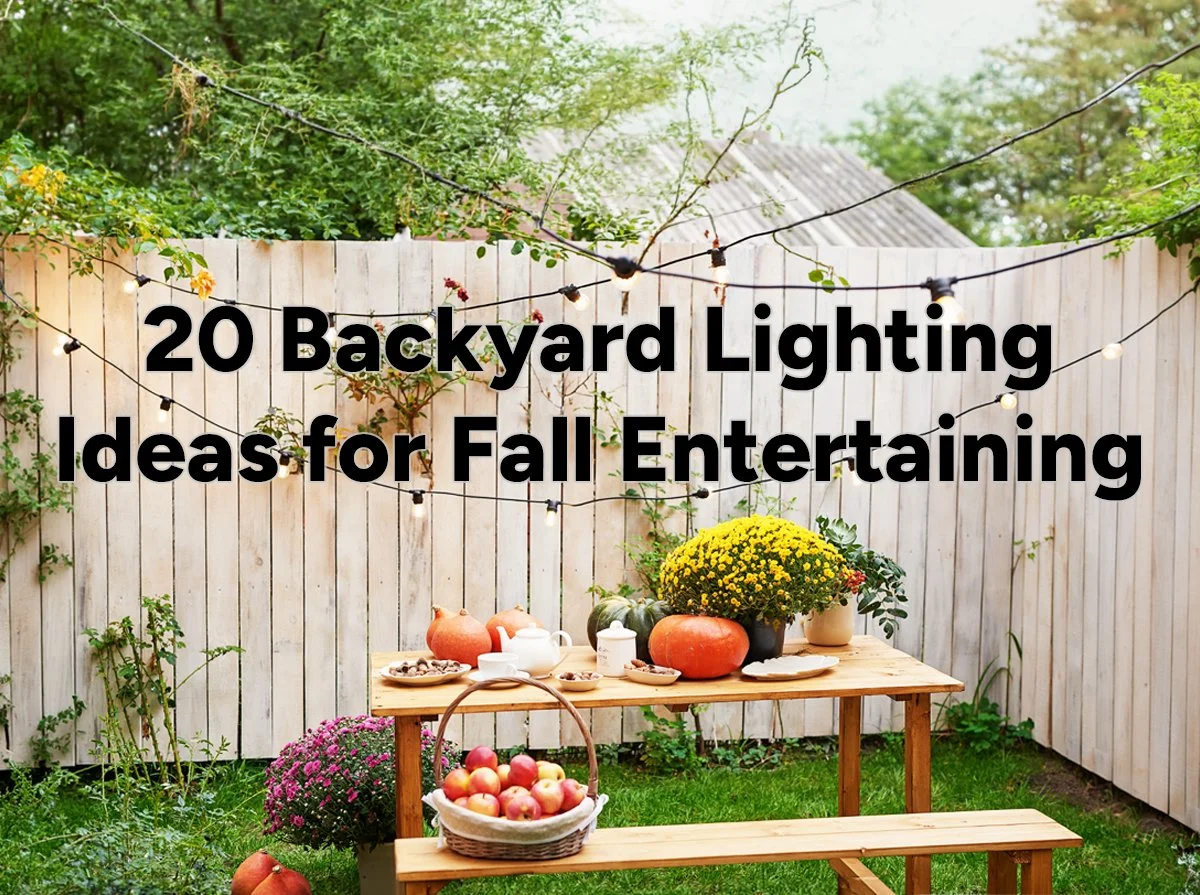
20 Backyard Lighting Ideas for Fall Entertaining
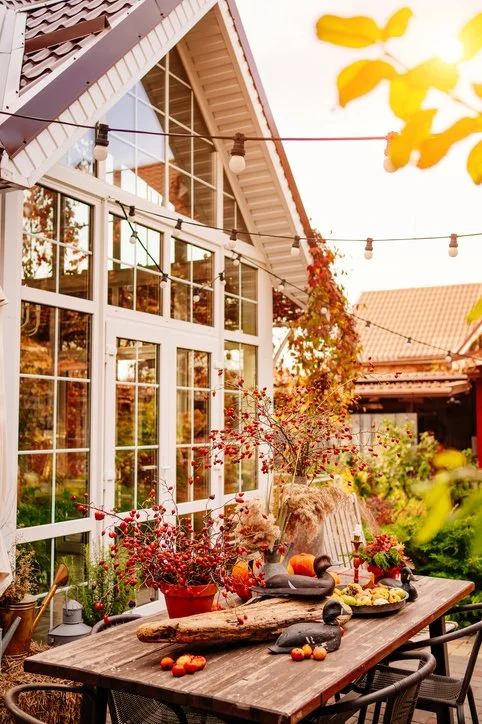
Fall entertaining moves outdoors earlier than you'd think, and by mid-October, sunset arrives before most guests finish their first drink. The right lighting setup keeps the conversation going long after dark, with warm light where people gather and enough visibility to move safely between the grill, the drink table, and the fire pit.
This guide covers 20 backyard lighting ideas for fall, plus practical advice on color temperature, layout planning, weatherproofing, and current trends to help you create a space guests won't want to leave.
Why Fall Backyard Lighting Matters for Entertaining
Once the sun starts setting earlier, your backyard gathering shifts into darkness faster than you might expect. Warm string lights, rustic lanterns, and natural autumn accents can transform that dark space into somewhere guests actually want to linger. The goal isn't just brightness. You want controlled contrast and light at different heights so people can see faces across the table, find their way to the drink station, and feel comfortable staying outside even as temperatures drop.
Cooler weather also changes where guests naturally gather. Instead of spreading across the lawn, people cluster around dining tables, covered patios, and fire features. Your lighting plan works best when it follows that same pattern, putting light where people will actually be.
20 Backyard Lighting Ideas for Fall Entertaining
1. Warm White Patio String Lights
Café-style strings in the 2700K–3000K range give you broad, even light over patios and seating areas. Mount them high enough to clear heads, and make sure your supports can handle wind. Before linking multiple strands together, check the packaging for maximum connected runs.
2. Hanging Lanterns With Flameless LED Candles
Lanterns hung from shepherd's hooks or pergola beams put light at eye level, which softens the overall look of your space. Battery-operated LED candles are a safer choice around dry leaves, fabric tablecloths, and crowded tables — candles cause an estimated 14,000 residential fires annually in the United States. You can also move them around as the evening unfolds without worrying about open flames.
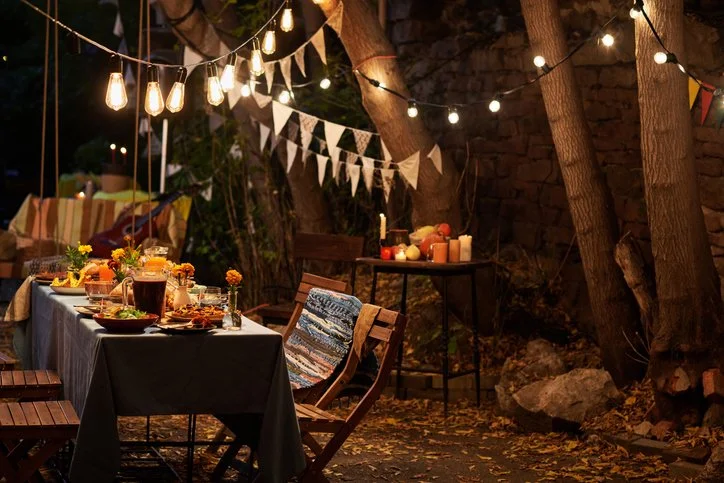
3. Bistro Café Lights Over the Dining Table
Larger globe-style bulbs visually anchor your dining area and make it easier to see faces and place settings. Keep the bulbs high enough to avoid head contact and glare. The bulb shape alone doesn't determine brightness, so pay attention to lumen output when you're choosing.
4. Fairy Lights Wrapped Around Trees
Wrapping trunks or lower branches adds sparkle and draws the eye deeper into your yard. Use tree-safe mounting methods and avoid wrapping too tightly, which can damage bark over time. Confirm the lights are rated for outdoor use before you install them.
5. Pathway Lights Along Walkways
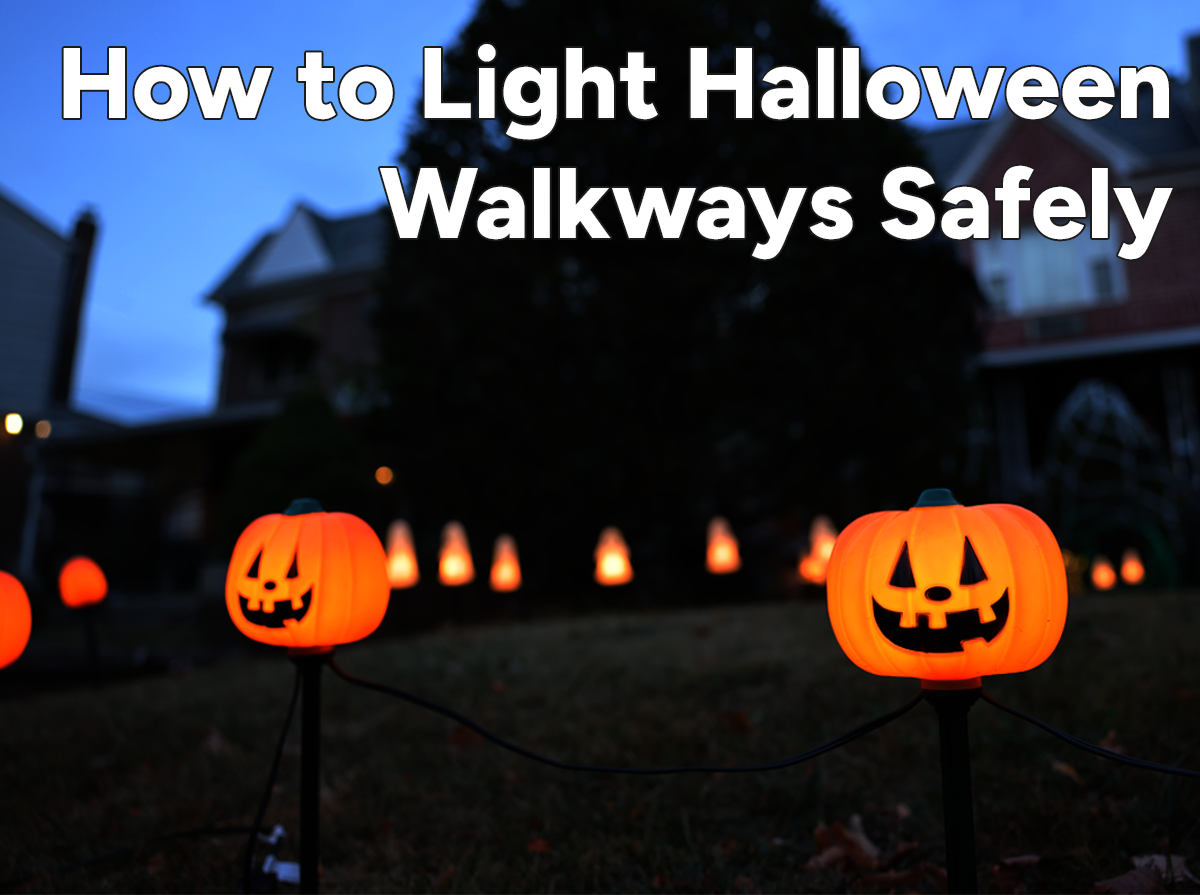
Low-profile fixtures beside walkways help guests move safely from the driveway or gate to your dining and seating zones. Focus on steps, curves, and surface changes first. If you choose solar options, test them after dark the night before your event because output varies with charge level, shade, and battery condition.
6. LED Deck and Step Lights
Recessed or surface-mounted lights reveal deck edges, stair treads, and level changes that guests might otherwise miss. Shield the light source to limit glare. For hardwired installations you're not familiar with, a licensed electrician can help.
7. Fire-Pit Ambient Lighting
The fire itself becomes a natural focal point, but flames change constantly. Adding low, steady light around the seating area and approach route keeps visibility consistent even when the fire dies down. Keep fixtures, cords, and dry décor well outside the required heat and flame zones.
8. C7 and C9 Lights on Fences and Pergolas
C7 and C9 bulbs have larger profiles that outline fences, pergolas, or covered edges nicely. Warm white, amber, or restrained autumn colors work well for fall. Before installation, check stringer compatibility, total wattage limits, and how many strands you can connect end-to-end.
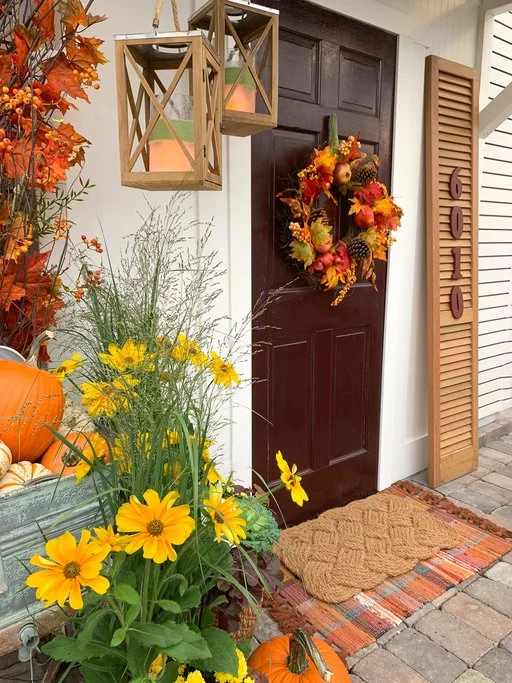
9. Outdoor Wall Sconces by Doorways
Wall fixtures at back doors and garage entries welcome guests and reveal thresholds. A shielded or diffused design lights the landing without creating glare into eyes.
10. Hanging Pendants Over Covered Patios
A single pendant or small cluster creates a more formal focal point above dining or conversation areas. Confirm ceiling support, mounting height, and fixture location rating. If you plan to use a dimmer, check compatibility before purchasing.
11. Battery-Operated Micro and Accent Lights
Battery-operated micro lights, puck lights, and compact accent lights add illumination where outlets are unavailable, including under patio umbrellas, inside centerpieces, or along buffet displays. Choose products rated for the intended location, conceal battery packs without blocking access, and secure each light so wind or guest movement cannot dislodge it.
12. Uplighting for Fall Foliage
Ground-mounted accent fixtures aimed at trees with colorful leaves extend the view beyond your patio and highlight seasonal texture. Use controlled beam angles and position fixtures to avoid glare into eyes or neighboring properties.
13. Post Lights for Fences and Deck Railings
Cap or post-mounted fixtures define your perimeter and mark changes in elevation. Coordinate spacing and output so the posts read as a pattern without overpowering the seating area.
14. Rope Lighting Under Railings and Benches
Tucking rope light beneath railings, benches, or planter edges creates a continuous, indirect accent with minimal visible hardware. Follow the manufacturer's instructions for bend radius, cutting points, and connectors. Don't place loose rope light where it can be stepped on.
15. Outdoor Chandeliers for Pergolas
A weather-suitable chandelier brings an indoor dining-room feeling to a pergola or gazebo. Confirm structural support, clearance, wind exposure, and location rating. A decorative indoor chandelier is rarely suitable for outdoor use.
16. Solar Garden Stake Lights
Decorative solar stakes in beds or along garden edges add accent light where they can receive adequate daytime sun. Runtime and output vary with panel placement, season, and battery condition, so test them before your event.
17. Smart Color-Changing Bulbs for Themed Nights
Compatible smart bulbs let you switch between harvest amber, Halloween purple, or adjustable warm white without swapping lamps. Check bulb-to-fixture fit, outdoor rating, and network or hub requirements before purchasing.
18. LED Torches for Yard Perimeters
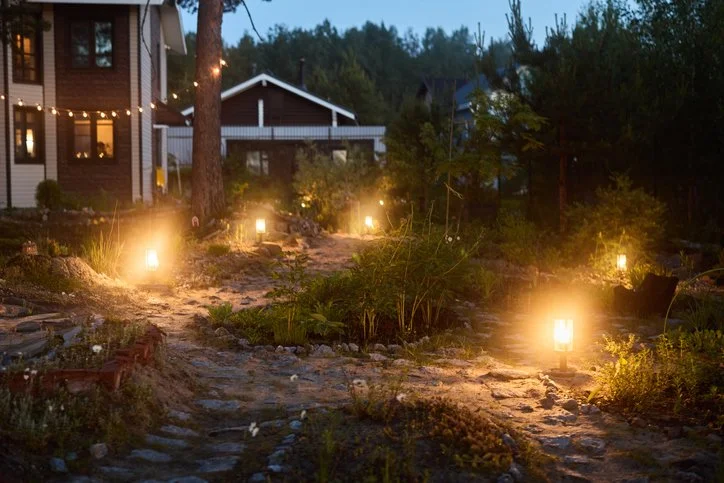
Flame-effect or lantern-style LED torches add height and define the entertaining boundary without open flame. If you prefer real-flame torches, keep them far from traffic and combustible décor, and follow all fuel, stability, and clearance guidelines.
19. Lighted Patio Umbrellas for Evening Dining
Umbrellas with integrated LEDs or compatible clip-on lights illuminate a table without permanent overhead installation. Check weight limits, wind guidance, and whether the light is rated for outdoor exposure.
20. DIY Mason Jar and Pumpkin Luminaries
Battery-operated tea lights in mason jars or carved pumpkins connect lighting with fall décor. Place them on stable surfaces outside walkways, and avoid open flames near dry materials.
Bulb Color Temperature for Fall Entertaining
Color temperature describes the appearance of white light, measured in kelvins (K). Lower values appear warmer and more amber, while higher values appear cooler and bluer.
| Color Temperature | Appearance | Best Use |
|---|---|---|
| 2200K-2700K | Amber, Candlelight | Intimate seating, accent lighting |
| 2700K-3000K | Warm White | General entertaining, dining |
| 3500K-4000K | Neutral White | Task areas like grilling or beverage prep |
Kelvin alone doesn't determine brightness. Lumens, beam spread, diffusion, and surface color all affect how the light feels in your space. Coordinating adjacent sources so they feel intentional, while allowing task areas to be slightly crisper, creates a more polished result.
How to Plan a Backyard Lighting Layout for a Fall Party
1. Map Your Entertaining Zones
Start by identifying where people will actually spend time: dining, conversation, cooking, beverage service, walkways, steps, entrances, and the fire-pit area. Assign a purpose to each light source and note where guests will move between zones.
2. Layer Ambient, Task, and Accent Lighting
Ambient: Overall illumination from string lights, pendants, lanterns, or wall fixtures
Task: Focused light for cooking, serving, reading labels, and navigating steps
Accent: Uplighting, rope light, foliage highlights, and decorative portable lights that add depth
3. Confirm Power Sources and Cord Routing
Before choosing final placements, inventory your outlets, circuits, transformers, batteries, and solar exposure. Use cords and equipment rated for outdoor use and the expected load. Route cords away from traffic, and keep connections protected. GFCI protection for outdoor receptacles is required in most areas.
4. Test the Setup Before Guests Arrive
Run the full layout after sunset the night before to find dark spots, glare, uneven color, or failed lights. Recheck shortly before the event, confirm timers and controls work, remove fallen leaves from fixtures, and secure loose cords.
Weatherproofing Outdoor Lighting for Cool Fall Nights
"Outdoor," damp-location, wet-location, and IP ratings are product-specific. Follow the label and manufacturer instructions for rain, sprinklers, condensation, and standing water exposure.
Inspect cords, sockets, covers, seals, and connections for damage or corrosion before each use. Remove compromised products from service immediately. Cold weather can affect battery and solar performance, so check the product's listed operating-temperature range. Keep plugs and connection points off wet ground and protected according to product instructions. For more maintenance guidance, read Tips for Protecting Outdoor Light Strings, Part 1 and Part 2.
Current Outdoor Lighting Trends for Fall Entertaining
Warm-toned LEDs continue to gain popularity because they offer incandescent-like color with lower energy use. Smart control through apps, hubs, or remotes allows scene changes, schedules, and brightness adjustment without leaving your seat, a trend driving the smart lighting market to $27.52 billion in 2026.
Portable and rechargeable lights provide flexible placement on tables and seating zones without permanent installation. Solar accents work well for cord-free installation where adequate sunlight and the product's output suit the application. Layered, low-glare designs using multiple restrained sources at different heights have replaced the single overly bright fixture as the preferred approach.
Shop Fall Backyard Lighting at 1000bulbs.Com
Planning a fall gathering starts with defining zones, establishing safe circulation and task light, then adding warm ambient and seasonal accents. Browse outdoor and landscape lighting, patio string lights, rope lights, solar fixtures, and C7/C9 stringers at 1000Bulbs.com.
Have questions about location ratings, compatibility, or power requirements? Contact a 1000Bulbs lighting specialist for help choosing the right products for your space.
Frequently Asked Questions About Backyard Lighting for Fall Entertaining
How many string lights do I need for my patio?
Measure the actual planned runs, including diagonals, drops, and lead cord, then compare the total with the product's lighted length, overall length, and socket spacing. A simple sketch with modest allowance for routing helps avoid coming up short.
Can outdoor string lights stay up all fall season?
They can remain installed when the complete system is rated for outdoor exposure and mounted, connected, and maintained according to its instructions. Check after wind or rain and remove from service if cords, sockets, or supports are damaged.
How can I power backyard lights without an outlet?
Solar fixtures, battery-operated lights, and rechargeable portable lamps work where their output and runtime suit the task. Extension cords still require an appropriate source, rating, load, and connection protection.
Are LED or incandescent bulbs better for fall outdoor entertaining?
LEDs generally use 80–90% less energy for a given light output and offer many color and control choices. Incandescent bulbs provide familiar color and dimming characteristics but typically use more power. Compare bulb base, voltage, lumens, color temperature, and fixture compatibility for your specific application.
How do I reduce insects around backyard lights during fall evenings?
Results vary by insect species, season, location, and light spectrum. Moving the brightest light source away from seating while keeping a separate, lower-glare task light where guests gather can help reduce the nuisance.