
How to Make Your Home Feel Cozy for Thanksgiving with Lighting
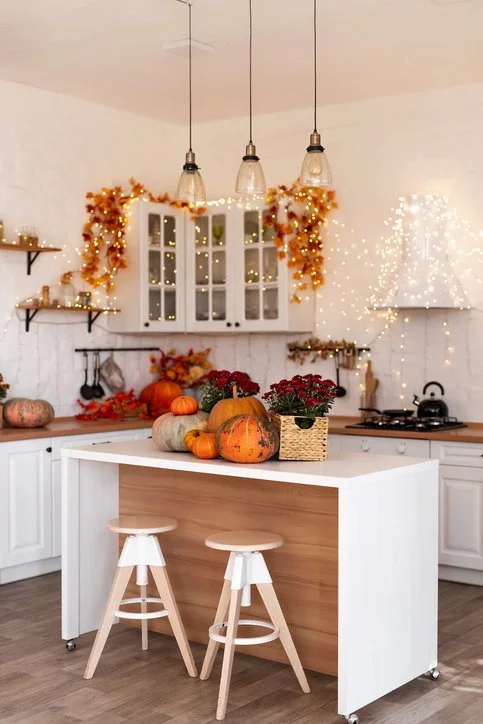
Thanksgiving lighting sets the mood before the first guest arrives. The right combination of warm bulbs, layered sources, and adjusted brightness turns an ordinary room into a space people want to linger in.
This guide covers color temperature basics, the three layers of light, room-by-room ideas for the entry, dining room, kitchen, living room, and outdoor spaces, plus a quick-swap checklist you can run through the morning of the holiday.
What Makes Lighting Feel Cozy?
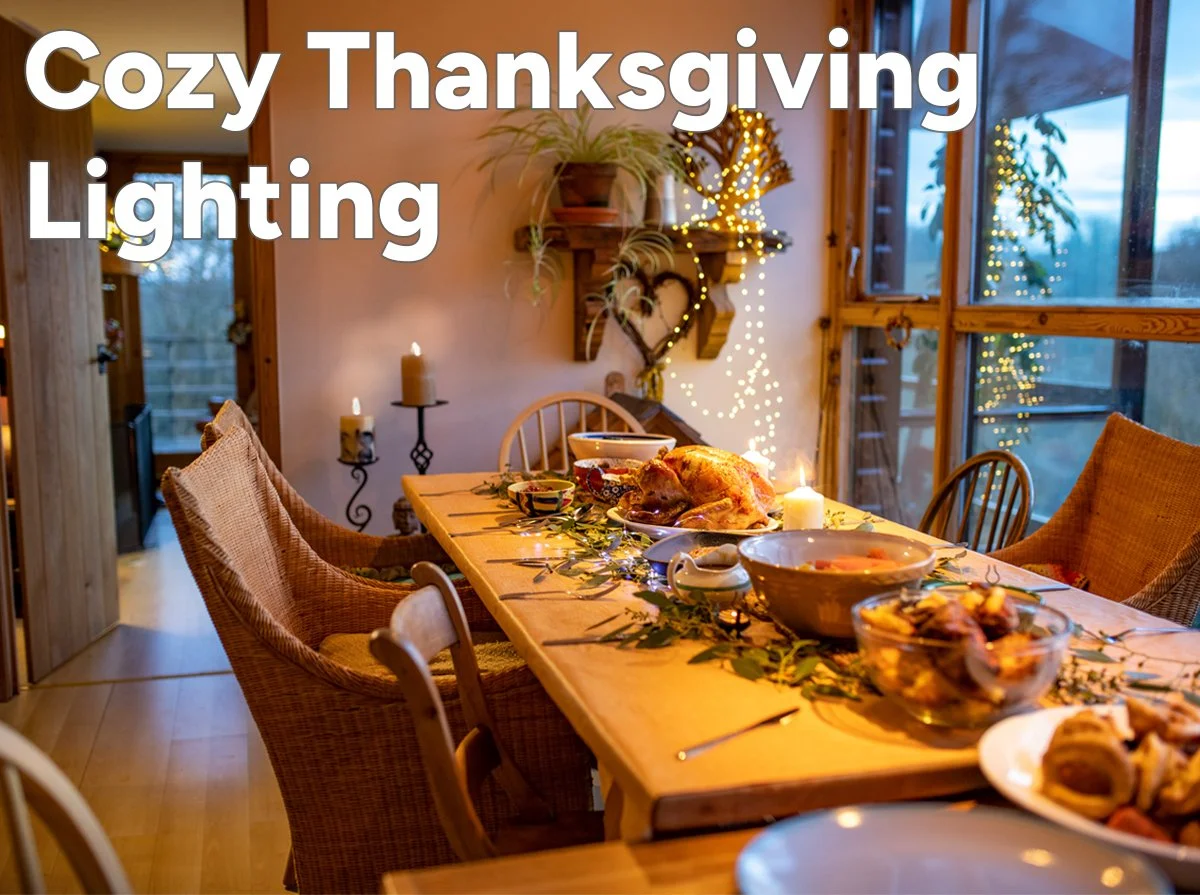
Cozy Thanksgiving lighting starts with warm LED bulbs in the 2200K–2700K range, lamps placed at seated height rather than overhead, candlelight or flameless alternatives, and soft fairy lights woven through fall décor. Warm light compresses space and softens contrasts, so when you combine warm color temperatures with multiple light sources spread across a room, the space feels inviting the moment guests walk through the door.
The difference between a cozy room and a harsh one often comes down to distribution. A single bright ceiling fixture flattens everything and casts hard shadows on faces. Spreading light across several sources at different heights, on the other hand, adds depth and softens the overall feel.
Now, cozy does not mean dim. You still want good visibility on countertops, stairs, serving areas, and walkways. The goal is comfortable contrast: brighter zones where you actually work, surrounded by gentler light everywhere else.
Choose the Best Color Temperature for a Warm Thanksgiving Ambiance
Color temperature describes how warm or cool a light appears, and it is measured in kelvins (K). Lower numbers look more amber, while higher numbers lean blue-white. Think of it like a spectrum: a candle flame sits around 1800K, a standard warm white bulb is about 2700K, and daylight runs closer to 5000K or higher.
For dining and living spaces, 2200K–2700K produces the candlelit warmth most people picture when they think of a cozy holiday gathering. Kitchens often work better at 3000K, which is still warm but offers slightly crisper visibility for chopping vegetables and plating food.
Here is a quick reference:
| Kelvin Range | Appearance | Best Use |
|---|---|---|
| 2200K-2400K | Amber, candle-like | Dining tables, mantels, decorative lamps |
| 2700K | Familiar warm white | Living rooms, entryways, general lighting |
| 3000K | Slightly crisper warm | Kitchens, food-prep areas |
| 4000K and above | Cool, clinical | Task areas only; may clash with fall decor |
Brightness is a separate consideration. Lumens measure how much light a bulb puts out, so a 2700K bulb can still be quite bright if it has high lumen output. When swapping bulbs, match the base type, shape, voltage, and fixture rating in addition to color temperature.
Layer Lighting Instead of Relying on One Overhead Fixture
Designers talk about three layers of light: ambient, task, and accent. Each layer has a distinct job, and combining them prevents the flat, glaring look that comes from relying on a single ceiling source.
Ambient Lighting
Ambient light is the room's general illumination, the background glow that lets you move around safely. Chandeliers, ceiling fixtures, recessed cans, and broad-throw floor or table lamps all contribute to ambient light.
If your ambient fixtures are dimmable, lowering them softens glare while still allowing safe movement through the space. Even dropping the brightness by 20–30% can change the feel of a room.
Task Lighting
Task lighting focuses on a specific activity. Under-cabinet strips illuminate chopping and cooking surfaces. A buffet lamp lights the serving area. A reading lamp beside a chair supports conversation or games after dinner.
The benefit of localized task lighting is that it keeps the surrounding room softer. You get brightness exactly where you work, without flooding the entire space.
Accent Lighting
Accent lighting highlights a focal point or seasonal detail. Small spotlights, warm white string lights, LED votives, and flameless candles around a mantel or centerpiece all qualify.
Use accents selectively. Too many competing focal points pull attention in different directions and make a room feel busy rather than cozy.
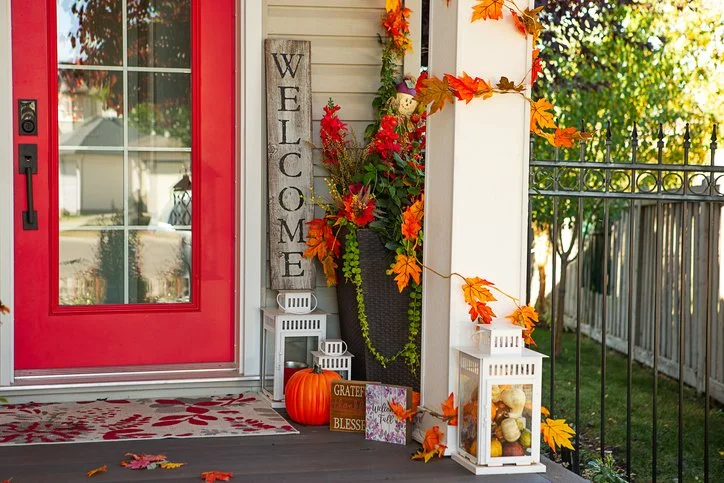
Welcome Guests With Cozy Entryway and Front Porch Lighting
First impressions start at the door. A warm white porch bulb (2700K or lower) clearly illuminates the door, steps, and house number without harsh glare aimed at arriving guests.
Lanterns or flameless candles near the doorway add a welcoming accent. Position them so they do not block the walking path. Warm white string lights can outline railings, wreaths, or architectural details, but secure cords to prevent trips.
Tip: Check product ratings before installing outdoors. Damp-location fixtures are suitable for covered porches. Wet-location fixtures handle direct rain exposure. Indoor-only products can fail or become hazardous outside.
Before guests arrive, walk the path from the street to the door. Look for dark steps, loose cords, exposed connections, and any light source aimed directly at eye level.
Create Warm Dining Room Lighting for the Thanksgiving Table
The dining room sets the tone for the meal. You want enough light to see food and faces clearly, yet not so much that the ceiling layer dominates the room.
If your main fixture is dimmable, start brighter during setup and lower it gradually once guests sit. The shift signals a change in pace without an abrupt plunge into darkness.
Candles vs. Flameless LED Candles
Real candlelight flickers and moves in a way that feels alive, but candles cause nearly 5,900 home fires per year. Flameless LED candles offer a lower-risk alternative, especially around children, pets, or flammable greenery.
Place votives or pillar candles down the center of the table or on a buffet, below guests' sightlines so flames do not block conversation. If using real candles, choose stable holders, keep flames away from décor, and never leave them unattended.
Chandeliers and Pendants on a Dimmer
A dimmable chandelier or pendant can support setup, dinner, and after-dinner conversation with a single adjustment. Both the bulb and the dimmer switch need to be compatible, though. Mismatched combinations may flicker, buzz, or have a limited dimming range.
Check product specifications or ask a lighting specialist before purchasing. For unfamiliar hardwired work, a licensed electrician is the safest choice.
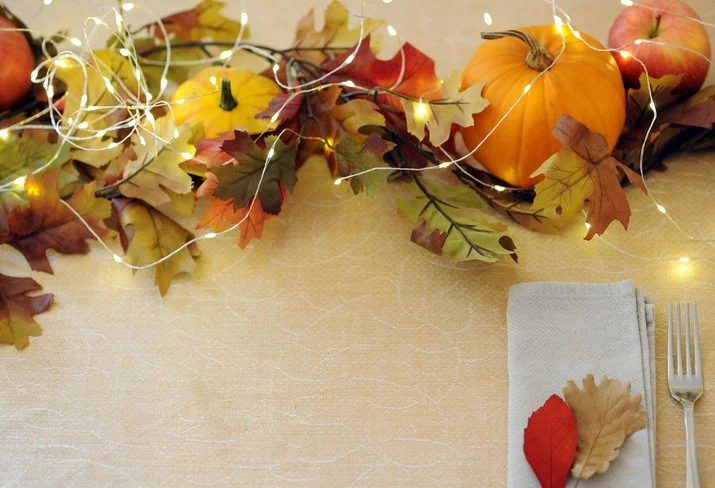
Table Centerpiece Accent Lighting
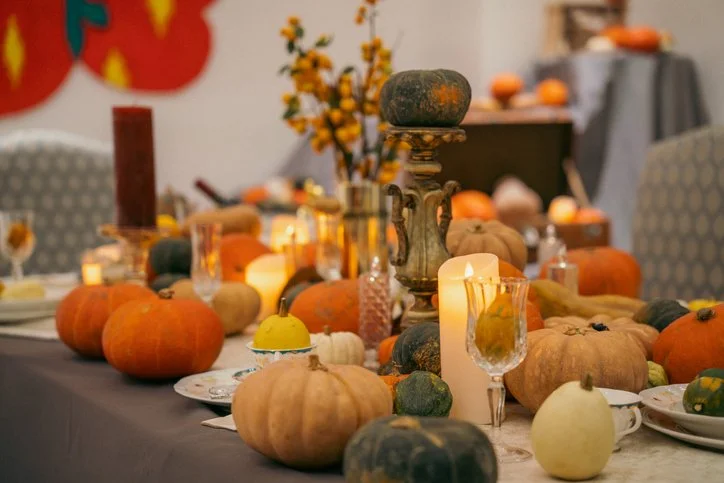
Battery-operated micro lights or LED votives tucked among pumpkins, leaves, and greenery add a subtle glow without cords crossing the table.
Keep the arrangement low enough for conversation across the table. Hide battery packs while keeping them accessible for replacement, and place electrical components away from likely spills.
Make the Living Room Comfortable for After-Dinner Gatherings
After the meal, guests often migrate to sofas and chairs. This is the moment to shift away from the brightest overhead source and rely on table and floor lamps arranged around seating areas.
Place lamps beside sofas, in dark corners, or near games and reading spots. Fabric shades, frosted glass, or diffused bulbs reduce direct glare and create a softer pool of light.
Steady warm white string or fairy lights on a mantel, bookcase, or windowsill add a seasonal accent without overwhelming the room. Battery-operated options work well in spaces without nearby outlets. Keep cords against walls and outside traffic paths.
If you have a fireplace, follow clearance instructions and keep cords, candles, and decorations away from heat and open flame.
Balance Kitchen Task Lighting With a Welcoming Glow
Kitchens present a challenge: you want brighter task lighting during preparation, yet the adjacent gathering spaces may be softer and warmer.
Under-cabinet lighting keeps chopping, cooking, and serving surfaces well lit. A color temperature around 2700K–3000K balances warmth with task visibility.
After cooking, dim compatible overhead fixtures while leaving the under-cabinet layer on. A small counter lamp can add warmth, but place it in a safe, dry location away from sinks and cooking surfaces. For hardwired installations or unfamiliar circuits, consult a licensed electrician.
Extend Thanksgiving Lighting to Patios and Porches
Outdoor gatherings benefit from the same layered approach used indoors. Lanterns on tables add accent. Pathway lighting keeps steps, gates, and changes in level visible.
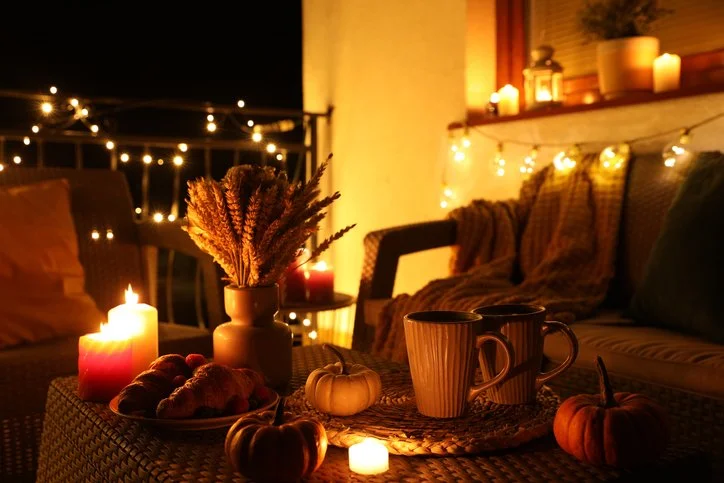
Before installing, verify product location ratings, cord lengths, and the maximum number of connected strings. Use outdoor-rated extension cords and weather-protected connections where permitted. Solar or battery-powered lanterns work well where running a cord would create a hazard.
Use the 3-5-7 Rule to Arrange Illuminated Decor
The 3-5-7 rule is a simple way to arrange decorative objects in odd-numbered groups. For Thanksgiving lighting, group three, five, or seven lanterns, flameless candles, votives, or micro-light accents to create a balanced arrangement without looking overly symmetrical. Treat the grouping as one composition, with one item serving as the visual anchor and the others supporting it.
For a small mantel, three pieces may be enough: a lantern at one end, a cluster of LED votives near the center, and a small illuminated accent at the other end. A longer table or shelf can support five or seven items. Vary their heights, leave breathing room between groups, and repeat the same warm color temperature so the display feels connected instead of cluttered. Keep flames and electrical components away from greenery, fabrics, and other combustible decor.
Try These Quick Lighting Swaps Before Guests Arrive
Even last-minute changes can shift the atmosphere. Focus on existing fixtures and portable products you already own or can pick up quickly.
1. Switch key fixtures to warm white bulbs
Prioritize the entry, dining room, and living room rather than changing every bulb in the house. A 2700K or lower bulb produces the warmest effect. Match base, shape, voltage, lumens, and fixture rating when selecting replacements.
2. Adjust brightness
Set compatible dimmers or smart bulbs brighter for setup and lower for dinner and conversation. Test all controls before guests arrive so you are not troubleshooting a new product mid-meal.
3. Bring in portable light
Move a table or floor lamp into a dark conversation zone. Add flameless candles to tables or mantels. Keep cords against walls and outside traffic paths.
4. Add one restrained decorative layer
Steady warm white battery-operated string lights on a mantel, stair rail, or window add a seasonal touch. One coordinated accent usually feels calmer than several colors, flashing modes, or competing effects.
5. Do a 15-minute lighting walk-through
Check the porch, stairs, buffet, countertops, bathroom route, and outdoor paths. View gathering areas from both standing and seated positions to catch glare and exposed bulbs. Correct dark safety spots and remove loose cords before guests arrive.
Set the Scene for a Warm Thanksgiving With 1000bulbs.com
Cozy Thanksgiving lighting comes down to a few choices: a warm color temperature, useful layers, and brightness that adjusts with the activity. Small, deliberate changes in the entry, dining room, kitchen, living room, and outdoor areas can shift the entire atmosphere.
If you are looking for warm white LED bulbs, dimmer switches, string lights, or under-cabinet lighting, explore the options at 1000Bulbs.com. For help matching a bulb to a fixture or confirming dimmer compatibility, call a 1000Bulbs lighting specialist at 1-800-624-4488.
Frequently Asked Questions About Cozy Thanksgiving Lighting
What Kelvin color temperature is best for cozy Thanksgiving lighting?
For dining and living areas, 2200K–2700K produces a warm, inviting glow. Kitchens often work well at 3000K, which is still warm but offers slightly crisper visibility for food preparation.
Are string lights appropriate for indoor Thanksgiving décor?
Yes. Steady warm white strings add a subtle fall glow without looking tied to Christmas. Use products rated for indoor use and secure cords so they do not create a trip hazard.
What is the 3-5-7 rule in decorating?
The rule refers to grouping decorative objects in odd numbers, often three, five, or seven, to create visual interest and balance. It applies to lanterns, votives, or other small illuminated accents on a mantel or table.
How do I make my living room feel cozy with lights?
Use several warm sources at different heights, such as a floor lamp, table lamp, and decorative accent. Dim or switch off harsh overhead light while keeping pathways and steps safely illuminated.