
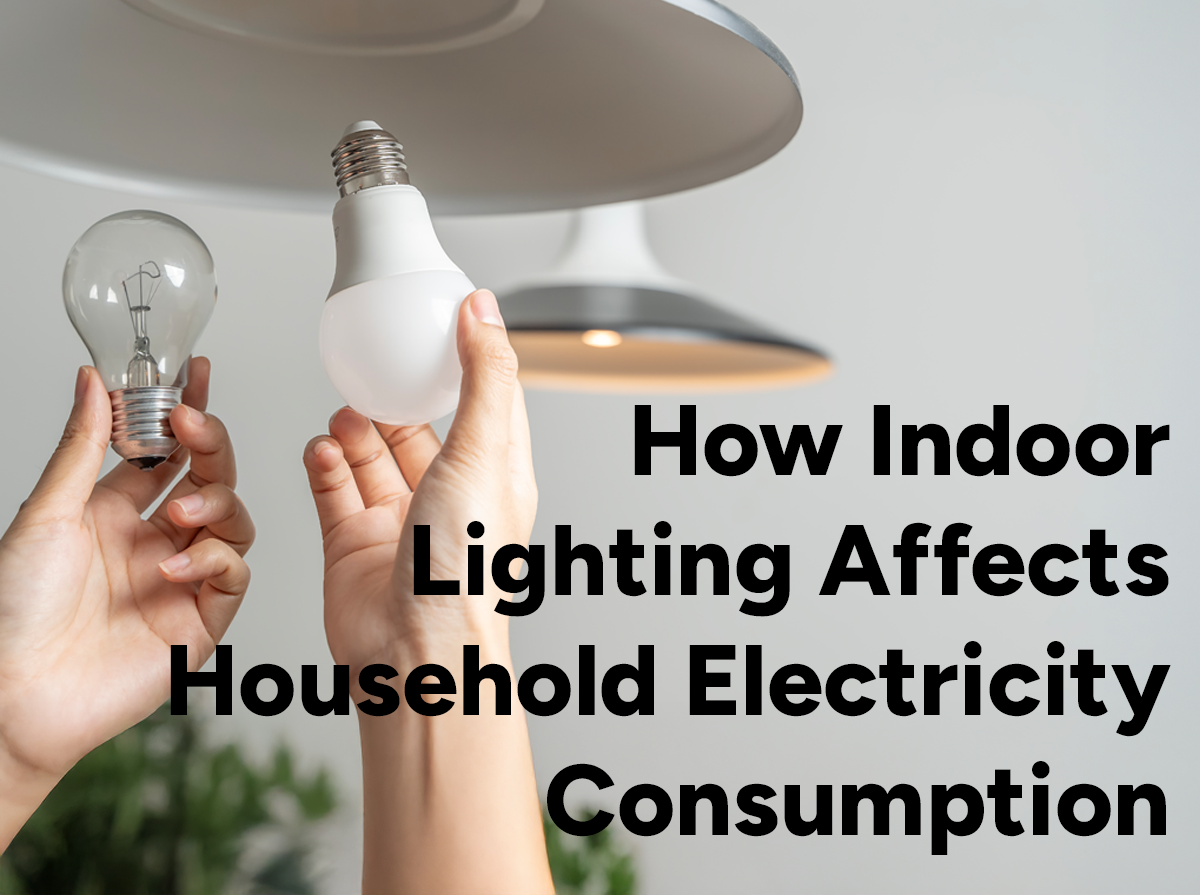
How Indoor Lighting Affects Household Electricity Consumption
When homeowners look for ways to lower their electric bills, they usually think about heating and cooling systems, water heaters, or large kitchen appliances. While those systems often consume more electricity than lighting, lighting remains one of the easiest and most affordable places to improve energy efficiency. Small changes made across every room in your home can add up over time, helping reduce electricity consumption without requiring a major renovation.
Understanding how lighting affects energy consumption starts with recognizing that not every light bulb uses electricity the same way. The technology inside the bulb, its wattage, brightness (measured in lumens), how long it stays on each day, and even the fixture surrounding it all influence how much electricity is used. Modern lighting isn't about accepting dimmer rooms to save energy. Instead, today's LED technology produces the same or even better illumination while using significantly less electricity than older lighting technologies.
Many homeowners also overlook the role that fixture selection, room layout, and everyday lighting habits play in overall household energy use. An efficient LED installed in the wrong fixture or left on unnecessarily still consumes more electricity than needed. Likewise, properly layered lighting, smart controls, and thoughtful fixture placement can improve visibility while reducing overall energy demand.
In this guide, you'll learn how lighting fits into your home's total electricity consumption, what factors have the biggest impact on energy use, how to estimate operating costs, and which upgrades typically deliver the greatest long-term value. Whether you're replacing a few bulbs or planning a whole-home lighting refresh, understanding these fundamentals can help you make smarter lighting decisions while keeping your home bright and comfortable.
How Much of Your Home Electricity Bill Comes From Lighting?
Lighting affects energy consumption based on three things: bulb type, wattage, and how long the lights stay on. A home full of older incandescent bulbs running several hours each evening will show a noticeably higher lighting cost than one using LEDs with the same runtime. The difference comes down to how well each bulb turns electricity into visible light instead of heat.
How big a slice lighting takes from your total bill depends on your home. A small apartment with a handful of LED lamps barely registers on the monthly statement. A larger house with dozens of incandescent bulbs in daily use sees lighting take a bigger share.
It's also important to separate lighting's contribution to your electricity use from your total utility costs. Heating, cooling, and water heating often consume more electricity overall, but lighting remains one of the few household systems you can improve almost immediately. You don't need to replace expensive equipment or complete a major renovation to start seeing results.
Here's what makes lighting different from other household energy costs: you can change it immediately. Replacing a water heater or upgrading your HVAC takes planning and real money. Swapping out a light bulb takes ten seconds. That accessibility makes lighting one of the first places to look when you want to lower electricity costs without a major project.
Lighting is also unique because several improvements can work together. Installing efficient LED bulbs, choosing fixtures that distribute light effectively, and adjusting how long lights stay on each day all contribute to lower household electricity consumption. Improving just one area can make a difference, but combining all three often produces the greatest long-term savings while maintaining the same level of brightness throughout your home.
What Factors Affect Indoor Lighting Energy Consumption
No single factor determines how much electricity your lighting system uses. Instead, total lighting energy consumption depends on three elements working together: bulb efficiency, fixture efficiency, and occupant behavior. Improving just one area can lower energy use, but combining all three often delivers the greatest long-term savings.
For example, replacing incandescent bulbs with LEDs reduces the electricity each fixture consumes. Installing fixtures that direct light where it's needed may allow you to use fewer bulbs or lower lumen outputs. Finally, simple habits like turning lights off when leaving a room or using dimmers and occupancy sensors help reduce unnecessary runtime. Understanding how these variables interact makes it easier to identify the upgrades that will have the biggest impact on your electric bill.
Bulb Type and Technology
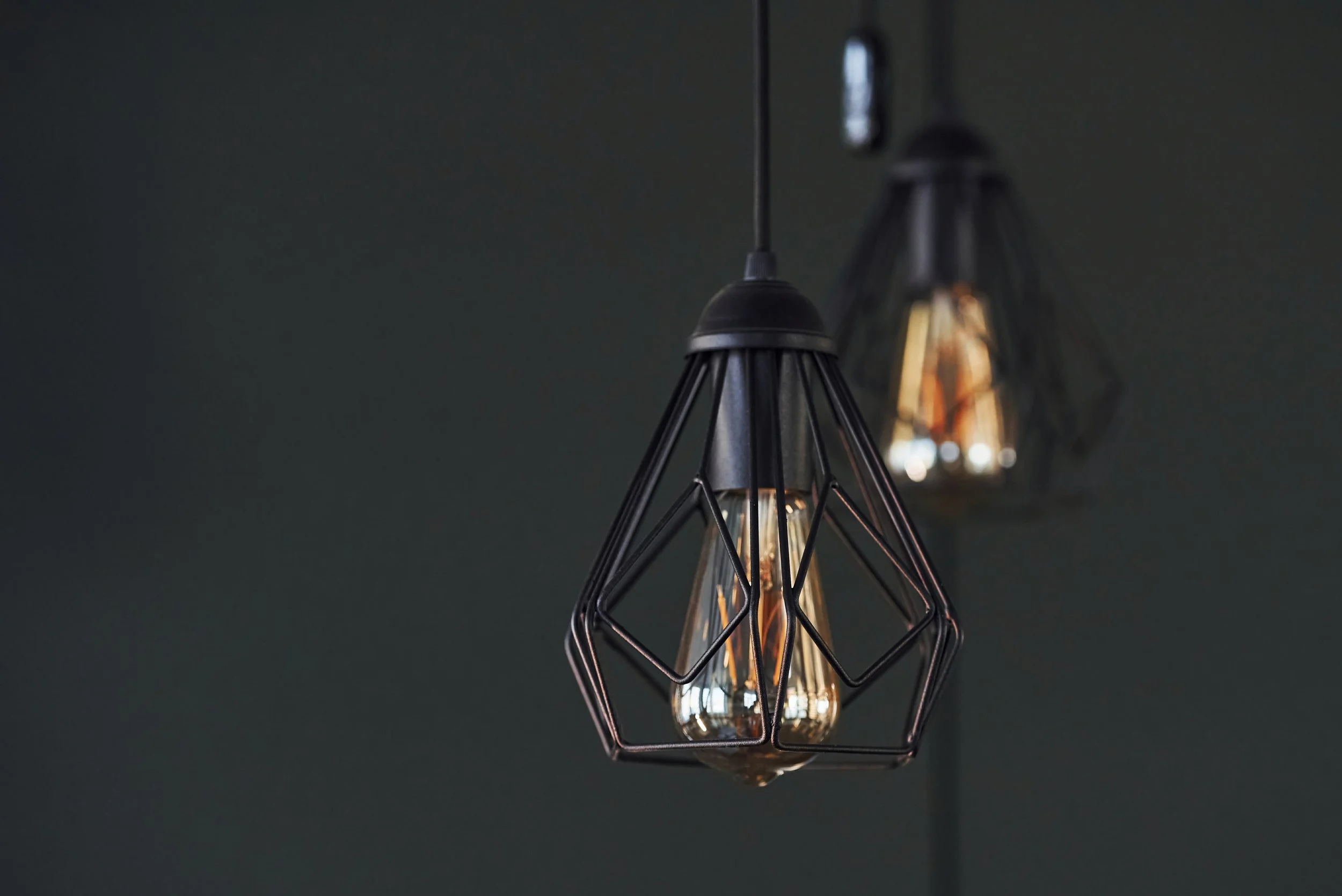
Incandescent, CFL, and LED bulbs convert electricity to light at very different rates. The term for this is luminous efficacy, which simply means how many lumens (units of brightness) a bulb produces for each watt of electricity it consumes.
Incandescent bulbs convert only a small portion of their electricity into visible light. Most of the energy becomes heat, which is why a 60-watt incandescent feels warm after running for a few minutes. LEDs flip this around, producing far more light per watt while staying cool to the touch.
This difference in efficiency is one of the biggest reasons LED lighting has become the standard for homes and businesses. Rather than wasting electricity as excess heat, LEDs convert much more of that energy into usable illumination. That means you can achieve the same brightness while consuming significantly less power throughout the bulb's lifetime.
Wattage and Lumen Output
Wattage measures how fast a bulb uses electricity. Lumens measure how much light it actually produces. An efficient bulb delivers more lumens per watt, so a 9-watt LED can match the brightness of a 60-watt incandescent.
Shopping by wattage made sense when incandescent bulbs were the only option. With LEDs, it no longer applies. Compare lumen output first, then pick the lowest wattage that gives you the brightness you want. The Lighting Facts label on modern packaging lists lumens, estimated yearly operating cost, color temperature, and expected lifespan.
Today's lighting packages are designed to simplify this comparison. Rather than searching for a "60-watt bulb," you'll often see labels such as "60-watt equivalent," indicating that the LED provides roughly the same brightness while consuming only a fraction of the electricity. Looking at lumens first helps ensure you select the right amount of light instead of assuming higher wattage means better performance.
Daily Runtime and Usage Habits
Total energy use equals wattage multiplied by hours of operation. A 10-watt bulb running five hours uses 50 watt-hours. The same bulb running ten hours uses 100 watt-hours.
Rooms where lights stay on for many hours daily, like kitchens, living rooms, and home offices, contribute more to your bill than spaces you pass through quickly. Prioritizing upgrades in high-use rooms typically provides the fastest payback.
By comparison, transitional spaces such as hallways, closets, pantries, stairways, and laundry rooms are often illuminated for much shorter periods. While these rooms still benefit from efficient lighting, replacing bulbs in your highest-use spaces first typically delivers a faster return on your investment because those fixtures accumulate far more operating hours each year.
Fixture Type and Placement
Fixture design affects how many bulbs you use and how much light reaches the area you're trying to illuminate. A poorly aimed recessed can or an outdated fixture with a dark shade may require higher wattage to achieve adequate brightness.
Layered lighting, which combines ambient, task, and accent sources, often allows you to use lower-wattage bulbs while improving visibility. Light-colored walls and ceilings also help by reflecting more light back into the room, reducing the total lumen output you actually require.
Layered lighting deserves special attention because it improves both comfort and efficiency. Ambient lighting provides overall illumination throughout the room, task lighting delivers focused light where activities such as reading, cooking, or working take place, and accent lighting highlights architectural features or décor. By directing brighter light only where it's needed, homeowners can often reduce overall wattage while creating a space that feels brighter and functions better.
The room itself also influences perceived brightness. Reflective wall colors, lighter ceilings, diffusers, reflective fixture surfaces, and well-designed shades help distribute light more evenly throughout the space. In contrast, dark paint colors, high ceilings, and opaque shades absorb more light, sometimes leading homeowners to install higher-wattage bulbs than would otherwise be necessary.
How Many Watts Common Household Light Bulbs Use
Manufacturers now market replacement bulbs by equivalent brightness rather than equivalent wattage. A package might say "60W equivalent" even though the LED inside draws only 8 or 9 watts. Knowing the actual wattage helps you estimate operating costs.
| Bulb Type | Typical Wattage for 800 Lumens |
|---|---|
| Incandescent | 60W |
| Halogen | 43W |
| CFL | 13–15W |
| LED | 8–10W |
Although these numbers vary slightly between manufacturers, they demonstrate just how dramatically lighting technology has improved over the past several decades. Modern LED bulbs produce the same level of illumination while consuming only a small fraction of the electricity required by traditional incandescent bulbs. That's why manufacturers now emphasize brightness equivalency instead of wattage alone, making it easier for homeowners to upgrade without sacrificing the amount of light they're accustomed to.
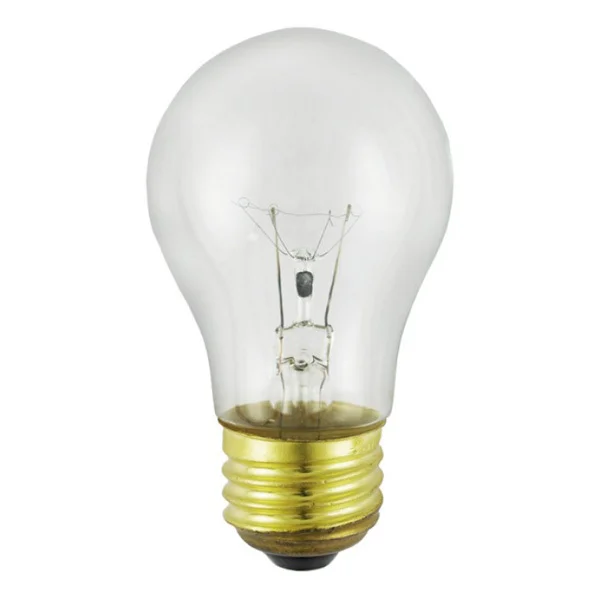
Incandescent A15 Bulb
Incandescent and Halogen Bulb Wattage
Incandescent bulbs are the least efficient option still available. A standard 60-watt incandescent produces about 800 lumens, but most of that 60 watts becomes heat rather than light.
Halogen bulbs are a slightly more efficient incandescent variant. They run hotter and last a bit longer, yet they still convert most of their electricity to heat. A halogen producing 800 lumens typically draws around 43 watts.
While halogen bulbs represented an improvement over traditional incandescent technology, they are still considered relatively energy intensive by today's standards. Many homeowners replacing older halogen bulbs with LED alternatives notice immediate reductions in electricity consumption without any noticeable difference in brightness.
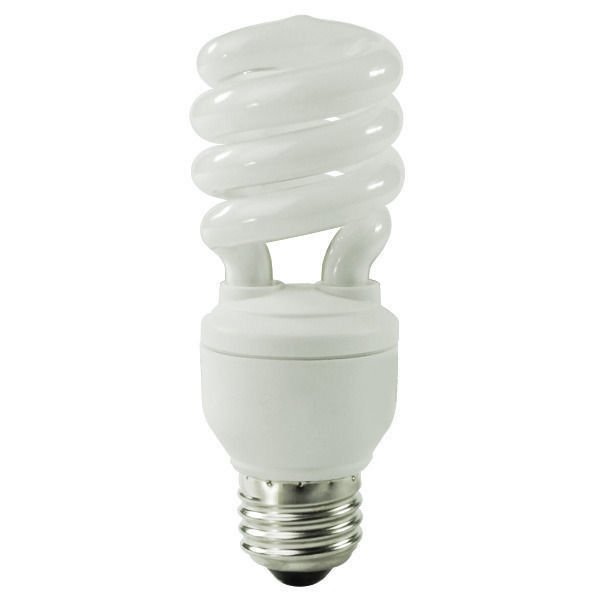
CFL Bulb
CFL Bulb Wattage
CFL stands for compact fluorescent lamp. CFLs use less wattage than incandescents for the same brightness, typically 13–15 watts for 800 lumens.
CFLs contain a small amount of mercury and take time to reach full brightness, especially in cold environments. They were the go-to efficiency upgrade before LEDs became affordable, though LEDs have largely replaced them in new installations.
Because CFLs contain mercury, they should be recycled properly instead of being placed in household trash. Although they remain more efficient than incandescent bulbs, many homeowners now choose LEDs because they provide instant brightness, longer service life, better dimming performance, and eliminate concerns about mercury disposal.
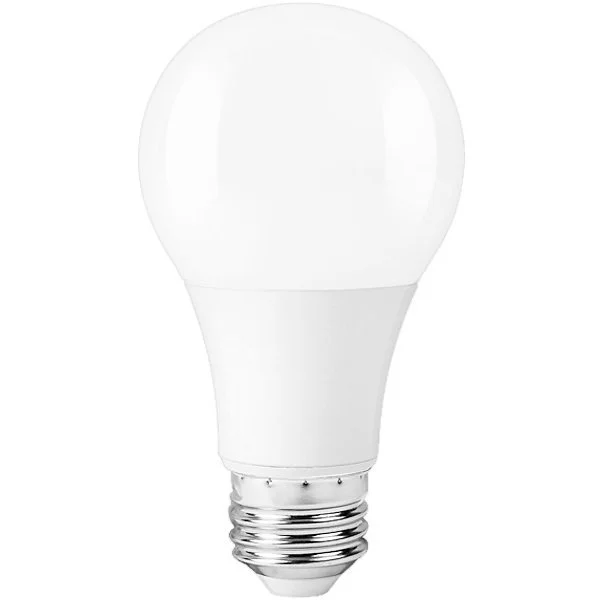
A19 LED Bulb
LED Bulb Wattage
LED bulbs use the least wattage for equivalent light output. An 800-lumen LED typically draws 8–10 watts, roughly one-seventh the electricity of an incandescent producing the same brightness.
LEDs also turn on instantly and last far longer than other bulb types. That extended lifespan affects total energy consumed over time because you're not manufacturing, shipping, and disposing of replacements as often. For more on how long LEDs actually last, see How Long Do LED Lights Really Last?
Beyond their lower energy consumption, LEDs offer additional benefits that contribute to lower long-term operating costs. Their extended lifespan reduces replacement frequency, they generate much less heat than incandescent bulbs, and many models are compatible with smart home systems, dimmers, occupancy sensors, and other energy-saving controls. These advantages make LEDs the preferred lighting technology for most residential applications today.
The Cost to Run a Light Bulb per Month and per Year
Calculating operating cost is straightforward once you know three numbers: the bulb's wattage, how many hours it runs daily, and your local electricity rate. You can find your rate on your utility bill, usually listed as cost per kilowatt-hour (kWh).
Formula: (Wattage × Hours per day × Days per month) ÷ 1,000 × Electricity rate = Monthly cost
Rather than relying on national averages or fixed electricity prices, this formula allows you to estimate your actual lighting costs using the rate you pay your local utility. Because electricity prices vary by location, calculating costs this way provides a more accurate picture of how your lighting choices affect your monthly bill.
Example:
Imagine a 60-watt incandescent bulb in your kitchen that operates for five hours each day. Over the course of a month, it uses:
60 watts × 5 hours × 30 days = 9,000 watt-hours
9,000 ÷ 1,000 = 9 kilowatt-hours (kWh)
Now compare that to a 9-watt LED producing similar brightness:
9 watts × 5 hours × 30 days = 1,350 watt-hours
1,350 ÷ 1,000 = 1.35 kilowatt-hours (kWh)
Without even assigning a dollar amount, it's easy to see the difference. The incandescent bulb uses nearly seven times more electricity to produce roughly the same amount of light. When you multiply those savings across multiple fixtures operating every day, upgrading to LEDs can significantly reduce your home's overall lighting energy consumption.
High-use areas amplify these savings even further. Kitchens, family rooms, garages, and home offices often have lights operating for many hours each day, making them excellent places to prioritize energy-efficient upgrades before replacing bulbs in rooms that see only occasional use.
LED vs Incandescent and CFL Energy Use
Comparing energy efficiency alone, LEDs win by a wide margin. But efficiency is only part of the picture.
| Factor | Incandescent | CFL | LED |
|---|---|---|---|
| Energy use | Highest | Moderate | Lowest |
| Heat production | High | Moderate | Low |
| Lifespan | ~1,000 hours | ~8,000 hours | 15,000–50,000 hours |
| Dimmability | Excellent | Limited | Excellent (if rated) |
| Cold-weather performance | Good | Poor | Excellent |
| Contains mercury | No | Yes | No |
Incandescent bulbs offer excellent color rendering and work with any dimmer, but their short lifespan and high energy use make them expensive to operate over time. CFLs improved efficiency but introduced mercury disposal concerns and slow warm-up times. LEDs combine low energy use, long life, instant brightness, and compatibility with most fixtures.
Looking beyond wattage alone provides a more complete picture of each technology's value. Heat production, maintenance requirements, environmental impact, dimming capability, and lifespan all influence the total cost of ownership. While an incandescent bulb may cost less upfront, replacing it repeatedly and paying for the additional electricity it consumes often makes it the most expensive option over time.
LEDs also produce very little wasted heat. During warmer months, this can provide a small secondary benefit by reducing the amount of excess heat introduced into your home. Although the impact varies depending on the number of fixtures in use, every watt not converted into heat is a watt that doesn't contribute to warming your indoor environment.
From an environmental standpoint, LEDs offer additional advantages. They last significantly longer than incandescent and CFL bulbs, reducing manufacturing demand and landfill waste over time. Unlike CFLs, LEDs also contain no mercury, making disposal simpler and reducing environmental concerns if a bulb breaks.
For most homeowners, LED lighting provides the best balance of efficiency, longevity, maintenance savings, and lighting quality. Incandescent bulbs still offer excellent color rendering, and CFLs remain more efficient than traditional incandescent lighting, but advances in LED technology have made them the preferred choice for nearly every residential application.
How Runtime, Dimmers, and Sensors Change Lighting Consumption
Even the most efficient bulb wastes energy if it stays on when no one is in the room. Controls that reduce runtime or lower output can cut lighting costs further.
Lighting efficiency isn't determined solely by the bulb you install. How you operate your lighting every day plays an equally important role. Dimmers, occupancy sensors, timers, smart switches, and daylight-responsive controls help reduce unnecessary runtime without requiring homeowners to constantly think about turning lights on and off.
Turning Lights Off Versus Leaving Them On
You may have heard that turning lights on and off uses more energy than leaving them running. For modern bulb types, this is a myth. The brief surge at startup is negligible compared to continuous operation.
Turning off lights when you leave a room saves energy, period. The only exception was older fluorescent tubes, which did experience some wear from frequent switching, but even then the energy savings outweighed the minor lifespan reduction.
For LED bulbs, frequent switching has very little effect on expected lifespan during normal residential use. Whenever a room will be unoccupied for more than a few minutes, turning the lights off remains the simplest way to reduce unnecessary electricity consumption.

Dimmer switch for LEDs
Dimmers and Smart Controls
Dimming reduces wattage consumption proportionally. A dimmable LED set to 50% brightness uses roughly half the electricity it would at full output.
Not all bulbs are dimmable, and not all dimmers are compatible with LEDs. Check the bulb packaging for dimmer compatibility, and see 3-Way Dimmer Switch vs. Multi-Location Dimmer Switch for guidance on choosing the right switch. Smart controls add scheduling and remote operation, preventing lights from running when you forget to turn them off.
Dimmers are especially valuable in living rooms, dining rooms, bedrooms, and media spaces where maximum brightness isn't always necessary. By lowering light output to match the activity, homeowners improve comfort while reducing energy use at the same time.
Motion Sensors and Daylight Harvesting
Motion sensors turn lights on only when a space is occupied, then shut them off after a set period of inactivity. They work well in low-traffic areas like garages, closets, laundry rooms, and bathrooms.
Daylight harvesting automatically adjusts artificial light based on available natural light. As sunlight fills a room, the fixtures dim or turn off. When daylight fades, they brighten. This approach is more common in commercial buildings but is increasingly available for residential use.
Occupancy sensors eliminate one of the most common sources of wasted electricity: lights left on in rooms that no one is using. Likewise, daylight harvesting ensures artificial lighting supplements natural daylight rather than competing with it. Together, these technologies help maintain consistent illumination while minimizing unnecessary energy consumption throughout the day.
How Fixtures and Wiring Impact Household Lighting Energy Use
Aging fixtures may not accept efficient bulb types or may distribute light poorly, requiring more wattage to achieve adequate illumination. Enclosed fixtures designed for incandescent bulbs can trap heat and shorten LED lifespan.
Old wiring can cause voltage fluctuations that reduce bulb efficiency and lifespan. If you notice bulbs burning out prematurely or flickering, a licensed electrician can assess whether wiring is the cause.
Even when you install energy-efficient bulbs, your fixtures still influence how effectively that light is used. A well-designed fixture directs light where it's needed, minimizes glare, and distributes illumination evenly throughout the room. Older or poorly designed fixtures may waste light, causing homeowners to compensate by installing brighter bulbs or adding additional fixtures that increase overall electricity consumption.
Retrofitting older fixtures can often improve compatibility with modern LED bulbs while maintaining the style of your home. In some cases, replacing an outdated fixture entirely provides better light distribution, improved energy efficiency, and access to modern features such as dimming or smart controls.
Several fixture characteristics affect perceived brightness:
Reflectors and diffusers: Direct or scatter light, changing how much reaches the work surface
Shade design: Dark or opaque shades absorb light; translucent shades let more through
Ceiling height: Higher ceilings require higher lumen output to achieve the same illumination at floor level
Wall and ceiling color: Light finishes reflect more light, often allowing lower-wattage bulbs
Room finishes: Glossy surfaces, mirrors, and lighter flooring can increase perceived brightness by reflecting light, while darker finishes absorb more illumination.
These factors don't necessarily change how much electricity a light bulb uses, but they do affect how bright a room feels. Improving light distribution often allows homeowners to choose lower-lumen bulbs while maintaining comfortable visibility, reducing both energy use and unnecessary over-lighting.
How to Reduce Indoor Lighting Energy Consumption at Home
The concepts above translate into practical steps you can take room by room.
1. Replace Incandescent and Halogen Bulbs With LEDs
Start with the fixtures that run the most hours daily. Kitchens, living rooms, and home offices typically offer the quickest payback. LED replacements exist for nearly every bulb shape and base type. For help identifying the right fit, see Types of LED Bulbs.
Rather than replacing every bulb at once, prioritize the fixtures that operate for several hours each day. Upgrading these high-use locations first often delivers the quickest reduction in household lighting energy consumption while spreading replacement costs over time.
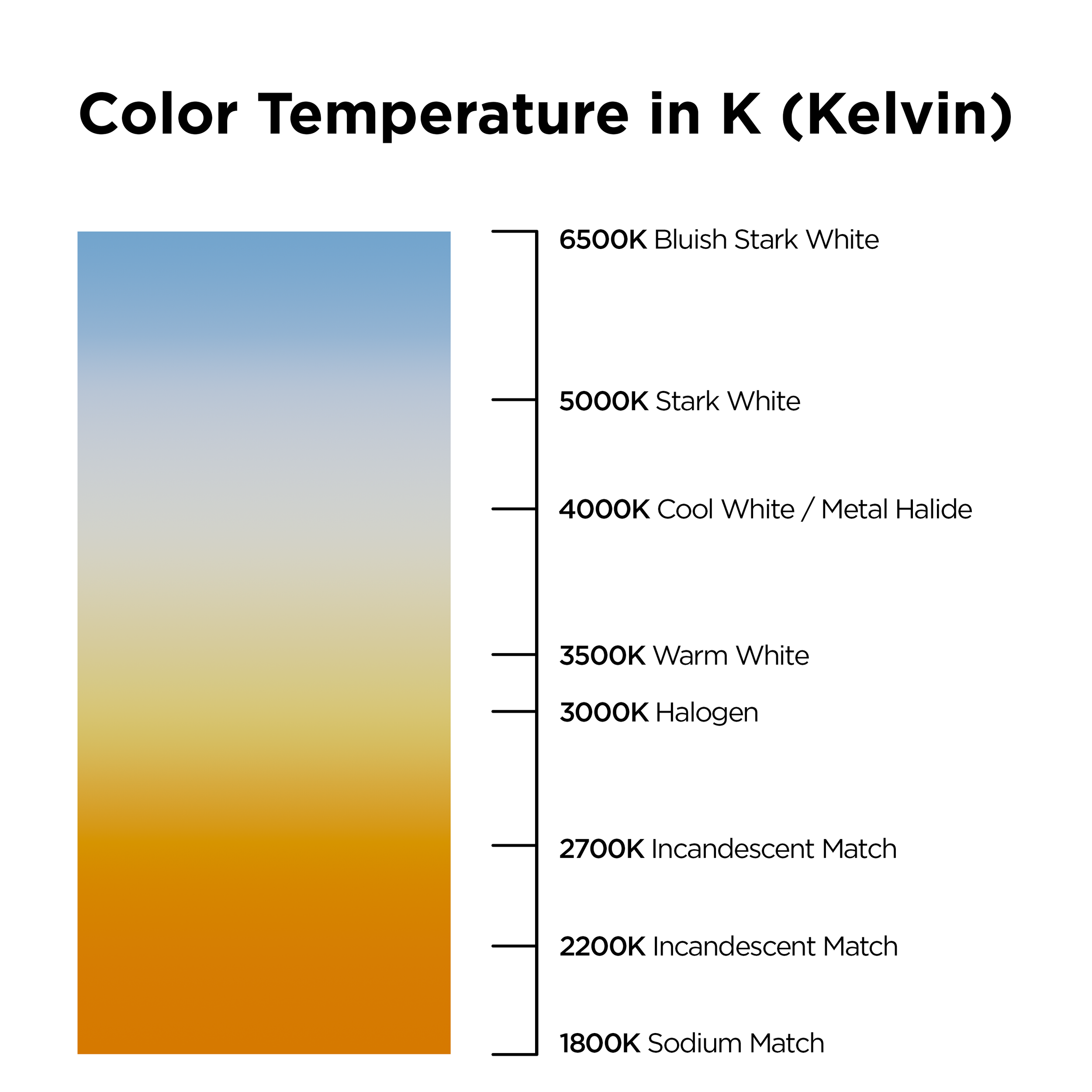
2. Match Lumens and Color Temperature to Each Room
Over-lighting wastes electricity. Choose lumens appropriate for the task: a reading lamp benefits from higher output, while ambient lighting in a bedroom can be softer.
Color temperature, measured in Kelvin (K), affects the feel of a space. Lower values (2700K–3000K) produce warm, yellowish light similar to incandescent. Higher values (4000K–5000K) produce cooler, bluish-white light often preferred in kitchens and workspaces.
Instead of automatically choosing the brightest bulb available, think about "right-sizing" your lighting. Every room has different lighting needs. A home office or kitchen benefits from brighter task lighting, while bedrooms and living rooms typically feel more comfortable with softer ambient illumination. Choosing the appropriate lumen output improves comfort while avoiding unnecessary electricity use.
3. Add Dimmers, Timers, and Occupancy Sensors
Rooms where lights are often left on accidentally, like bathrooms, garages, and closets, benefit most from occupancy sensors. Dimmers work well in living rooms, dining rooms, and bedrooms where full brightness is not always necessary.
Timers and smart schedules can further reduce energy use by automatically turning lights off overnight or when you're away from home. Before installing dimmers or smart switches, always verify that both the bulbs and controls are designed to work together to ensure smooth performance and avoid flickering.
4. Upgrade Aging Fixtures and Wiring
If a fixture cannot accommodate efficient bulbs or traps heat in a way that shortens LED life, replacing it may be worthwhile. Enclosed fixtures designed for incandescent bulbs are a common culprit.
If your home still contains aging wiring, damaged sockets, or outdated fixtures, consider having a licensed electrician inspect the system before making major lighting upgrades. Addressing compatibility or electrical issues first helps maximize both the performance and lifespan of new lighting products.
Replacing enclosed fixtures originally designed for incandescent bulbs may also improve LED cooling, allowing bulbs to maintain their expected brightness and service life for many years.
5. Track Your Room-By-Room Lighting Load
Create a simple inventory listing each room's bulb type, wattage, quantity, and estimated daily runtime. This gives you a roadmap for future upgrades instead of replacing every bulb at once. If you want help prioritizing, contact a 1000Bulbs.com lighting specialist for product selection guidance.
A simple spreadsheet or notebook works well for this exercise. Record each room's bulb type, lumen output, wattage, number of fixtures, and estimated hours of daily use. Once you identify which rooms consume the most lighting energy, you'll have a clear roadmap for future upgrades instead of guessing where to start.
Start Saving on Your Home Lighting Energy Use
Bulb choice, fixture compatibility, and usage habits all affect how much electricity your lighting consumes. Reducing that consumption means producing the same or better illumination using more efficient technology, smarter controls, and better lighting design.
While lighting may not be the largest contributor to your household electric bill, it's one of the simplest systems to improve. Replacing outdated bulbs, choosing fixtures that distribute light effectively, installing smart controls, and developing better lighting habits can all reduce electricity consumption without sacrificing comfort or visibility.
The biggest gains often come from combining multiple improvements rather than relying on a single upgrade. An energy-efficient LED bulb installed in a well-designed fixture, paired with the right lumen output and occupancy controls, can significantly reduce long-term operating costs while creating a brighter, more functional living space.
Whether you're replacing a single bulb or planning a whole-home lighting upgrade, taking a thoughtful approach helps you maximize every watt of electricity you use. Instead of making rooms darker, today's lighting technologies allow you to enjoy better illumination while consuming less energy than ever before.
If you're ready to upgrade your home's lighting, the US-based lighting specialists at 1000Bulbs can help you compare bulbs, fixtures, dimmers, and smart controls for virtually any application. Contact our team at 1-800-624-4488 for expert guidance and find energy-efficient lighting solutions that fit your home, your goals, and your budget.
Frequently Asked Questions About Indoor Lighting and Energy Consumption
Do lights cause a high electric Bill?
Lighting contributes to your electric bill, but its overall impact depends on the type of bulbs you use, how many fixtures are installed, and how long they operate each day. Upgrading high-use fixtures to LEDs and reducing unnecessary runtime can noticeably lower your household lighting energy consumption.
Do smart bulbs use electricity when they are off?
Smart bulbs draw a small amount of standby power to maintain their wireless connection, even when the light is off. This standby energy use is minimal compared to the electricity consumed while the bulb is illuminated and is typically offset by the energy savings gained through scheduling, automation, and remote control.
What Is The Best Lighting For People With Macular Degeneration?
People with macular degeneration often benefit from higher lumen output and warmer color temperatures that reduce glare. Positioning adjustable task lighting directly over reading or work areas can also improve visibility while reducing eye strain. Because lighting needs vary from person to person, it's often helpful to experiment with different brightness levels and color temperatures to find the most comfortable combination.
What runs up your electric Bill the most?
Heating, cooling, and water heating typically consume more electricity than lighting in most households. However, inefficient incandescent or halogen bulbs that operate for several hours every day can still make a noticeable contribution to your monthly electricity costs, especially in larger homes with many fixtures.
Can leaving lights on damage LED bulbs?
Leaving an LED bulb on doesn't typically damage it, but it does consume electricity and gradually reduces its usable lifespan. Turning lights off when they aren't needed remains the best way to maximize both energy savings and bulb longevity.
Does using brighter light bulbs always use more electricity?
Not necessarily. Brightness is measured in lumens, while electricity use is measured in watts. Modern LED bulbs can produce the same number of lumens as older incandescent bulbs while using significantly fewer watts, making them much more energy efficient.
Are smart lighting controls worth installing?
For many homeowners, yes. Smart switches, timers, occupancy sensors, and automated schedules help reduce unnecessary lighting runtime, particularly in rooms where lights are frequently left on. Over time, these controls can improve convenience while lowering household electricity consumption.