
Top Holiday Lighting Trends for 2026
Explore holiday lighting trends for 2026 through eight options for personalizing your display, combining nostalgic styles with flexible controls. From warm white strings and vintage bulbs to programmable systems, this guide helps you compare appearance, setup, and maintenance for your home or business.
What Is Shaping Holiday Lighting This Season
Christmasworld Trends 26+ from Christmasworld, a trade fair for seasonal and festive decoration in Frankfurt, identifies three festive design directions: “brave,” “light,” and “solid.” Its forecast blends retro references, delicate materials, and reimagined classics. These themes provide design inspiration, not purchasing statistics. The eight lighting options below are editorial selections to help you combine established styles and newer controls.
Consider these options for your display:
Smart and app-controlled lights: Scheduling and supported effects from your phone
Warm white and vintage white palettes: Warm tones that vary by product
RGB and addressable lighting: Color changes, with independent control on addressable systems
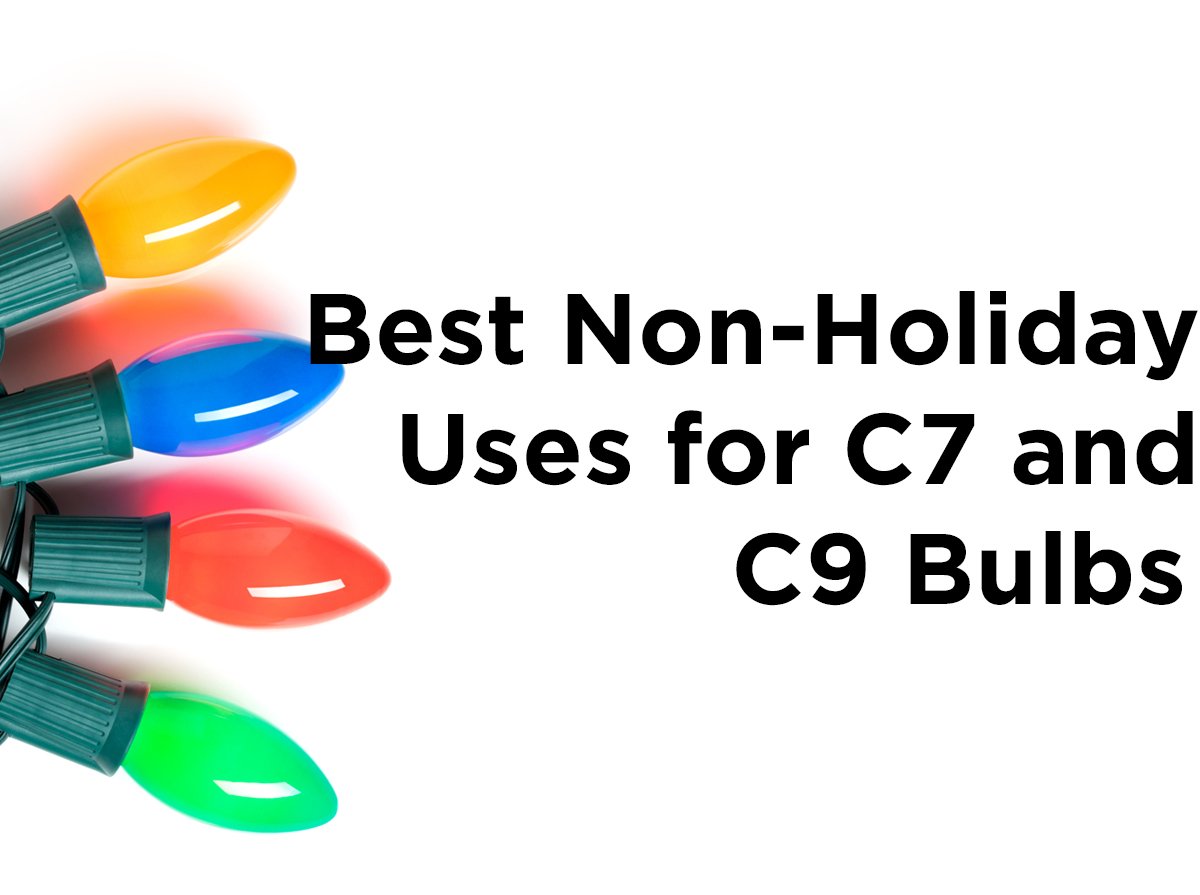
Vintage-style C7 and C9 bulbs: Classic shapes with LED or incandescent options
Fairy lights and micro LEDs: Tiny bulbs on thin wire for delicate accents
Projection and animated effects: Moving patterns cast onto walls and facades
Systems for larger properties: Coordinated lighting for storefronts and longer runs
Permanent outdoor lighting: Year-round installations with programmable colors
You can combine styles. Choose a main look, then add accents that suit your space and the control you want.
Smart and App-Controlled Christmas Lights
Smart Christmas lights let you set schedules and adjust supported colors or effects from an app. Features vary, so choose the controls you will actually use.
Check how the lights connect and whether a separate controller or hub is required.
Wi-Fi and Bluetooth-Controlled Strings
Wi-Fi lights use a supported home network. Away-from-home access may depend on a cloud service or compatible hub; Wi-Fi alone does not guarantee remote access.
Bluetooth-only control generally requires you to be nearby unless a compatible gateway provides remote access. Range varies by product and surroundings. Some systems use Bluetooth only during setup.
Before buying, check the app requirements and confirm the lights work with your existing network.
Voice Assistant Integration
Compatible lights may support voice commands through Alexa, Google Assistant, or Siri with Apple Home. Check which on/off, dimming, or color commands your selected product supports.
Voice control may not include every app feature. Confirm compatibility before ordering.
Preset Scenes and Custom Animations
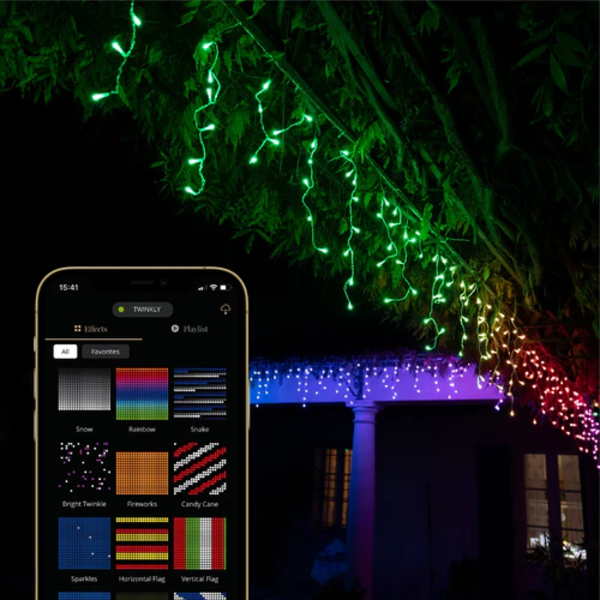
Preset scenes let you select a saved look, such as a Christmas color pattern, without programming each effect.
Custom animations are a separate feature. Music synchronization may require a microphone, accessory, or app function. Before combining products, confirm that the exact models support synchronized control.
Warm White and Vintage White Displays
Warm white creates an inviting backdrop for greenery, wood, and brick. Use it throughout your display or combine it with colorful accents.
Warm White LED Color Temperature
Color temperature, measured in kelvins (K), describes the appearance of white light. Lower values look warmer. For warm white Christmas lights, approximately 2700K–3000K is a useful reference when the manufacturer specifies that range.
Labels alone do not guarantee a match. Two warm white products can look different side by side, so compare existing and new strands before buying in bulk.
Vintage White for an Understated Look
Some products labeled “vintage white” have a warmer, amber-toned appearance. The label does not specify a universal Kelvin range; check the individual product details.
Pair vintage white with natural greenery, gold ornaments, or traditional architecture for a coordinated look. Compare samples if you are mixing brands or adding to older strings.
Color-Changing RGB and Pixel Lighting
RGB lights mix red, green, and blue light to create many colors. Non-addressable RGB strings commonly change together, holding one color or cycling through a shared sequence.
Addressable lights control supported bulbs or segments independently, enabling chases, gradients, and patterns. A “pixel” commonly means an individually controllable point of light.
A few things worth knowing:
Dedicated white LEDs: RGB-mixed white can look different from a dedicated white LED. For warm white plus color effects, check the separate white channel and its specified color temperature; an RGBW label alone does not guarantee warm white.
App control is separate: A light can be RGB without being smart. Addressability describes the control capability, not the connection method.
Vintage C7 and C9 Bulb Looks
C7 and C9 describe bulb shapes and sizes. Common replaceable Christmas versions use E12 candelabra and E17 intermediate bases, respectively. Dimensions vary by product; the table gives approximate heights.
Both LED and incandescent versions can create nostalgic outlines. LEDs generally use less power, while incandescent versions offer a traditional filament glow.
| Feature | C7 Bulbs | C9 Bulbs |
|---|---|---|
| Approx. Height | ~2 inches | ~3 inches |
| Common Base | E12 (candelabra) | E17 (intermediate) |
| Typical Uses | Trees, smaller outlines | Rooflines, larger displays |
Before ordering replacement bulbs, verify the base type, voltage, load limits, and compatibility with your existing stringers.
Fairy Lights and Micro LED Strings
Fairy lights and micro LEDs use tiny points of light, often on fine wire, for wreaths, shelves, centerpieces, and trees. Cluster arrangements place lights more densely; the terms are not interchangeable.
Battery power suits spots without outlets. USB and plug-in options need a suitable power source; check placement instructions for the lights and power supply.
Low heat does not establish suitability for enclosed containers. Follow the manufacturer’s instructions before placing lights in glass or tight spaces.
Projection Mapping and Animated Effects
Simple projectors cast repeated patterns. Projection mapping aligns prepared content with windows, columns, and other architectural features. Treat it as a specialty option with additional setup needs.
Results depend on several factors:
Surface: Match the image size to the surface and consider its color and texture
Ambient light: Nearby lighting can wash out the image
Viewing distance: Check whether details remain visible from the street
Positioning: Adjust throw distance, angle, and focus for the intended surface
A basic projector will not automatically map your architecture. Custom effects require content preparation and alignment, sometimes with professional help.
Use equipment suitable for its outdoor exposure and keep projections within your property, away from road traffic.
Commercial-Grade Displays for Storefronts and Properties
For storefronts, homeowners association common areas, and large properties, plan for consistent appearance and repeat-season servicing. A “commercial-grade” label alone does not establish construction quality or performance.
When evaluating products for larger displays, look at:
Wire and sockets: Check specifications and suitability for the installation
Location ratings: Verify suitability for expected outdoor exposure
Connection limits: Follow the stated maximum connected strings and load
UV resistance and warranty: Verify ratings, coverage, and exclusions
Replacements: Check matching bulb and component availability
Christmas light stringers and spools can support coordinated runs along a storefront roofline and entrance. Compare socket spacing, matching bulbs, and bulk-purchase options. Only customize products designed for that purpose.
Permanent Outdoor Holiday Lighting
Permanent holiday systems are designed to remain installed year-round, with some using discreet roofline or soffit mounting. Programmable models can switch between holiday and everyday scenes.
Decorative effects do not necessarily provide the illumination needed for general architectural lighting. Check the system’s intended application.
A few considerations before committing:
Installation: Requirements vary. Check mounting, power, temperature, and component ratings, and whether professional installation is needed
Maintenance: Plan for inspections and occasional component replacement
Cost: Compare installed quotes, operating costs, and service terms with seasonal options
These systems can reduce repeated seasonal installation, but they do not remove every future maintenance task or ladder visit.
How to Choose the Right Trend for Your Space
Start with your desired appearance, available power, local weather, and budget. Then compare the setup and maintenance each option requires.
Match Bulb Style to Your Home's Look
C7 and C9 bulbs create defined, nostalgic outlines. Micro LEDs add subtle detail to greenery or indoor displays. Pixel effects make lighting a focal point. Use these as design suggestions rather than rules for particular home styles.
A warm white roofline with RGB accents on a tree can connect traditional and contemporary elements. Keep the main palette consistent so each area feels part of the same display.
Plan for Weather Resistance and Power Load
Check outdoor suitability for lights, controllers, power supplies, and connections. An IP rating describes protection against solid objects and water, but is not the sole installation criterion. Follow placement and environmental instructions.
Calculate connected wattage and follow circuit, extension cord, controller, and string limits. Use suitable outdoor power and connection protection; do not overload components.
Balance Budget With Long-Term Use
| Option | Compare Before Buying | Seasonal Work | Best Fit |
|---|---|---|---|
| Incandescent Strings | Purchase price, energy use | Install, inspect, store | Traditional appearance |
| Standard LED Strings | Specifications, replacements | Install, inspect, store | Flexible seasonal displays |
| Smart/Pixel LEDs | Controls, accessories, compatibility | Install, configure, inspect, store | Custom effects |
| Permanent Systems | Installed quote, service terms | Inspect, maintain | Year-round use |
Compare purchase price with energy use, accessories, installation, and upkeep. LED options generally use less energy for comparable applications, but actual costs and service life vary. Check whether failed bulbs or components are replaceable and how seasonal products should be stored. For permanent systems, review service terms before deciding whether reduced seasonal setup justifies the investment.
Plan Your Holiday Display With 1000Bulbs.com
Find Christmas lights, replacement bulbs, stringers, and accessories at 1000Bulbs.com. Our Lighting Specialists can help you match compatible products and plan quantities. Contact us at 1-800-624-4488 for project guidance.
Frequently Asked Questions About Holiday Lighting Trends
What color temperature is warm white for Christmas lights?
A tested Kelvin rating may not be provided for decorative Christmas lights. To find the warm white look you want, compare the product’s color description and sample strands. Products labeled warm white can differ in appearance, especially when added to an existing display.
Are permanent holiday lights worth the investment?
Consider installed cost, maintenance, frequency of use, and the value of reducing seasonal setup. Permanent systems offer year-round flexibility, but still need inspection and may require component replacement.
Can I mix smart RGB lights with warm white strings?
Yes, visually. Electrical connection and synchronized effects require confirmed compatibility. Do not connect unrelated strings together without manufacturer approval; sharing a brand does not guarantee they work together.
Do LED Christmas lights last longer than incandescent lights?
LEDs typically have longer rated lives, but usable string life also depends on wiring, controllers, operating conditions, and storage. A bulb’s rating does not guarantee a number of seasons.
What is the difference between RGB and addressable lights?
RGB describes red, green, and blue color mixing. Addressable means supported lights or segments can be controlled independently. A product can be RGB without being addressable, or have both features.
Do smart Christmas lights require Wi-Fi?
Not always. Some use Bluetooth or other controller connections. Check which functions operate locally and which need internet access. A dedicated remote alone does not establish connected smart features.