
What Are Lighting Codes and Why Do They Matter?
Lighting codes are regulations that govern how lighting systems must be installed, powered, controlled, and maintained in residential and commercial buildings. They exist to protect people, reduce energy consumption, and ensure buildings remain safe during normal operation and emergencies.
Whether you're planning a commercial build-out, retrofitting a warehouse, or just trying to figure out why your inspector keeps asking about occupancy sensors, this guide breaks down the major codes, what they regulate, and how to keep your project compliant.
Although many people think of lighting codes as a hurdle during inspections, they're really a framework for designing safer, more efficient buildings. Understanding the basics before selecting fixtures or controls can help prevent costly redesigns, failed inspections, and expensive product replacements later in a project.
What Are Lighting Codes?
If you search "light codes" online, you might find results about spiritual energy patterns or sacred geometry. That's not what we're talking about here. Lighting codes are building regulations that govern how lighting systems get designed, installed, and controlled. They're written into law, enforced by inspectors, and they apply to everything from the wiring behind your walls to the exit sign above your door.
So why do lighting codes exist? They address three concerns:
Electrical safety: Proper wiring, grounding, and fixture installation prevent fires and shocks.
Energy efficiency: Limits on power consumption push buildings toward more efficient fixtures and controls.
Life safety: Exit signs and emergency backup lighting help people get out safely when the power goes down.
Here's something worth knowing: lighting codes set minimum requirements. A building can pass inspection and still have mediocre lighting. Many designers go beyond code requirements to improve comfort, productivity, or energy savings. Passing inspection is the floor, not the ceiling.
For example, an office may technically meet code-required light levels while still benefiting from better fixture placement, improved glare control, or higher-quality LED fixtures that create a more comfortable work environment. Code compliance establishes the minimum acceptable standard, while good lighting design focuses on creating spaces that perform well for the people who use them every day.
Code compliance also applies to more than new construction. Renovations and tenant improvements often trigger code requirements depending on the scope of work. Even a straightforward lighting retrofit can bring new obligations if you're changing enough fixtures or altering the space.
Whether compliance is required depends on the scope of the project and the local jurisdiction. Replacing a single fixture may not trigger significant code updates, while remodeling an entire office floor or converting a warehouse into retail space often requires portions of the lighting system to meet current code requirements.
Who Writes and Enforces Lighting Codes?
Lighting codes come from standards organizations. The National Fire Protection Association (NFPA) publishes the National Electrical Code. The International Code Council (ICC) publishes the International Energy Conservation Code. The American Society of Heating, Refrigerating and Air-Conditioning Engineers (ASHRAE) publishes energy standards for commercial buildings.
These groups create model codes, which are essentially templates. States and cities then decide whether to adopt them, modify them, or wait. Two neighboring cities might enforce different code editions or have different local amendments. This is why checking with your local building department matters more than assuming a national standard applies everywhere.
Model codes do not automatically become law when they're published. Instead, state legislatures, county governments, or local municipalities decide whether to adopt the latest edition, continue using an older version, or introduce amendments that address local needs. As a result, projects located only a few miles apart may follow different code requirements despite using many of the same products.
The person who actually enforces the code is called the Authority Having Jurisdiction, or AHJ. This is typically a local building or fire inspector. Before a building can be occupied, the AHJ reviews plans, issues permits, and conducts inspections. If something fails, you correct it and schedule a re-inspection before moving forward.
Because the AHJ has final authority over code interpretation, it's always wise to confirm local requirements before purchasing lighting products or finalizing construction documents. Doing so helps avoid delays, change orders, and unnecessary replacement costs later in the project.
Main Types of Lighting Codes in the United States
A single commercial project often has to satisfy multiple codes at once. You might have the NEC for electrical safety, IECC or ASHRAE 90.1 for energy efficiency, and NFPA 101 for life safety, all applying to the same building. Here's a quick look at each.
Rather than competing with one another, these codes work together. One code may determine how a fixture is installed, another may regulate how much power it can consume, and another may specify where emergency lighting must be located. Understanding the purpose of each code helps simplify what can otherwise feel like a complex compliance process.
National Electrical Code (NEC)
The NEC is published by NFPA and adopted in some form by all 50 states. It covers safe installation of electrical wiring and equipment, including light fixtures. The NEC focuses on how fixtures are wired, mounted, and protected. It doesn't tell you how bright a room has to be or how much energy you can use.
Instead, the NEC is designed to reduce electrical hazards by establishing requirements for safe wiring methods, grounding, overcurrent protection, and equipment installation. While it doesn't evaluate fixture performance or efficiency, it helps ensure lighting systems operate safely throughout the life of the building.

International Energy Conservation Code (IECC)
The ICC publishes the IECC, which sets baseline energy efficiency requirements for both commercial and residential buildings. Many states adopt this code directly. Others use it as a starting point and add their own amendments.
The IECC focuses on reducing building energy consumption through efficient lighting systems, automatic controls, and lighting power limits. It has become one of the primary drivers behind widespread LED adoption in both commercial and residential construction.

Ashrae 90.1
ASHRAE 90.1 is an energy standard commonly required for commercial buildings. The IECC often references it, and many large commercial projects, LEED-certified buildings, and government facilities use ASHRAE 90.1 during design.
Because ASHRAE 90.1 is frequently specified for large office buildings, healthcare facilities, educational campuses, and government projects, architects and engineers often design around its requirements from the earliest planning stages. Even when another energy code is officially adopted, many owners voluntarily follow ASHRAE 90.1 to support sustainability goals and improve long-term operating efficiency.
California Title 24
California's Building Energy Efficiency Standards are stricter than federal baselines. Any project in California falls under Title 24. Because California is such a large market, many manufacturers design products to meet Title 24 standards even for nationwide distribution.
Title 24 places a particularly strong emphasis on lighting controls, occupancy sensing, daylight-responsive dimming, and overall building energy performance. Many residential projects also require JA8-compliant lighting products, which meet additional performance standards for LED efficacy, color quality, dimming, and longevity. As a result, many products sold throughout the United States now include features originally developed to meet California's more demanding requirements.
NFPA 101 and the International Building Code
NFPA 101 (the Life Safety Code) and the IBC govern emergency egress, exit signage, and emergency lighting. They determine where exit signs go, how bright emergency lighting is, and how long backup power lasts during an outage.
Unlike energy codes, which focus on reducing electricity consumption, these life safety codes prioritize occupant protection during emergencies. They help ensure that building occupants can quickly locate exits and safely evacuate if normal lighting systems fail due to fire, severe weather, or power outages.
| Code | Publishing Body | Primary Focus |
|---|---|---|
| NEC | NFPA | Electrical Safety |
| IECC | ICC | Energy efficiency |
| ASHRAE 90.1 | ASHRAE | Commercial energy efficiency |
| Title 24 | California Energy Commission | State energy standards |
| NFPA 101 / IBC | NFPA / ICC | Life safety and egress |
Understanding which code governs each aspect of a project makes compliance much easier. Rather than memorizing every requirement, focus on the role each code plays and work with your local building department or lighting specialist to verify which standards apply before construction begins.
What Lighting Codes Regulate
Wiring, Circuits, and Fixture Installation
The NEC specifies requirements for wire gauge, circuit protection, grounding, and fixture mounting. If you're installing a fixture in a wet or damp location (think bathrooms, outdoor areas, or commercial kitchens), the fixture has to be rated for that environment.
Products carry safety listings from organizations like UL or ETL, which indicate they've been tested to safety standards. However, a listing alone doesn't guarantee code compliance for a specific installation. The fixture still has to be installed according to the manufacturer's instructions and local code requirements.
Lighting codes also establish requirements for properly supporting fixtures, protecting electrical connections, and ensuring junction boxes remain accessible for future inspection or maintenance. Suspended fixtures, recessed luminaires, and heavy commercial lighting often require specific mounting methods designed to support their weight safely over time.
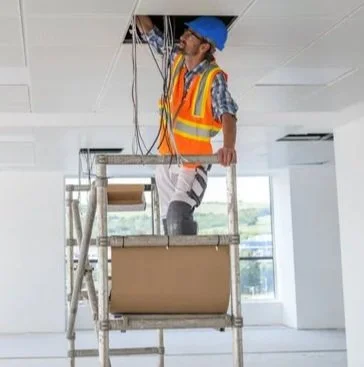
Another important requirement is following the manufacturer's installation instructions. Even a UL- or ETL-listed fixture can fail inspection if it is installed in a way that differs from the manufacturer's approved instructions. Inspectors often verify that fixtures are installed in their intended locations and connected using approved wiring methods and hardware.
For outdoor installations, fixture location ratings also matter. Damp-rated fixtures are designed for covered areas where moisture is present but direct rain is limited, while wet-rated fixtures are built to withstand direct exposure to rain, snow, and other weather conditions. Choosing the correct rating helps maintain both safety and long-term performance.
Lighting Power Density and Wattage Limits
Energy codes set maximum watts per square foot, known as lighting power density (LPD). Each space type has its own allowance. A warehouse has different limits than an office, which has different limits than a retail store.
Exceeding LPD limits fails inspection. LED fixtures help meet LPD requirements because they produce more light per watt than older technologies. This is one reason LED adoption has accelerated in commercial construction.
Lighting power density limits aren't one-size-fits-all because different spaces have different lighting needs. A warehouse with wide aisles typically requires less lighting power than a retail showroom designed to highlight merchandise, while hospitals, classrooms, and manufacturing facilities each have their own allowances based on how the space is used.
Designers balance fixture selection, lumen output, and lighting controls to stay within the allowable power budget while still delivering adequate illumination. Modern LED fixtures make this much easier because they produce significantly more lumens per watt than legacy fluorescent, HID, or incandescent technologies.
Occupancy Sensors and Automatic Controls
Many codes now require occupancy sensors, daylight harvesting, or automatic shutoff in certain spaces. Restrooms, conference rooms, warehouses, and private offices commonly fall under control requirements. In many jurisdictions, controls are no longer optional.
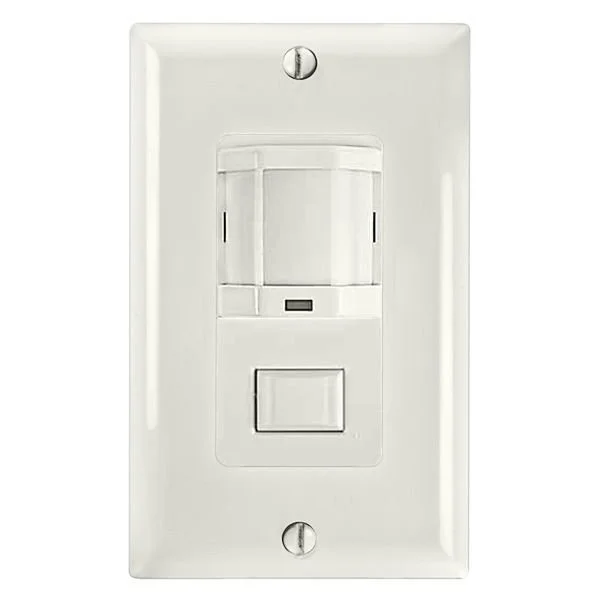
The terminology can get confusing:
Occupancy sensors turn lights on when someone enters and off when the space is vacant.
Vacancy sensors require manual turn-on but turn off automatically.
Daylight harvesting dims or switches off lights when natural light is sufficient.
Modern energy codes increasingly require multiple control strategies working together in the same space.
Many commercial buildings also incorporate scheduling systems that automatically turn lighting on and off based on business hours. These systems help eliminate unnecessary energy use in offices, schools, warehouses, and retail facilities where predictable operating schedules make automation practical.
Networked lighting controls take automation even further by connecting fixtures, sensors, and building management systems through a centralized platform. Facility managers can monitor energy usage, adjust schedules remotely, receive maintenance alerts, and optimize lighting performance across an entire property. As lighting technology continues to evolve, many newer energy codes increasingly recognize or encourage these advanced control strategies.
Exit Signs and Emergency Lighting
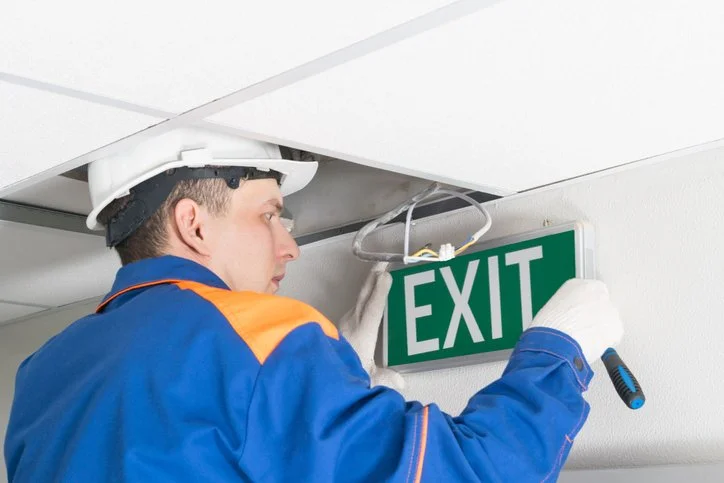
Life safety codes require illuminated exit signs and battery-backup emergency lighting in commercial buildings. During a power outage, emergency lighting maintains a minimum light level for a specified duration, typically 90 minutes.
Installation is only part of the requirement. Emergency lighting systems require periodic testing and maintenance throughout the life of the building. Monthly and annual testing protocols are common, and documentation of testing may be required during inspections.
Building owners are generally responsible for maintaining these systems after installation. Batteries, emergency drivers, lamps, and self-testing components should be inspected regularly to ensure they operate correctly when needed. A properly installed emergency lighting system that isn't maintained can still fall out of compliance over time.
Many newer emergency fixtures include self-testing and self-diagnostic capabilities that automatically perform routine function checks and record test results. These features can simplify maintenance while helping facility managers document ongoing compliance with inspection requirements.
Outdoor and Site Lighting
Codes may regulate light trespass (light spilling onto neighboring properties), uplight (light directed toward the sky), and total site lumens. Parking lot and facade lighting often fall under outdoor lighting rules.

Dark Sky initiatives and municipal ordinances add another layer, particularly near residential neighborhoods or environmentally sensitive areas. BUG ratings (Backlight, Uplight, Glare) help specify fixtures that minimize light pollution while still providing adequate illumination.
Many municipalities now adopt outdoor lighting ordinances that limit excessive brightness, glare, and unnecessary nighttime illumination. These requirements help reduce light pollution while preserving visibility for drivers, pedestrians, nearby residents, and wildlife.
BUG ratings provide a standardized way to evaluate how a fixture distributes light. Instead of measuring only total brightness, the rating separately evaluates backlight, uplight, and glare so designers can select fixtures that provide effective illumination without directing excessive light where it isn't needed.
Projects located near residential developments, parks, observatories, or environmentally sensitive habitats often face additional outdoor lighting restrictions. Reviewing local requirements early in the design process helps avoid redesigns and ensures exterior lighting supports both safety and community goals.
Why Lighting Codes Matter for Your Building
Failed inspections delay move-in or opening. Non-compliance can affect insurance coverage or result in fines. On the other hand, compliant lighting typically reduces energy bills and maintenance costs.
The most expensive code problems are the ones discovered after installation. Confirming code requirements before purchasing fixtures avoids costly change orders and project delays. A quick call to your local building department before ordering can prevent expensive surprises later.
Following lighting codes also helps protect your investment over the long term. Code-compliant lighting systems are typically easier to maintain, less likely to require unexpected modifications, and better positioned to meet future upgrades as building technologies continue to evolve.
The benefits of code compliance extend beyond passing inspection:
Failed inspections delay move-in or opening.
Non-compliance can affect insurance coverage.
Proper compliance reduces energy bills and maintenance costs.
Confirming code requirements before purchasing fixtures helps avoid costly change orders, product replacements, and installation delays.
Residential vs. Commercial Lighting Code Requirements
Residential projects typically face fewer energy code requirements than commercial projects. However, NEC electrical safety rules apply to both. California Title 24 has residential-specific sections that go beyond what most other states require.
Commercial projects face LPD limits, control mandates, and more frequent inspections. The gap between residential and commercial requirements is substantial.
Most homeowners only encounter lighting codes when building a new home, completing a major remodel, or adding new electrical circuits. Commercial projects, however, are routinely reviewed for energy efficiency, emergency lighting, lighting controls, accessibility, and overall building safety before they receive occupancy approval.
Because commercial buildings typically serve larger numbers of occupants and consume significantly more electricity than homes, their lighting systems are subject to stricter design standards and more comprehensive inspections.
| Requirement | Residential | Commercial |
|---|---|---|
| NEC electrical safety | Yes | Yes |
| Lighting power density limits | Rarely | Yes |
| Occupancy sensors required | Rarely | Often |
| Emergency lighting | No (single-family) | Yes |
| Exit signs | No (single-family) | Yes |
How to Keep Your Lighting Code Compliant
1. Identify Which Codes Apply to Your Project
Check with your local building department before finalizing specifications. Codes vary by state, city, and building type. Commercial new construction has different requirements than a residential remodel.
It's also helpful to determine whether your project is considered new construction, a renovation, a tenant improvement, or a simple fixture replacement. Different project types often trigger different code requirements, even within the same jurisdiction.
2. Check Product Certifications Before You Buy
Look for UL listing, DLC qualification, and Title 24 compliance labels where applicable. Each certification serves a different purpose:
UL or ETL listing: Confirms the product meets safety standards
DLC qualification: Indicates the product meets efficiency thresholds for utility rebates
ENERGY STAR: Consumer-focused efficiency certification
Title 24 compliance: Required for California projects
Certification indicates the product meets certain standards, but it doesn't guarantee code compliance for your specific installation.
Understanding what each certification represents can make product selection much easier:
UL Listing: Demonstrates the product has been independently tested for electrical safety.
ETL Listing: Provides similar third-party safety certification through Intertek and is widely accepted by inspectors.
DLC Qualification: Confirms commercial lighting products meet stringent efficiency and performance requirements, making many eligible for utility rebate programs.
ENERGY STAR Certification: Recognizes energy-efficient residential and light commercial products that meet EPA performance standards.
Title 24 Compliance: Indicates products include the features necessary to satisfy California's demanding building energy requirements when installed correctly.
Remember that certifications apply to individual products, while code compliance applies to the entire installation. Selecting certified equipment is an important first step, but the finished system must still satisfy all applicable local code requirements.
3. Verify Controls, Sensors, and Emergency Backup
Confirm that required controls are included in your specification. Missing occupancy sensors, emergency drivers, or photocells are common reasons for failed inspections. If your project requires battery backup, time clocks, or networked controls, verify those are specified before ordering.
Reviewing your lighting schedule before purchasing materials helps ensure every required component has been accounted for. Emergency drivers, battery packs, photocells, occupancy sensors, daylight sensors, and networked controls are frequently overlooked until the inspection phase, when correcting omissions becomes significantly more expensive.
4. Confirm Local Amendments With Your Inspector
Many jurisdictions amend model codes. A product or design that passes in one city may not pass in another. Asking the AHJ before purchasing is especially important for large commercial projects where replacement costs add up quickly.
Whenever possible, verify requirements before placing large equipment orders. Spending a few minutes reviewing plans with your local building department or Authority Having Jurisdiction can prevent weeks of project delays and thousands of dollars in replacement costs if changes become necessary after installation.
Work With a Lighting Specialist for Code-Compliant Projects
Code requirements vary by location and change over time. A lighting specialist can help match products to your project's code requirements, verify certifications, and prevent delays. For larger projects, having a consistent point of contact who understands your specifications makes the process smoother.
Whether you're planning a warehouse retrofit, designing lighting for a new commercial facility, or replacing fixtures in an existing building, having expert guidance early in the process can save significant time and expense. Understanding which products support your project's code requirements before ordering helps reduce the risk of failed inspections, unexpected redesigns, and costly replacement orders.
For nearly 30 years, 1000Bulbs has helped contractors, facility managers, business owners, and homeowners navigate complex lighting projects with practical product recommendations and technical support. From energy-efficient commercial fixtures and emergency lighting to occupancy sensors, exit signs, and Title 24-compliant products, our US-based lighting specialists can help you identify solutions that align with your project's goals and applicable code requirements.
Because every jurisdiction may adopt different versions or amendments of national model codes, working with experienced lighting professionals alongside your local Authority Having Jurisdiction helps simplify the purchasing process and reduces the likelihood of costly compliance issues later in the project.
Contact 1000Bulbs at 1-800-624-4488 to speak with a US-based Lighting Specialist about your next residential or commercial lighting project.
Frequently Asked Questions About Lighting Codes
How often are lighting codes updated?
Model codes like the NEC and IECC are updated on three-year cycles. States and municipalities adopt updates on their own schedules, so the enforced version in your area may lag behind the latest edition by several years.
Because adoption timelines vary, it's common for neighboring jurisdictions to enforce different code editions. Always verify which version your local building department currently follows before beginning a project.
Do lighting codes apply to existing buildings during a retrofit?
Retrofits that change the use of a space, add square footage, or replace a certain percentage of fixtures often trigger code compliance for the affected areas. Requirements vary by jurisdiction, so checking with your local building department before starting work is the safest approach.
Simple maintenance projects may not require major upgrades, but larger renovations, tenant improvements, or occupancy changes often require portions of the lighting system to comply with current codes.
Does a DLC or UL listing mean a product is automatically code compliant?
A DLC or UL listing confirms that a product meets specific performance or safety standards. It doesn't guarantee compliance with all local code requirements for your particular installation. The installation method, location, and local amendments all affect whether a listed product meets code in your project.
Think of certifications as one piece of the compliance process. They help verify product quality and performance, but inspectors evaluate the complete installation, including wiring methods, controls, mounting, and overall system design.
What happens if my lighting installation fails inspection?
The inspector notes the deficiencies, and you correct them and schedule a re-inspection. Occupancy approval or permit closure waits until the installation passes. For commercial projects, this can delay opening and add costs.
Depending on the issue, corrections may involve replacing fixtures, adding required lighting controls, modifying wiring, or updating emergency lighting components. Confirming requirements before purchasing products is one of the most effective ways to avoid these delays.
Can lighting codes affect utility rebates?
Yes. Many utility rebate programs require lighting products to meet specific performance standards, such as DLC qualification, while the overall installation must comply with applicable energy codes. Choosing products that satisfy both rebate requirements and local code requirements can maximize savings while helping ensure a successful inspection.
Who has the final authority on lighting code compliance?
Your local Authority Having Jurisdiction (AHJ), typically a building or fire inspector, has the final authority on how lighting codes are interpreted and enforced for your project. If there's ever uncertainty about a requirement, consult the AHJ before purchasing materials or beginning installation.