
LED vs Incandescent: The Complete Bulb Comparison Guide
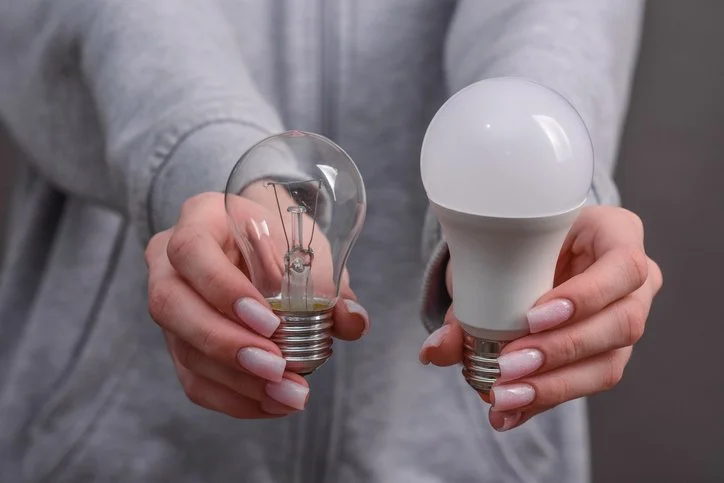
Choosing the right light bulb might seem like a small decision, but the choice between LED and incandescent bulbs can have a real impact on energy costs, lighting performance, and long-term maintenance. As incandescent bulbs continue to be phased out and LED technology becomes the standard, many homeowners and businesses are asking the same question: which bulb is better, LED or incandescent? This guide explains the differences in energy use, lifespan, cost, light quality, environmental impact, and real-world applications so you can confidently choose the best option for your space.
LED vs Incandescent: What’s the Difference?
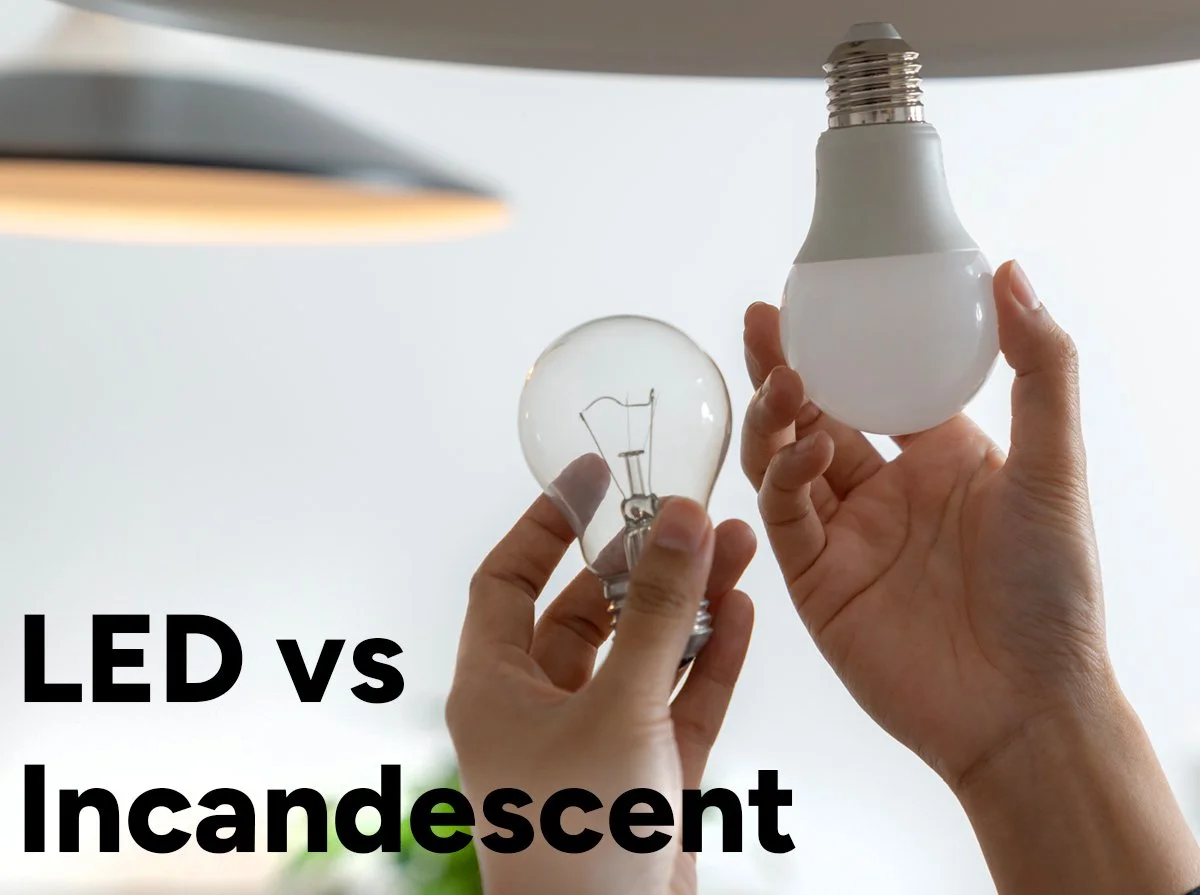
LED and incandescent bulbs create light in very different ways. Incandescent bulbs produce light by running electricity through a thin filament until it glows. While this technology has been around for more than a century, it is inefficient because most of the energy used is released as heat rather than light. LED bulbs, or light-emitting diodes, generate light electronically. They convert energy directly into light with minimal heat output, making them far more efficient and durable. The bottom line is that LEDs are designed to use less energy while lasting significantly longer.
Energy Efficiency: LED vs Incandescent
Energy efficiency is one of the biggest differences between LED and incandescent bulbs. A typical incandescent bulb that produces the equivalent brightness of a 60-watt bulb uses 60 watts of power, while an LED replacement usually uses only 8 to 10 watts. This means LED bulbs can use up to 85 percent less energy to produce the same level of brightness. Over time, this reduction can noticeably lower electricity bills, especially in homes or commercial buildings with many light fixtures. Many customers start by replacing high-use bulbs with LED light bulbs and expand from there as they see the savings add up.
Lifespan Comparison
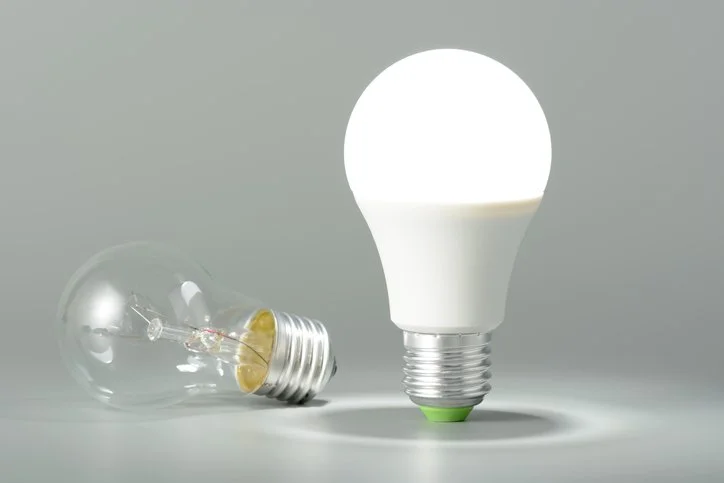
Another major advantage of LED bulbs is lifespan. Incandescent bulbs typically last about 1,000 hours. LED bulbs commonly last between 15,000 and 25,000 hours or more. One LED bulb can last 15 to 25 times longer than an incandescent bulb. This makes LEDs especially valuable in high-use areas or in fixtures that are difficult to access, such as recessed lighting, high ceilings, or outdoor fixtures where bulb replacement is inconvenient.
Cost Comparison: Upfront vs Long-Term
While incandescent bulbs usually cost less at checkout, the upfront price does not tell the full story. Incandescent bulbs are inexpensive to buy but require frequent replacement and consume significantly more electricity. LED bulbs cost more initially due to advanced technology, but their lower energy use and long lifespan result in much lower costs over time. In many cases, a single LED bulb can replace more than a dozen incandescent bulbs over its lifetime while using a fraction of the electricity. For buyers comparing options across different bulb types and wattage equivalents, LED replacements consistently offer better long-term value.
Light Quality and Performance
Concerns about LED light quality are largely outdated. Modern LED bulbs offer excellent performance and flexibility. They are available in a wide range of color temperatures, including warm white options that closely mimic the familiar glow of incandescent bulbs. Neutral and cool white LEDs are commonly used in kitchens, offices, and workspaces. LEDs reach full brightness instantly, and many are compatible with dimmer switches when properly matched. Unlike incandescent bulbs, LEDs produce very little heat, which improves safety and efficiency, especially in enclosed fixtures.
Environmental Impact
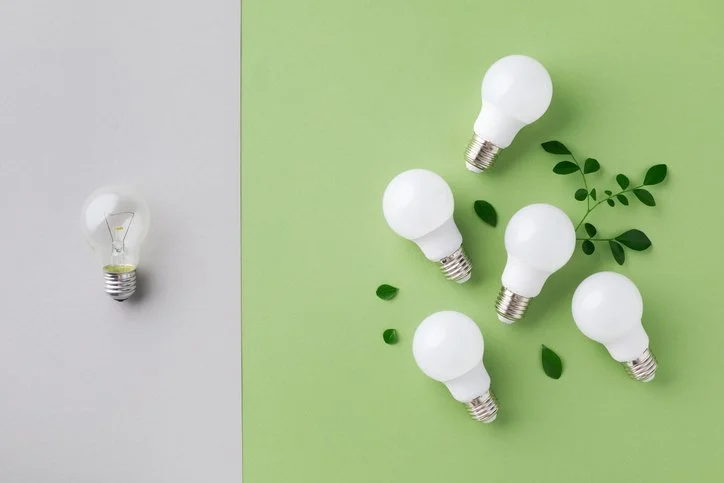
LED bulbs are widely considered the more environmentally responsible choice. They use less electricity, last longer, and reduce the number of bulbs sent to landfills. They do not contain mercury, and they help lower overall carbon emissions over time. Switching from incandescent to LED lighting is one of the simplest ways homeowners and businesses can reduce energy consumption without sacrificing light quality.
Incandescent Bulb Phase-Out and What It Means
Many standard incandescent bulbs have been phased out due to energy efficiency regulations. While some specialty incandescent bulbs may still be available, options are increasingly limited. This means incandescent bulbs will continue to be harder to find, while LED alternatives are widely available and designed to fit existing fixtures. Customers replacing older bulbs often find it easier to transition by selecting LED equivalents that match the brightness, base type, and shape of their previous incandescent bulbs.
Real-World Applications: LED vs Incandescent
LED bulbs are suitable for nearly every residential application, including living rooms, bedrooms, kitchens, bathrooms, and outdoor lighting. Warm white LED bulbs closely replicate traditional incandescent lighting, making the transition seamless. In commercial and industrial settings, LEDs offer lower operating costs, longer lifespan, and reduced maintenance. Offices, warehouses, retail spaces, and hospitality environments all benefit from upgrading to LED lighting solutions. Many LED options are also available for decorative fixtures, appliance lighting, and specialty sockets.
LED vs Incandescent: Side-by-Side Comparison
LED bulbs offer excellent energy efficiency, a lifespan of 15,000 to 25,000 hours or more, very low heat output, a higher upfront cost, much lower long-term cost, and wide availability. Incandescent bulbs offer poor energy efficiency, a lifespan of about 1,000 hours, very high heat output, lower upfront cost, much higher long-term cost, and declining availability.
Final Verdict: LED or Incandescent?
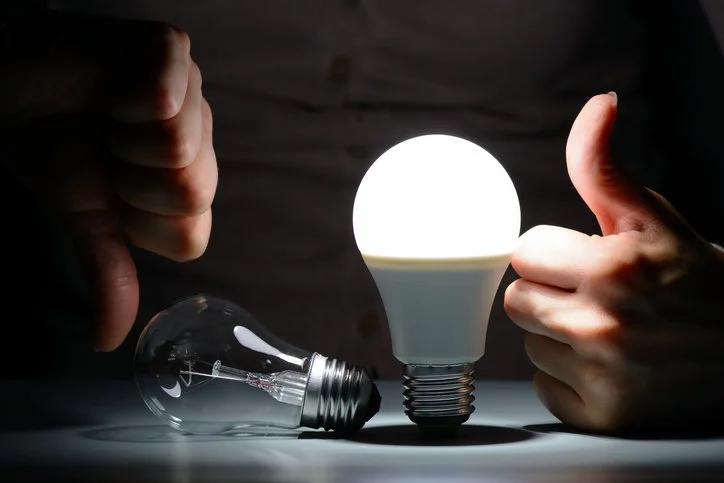
For nearly every application, LED bulbs outperform incandescent bulbs in efficiency, lifespan, and overall value. LEDs deliver the same brightness and warmth people expect from incandescent lighting while using far less energy and lasting much longer. Whether replacing a single bulb or upgrading an entire building, LED lighting is the smarter long-term choice.
Frequently Asked Questions
Are LED bulbs brighter than incandescent bulbs?
LED bulbs are not inherently brighter, but they are more efficient. Brightness is measured in lumens, not watts. An LED bulb with the same lumen output as an incandescent bulb will appear just as bright while using far less energy. Comparing lumens across bulb options is the best way to ensure consistent brightness.
Do LED bulbs work in fixtures designed for incandescent bulbs?
Yes. Most LED bulbs are designed to directly replace incandescent bulbs in standard fixtures. It is important to confirm the base type, bulb shape, and wattage equivalent when selecting a replacement, especially for specialty fixtures or enclosed housings.
Can LED bulbs be used with dimmer switches?
Many LED bulbs are dimmable, but not all. Both the bulb and the dimmer switch must be compatible to avoid flickering, buzzing, or reduced dimming range. Choosing dimmable LED bulbs and LED-compatible dimmers helps ensure smooth performance.
Are LED bulbs better for the environment?
Yes. LED bulbs use less electricity, last longer, and reduce waste, resulting in a lower environmental impact over time. Their efficiency also helps reduce overall energy demand.
Why are incandescent bulbs being phased out?
Incandescent bulbs waste most of their energy as heat and do not meet modern energy efficiency standards. Regulations were introduced to encourage the use of more efficient lighting technologies like LEDs.
Is it worth replacing incandescent bulbs that still work?
In most cases, yes. Replacing functioning incandescent bulbs with LED alternatives can reduce energy costs immediately and eliminate the need for frequent bulb replacements.