
The Complete Guide to Under-Cabinet and Puck Lights
| What This Article Covers |
|---|
Under-cabinet and puck lighting improve task visibility, eliminate countertop shadows, and add layered illumination to kitchens, workspaces, retail displays, and hospitality environments. The challenge isn't just picking a fixture — it's choosing the right fixture type, installation method, brightness level, and spacing strategy for your specific space, and making sure everything is compatible before you buy. This guide covers the four main types of under-cabinet lighting (puck lights, under cabinet lights, linear bars, and tape lighting), how to compare hardwired, plug-in, and battery-powered systems, brightness and lumen recommendations by application, color temperature guidance, spacing best practices, and how to replace older halogen and xenon systems without running into transformer or dimmer compatibility problems. Best for: homeowners planning a kitchen remodel, DIY renovators, electricians and contractors, facility managers, hospitality operators, retail display planners, and anyone replacing older puck light or fluorescent under-cabinet systems. |
Updated 8/3/26 by 1000Bulbs Staff
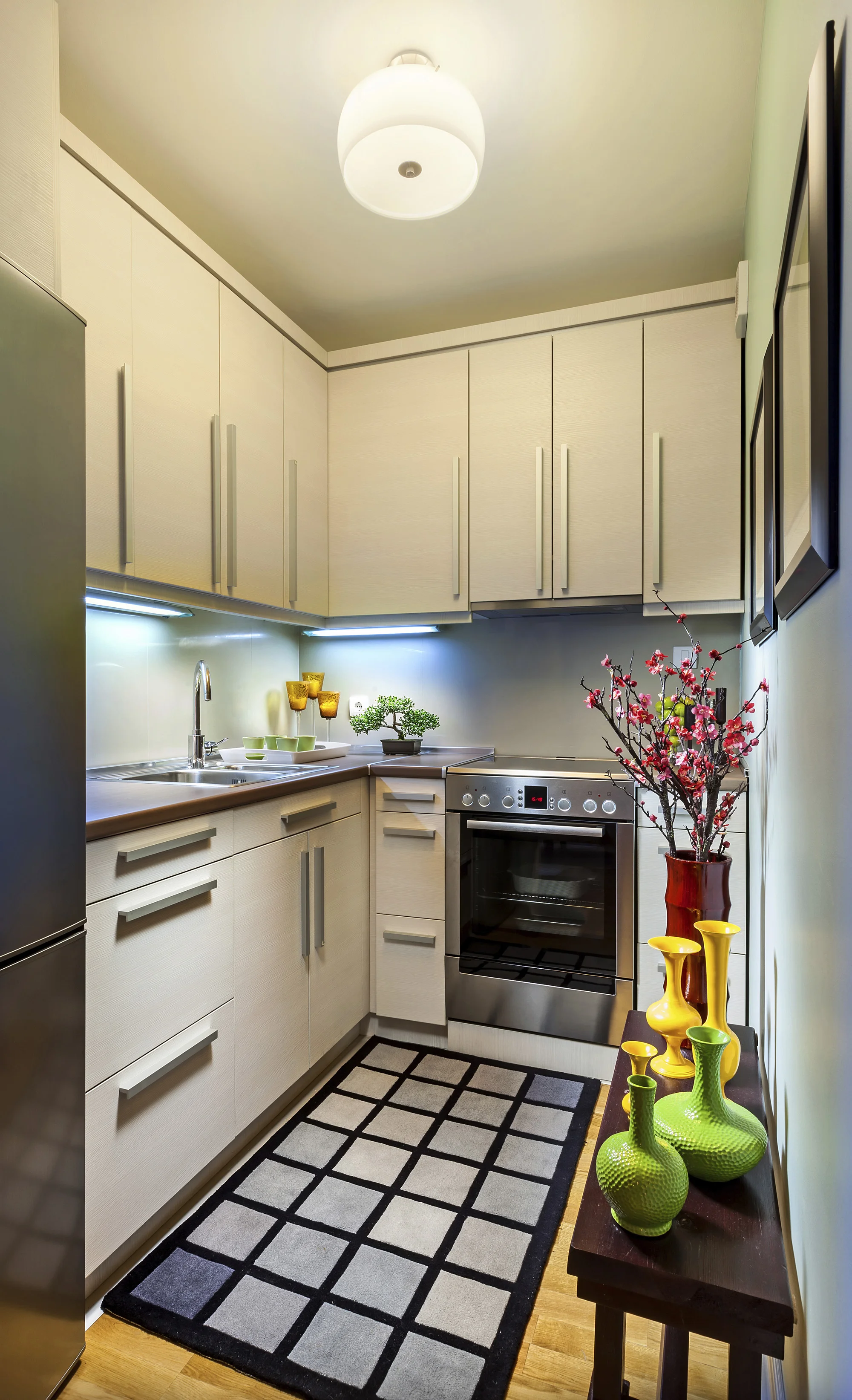
Overhead lighting alone rarely provides ideal task visibility. In kitchens, workspaces, bars, retail displays, and office breakrooms, upper cabinets and the person standing beneath them often cast shadows directly onto the surface where detailed work happens. Under-cabinet and puck lighting solve that problem by placing illumination closer to the task area itself.
Choosing the right setup involves more than selecting a fixture style. The decision includes fixture type, installation method, brightness, spacing, dimming compatibility, transformer requirements, and whether the lighting is intended for task illumination, accent lighting, or both. Residential remodels and commercial retrofits each introduce their own considerations as well.
This guide explains under-cabinet and puck lighting types, compares hardwired and plug-in installations, covers brightness and color temperature recommendations, explains spacing best practices, addresses replacement compatibility for older halogen and xenon systems, and helps you choose the right lighting setup for your space.
Direct Answer: What Are Under-Cabinet and Puck Lights?
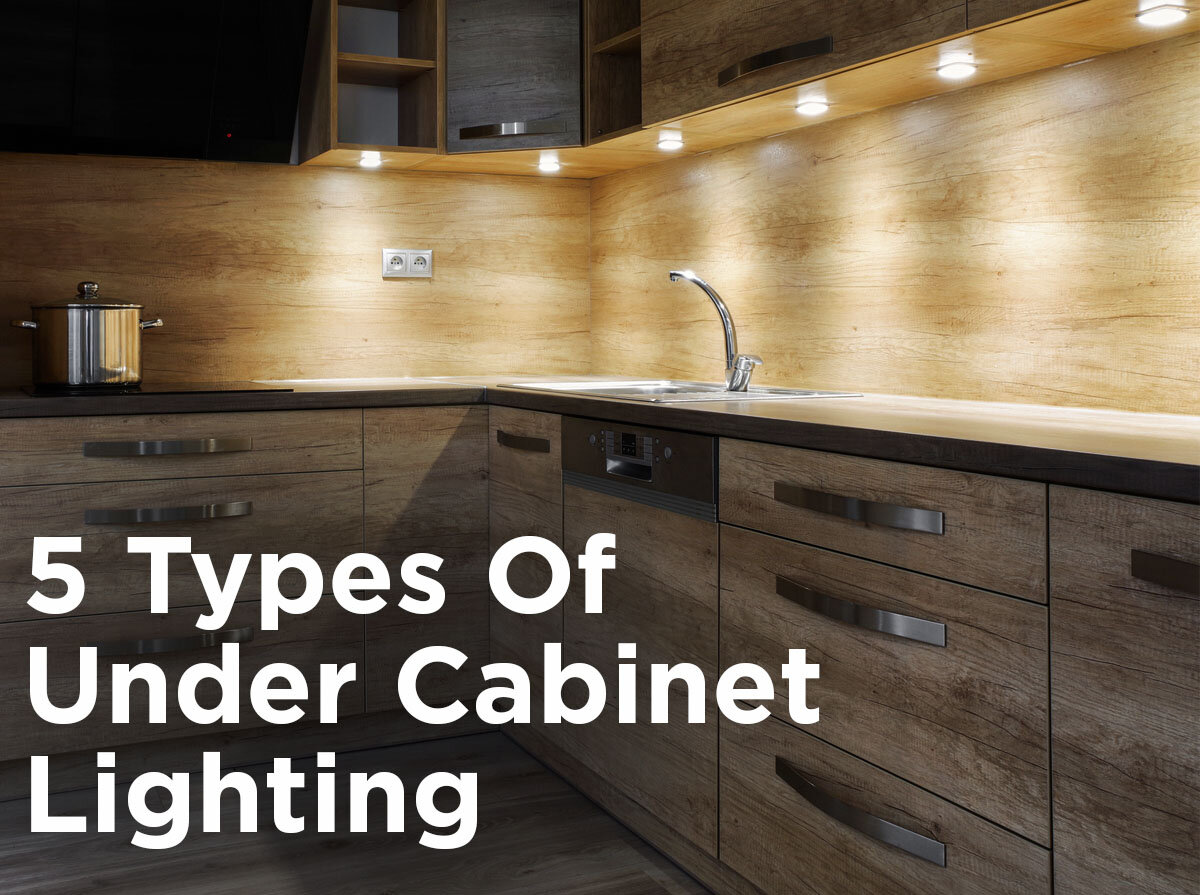
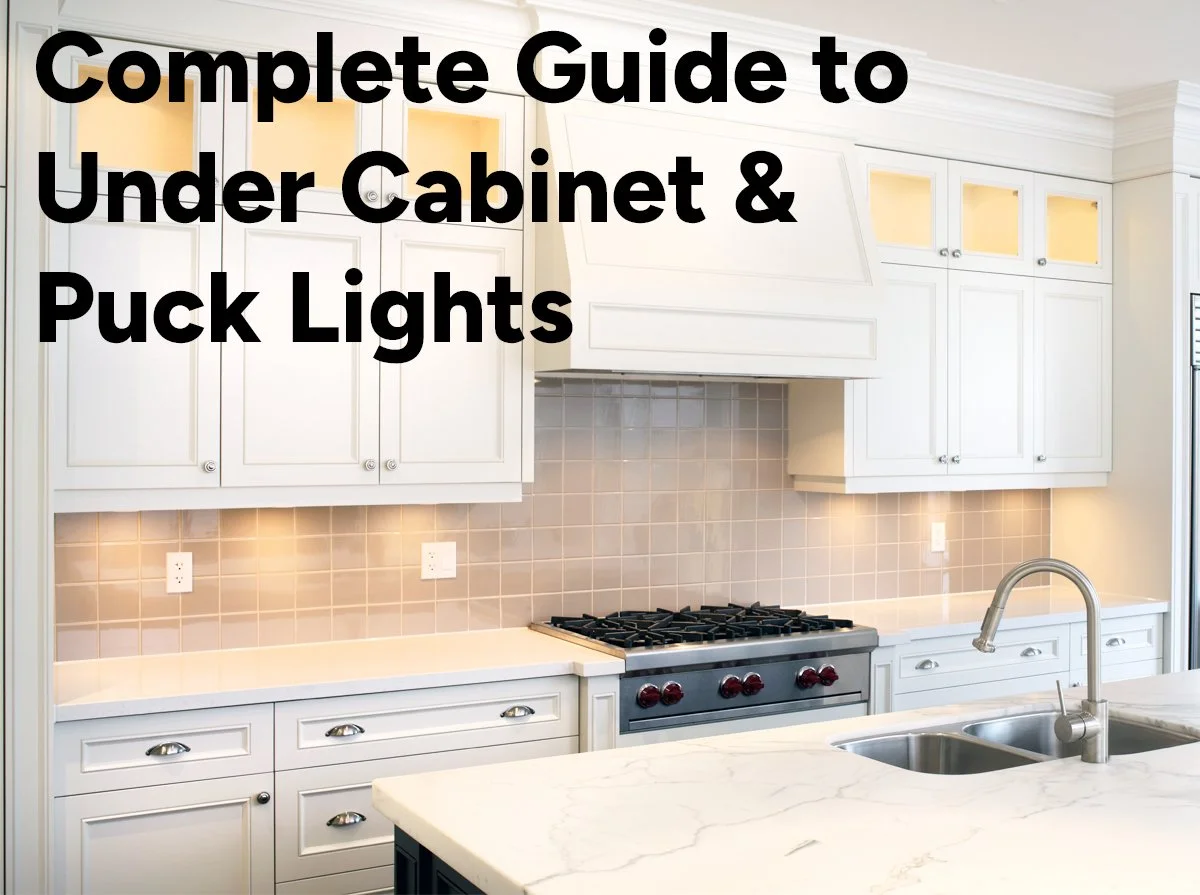
Under-cabinet lighting refers to any light fixture mounted beneath cabinets to illuminate countertops, workspaces, shelving, or display surfaces below. Puck lights are individual round or square fixtures that produce focused directional light. Both are commonly used for task lighting to improve visibility and reduce shadows, or for accent lighting to highlight architectural features, products, or decorative surfaces.
Even well-designed overhead lighting creates shadows because the light source is positioned above and behind the person using the space. In kitchens, that shadow often falls directly across the countertop during food preparation. In offices and hospitality environments, overhead-only lighting can leave work surfaces visually uneven or underlit.
Under-cabinet lighting solves this problem by positioning the light source closer to the actual work surface. Instead of relying entirely on ceiling fixtures, the lighting projects forward beneath the cabinet line to illuminate the countertop directly.
Under-cabinet lighting is a broad category that includes:
Puck lights
Under cabinet lighting
Linear bar fixtures
Each option distributes light differently and serves slightly different applications.
Puck lights create focused pools of illumination and work well for accent lighting or targeted task areas. Under-cabinet and tape lighting provide more continuous, even coverage across the full cabinet run. Linear bar fixtures combine broader coverage with straightforward installation and are especially common in retrofit projects.
Under-cabinet lighting is widely used in:
Residential kitchens
Office breakrooms
Hospitality bars
Retail shelving
Display cabinetry
Workshops
Commercial millwork
The distinction between task lighting and accent lighting matters when selecting fixtures. Task lighting prioritizes even, bright illumination across the full surface area. Accent lighting prioritizes visual emphasis and atmosphere. Some fixture types perform both roles effectively, while others are optimized primarily for one purpose.
Types Of Under-Cabinet Lighting
Not all under-cabinet lighting performs the same way. Fixture type affects:
Coverage pattern
Brightness distribution
Installation complexity
Visual appearance
Replacement flexibility
Some systems prioritize smooth task lighting across the full countertop, while others create more dramatic accent illumination.
Puck Lights
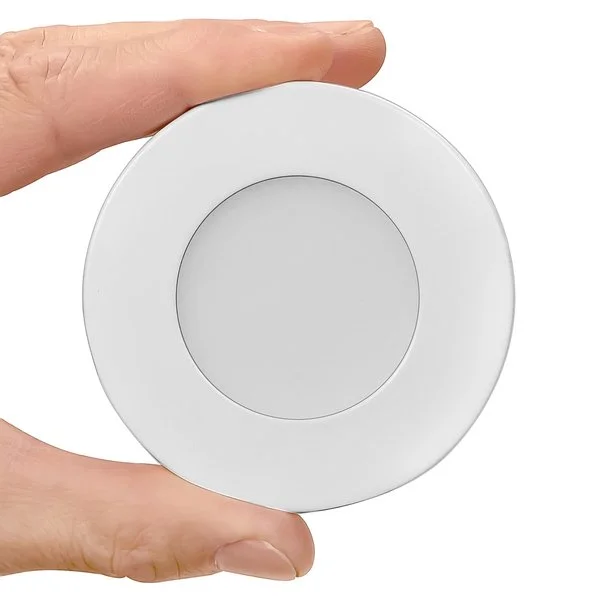
Puck lights are individual round or square fixtures typically measuring between 2 and 4 inches in diameter.
Each puck creates a focused cone of light that illuminates a specific area beneath the cabinet. Multiple pucks are installed in sequence to create broader countertop coverage.
Because each fixture produces its own concentrated beam, puck light spacing matters significantly. Fixtures spaced too far apart create visible dark zones between pools of light. Fixtures spaced more closely together create smoother task lighting coverage.
Puck lights are commonly used for:
Accent lighting
Decorative cabinet illumination
Small countertop work zones
Display shelving
Hospitality millwork
Retail highlighting
They are available in LED, halogen, and xenon versions, though LED puck lights now dominate most new installations because they produce less heat and require substantially less maintenance over time.
Puck lights can also be either surface-mounted or recessed into the cabinet bottom, depending on the desired appearance and how visible the fixture itself should be after installation.
LED Under-Cabinet Fixtures
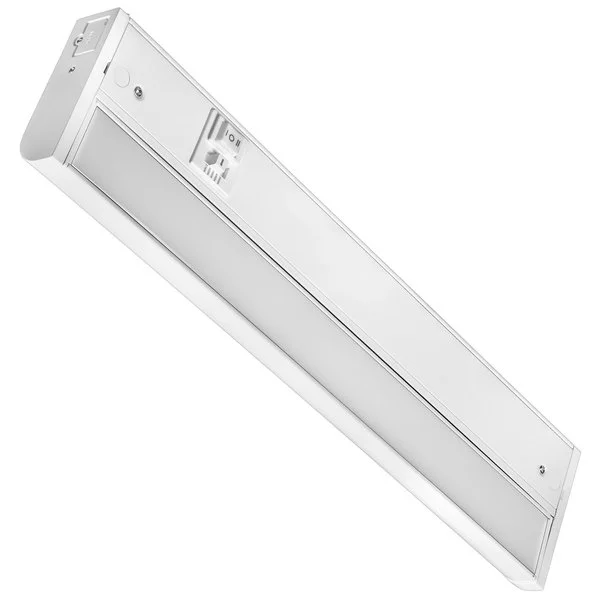
LED under-cabinet fixtures provide bright, energy-efficient task lighting for kitchens, workspaces, laundry rooms, and other areas where additional illumination is needed beneath cabinets. They create consistent light across countertops and work surfaces, improving visibility while reducing shadows during food preparation, reading, or detailed tasks.
Many modern under-cabinet fixtures use integrated LED technology to deliver long service life, low energy consumption, and minimal maintenance. Compared to traditional lighting, LED fixtures use significantly less electricity while producing very little heat, making them a practical choice for enclosed cabinet installations. They are also available in a variety of color temperatures, allowing homeowners to choose warm, neutral, or cool white light to complement their space.
Under-cabinet LED fixtures are available in several styles, including linear bars, low-profile fixtures, and tape-light systems, making it easy to match different cabinet layouts and lighting needs.
Linear Bar Fixtures
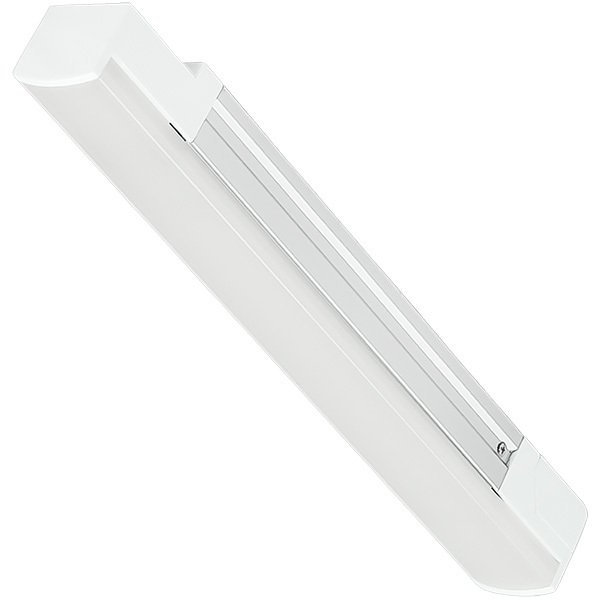
Linear bar fixtures are enclosed under-cabinet lights housed inside rigid rectangular fixture bodies.
These fixtures are commonly used as:
Fluorescent retrofit replacements
Commercial under-cabinet lighting
Utility task lighting
Office breakroom lighting
Linear bars typically range from 12 inches to 48 inches long, and many allow multiple fixtures to link together for continuous cabinet coverage.
Compared to tape lighting, linear bars generally offer:
Easier installation
Integrated housing protection
Cleaner retrofit capability
More durable construction
Many commercial installations prefer enclosed linear fixtures because the housing protects internal components and simplifies maintenance.
Tape Lighting
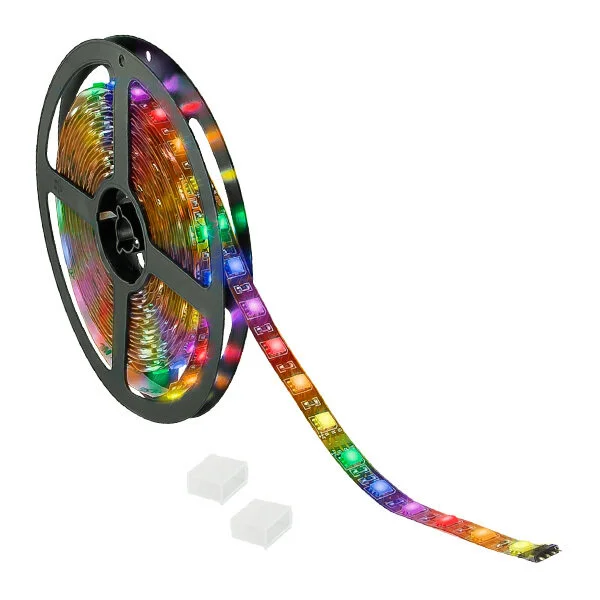
Tape lighting, also called LED tape or flexible strip lighting, uses thin flexible circuit boards populated with small surface-mount LEDs.
Tape lighting is extremely versatile because it can:
Bend around corners
Fit into tight spaces
Follow irregular cabinet runs
Install inside channels
Mount nearly invisibly
This flexibility makes tape lighting popular in:
Custom millwork
Hospitality lighting
Retail displays
Floating shelves
Decorative cabinetry
Modern residential kitchens
Depending on brightness level and installation method, tape lighting can serve as either task lighting for functional visibility or accent lighting for decorative effect.
High-output LED tape installed inside aluminum channels with diffusers can provide excellent countertop task lighting, while lower-output tape often serves decorative ambient purposes.
| Fixture Type | Coverage Pattern | Installation Style | Best Applications | Visual Effect |
|---|---|---|---|---|
| Puck lights | Focused light pools | Surface or recessed mount | Accent lighting, targeted task lighting | Defined light zones |
| LED under-cabinet fixtures | Continuous, even coverage | Surface-mounted or hardwired | Kitchens, workspaces, utility areas, everyday task lighting | Smooth, uniform illumination |
| Linear bar fixtures | Broad linear coverage | Screw or clip mount | Retrofits, utility lighting, commercial use | Clean, functional appearance |
| Tape lighting | Flexible continuous coverage | Adhesive or channel mount | Custom cabinetry, displays, decorative installs | Minimal visible hardware |
Under-Cabinet Lighting Comparison: Hardwired vs. Plug-In vs. Battery-Powered Under-Cabinet Lighting
The way an under-cabinet lighting system is powered affects more than just installation. It influences the finished appearance, installation complexity, long-term flexibility, maintenance requirements, and overall project cost. Understanding the differences between hardwired, plug-in, and battery-powered systems can help you choose the option that best fits your space, budget, and renovation plans.
Hardwired systems create the cleanest, most permanent installation and are often preferred during new construction or kitchen remodels. Plug-in fixtures offer an easier retrofit solution with minimal electrical work, while battery-powered lights provide the quickest installation for closets, pantries, rentals, and other areas where wiring isn't practical.
Hardwired Under-Cabinet Lighting
Hardwired systems connect directly to the building’s electrical system through junction boxes or dedicated circuits.
These installations create the cleanest finished appearance because:
No visible cords remain
Switches integrate directly with the room
Fixtures appear fully built-in
Hardwired systems are commonly installed during:
New construction
Kitchen remodels
Commercial millwork projects
Major renovations
Installation usually requires:
Electrical wiring access
Junction box connections
Cabinet drilling
Circuit integration
Many hardwired systems operate directly on 120V line voltage, while others use 12V or 24V low-voltage systems paired with remote drivers or transformers.
Hardwired lighting is usually the preferred choice when:
A permanent installation is desired
Cabinetry is already being modified
A clean architectural appearance matters most
Plug-In Under-Cabinet Lighting
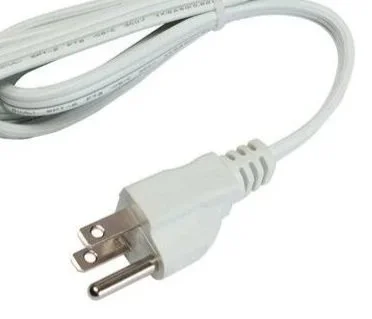
Plug-in systems connect to standard wall outlets using power cords.
These systems remain extremely popular because installation is significantly easier than hardwired alternatives. Most plug-in systems simply require:
Mounting the fixtures
Routing the power cord
Connecting to an outlet
No electrical rewiring is necessary.
Plug-in systems work especially well for:
DIY upgrades
Apartment kitchens
Rental properties
Retrofit projects
Temporary remodel phases
The primary compromise is cord visibility.
In some layouts, the cord can be hidden effectively behind appliances or routed discreetly beneath cabinets. In other spaces, some visible cabling may remain unavoidable.
Many plug-in systems also offer features such as inline switches, touch controls, remote controls, and smart home integration, allowing easier operation without requiring wall-switch modifications.
Battery-Powered Under-Cabinet Lighting
Battery-powered fixtures are completely self-contained and require no electrical connection at all.
These systems typically mount using:
Adhesive backing
Small screws
Magnetic mounting plates
Battery-powered lights are extremely easy to install, which makes them useful for:
Closets
Pantries
Rental spaces
Temporary lighting
Accent installations
Low-use areas
However, battery systems are generally not ideal for primary kitchen task lighting because:
Brightness output is lower
Battery replacement becomes frequent
Runtime decreases under heavy daily use
Rechargeable battery fixtures improve long-term convenience somewhat, but hardwired and plug-in systems still perform better for high-use work surfaces.
Installation Method Comparison
| Installation Method | Installation Difficulty | Appearance | Best Applications |
|---|---|---|---|
| Hardwired | Highest | Cleanest appearance | Permanent kitchens, remodels, commercial projects |
| Plug-in | Moderate to easy | Some cord visibility possible | DIY retrofits, renters, upgrades |
| Battery-powered | Easiest | Cord-free appearance | Closets, temporary lighting, accent use |
How Bright Should Under-Cabinet Lighting Be?
Brightness is one of the most important under-cabinet lighting decisions because these fixtures often function as true task lighting rather than decorative accent lighting.
A system that looks attractive at night may still perform poorly during actual countertop use if the output is too low or unevenly distributed.
Understanding Lumens For Under-Cabinet Lighting
Under-cabinet lighting brightness is measured in lumens. Higher lumens mean more visible light output.
For task-oriented spaces such as kitchens and prep areas, most under-cabinet lighting systems should provide enough illumination to reduce shadows while remaining visually comfortable at close viewing distances.
As a general guideline:
Accent lighting often uses lower lumen output
Task lighting requires substantially more brightness
Low-output puck lights intended primarily for decorative use may produce only 100 to 200 lumens per fixture. However, high-output LED strips and task bars may provide several hundred lumens per foot depending on the application.
Recommended Brightness By Application
| Application | Typical Brightness Recommendation |
|---|---|
| Decorative accent lighting | 100 to 200 lumens per fixture |
| Standard kitchen task lighting | 200 to 500 lumens per foot |
| Detailed prep work | 500+ lumens per foot |
| Display shelving | Moderate output with controlled beam spread |
| Hospitality ambient lighting | Lower output for atmosphere |
Brightness should also scale with:
Countertop depth
Cabinet height
Surface reflectivity
Ambient room lighting
Dark countertops and matte finishes absorb more light than reflective white surfaces, which means higher fixture output may be necessary to maintain comparable visibility.
Why Even Distribution Matters
Brightness alone does not determine lighting quality.
Uneven spacing or narrow beam angles can create:
Harsh hotspots
Bright scalloping
Deep shadows
Distracting contrast zones
Continuous LED strip lighting generally creates smoother illumination than puck lights because the LEDs distribute light more evenly across the countertop surface.
Puck lights can still perform very well for task lighting, but spacing becomes much more important.
For most kitchen installations, puck lights are commonly spaced 18 to 24 inches apart, depending on:
Beam angle
Cabinet depth
Countertop usage
Fixture output
Choosing The Right Color Temperature
Color temperature dramatically changes how under-cabinet lighting feels inside a space.
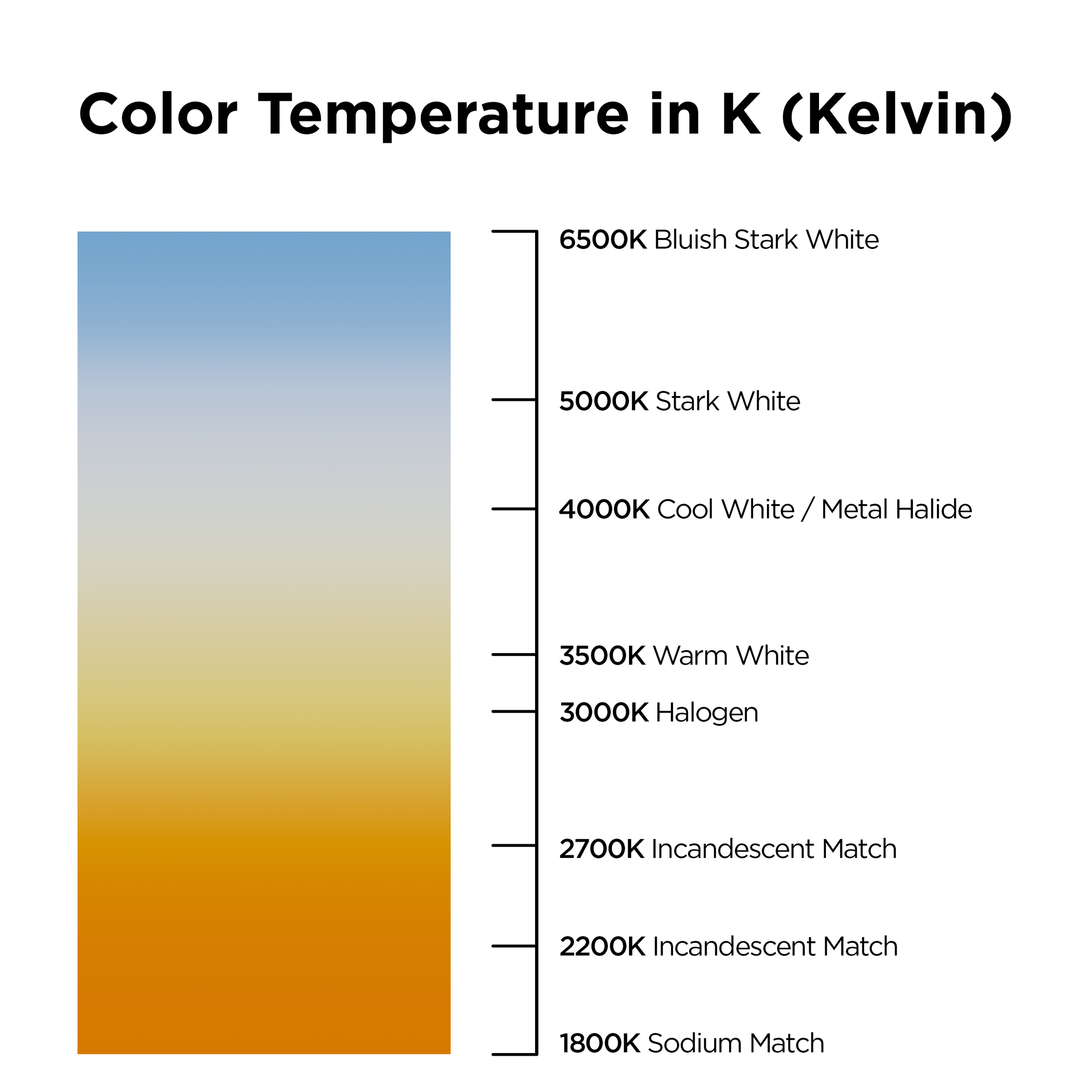
Measured in Kelvin (K), color temperature determines whether the light appears:
Warm
Neutral
Cool
The right choice depends on:
Cabinet finish
Countertop materials
Room style
Lighting purpose
Existing room lighting
Warm White Lighting
Warm white lighting between 2700K and 3000K creates a softer, more inviting appearance similar to traditional incandescent lighting.
This range is commonly used in:
Residential kitchens
Hospitality spaces
Bars
Decorative cabinetry
Traditional interiors
Warm lighting tends to pair especially well with:
Wood cabinetry
Warm paint tones
Brass hardware
Natural stone surfaces
Neutral White Lighting
Neutral white lighting around 3500K to 4000K balances warmth with clarity.
This range works especially well for:
Modern kitchens
Office breakrooms
Utility workspaces
Commercial cabinetry
Many designers consider 3000K to 3500K the safest all-purpose under-cabinet lighting range because it blends comfortably with both warm and cool interior palettes.
Cool White Lighting
Cool white lighting between 4000K and 5000K creates brighter, sharper illumination often associated with task visibility and commercial environments.
This range is commonly used in:
Commercial prep areas
Retail displays
Workshops
Utility spaces
Healthcare environments
However, cool lighting can sometimes feel harsh in residential kitchens if paired with warmer ambient lighting elsewhere in the room.
Why CRI Matters
CRI stands for Color Rendering Index. CRI measures how accurately a light source renders colors compared to natural light.
Low-CRI lighting can make:
Food appear dull
Cabinet colors shift
Countertops lose depth
Decorative finishes look flat
For kitchens and display applications, under-cabinet lighting should generally target CRI 90 or higher.
This is especially when:
Food preparation visibility matters
Decorative surfaces are being highlighted
Accurate color appearance is important

Replacing Older Halogen And Xenon Under-Cabinet Lights
Many older under-cabinet systems still use:
Halogen puck lights
Xenon fixtures
Fluorescent bars
These systems often continue functioning, but they typically create:
Higher energy consumption
Increased heat output
Frequent bulb replacement
Transformer aging issues
Modern LED replacements solve many of those long-term maintenance and efficiency problems.
Replacing Halogen Puck Lights
Halogen puck systems were popular because they produced:
Bright focused light
Excellent color rendering
Smooth dimming performance
The downside was heat.
Halogen under-cabinet fixtures often become extremely hot during operation, especially inside enclosed cabinet installations or tight millwork cavities.
LED puck replacements dramatically reduce:
Operating temperature
Energy usage
Maintenance frequency
However, retrofit compatibility depends on:
Voltage
Existing transformer type
Dimming system
Fixture clearance
Some older transformers designed for halogen loads may not operate correctly with low-load LED replacements.
Replacing Xenon Systems
Xenon under-cabinet lighting became popular because it operated cooler than halogen while still producing warm, attractive light.
Many xenon systems dim very smoothly and remain visually appealing even today.
However, xenon bulbs still:
Consume more energy than LEDs
Require more maintenance
Produce more heat
Offer a shorter lifespan
LED replacements for xenon systems are now widely available, but older fixtures should still be checked carefully before retrofitting. Transformer compatibility, dimming performance, and the physical size of the replacement lamp can all affect whether the new bulb operates correctly in the existing fixture.
Replacing Fluorescent Under-Cabinet Fixtures
Older fluorescent under-cabinet bars commonly suffer from:
Flickering
Uneven color
Ballast noise
Slow startup
Aging lamp discoloration
LED linear bars and LED under-cabinet lights typically provide:
Better color consistency
Instant startup
Lower energy consumption
Longer lifespan
Reduced maintenance
Common Under-Cabinet Lighting Mistakes
Many under-cabinet lighting problems come from installation planning mistakes rather than fixture quality.
Here are some of the most common issues:
| Mistake | Why It Causes Problems |
|---|---|
| Installing fixtures too close to the cabinet face | Fixtures become visible from normal room angles and create uncomfortable glare. |
| Using low-output accent lights for task lighting | Decorative lighting often lacks enough brightness for food prep and workspace visibility. |
| Spacing puck lights too far apart | Wide spacing creates visible dark gaps and uneven countertop illumination. |
| Mixing color temperatures | Warm ambient lighting paired with cool under-cabinet lighting can make kitchens feel visually disconnected. |
| Ignoring transformer compatibility during LED retrofits | Older low-voltage transformers may flicker or fail with LED replacements. |
| Installing fixtures without diffusers | Exposed LEDs can create harsh point-source glare on reflective countertops. |
| Choosing low-CRI lighting | Poor color rendering affects food appearance and decorative surface visibility. |
| Skipping dimming controls | Under-cabinet lighting often benefits from adjustable brightness depending on task and time of day. |
The Right Under-Cabinet Lighting Improves Both Visibility And Atmosphere
Under-cabinet lighting changes how kitchens, workspaces, and display areas function on a daily basis.
The right system reduces shadows, improves task visibility, highlights finishes more effectively, and creates a cleaner layered lighting design throughout the space.
Fixture type, brightness, color temperature, installation method, and dimming compatibility all affect long-term performance and visual comfort.
Modern LED under-cabinet lighting has become the standard because it combines:
Lower energy consumption
Reduced heat output
Longer lifespan
Better color consistency
Improved dimming compatibility
More flexible installation options
Whether you are upgrading a kitchen, replacing aging puck lights, designing custom cabinetry, or planning commercial display lighting, choosing the right fixture type upfront helps avoid uneven illumination, glare, and compatibility issues later.
1000Bulbs carries a wide range of under-cabinet lighting products, including LED puck lights, tape lighting, linear bars, hardwired systems, plug-in fixtures, and replacement lamps for older halogen and xenon installations. To speak with a US-based lighting specialist, call 1-800-624-4488 Monday through Friday from 7 a.m. to 5 p.m. CST.
FAQs
What Is The Best Type Of Under-Cabinet Lighting?
LED strip lighting is often considered the best all-purpose option for smooth task lighting coverage, while puck lights work well for accent lighting and targeted illumination.
Are Puck Lights Good For Kitchens?
Yes. Puck lights work well in kitchens when spaced correctly, especially for accent lighting and focused task areas.
What Color Temperature Is Best For Under-Cabinet Lighting?
Most residential kitchens perform well with color temperatures between 2700K and 3500K depending on the desired warmth and overall room design.
Can I Replace Halogen Puck Lights With LED?
In many cases, yes. However, transformer compatibility, dimmer compatibility, and fixture clearance should always be checked before retrofitting older systems.
How Many Lumens Do Under-Cabinet Lights Need?
Task lighting generally requires more output than decorative lighting. Many kitchen installations target roughly 200 to 500 lumens per foot depending on countertop use and ambient lighting conditions.
Are Hardwired Under-Cabinet Lights Better Than Plug-In Systems?
Hardwired systems create the cleanest finished appearance, while plug-in systems offer easier installation and greater flexibility for retrofit projects and rental properties.