
Best Outdoor Light Bulbs: Weatherproof LED Buying Guide
| What This Article Covers |
|---|
Outdoor bulbs fail more often than indoor ones, and almost always for the same preventable reasons: moisture intrusion, heat buildup inside enclosed fixtures, UV exposure, and choosing a bulb that wasn't designed for the environment. In many cases, premature failure has less to do with the quality of the bulb and more to do with whether it's properly matched to the fixture and installation conditions. This guide explains how to choose outdoor light bulbs that can withstand the elements, how wet-, damp-, and enclosed-fixture ratings work, which bulb types are best for different applications, and how color temperature affects both appearance and performance. You'll also learn the most common outdoor lighting mistakes and what you can realistically expect from LED lifespan in real-world conditions. Best for: homeowners replacing porch or security bulbs, property managers specifying parking lot or building exterior lighting, landscapers selecting outdoor accent or flood fixtures, and contractors handling commercial exterior retrofits. |
If your porch light keeps burning out after one winter or your security floodlight suddenly stops working during heavy rain, you are dealing with one of the most common frustrations in residential and commercial lighting.
The best outdoor light bulbs are designed specifically to handle moisture, temperature swings, UV exposure, and enclosed fixture heat buildup, but many buyers unknowingly install indoor-rated products outside and shorten bulb life dramatically.
Outdoor environments are far harder on lighting systems than indoor spaces. A bulb that performs perfectly in a living room can fail quickly in a sealed lantern, exposed soffit fixture, or damp parking structure.
The good news is that choosing the right outdoor LED bulbs is far simpler once you understand ratings, bulb types, and the conditions your fixture actually experiences. This guide breaks down exactly what to look for so you can select weatherproof outdoor bulbs that last longer and perform reliably year-round.
Why Outdoor Lighting Fails So Often
Outdoor lighting experiences far more stress than indoor fixtures, and most premature failures come from a handful of predictable issues. Understanding these factors helps you choose products that are better suited for the conditions they'll face, reducing maintenance and replacement costs over time.
Heat Buildup Inside Enclosed Fixtures
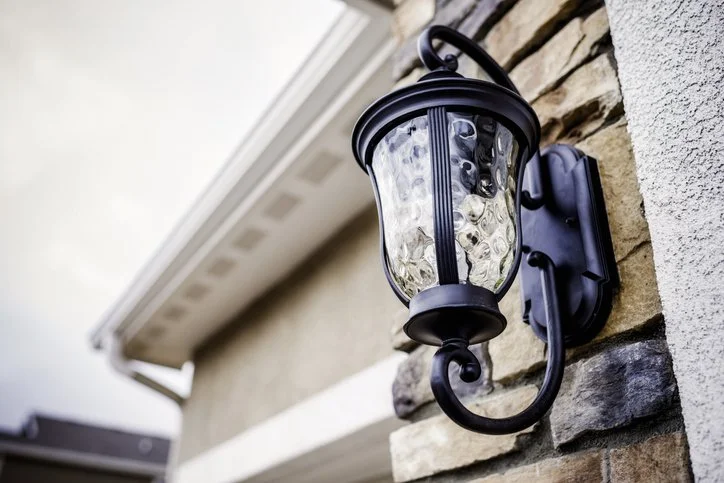
Outdoor coach lights, post lanterns, sealed sconces, and decorative fixtures often trap heat the same way enclosed indoor fixtures do.
LED drivers are highly sensitive to temperature. When internal temperatures rise beyond roughly 80 to 85°C, driver components begin degrading much faster.
Heat buildup can significantly reduce LED lifespan. For example, a bulb rated for approximately 25,000 hours in open-air conditions may fail much sooner when installed inside a tightly sealed fixture that cannot dissipate heat effectively. Decorative lanterns are especially susceptible because they surround the bulb with glass, limiting airflow.
This is why enclosed-fixture ratings are just as important as wet or damp ratings. A bulb may be approved for outdoor moisture exposure but still fail prematurely if it isn't designed to operate inside a sealed housing.
Moisture and Condensation
Many outdoor bulb failures occur even when rain never directly contacts the lamp. Outdoor fixtures cycle between warm daytime temperatures and cooler nighttime temperatures, creating condensation inside the housing over time.
That moisture can eventually reach sockets, driver boards, and electrical contacts, leading to corrosion or electronic failure.
Every outdoor installation should use a bulb that matches the amount of moisture the fixture will encounter. Covered fixtures typically require at least a damp-location rating, while fixtures exposed directly to rain, snow, irrigation, or wind-driven moisture require a wet-location-rated bulb.
Cold Temperatures
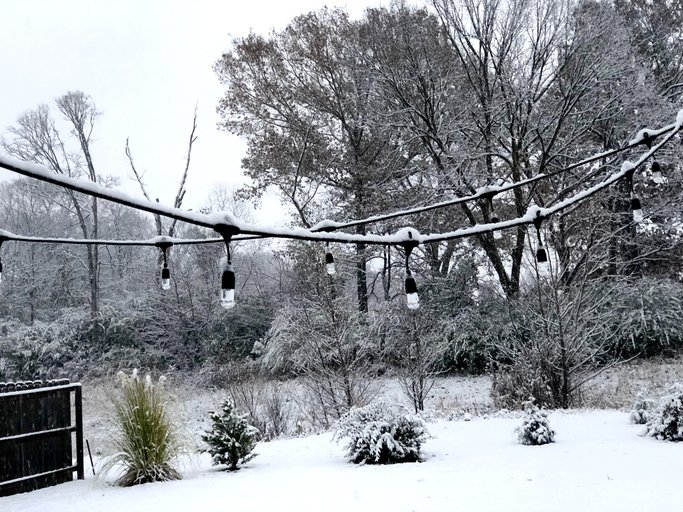
Cold weather can place additional stress on LED driver electronics, particularly in lower-quality products.
As temperatures drop, components such as capacitors may become less efficient, startup characteristics can change, and driver circuitry may become less stable. In extreme conditions, some LEDs may flicker, start slowly, or fail to illuminate altogether.
For installations in colder climates, always verify the minimum operating temperature listed on the product specification sheet.
Improper Bulb Selection
The most preventable cause of premature bulb failure is using a product that is not designed for the installation environment.
Installing an indoor bulb outdoors, placing a non-enclosed-rated bulb inside a sealed lantern, exceeding the fixture's maximum wattage, or using a damp-rated bulb where direct rain exposure is expected can all dramatically shorten bulb life.
Matching the bulb to both the fixture and its environment is often more important than choosing the highest lumen output or longest advertised lifespan.
What Makes a Bulb Safe for Outdoor Use?
Outdoor safety ratings are often misunderstood because buyers focus only on brightness or bulb shape while overlooking environmental certifications.
A bulb that's perfectly suitable for one outdoor location may fail quickly in another simply because the exposure conditions are different. Understanding the difference between wet, damp, and enclosed-fixture ratings helps ensure you select a product that's built for your installation.
Wet-Rated vs Damp-Rated
If your fixture is exposed directly to rain, snow, irrigation spray, or standing moisture, you need a wet-rated bulb.
Wet-rated bulbs are UL-listed for direct exposure to water and are intended for applications such as exposed wall packs, open-bottom fixtures, uncovered soffit lighting, and pole-mounted fixtures where precipitation can reach the bulb.
Damp-rated bulbs are designed for environments where moisture is present but direct water contact is limited. Covered porches, carports, covered soffits, and protected outdoor lanterns are common examples.
A wet-rated bulb can always be used in a damp location. However, a damp-rated bulb should never be installed where it will receive direct rain or water exposure.
It's also important to remember that moisture ratings and enclosed-fixture ratings are separate requirements. If your covered lantern or decorative fixture traps heat around the bulb, the bulb should also be approved for enclosed-fixture use to ensure long-term reliability.
IP Ratings Explained Simply
Some outdoor bulbs and fixtures also include IP ratings, which measure resistance to solids and moisture.
For example:
IP65 = dust-resistant and protected against water spray
IP67 = dust-resistant and protected against temporary immersion
Higher IP ratings generally indicate better weather protection for harsh environments.
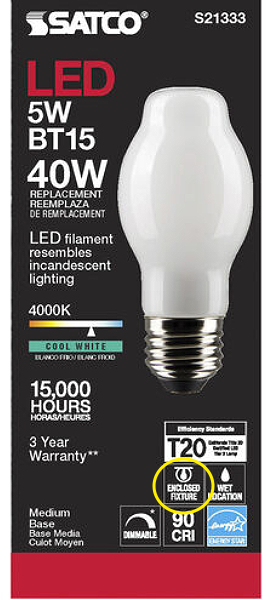
Packaging for Satco S21333 with Enclosed Fixture rating circled.
Enclosed Fixture Ratings
Wet or damp ratings do not automatically mean a bulb is safe for enclosed fixtures.
An enclosed-fixture-rated bulb has been thermally tested in sealed housings where heat buildup becomes much more severe.
Common outdoor enclosed fixtures include porch lanterns, decorative wall sconces, ceiling-mounted entry fixtures, and many landscape fixtures that surround the bulb with glass or other protective materials.
Many outdoor installations require both moisture protection and enclosed-fixture compatibility. A bulb may be approved for wet or damp locations but still be unsuitable for the elevated temperatures found inside an enclosed fixture.
Ignoring enclosed-fixture ratings is one of the fastest ways to shorten LED lifespan outdoors and may lead to early driver failure, reduced light output, or frequent bulb replacements.
Durability Considerations
Outdoor lighting is exposed to more than just rain.
Wind, vibration, UV radiation, airborne debris, and constant temperature changes all place additional stress on lighting components throughout the year. Commercial parking structures, fixtures mounted near HVAC equipment, and high-traffic areas can be especially demanding environments.
Solid-state LED construction makes modern outdoor bulbs far more resistant to vibration than traditional incandescent lamps because there are no fragile filaments to break. However, decorative filament-style LED bulbs, while attractive, are generally better suited for residential decorative applications than high-vibration commercial installations.
Best Types of Outdoor Light Bulbs
Different outdoor applications require very different bulb designs. Choosing the correct form factor matters just as much as choosing the correct rating.
LED Flood Lights
LED flood lights are designed to illuminate large outdoor spaces such as driveways, parking areas, patios, building perimeters, and security zones. Their broad beam spread makes them ideal when wide, even coverage is more important than highlighting a specific object or architectural feature.
Residential flood lights commonly range from about 10 to 65 watts, while commercial fixtures can exceed 150 watts depending on mounting height and coverage requirements. Depending on the application, they may produce anywhere from approximately 1,000 to more than 15,000 lumens.
Beam angle also plays an important role in performance. Wider beam spreads around 100 to 120 degrees are well suited for illuminating large open areas, while narrower beam angles between 60 and 90 degrees provide greater directional control and help concentrate light where it is needed most.
Because flood lights are frequently installed in exposed locations, they should carry an appropriate wet-location rating whenever they are subject to direct weather exposure.
PAR Bulbs
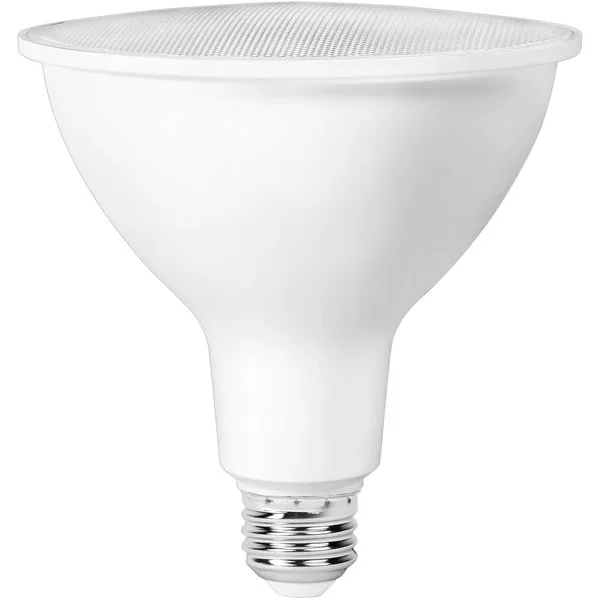
PAR bulbs are among the most versatile outdoor lighting options because they combine directional beam control with higher light output. They are commonly used in recessed soffits, landscape spotlights, accent lighting, exterior downlights, and other applications where focused illumination is preferred.
PAR bulbs are available in several common sizes, including PAR20, PAR30, and PAR38. As the bulb diameter increases, lumen output and beam spread options generally increase as well, allowing larger PAR bulbs to illuminate greater distances or wider areas.
Most PAR bulbs are available with narrow spot, flood, and wide flood beam patterns, making it easier to tailor the light distribution to the specific application rather than relying solely on brightness.
If a PAR bulb will be installed inside a recessed can or enclosed outdoor fixture, always verify that it is approved for enclosed-fixture use to help prevent premature heat-related failure.
Security Bulbs
Lighting used for security applications prioritizes visibility, coverage, and reliability over decorative appearance. The ideal bulb depends on factors such as mounting height, fixture design, surrounding ambient light, and whether the lighting will be used alongside surveillance cameras or motion sensors.
Many residential security installations use bulbs producing roughly 1,600 to 3,000 lumens, although larger commercial properties may require considerably higher output or dedicated LED fixtures instead of screw-in replacement bulbs.
Color temperature also deserves careful consideration. Cooler color temperatures between approximately 4000K and 5000K are often selected for commercial security lighting because they can improve perceived visibility. However, residential properties, neighborhoods with dark-sky requirements, or installations where glare is a concern may benefit from warmer options around 3000K to 4000K instead.
Rather than focusing on one specific color temperature, the goal should be selecting lighting that provides adequate visibility while minimizing glare and complying with any local lighting ordinances.
Many bulbs used for security lighting also support:
Motion sensors
Integrated dusk-to-dawn photocells
Automatic scheduling
Integrated photocell bulbs can be an excellent solution for homeowners who want exterior lighting to operate automatically without installing separate controls or timers.
Decorative Outdoor Bulbs
Decorative outdoor bulbs are designed primarily for ambiance rather than maximum visibility.
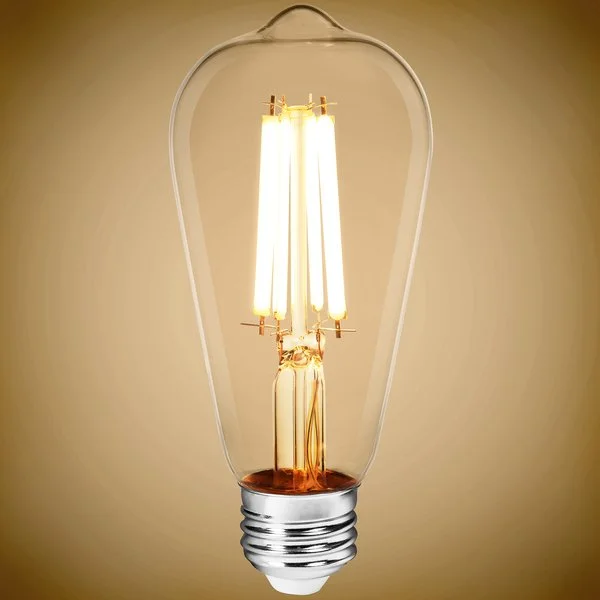
Popular styles include Edison-inspired filament LEDs, globe bulbs, vintage A19 lamps, S14 patio bulbs, and G40 string light bulbs. These products are commonly installed in entry lanterns, decorative sconces, post-cap fixtures, outdoor dining areas, and patio string lighting where appearance is just as important as illumination.
Because decorative bulbs emphasize style, it is especially important to confirm that they are actually rated for outdoor use. Some bulbs designed to look like outdoor products may only carry dry-location ratings and should not be installed in exterior fixtures.
Covered outdoor areas should use bulbs with at least a damp-location rating, while fixtures exposed directly to weather should always use wet-location-rated products. Higher-quality decorative LEDs often include improved seals and UV-resistant materials that help them withstand years of outdoor exposure.
Smart Outdoor Bulbs
Smart outdoor bulbs combine weather-resistant construction with connected lighting features that allow users to control their exterior lighting remotely.
Depending on the product, features may include app-based control, voice assistant compatibility, dimming, programmable schedules, adjustable white light, and RGB color-changing capabilities.
These bulbs are commonly used for:
Automated porch lighting
Vacation lighting schedules
Security automation
Patio ambiance
For many homeowners, the biggest advantage is flexibility. Smart bulbs make it possible to automate outdoor lighting without replacing the fixture or installing additional wiring.
However, not every smart bulb is designed for outdoor use. Many products are approved only for damp locations. Before installing a smart bulb in an exposed fixture, verify that it carries the appropriate wet-location rating and, if necessary, an enclosed-fixture rating as well. Matching the operating temperature range to your local climate can also help improve long-term reliability.
Best Outdoor Bulbs by Application
Choosing the right outdoor bulb starts with understanding what the lighting needs to accomplish. The same bulb that works well on a front porch may not provide enough output for a parking lot or enough beam control for landscape lighting. Matching the bulb to the application typically produces better performance than simply choosing the brightest option available.
Landscape Lighting
Landscape lighting is designed to enhance architectural features, gardens, pathways, and outdoor living spaces through carefully controlled illumination rather than maximum brightness.
Most residential landscape lighting performs best with 4- to 7-watt LED lamps, warm white color temperatures between 2700K and 3000K, and directional PAR16 or MR16 bulbs.
Many landscape applications require only 200 to 400 lumens per fixture. Excessive brightness often creates unwanted glare and harsh contrasts that reduce the visual depth and natural appearance of the landscape.
Most residential systems operate on 12-volt low-voltage transformers, making compatibility an important consideration when replacing older halogen fixtures with LEDs. Some existing transformers may require LED-compatible replacements or load-correction components to operate reliably.
As with any outdoor lighting application, the required damp or wet rating depends on how much direct weather exposure the fixture will receive.

Security Lighting
Security lighting demands much higher output levels than decorative applications.
Instead of relying on a single recommended specification, consider the installation as a whole. Mounting height, beam spread, fixture placement, and surrounding ambient light all influence how effectively the lighting improves visibility.
Many residential installations use bulbs between approximately 1,600 and 3,000 lumens paired with motion sensors or dusk-to-dawn controls. Larger commercial properties often require dedicated LED flood lights or area fixtures rather than screw-in replacement bulbs.
PAR38 bulbs and dedicated LED floodlights remain popular because they offer an excellent balance of beam control, coverage, and installation simplicity.
Mounting height also has a significant impact on performance. A PAR38 bulb installed eight feet above the ground will provide much greater illumination than the same bulb mounted fourteen feet high. As mounting height increases, higher-output fixtures often become necessary to maintain consistent light levels.
For installations above roughly twelve feet, dedicated LED area lights generally outperform traditional screw-in bulb retrofits.
Porch Lighting
Porch lighting sits at the intersection of functionality and aesthetics. Most residential porch fixtures perform best with A19 or globe-style bulbs that produce approximately 800 to 1,100 lumens and a warm white color temperature between 2700K and 3000K.
These warmer color temperatures create a welcoming appearance while still providing adequate illumination for entryways, walkways, and front doors.
Fixture exposure determines the required rating. Covered porch fixtures should use damp-rated bulbs at a minimum, while fully exposed fixtures require wet-rated products designed to withstand direct weather exposure.
Decorative Edison-style bulbs remain popular in visible-bulb sconces and other decorative fixtures, but it's important to verify lumen output before purchasing. Many vintage-style LED bulbs produce only 250 to 400 lumens, which may not provide enough light when used as the primary illumination source for a larger porch or entryway.

Parking Lots
Parking lot retrofits typically move beyond residential-style bulbs entirely and into commercial retrofit systems.
Common upgrade options include LED corn bulbs, mogul-base HID replacements, full LED parking lot fixtures, and complete shoebox lighting systems.
Typical commercial specifications include:
4000K to 5000K color temperatures
HID replacements from approximately 100W to 400W
E39 mogul-base compatibility
Most LED corn bulb retrofits require:
Ballast bypass
Photocell compatibility verification
Driver rewiring
Commercial property owners pursuing utility rebates should also verify whether the selected products are DLC-listed, since many rebate programs require qualifying products to appear on the DesignLights Consortium Qualified Products List (QPL). Choosing a non-qualified product could reduce or eliminate available incentive savings.
Commercial Exteriors
At larger commercial scales, complete LED fixtures usually outperform screw-in bulb retrofits.
Applications such as wall packs, canopy lighting, parking structures, loading docks, and building perimeter lighting benefit from fixtures specifically engineered for outdoor commercial environments. Compared with retrofit bulbs, dedicated fixtures generally provide better thermal management, improved weather sealing, more precise optical control, and longer service life.
Commercial projects should also evaluate whether DLC qualification, DarkSky compliance, municipal lighting ordinances, or full-cutoff optics are required before finalizing a lighting specification. Many communities now regulate upward light spill and allowable color temperatures to reduce light pollution, making code compliance an increasingly important part of outdoor lighting design.
Color Temperature for Outdoor Lighting
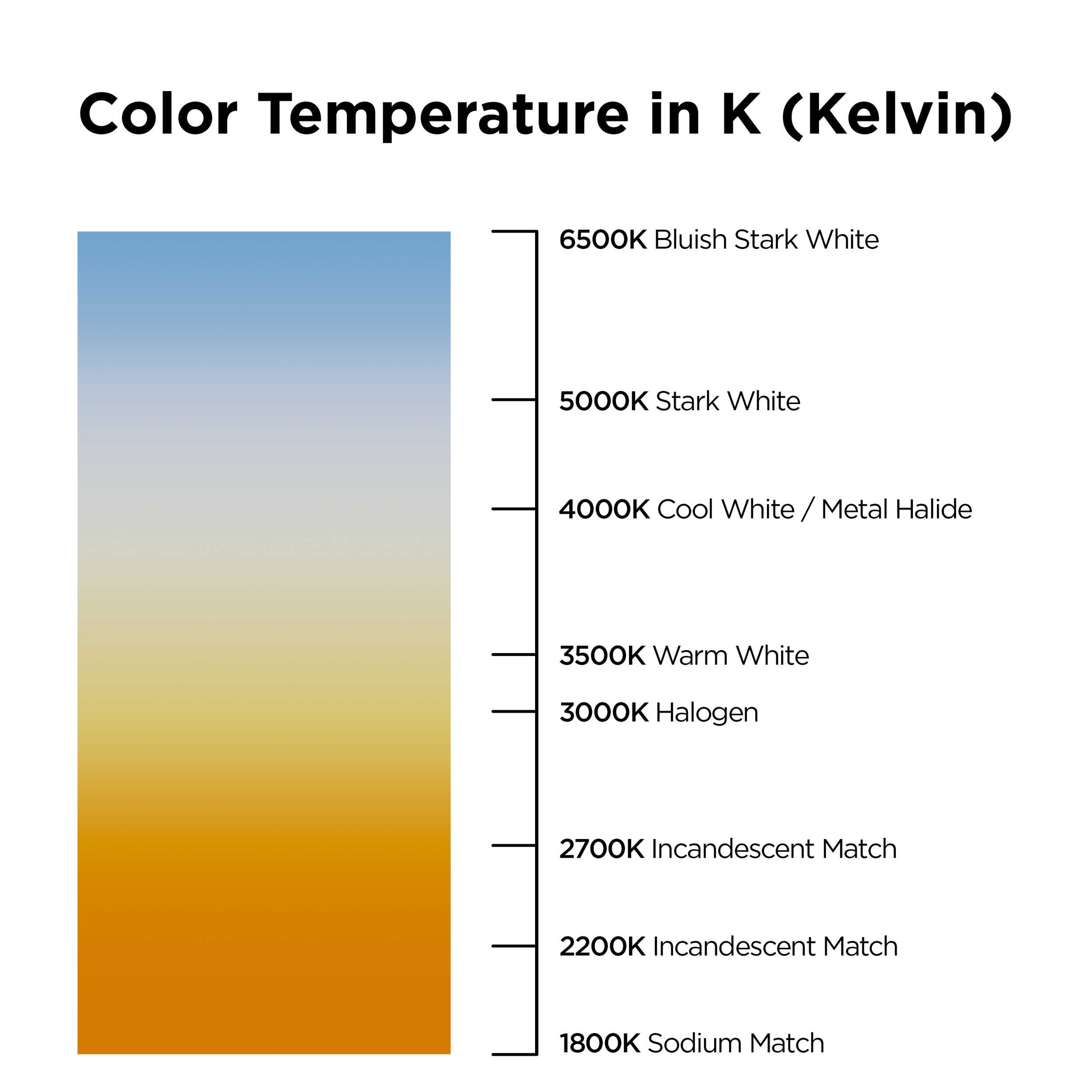
Color temperature has a major impact on how outdoor spaces feel and function. The same fixture can create a warm, inviting entryway or a bright, high-visibility work area depending entirely on the color temperature you choose. Selecting the right color temperature helps balance aesthetics, safety, visibility, and, in some cases, local lighting regulations.
2700K to 3000K
Warm white lighting between 2700K and 3000K remains the most popular choice for residential outdoor spaces.
This color range closely resembles traditional incandescent lighting, creating a comfortable and welcoming appearance around homes. It's commonly used for front porches, patios, decorative sconces, entryways, pathway lighting, and landscape accents where ambiance is just as important as visibility.
Because warm white light produces less perceived glare than cooler color temperatures, it is often preferred in neighborhoods where homeowners want attractive exterior lighting without overwhelming nearby properties. It also complements brick, stone, wood, and other common residential building materials.
While warm white lighting works well for decorative and hospitality-focused applications, it generally provides less perceived contrast than cooler color temperatures. For installations where maximum visibility is the priority, a neutral or daylight color temperature may be more appropriate.
4000K
4000K neutral white lighting sits between residential warmth and commercial visibility.
This color temperature has become increasingly popular because it offers excellent visibility without appearing overly harsh or clinical. Many property managers, commercial building owners, and multifamily communities choose 4000K as a balanced solution that supports safety while maintaining an attractive appearance.
Covered parking
Commercial building entries
Multifamily properties
Property management applications
Exterior walkways
For mixed-use developments, office buildings, schools, healthcare campuses, and apartment communities, 4000K often provides the best balance between visual comfort and functional illumination.
5000K
5000K daylight lighting delivers the highest visual clarity and strongest perceived brightness outdoors.
Commercial security lighting, warehouses, industrial facilities, parking lots, and loading areas often use this color temperature because it creates a bright environment that many users associate with increased visibility.
This is the standard choice for:
Security lighting
Parking lots
Commercial exteriors
Warehouses
Industrial facilities
Surveillance-heavy applications
The cooler color temperature improves:
Facial recognition
Camera image quality
Peripheral visibility
Motion detection
However, 5000K is not automatically the best choice for every outdoor installation. Factors such as fixture placement, beam control, surrounding ambient light, glare, nearby residences, and local lighting ordinances should all influence the final specification. In many situations, a well-designed 4000K installation can provide excellent visibility while reducing glare and minimizing blue-spectrum light.
Consider Dark-Sky Lighting Requirements
As outdoor lighting technology has improved, many municipalities have adopted lighting ordinances designed to reduce unnecessary light pollution while preserving nighttime visibility.
Some municipalities regulate outdoor lighting color temperatures and fixture performance as part of dark-sky initiatives designed to reduce light pollution.
These regulations often limit upward light spill, encourage fully shielded fixtures, and may restrict higher color temperatures in certain applications because cooler light contains more blue-spectrum wavelengths that contribute to skyglow.
Requirements vary by location. Residential neighborhoods, commercial developments, parks, and environmentally sensitive areas may all have different standards depending on local building codes.
Before specifying lighting for a commercial project, verify any applicable municipal requirements for fixture shielding, cutoff optics, allowable color temperature, and overall light distribution. Addressing these requirements during the planning stage can help avoid costly modifications after installation.
Common Outdoor Lighting Mistakes
Most outdoor lighting failures can be traced back to a handful of preventable specification mistakes rather than defects in the lighting technology itself.
Understanding these common issues can help extend bulb life, improve performance, and reduce maintenance costs over time.
Installing Indoor Bulbs Outdoors
One of the most common residential mistakes is using standard indoor A19 bulbs in outdoor fixtures.
Even covered exterior fixtures experience humidity, condensation, and repeated temperature changes throughout the year. Indoor bulbs are not designed to withstand these environmental conditions and often fail much sooner than properly rated outdoor products.
At a minimum, covered outdoor fixtures should use damp-location-rated bulbs, while fixtures exposed directly to rain, snow, or irrigation require wet-location-rated products. Matching the bulb's environmental rating to the installation remains one of the simplest ways to improve long-term reliability.
Ignoring Enclosed Fixture Ratings
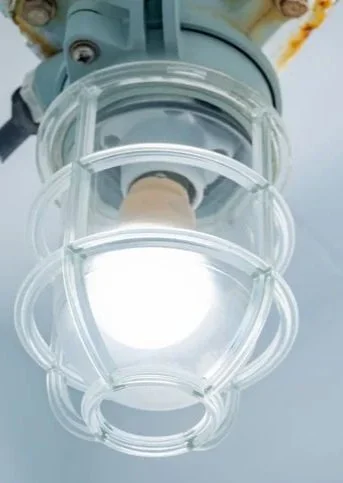
Many outdoor fixtures are effectively sealed heat traps.
Coach lanterns, decorative globe fixtures, enclosed wall sconces, and ceiling-mounted entry fixtures often surround the bulb with glass or other protective materials that significantly reduce airflow.
Although a bulb may carry a wet- or damp-location rating, that does not necessarily mean it has been tested for use inside an enclosed fixture. Heat buildup inside these housings places additional stress on LED drivers and other electronic components, often shortening the bulb's useful life.
Whenever your fixture surrounds the bulb with glass or traps heat, verify that the bulb is specifically approved for enclosed-fixture applications.
Choosing the Wrong Color Temperature
Brightness alone does not determine how effective outdoor lighting will be. Selecting the wrong color temperature can reduce visual comfort, create unnecessary glare, or produce an appearance that doesn't match the intended environment.
For example, warm white lighting around 2700K generally complements residential porches and decorative entryways, while cooler color temperatures are often selected for commercial security lighting and work areas. Rather than relying on a single color temperature for every project, choose one that supports the specific application and surrounding environment.
Overlooking Cold-Weather Performance
Cold-weather compatibility matters much more than many buyers realize.
Although LEDs generally perform well in cold temperatures, lower-quality drivers may become less stable as temperatures drop. Some products may flicker during startup, illuminate more slowly, or experience reduced reliability in consistently freezing conditions.
If your installation is located in an area where temperatures regularly fall below 32°F (0°C), review the manufacturer's minimum operating temperature before installation. Selecting products designed for low-temperature operation can improve long-term performance and reduce unexpected failures during winter months.
How Long Should Outdoor LED Bulbs Last?
Outdoor LED bulbs are commonly rated for 15,000 to 25,000 hours of operation. Some premium commercial products are rated for even longer lifespans under ideal laboratory conditions.
Those published ratings, however, are based on controlled testing environments with stable electrical conditions, open-air operation, and ambient temperatures of approximately 77°F (25°C). Real-world outdoor installations rarely experience those ideal conditions.
Outdoor bulbs are routinely exposed to:
Thermal cycling
Moisture
UV radiation
Driver stress
Vibration
Seasonal temperature swings
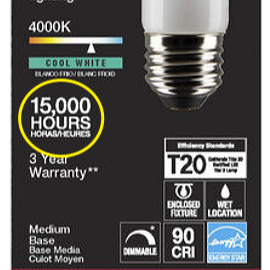
Life Hours circled on Satco bulb packaging.
Because of these environmental factors, actual service life depends just as much on proper application as it does on the quality of the bulb itself. A properly specified outdoor LED installed in the correct fixture can provide years of reliable operation, while the wrong bulb may fail much sooner regardless of its advertised lifespan.
In well-matched outdoor applications, many quality LED bulbs realistically provide between approximately 10,000 and 20,000 hours of dependable service.
Several factors have a direct impact on long-term performance, including:
Using wet-rated bulbs where direct weather exposure is expected
Installing enclosed-fixture-rated bulbs inside sealed housings
Matching the bulb to the correct voltage
Allowing for proper thermal management
Taking the time to match the bulb to both the fixture and the environment often has a greater effect on longevity than choosing a product with the highest advertised hour rating.
The Mismatch Penalty
One of the fastest ways to shorten LED lifespan is installing a bulb in an environment it was never designed to handle.
For example:
A standard indoor LED installed inside a sealed outdoor lantern may fail within 2,000 to 6,000 hours.
Moisture exposure can accelerate corrosion of electrical contacts and internal electronics.
Heat buildup inside enclosed fixtures places additional stress on LED drivers and other sensitive components.
In many cases, premature failure isn't caused by the LED itself but by the operating conditions surrounding it. Choosing the correct environmental rating at the time of purchase can significantly improve reliability while reducing future maintenance.
Thermal Cycling Effects
Outdoor lighting experiences repeated heating and cooling every day. A fixture may warm throughout the evening while operating and then cool again before sunrise, creating thousands of expansion-and-contraction cycles over its lifetime.
Over time, this repeated thermal cycling places stress on:
Driver circuitry
Solder joints
Internal electronic components
Higher-quality outdoor LED bulbs are engineered to better withstand these conditions through improved heat sinks, more robust driver electronics, enhanced sealing, and more effective thermal management. While no lighting product lasts forever, choosing products specifically designed for outdoor environments helps maximize service life under real-world conditions.
Final Thoughts: Outdoor Lighting That Actually Lasts
Outdoor lighting failures are rarely random. More often than not, they result from installing a bulb that wasn't designed for the environment in which it's being used.
Choosing the right outdoor light bulb involves much more than selecting a brightness level or bulb shape. Moisture exposure, fixture design, operating temperature, mounting location, and the intended application all play an important role in long-term performance.
A wet-rated flood light for a driveway, an enclosed-fixture-rated LED for a decorative porch lantern, and a high-output PAR38 for security lighting each solve very different lighting challenges. Understanding those differences makes it much easier to select a product that delivers reliable performance year after year.
Whether you're upgrading residential landscape lighting, replacing porch bulbs, retrofitting commercial parking lot fixtures, or specifying lighting for a large outdoor project, choosing products that match the installation environment will help improve reliability, reduce maintenance, and maximize the value of your investment.
1000Bulbs offers a wide selection of outdoor LED bulbs, PAR lamps, flood lights, decorative outdoor lighting, and commercial exterior lighting solutions backed by knowledgeable, U.S.-based lighting professionals. If you're unsure which product is right for your project, our team can help you compare options and identify a solution that fits your application. Call 1-800-624-4488 Monday through Friday from 7 a.m. to 5 p.m. CST to speak with a lighting specialist.
FAQs
Can LED Bulbs Be Used Outdoors?
Yes. LED bulbs can be used outdoors as long as they carry the appropriate environmental rating for the installation. Covered outdoor fixtures typically require at least a damp-location-rated bulb, while fixtures exposed directly to rain, snow, or irrigation should use wet-location-rated products. If the fixture is enclosed, the bulb should also be approved for enclosed-fixture use.
What Is The Best Color Temperature For Outdoor Lights?
The best outdoor color temperature depends on the application. Residential porch and landscape lighting usually perform best around 2700K to 3000K, while security lighting and commercial exteriors often benefit from 4000K to 5000K daylight illumination.
Why Do Outdoor Bulbs Fail Quickly?
Outdoor bulbs fail quickly when moisture, heat buildup, thermal cycling, or incorrect ratings damage the LED driver or internal electronics. Installing indoor bulbs outdoors or ignoring enclosed fixture ratings are two of the most common causes.
Are Enclosed Fixture Bulbs Required Outdoors?
Many outdoor fixtures require enclosed-rated bulbs because sealed housings trap heat around the lamp. Using a non-enclosed-rated bulb inside a sealed fixture can shorten its lifespan dramatically.
What Outdoor Bulbs Work Best In Cold Weather?
Outdoor LED bulbs designed for low-temperature operation perform best in cold climates. Always verify minimum operating temperature specifications before installing bulbs in areas regularly exposed to freezing conditions.