

What Is the Best Lighting for a Large Warehouse?
| What This Article Covers |
|---|
Warehouse lighting affects more than visibility. For facility managers, operators, and contractors, the wrong fixture type, beam angle, or brightness level leads to picking errors, forklift safety risks, higher energy bills, and ongoing maintenance costs that compound over time. This guide covers the best warehouse lighting fixture types for large facilities, including LED high bays and linear aisle fixtures, recommended footcandle levels by zone based on IES standards, how ceiling height and rack configuration affect fixture selection, smart lighting controls that reduce energy use by 30 to 50 percent in low-traffic zones, and a realistic breakdown of LED vs. metal halide performance and payback expectations. Best for: warehouse operators, facility managers, industrial contractors, logistics and distribution center managers, and commercial property owners evaluating LED retrofits or planning new facility lighting layouts. |
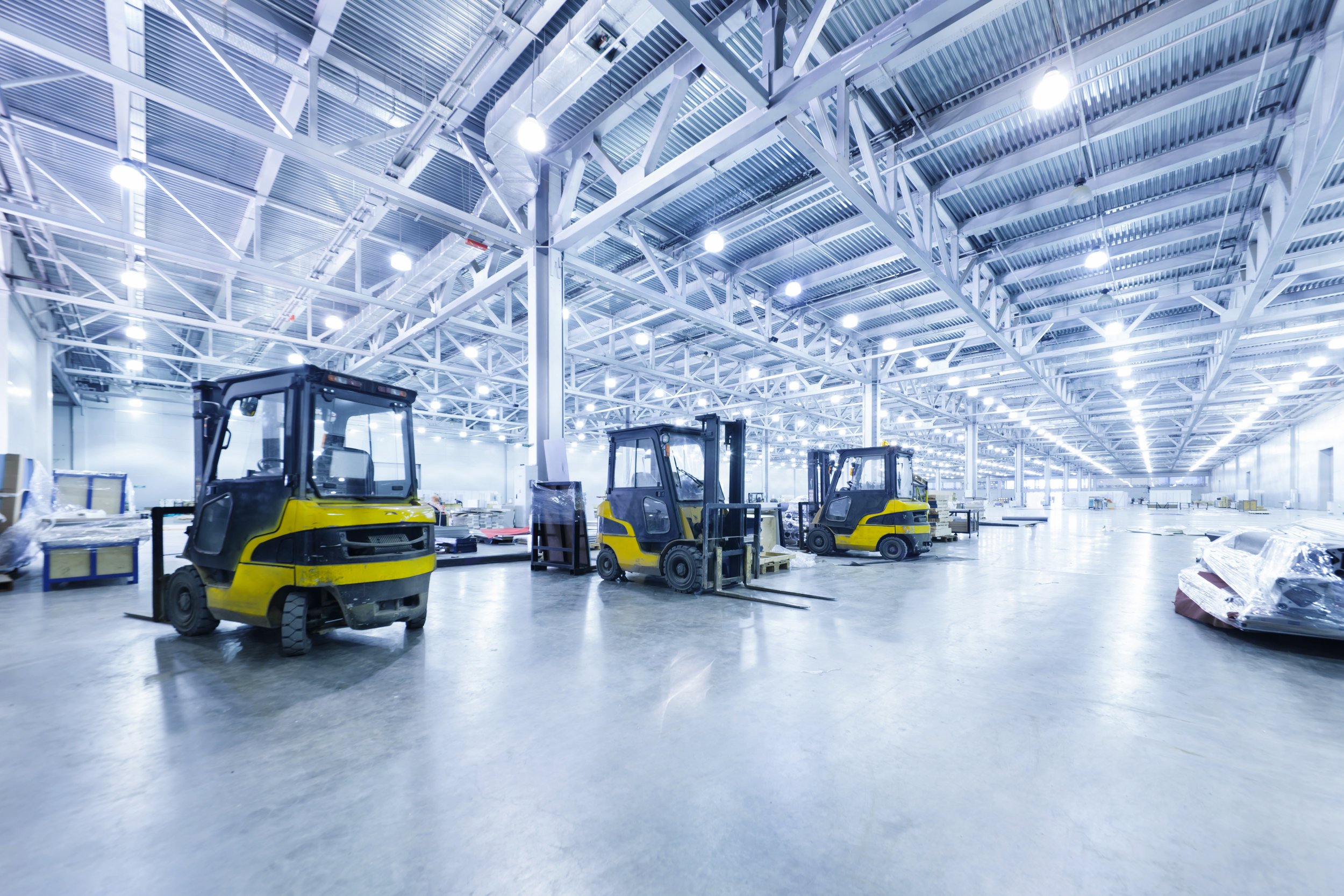
A warehouse can have the best inventory system in the world and still lose efficiency if workers are operating under poor lighting. In large facilities, lighting affects much more than visibility. It influences forklift safety, picking accuracy, employee fatigue, maintenance scheduling, and overall operating costs every single day.
Many warehouses still rely on aging fluorescent or metal halide fixtures installed more than a decade ago. While those systems may technically still function, they often create uneven illumination, excessive energy consumption, long warm-up times, and ongoing maintenance headaches that modern LED systems largely eliminate.
The challenge is that warehouse lighting is not one-size-fits-all. A fulfillment center with narrow aisles and barcode scanning requirements needs a very different lighting layout than a bulk storage warehouse with open floor space and high ceilings. Fixture type, beam angle, color temperature, mounting height, and lighting controls all affect how effectively the system performs.
This guide breaks down the best warehouse lighting options for large facilities, including:
LED high bay recommendations
Warehouse brightness standards
Beam angle considerations
Smart lighting controls
LED retrofit strategies
Energy savings expectations
Common warehouse lighting mistakes
Whether you are planning a full warehouse LED retrofit or upgrading a few outdated fixtures, understanding how lighting design affects warehouse operations helps prevent expensive installation mistakes later.
Why Warehouse Lighting Matters More than Most Facilities Realize
Warehouse lighting affects nearly every operational function inside the building. Poor lighting slows movement, increases visual fatigue, contributes to mistakes, and creates safety concerns that become more noticeable as facilities scale.
Safety and Visibility
In warehouse environments, visibility directly affects worker safety. Poorly illuminated aisles make it harder for forklift operators and employees to identify:
Floor hazards
Damaged pallets
Loose debris
Spill areas
Pedestrian movement
Rack obstructions
Dark intersections between aisles are especially problematic in facilities with active forklift traffic. Warehouse lighting also plays an important role during power interruptions, shift transitions, overnight operations, and loading dock activity, when visibility can directly affect worker safety. Consistent illumination throughout the warehouse helps employees react faster, identify hazards more easily, and navigate the facility more safely during high-traffic operating periods.
Picking Accuracy
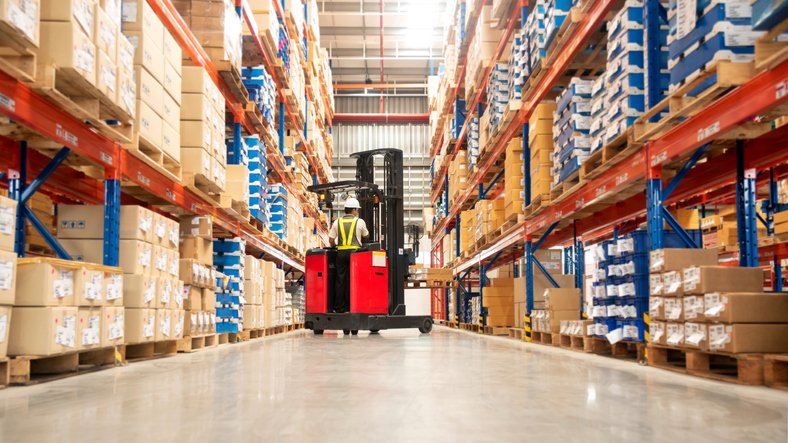
Lighting quality directly affects how quickly workers can read labels, verify product SKUs, scan barcodes, distinguish packaging, and confirm inventory locations. In fulfillment environments handling thousands of picks each day, even small improvements in visibility can reduce mis-picks, shipping errors, returns, re-ships, and workflow interruptions. High-CRI LED warehouse lighting further improves accuracy by increasing contrast and making labels easier to read under fast-paced working conditions.
Productivity and Fatigue
Employees working long shifts under poor lighting often experience increased:
Eye strain
Fatigue
Visual discomfort
Concentration loss
Uneven lighting and excessive glare can slow movement throughout picking aisles and work zones even when the warehouse technically appears bright enough overall.
Modern LED warehouse lighting helps create more uniform illumination throughout the facility, reducing harsh contrasts between bright and dark areas. That consistency becomes especially important in:
Multi-shift operations
Large fulfillment centers
Warehouses operating 24/7
Facilities with dense racking systems
Energy and Maintenance Costs
Lighting is one of the largest ongoing electrical expenses in many warehouse environments.
Older warehouse systems using metal halide fixtures, fluorescent high bays, and high-pressure sodium fixtures consume substantially more electricity than modern LED warehouse lighting systems. The maintenance side is equally important.
Legacy warehouse fixtures often require:
Frequent lamp replacement
Ballast replacement
Lift rentals
Maintenance downtime
Inventory stocking for replacement parts
In warehouses with ceilings above 25 feet, even a simple fixture repair can become labor-intensive and disruptive. Modern LED high bays dramatically reduce those maintenance demands while lowering energy usage at the same time.
Best Warehouse Lighting Fixture Types
The best warehouse lighting setup depends on how the facility actually operates. A warehouse with open bulk storage requires a different lighting strategy than a fulfillment center with narrow aisles, tall racking, and continuous barcode scanning activity.
The goal is not simply to increase brightness. Effective warehouse lighting delivers consistent illumination where employees need visibility while minimizing glare, wasted light, and unnecessary energy consumption.
LED High Bays
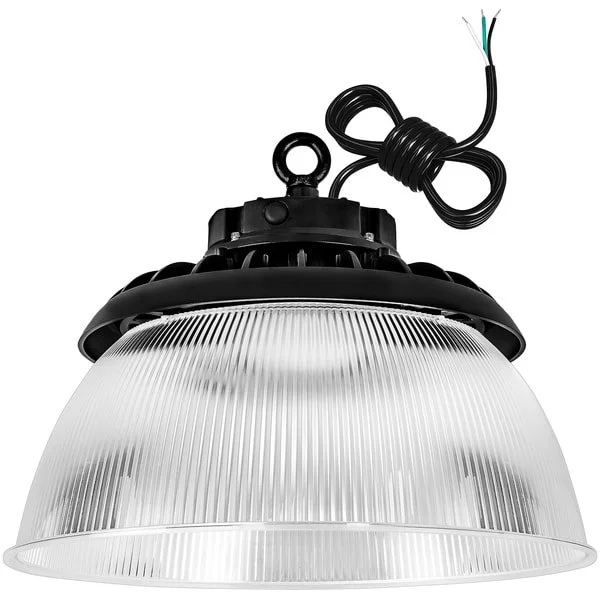
Round LED High Bay
LED high bay fixtures are the standard recommendation for warehouse ceilings above 20 feet. Most commercial retrofits replace older fluorescent or metal halide systems with LED high bays because they provide better efficiency, longer lifespan, and lower maintenance requirements.
Warehouses generally use UFO high bays or linear high bays. UFO high bays create a broad, symmetrical light pattern that works especially well in open warehouse floors, manufacturing areas, and bulk storage environments.
Linear high bays produce a wider rectangular beam shape better suited for fulfillment centers, rack aisles, and long picking lanes where light needs to be distributed more precisely throughout the space.
Many warehouse LED retrofits reduce fixture wattage substantially while still improving floor-level visibility. A common upgrade involves replacing 400W metal halide fixtures with LED high bays operating between roughly 150W and 200W.
Modern LED high bays also commonly support occupancy sensors, 0-10V dimming, smart lighting controls, and DLC rebate eligibility. These features give facilities more flexibility when integrating automation systems or reducing long-term operating costs.
Linear Aisle Lighting
Warehouses with tall rack systems often require more targeted lighting than overhead high bays alone can provide.
As rack heights increase, shelving blocks and absorbs light before it reaches lower picking levels. This often creates uneven vertical illumination, shadowed shelving, and reduced barcode visibility throughout narrow aisles.
Linear aisle fixtures mounted directly above or between aisles help direct light exactly where employees are:
Reading labels
Verifying inventory
Scanning barcodes
Pulling products
That targeted approach improves picking accuracy while reducing wasted illumination in inactive areas of the warehouse.
In many fulfillment facilities, aisle-mounted lighting also improves lower-rack visibility without dramatically increasing fixture count throughout the building.

UFO LED High Bay w/ Sensosr
Motion Sensor Warehouse Lighting
Lighting controls are one of the fastest ways to reduce warehouse energy consumption without sacrificing operational visibility.
Most warehouses do not maintain identical traffic levels across every aisle all day long. Some storage areas may remain inactive for extended periods between picking cycles.
Motion sensor-compatible LED warehouse lights automatically dim or switch off when no activity is detected, then return to full brightness within seconds once movement resumes.
This strategy works especially well in:
Distribution centers
Bulk storage warehouses
Cold storage facilities
Low-traffic inventory zones
Facilities using occupancy controls often reduce lighting energy usage in controlled areas by roughly 30 to 50 percent, depending on traffic patterns and operating schedules.
Emergency Warehouse Lighting
Emergency lighting is a critical part of warehouse safety planning, not just a code requirement. During a power interruption, workers still need clearly illuminated exit paths, stairwells, dock exits, forklift routes, and electrical access areas.
Warehouse emergency lighting systems commonly include battery-backup fixtures, emergency drivers, exit signs, and emergency wall packs.
Many facilities overlook emergency systems until a failed inspection, a monthly test failure, or a real outage exposes deficiencies. Evaluating emergency lighting during a warehouse LED retrofit is usually far more efficient than addressing compliance separately later.
How Bright Should Warehouse Lighting Be?
Warehouse brightness is typically measured in footcandles (fc), which describes the amount of light reaching a working surface.
The correct brightness level depends heavily on how each area of the warehouse is used.
General Warehouse Circulation
General circulation areas such as shipping zones, receiving areas, forklift routes, and main aisles typically require around 20 to 30 footcandles minimum.
Facilities with heavier forklift traffic often target closer to 50 footcandles to improve visibility around intersections and moving equipment.

Pick and Pack Areas
Active picking zones require substantially more illumination than general circulation spaces. Warehouses performing barcode scanning, inventory verification, label reading, and packing operations often perform best around 50 to 75 footcandles.
These higher lighting levels help reduce picking mistakes, scan failures, eye strain, and worker fatigue during long operating shifts.
High-CRI fixtures are especially valuable in these environments because workers must distinguish small text and visually similar packaging quickly and accurately.
Offices and Quality Control Stations
Warehouse office areas and quality control stations generally follow standard commercial office lighting recommendations.
Typical targets range between 50 and 100 footcandles, depending on the amount of screen usage, paperwork, inspection activity, and administrative work performed in the space.
Fixture spacing calculations depend on ceiling height, beam angle, rack configuration, and lumen output. A fixture mounted at 30 feet requires substantially more intensity than the same fixture mounted at 15 feet because the light must travel farther before reaching the work surface.
Beam angle matters just as much as raw lumen output. Wide beam distributions work well in open-floor warehouses, while narrower beam patterns perform better in tall racked aisles where concentrated downward illumination is needed.
A proper warehouse lighting plan should account for target footcandle levels, fixture spacing, beam distribution, glare control, maintenance accessibility, and long-term energy usage before installation begins.
LED vs Metal Halide in Warehouses
Metal halide fixtures dominated warehouse lighting for decades because they delivered high lumen output at a relatively affordable upfront cost. Many warehouses still operate systems installed 15 to 20 years ago simply because the fixtures still function.
The problem is that the long-term operational costs of metal halide systems add up quickly through higher electricity usage, frequent lamp replacements, ballast failures, restrike delays, and ongoing maintenance labor.
For warehouses operating multiple shifts across large square footage, those costs compound year after year.
Energy Consumption Differences
A typical 400W metal halide fixture produces roughly 24,000 to 36,000 lumens. Modern LED high bays can often deliver comparable usable illumination while consuming substantially less power.
Many warehouse retrofits now replace older 400W metal halide fixtures with LED high bays operating between roughly 150W and 200W. Facilities replacing older 250W metal halide systems commonly move to LED fixtures around the 100W range.
Those wattage reductions create meaningful operational savings in warehouses running lights for long hours every day.
A warehouse operating 100 metal halide fixtures at 400W each maintains a lighting load of roughly 40 kilowatts. Replacing those fixtures with 150W LED high bays lowers the connected load to approximately 15 kilowatts while maintaining comparable visibility throughout the facility.
Restrike Delays and Operational Impact
One of the biggest operational disadvantages of metal halide lighting is restrike time. After a power interruption or shutdown, metal halide lamps often require 15 to 20 minutes to return to full brightness.
In active warehouse environments, that delay creates visibility and workflow problems during overnight operations, loading activity, shift transitions, and temporary outages. LED warehouse lighting reaches full brightness instantly with no warm-up period.
That immediate startup also allows LED systems to integrate effectively with occupancy sensors, scheduled dimming, motion controls, and smart lighting automation. Metal halide systems are poorly suited for those types of energy-saving control strategies.
Maintenance and Lifespan
Metal halide lamps generally last between 10,000 and 20,000 hours before replacement becomes necessary. Modern LED high bay fixtures commonly carry rated lifespans between 50,000 and 100,000 hours depending on driver quality and operating conditions.
For warehouses operating long shifts daily, that difference can represent years of reduced maintenance activity. Maintenance savings become especially important in facilities with:
Tall ceilings
Lift-dependent fixture access
Continuous operations
Dense rack systems
Every avoided fixture replacement reduces labor hours, lift rentals, maintenance scheduling complexity, and operational downtime. In many facilities, maintenance reduction becomes just as valuable as energy savings over the life of the lighting system.
LED Retrofit Payback Expectations
Most warehouse LED retrofits recover their installed cost within roughly two to four years through combined energy and maintenance savings.
The exact timeline depends on factors such as operating schedules, utility rates, fixture count, installation costs, lighting controls, and the condition of the existing system.
Facilities operating older metal halide systems on long daily schedules typically see the fastest return on investment.
How Layout and Ceiling Height Affect Warehouse Lighting
Warehouse lighting performance depends just as much on layout as it does on fixture output. A high-output fixture installed in the wrong location can still create shadowing, uneven illumination, glare, and poor aisle visibility. Effective warehouse lighting design starts with understanding how ceiling height, rack configuration, and beam distribution interact throughout the space.
Ceiling Height Considerations
Ceiling height is usually the first factor determining fixture selection.
Warehouses with ceilings below roughly 20 feet often use low bay fixtures, LED strip lighting, or commercial shop lights. Facilities with ceilings between 20 and 40 feet typically require LED high bay systems designed specifically for higher mounting positions.
As mounting height increases, fixture intensity requirements increase as well. A fixture mounted at 30 feet must deliver substantially more usable light than the same fixture mounted at 15 feet because the light has farther to travel before reaching the floor.
Rack Layout and Aisle Width
Tall rack systems create additional lighting challenges because shelving blocks and absorbs light before it reaches lower picking levels.
Facilities with rack systems above 20 feet and aisles narrower than 10 feet often develop shadowed shelving and reduced lower-rack visibility when relying entirely on overhead high bays.
In those layouts, narrower beam distributions or supplemental aisle lighting improve label readability, barcode visibility, lower-rack illumination, and picking accuracy without dramatically increasing fixture count throughout the facility.
Beam Angle Selection
Beam angle matters just as much as lumen output in warehouse environments. Wide beam spreads, such as 90-degree or 120-degree distributions, work well in open warehouse floors, manufacturing areas, and bulk storage spaces.
Narrower beam patterns, closer to 60 degrees, perform better in tall racked aisles and concentrated work zones because they direct more light downward instead of spilling illumination into neighboring aisles.
A proper warehouse lighting plan should account for target footcandle levels, fixture spacing, beam distribution, rack layout, glare control, maintenance accessibility, and long-term energy usage before installation begins.
Lighting Tip: Need more control over beam angles? We have you covered. UFO high bays with adjustable beam angles let you choose the beam angle needed during installation. Linear LED high bays with rotatable panels allow you to aim the light directly where you need it most.

Smart Warehouse Lighting Controls
Lighting controls are one of the fastest ways to reduce warehouse energy consumption without sacrificing operational visibility.
Most warehouse facilities do not require full light output in every zone all day long. Smart controls allow the lighting system to respond dynamically to occupancy patterns, daylight availability, and operating schedules.
Occupancy Sensors
Occupancy sensors automatically dim or switch off fixtures in unoccupied areas.
In many warehouses, certain aisles remain inactive for extended periods between picking cycles. Sensor-controlled LED high bays can reduce output during those inactive periods and restore full brightness within seconds once movement resumes.
This strategy works especially well in:
Distribution centers
Bulk storage facilities
Cold storage warehouses
Low-traffic inventory zones
Facilities using occupancy controls in intermittent-use areas often reduce lighting energy consumption in those zones by roughly 30 to 50 percent.
Daylight Harvesting
Warehouses with skylights or roof glazing can often reduce artificial lighting usage during daytime hours.
Daylight harvesting systems use photosensors to measure available natural light and automatically dim fixtures when sunlight provides sufficient illumination throughout the facility.
This strategy works particularly well in large open-floor warehouses and single-story distribution centers with significant roof-level daylight access.
Scheduled Dimming
Facilities operating multiple shifts can also reduce lighting energy usage through scheduled dimming strategies.
Lighting systems can automatically lower output during break periods, overnight maintenance windows, partial shutdowns, and low-traffic operating hours without affecting visibility during active production time.
Most modern LED high bay fixtures already support 0-10V dimming, which simplifies occupancy sensor integration and future smart lighting upgrades.
Real Warehouse Energy Savings Examples
Warehouse LED retrofit savings vary depending on operating schedules, fixture count, utility rates, and the condition of the existing lighting system.
Still, the difference between legacy warehouse lighting and modern LED systems is substantial enough that most facilities see measurable reductions in both energy and maintenance costs almost immediately.
A mid-size warehouse operating 100 older 400W metal halide fixtures maintains a connected lighting load of roughly 40 kilowatts. Replacing those fixtures with 150W LED high bays lowers the connected load to approximately 15 kilowatts while maintaining comparable visibility throughout the facility.
Replacing older warehouse lighting with high-efficiency LED fixtures can significantly reduce energy costs, with the exact savings depending on factors such as operating hours, electricity rates, fixture wattage, and the number of fixtures being replaced.
Larger fulfillment centers often see even greater energy savings after upgrading to LED warehouse lighting.
Facilities that install occupancy sensors in low-traffic aisles can reduce lighting energy consumption in those controlled areas by 30% to 50%, while warehouses that combine LED fixtures with daylight harvesting and scheduled dimming controls may reduce overall lighting energy use by 60% or more compared to older metal halide systems.
Cold storage facilities often benefit even more from LED retrofits because LEDs perform efficiently in low-temperature environments where fluorescent and HID fixtures lose performance. Unlike metal halide systems, LEDs reach full brightness instantly, maintain consistent light output in refrigerated spaces, and integrate easily with occupancy controls. Together, these advantages reduce energy consumption while improving visibility and operational efficiency.
Maintenance Considerations for Warehouse Lighting
Maintenance is one of the most overlooked costs in warehouse lighting systems. In facilities with high ceilings and continuous operations, even a routine fixture replacement can require:
Lift access
Labor scheduling
Aisle restrictions
Temporary workflow interruptions
Older warehouse systems using fluorescent or HID fixtures often require ongoing lamp replacement, ballast replacement, and troubleshooting as components age.
LED warehouse lighting dramatically reduces maintenance demands because most commercial LED high bay fixtures operate for 50,000 to 100,000 hours before major service is required, making fewer maintenance calls just as valuable for many facilities as reducing electrical consumption.
For many facilities, reducing maintenance calls becomes just as valuable as reducing electrical consumption.
Driver Accessibility Matters
Not all LED fixtures are equally serviceable. Commercial warehouse fixtures should prioritize:
Accessible drivers
Replaceable components
Serviceable optics
Clearly labeled wiring compartments
Low-cost integrated fixtures may reduce upfront expense but create larger replacement costs later if individual components cannot be serviced separately.
Facilities planning long-term operations should evaluate warranty coverage, replacement part availability, and manufacturer support before selecting warehouse lighting products.
Environmental Conditions
Warehouses can be demanding environments for lighting systems. Dust, vibration, fluctuating temperatures, and daily equipment traffic can all affect fixture performance and longevity if the wrong products are installed. Choosing fixtures designed for your facility's operating conditions helps maintain consistent light levels while reducing maintenance needs over time.
Many warehouse environments expose lighting fixtures to conditions that go well beyond those found in offices or retail spaces. Airborne dust and debris can accumulate on lenses and optics, reducing light output over time, while constant vibration from machinery and forklift traffic may loosen components or shorten the lifespan of lower-quality fixtures. In facilities that experience wide temperature swings, fixtures must also be able to perform reliably in both hot and cold conditions.
For these reasons, industrial warehouses and manufacturing facilities often benefit from fixtures designed with enhanced durability features, including:
Sealed optics to help keep dust and contaminants out
Higher IP ratings for protection against moisture and airborne particles
Durable polycarbonate or tempered glass lenses that resist impacts
Enhanced thermal management to dissipate heat and extend LED lifespan
Even with durable fixtures, routine maintenance remains important. Warehouses with significant airborne dust or debris should periodically clean fixture lenses to maintain consistent lumen output and prevent dirt buildup from reducing lighting performance. Regular inspections can also help identify damaged fixtures or lenses before they affect visibility or create safety concerns.
Should you Retrofit or Replace Warehouse Fixtures?
Not every warehouse lighting upgrade requires complete fixture replacement. Some facilities benefit from LED retrofit kits or lamp conversions, while others achieve better long-term performance by replacing the entire fixture. The right approach depends on:
Fixture condition
Ceiling height
Existing technology
Labor costs
Maintenance goals
Control integration plans
LED Retrofit Options
Common warehouse retrofit approaches include:
Retrofit kits
Driver replacement systems
Retrofits often make sense when existing fixture housings remain structurally sound and the facility wants to reduce upfront installation costs.
Many phased warehouse upgrades also rely on retrofit strategies because they allow sections of the building to be upgraded gradually instead of replacing every fixture simultaneously.
However, retrofits still inherit some limitations of the original fixture design, including:
Older optics
Existing housing constraints
Limited thermal performance
Full Fixture Replacement
Complete fixture replacement typically provides the best long-term performance for large warehouse environments. Modern LED high bay fixtures offer:
Better optics
Improved thermal management
Higher efficiency
Integrated controls
Cleaner installation appearance
Full replacement often makes the most sense when:
Existing fixtures are near their end of life
Warehouse layouts have changed
Maintenance issues are already significant
Smart controls are planned
Replacing older fixtures also improves lighting consistency throughout the warehouse instead of simply increasing raw brightness.
Rebates and ROI considerations
Many warehouse LED lighting projects qualify for:
Utility rebates
Commercial efficiency incentives
Local energy programs
Most rebate programs prioritize DLC-listed fixtures and energy-saving control integration.
Because rebate requirements vary by utility provider and state, facilities should verify eligibility before finalizing product selection.

DLC Certification
DLC-listed fixtures are commonly required to qualify for utility rebates, commercial incentive programs, and municipal energy efficiency projects.
DLC certification verifies that a fixture meets established performance standards for efficiency, lumen output, reliability, and product testing. For large warehouse retrofits, selecting DLC-listed fixtures can improve overall project economics by helping facilities take advantage of available incentive programs.
Long-Term Operational Savings
Warehouse LED retrofits reduce costs through multiple categories simultaneously:
Lower electrical consumption
Reduced maintenance labor
Fewer lift rentals
Longer replacement intervals
Reduced operational downtime
Facilities operating older metal halide systems often underestimate how much maintenance activity disappears after converting to LED high bays.
A warehouse replacing dozens of HID lamps annually may reduce fixture-related maintenance calls dramatically after completing an LED retrofit.
How 1000Bulbs Helps Commercial Facilities Upgrade Faster
1000Bulbs supports commercial and industrial lighting projects with a wide selection of LED high bays, linear fixtures, emergency lighting products, occupancy sensors, and control-ready commercial lighting solutions designed for large facilities.
US-based lighting professionals are available by phone Monday through Friday, 7 a.m. to 7 p.m. CST, to help facility managers, contractors, and procurement teams evaluate fixture options, estimate fixture counts, and identify practical upgrade paths for their specific space.
For larger projects, 1000Bulbs also offers bulk pricing and support for phased commercial rollouts where fixture availability and lead times matter. Many product pages also include a lighting layout tool that helps estimate fixture quantity requirements and projected footcandle levels based on room dimensions.
Call 1-800-624-4488 to speak with a lighting expert or browse the commercial and industrial lighting catalog at 1000Bulbs.com.
Final Thoughts
Warehouse lighting affects nearly every part of facility operations, including safety, picking accuracy, employee comfort, maintenance scheduling, and long-term operating costs.
Older fluorescent and metal halide systems may still function, but modern LED warehouse lighting dramatically improves efficiency while reducing maintenance demands. Proper fixture selection, beam angle planning, control integration, and layout design all play a major role in how effectively the system performs over time.
Whether you are upgrading high bay fixtures, improving visibility in narrow aisles, or planning a full warehouse LED retrofit, selecting the right lighting strategy upfront helps avoid expensive operational problems later.
Browse 1000Bulbs’ selection of warehouse LED lighting, high bay fixtures, industrial retrofit solutions, and motion sensor-compatible commercial lighting products.
Or, you can call 1-800-624-4488 to speak with a US-based lighting specialist who can help identify the right setup for your facility.
FAQs
What is the Best Lighting for a Warehouse?
For most large warehouses, LED high bay fixtures provide the best balance of efficiency, visibility, lifespan, and maintenance reduction.
How Many Footcandles Does a Warehouse Need?
General warehouse circulation areas typically require 20 to 30 footcandles, while active pick and pack zones often perform best around 50 to 75 footcandles.
What Color Temperature is Best for Warehouse Lighting?
5000K daylight is the most common warehouse color temperature because it improves visibility, barcode readability, and picking accuracy without appearing excessively harsh.
Are LED High Bays Better than Metal Halide Fixtures?
LED high bays generally outperform metal halide fixtures in energy efficiency, maintenance requirements, startup speed, lifespan, and smart control compatibility.
How Long Do Warehouse LED Lights Last?
Most commercial LED high bay fixtures are rated between 50,000 and 100,000 hours, depending on driver quality and operating conditions.