
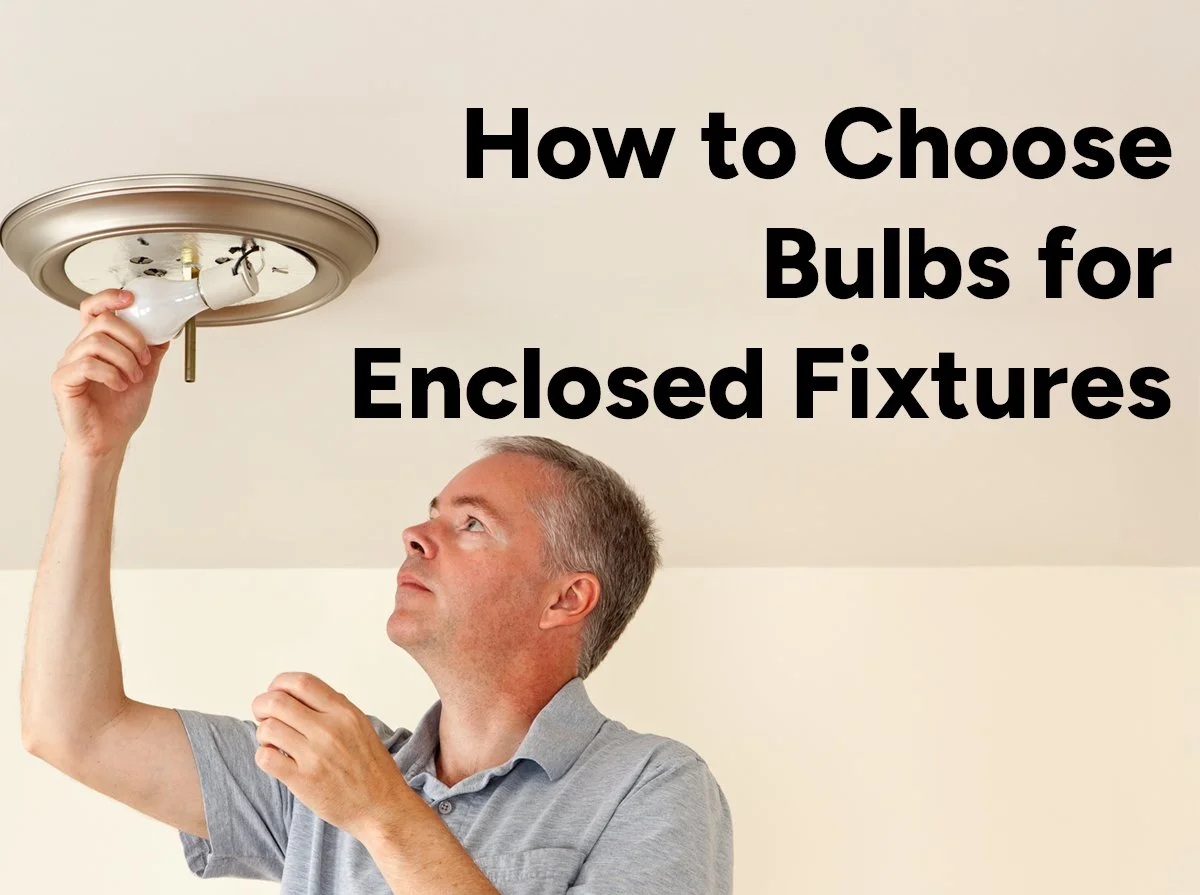
How to Choose Bulbs for Enclosed Fixtures
| What This Article Covers |
|---|
Repeated LED failures in enclosed fixtures are almost always caused by heat, not a defective bulb. When a standard LED is installed in a globe pendant, covered ceiling fixture, outdoor lantern, or sealed recessed can, the trapped heat raises internal temperatures beyond what a non-rated driver can handle, cutting lifespan from tens of thousands of hours to just a few thousand. This guide explains why enclosed fixtures cause problems for LEDs, what the enclosed fixture rating means and where to find it, how to recognize the warning signs of the wrong bulb, and what to look for when selecting replacement bulbs for residential, commercial, and outdoor enclosed fixtures. It also covers best practices for extending bulb lifespan in any sealed housing. Best for: homeowners, property managers, electricians, facility maintenance teams, and anyone troubleshooting repeated LED failures in covered or sealed fixtures. |
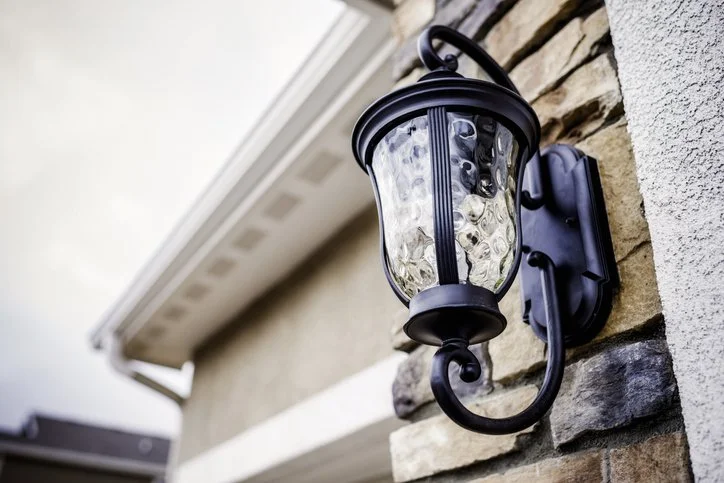
Bulbs for enclosed fixtures are one of the most misunderstood parts of LED lighting. A homeowner installs a new LED in a globe pendant or covered ceiling fixture, and a few months later the bulb starts flickering, buzzing, or fails completely.
The assumption is usually that the bulb was defective.
In reality, the issue is often heat.
Most standard LED bulbs are designed to operate in open-air fixtures where heat can dissipate naturally. Enclosed fixtures trap that heat around the bulb, creating temperatures that shorten driver life dramatically if the bulb is not designed for those conditions.
It is one of the most common causes of early LED failure in homes, apartments, and light commercial buildings.
The good news is that the problem is usually easy to fix once you understand what to look for. Choosing the right enclosed-rated bulb can significantly improve lifespan, reliability, and overall lighting performance.
Why Enclosed Fixtures Cause Problems for LEDs
LEDs generate far less heat than incandescent bulbs, but they still produce heat internally that needs to escape.
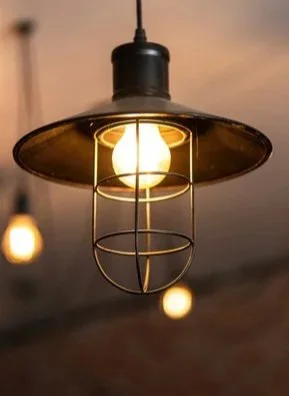
Example of an open fixture.
In an open fixture, warm air rises away from the bulb and cooler air replaces it naturally. That airflow helps keep the LED driver and internal components operating within their intended temperature range.
An enclosed fixture changes that completely.
When a bulb sits inside a sealed globe, a recessed can, an outdoor lantern, or an enclosed ceiling fixture, heat builds up around the lamp with nowhere to go. Temperatures inside the housing rise steadily while the bulb continues operating.
The issue is not usually the LED chips themselves. The most heat-sensitive component is the driver, which regulates power inside the bulb.
You can think of it like a car engine without proper airflow through the radiator. The engine may work fine initially, but once heat starts building up faster than it can dissipate, components begin failing much earlier than expected.
Heat Buildup Shortens Lifespan
LED lifespan ratings are typically measured under controlled open-air conditions.
Inside enclosed fixtures, operating temperatures can rise significantly higher than those test conditions. When internal temperatures remain elevated for long periods, the driver degrades faster and the overall lifespan of the bulb drops.
That is why a bulb rated for many years of operation in open air may fail surprisingly quickly inside an enclosed housing.
To put that in concrete terms: standard LED lifespan ratings of 15,000 to 25,000 hours are based on open-air testing at 25°C. In an enclosed fixture without the correct rating, real-world lifespan can drop to 3,000 to 8,000 hours. At 3 hours of use per day, a properly rated bulb should last well over a decade. The same non-rated bulb in an enclosed fixture may need replacing in under three years.
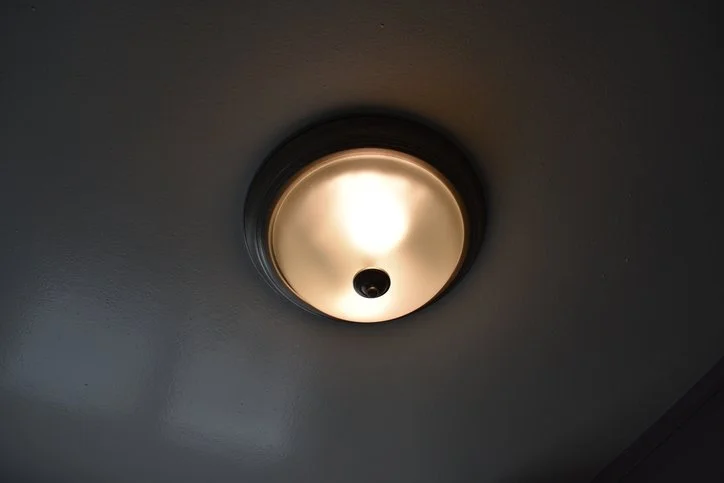
Fully enclosed ceiling light
Common enclosed fixtures that trap heat include:
Globe pendants
Covered flush-mount ceiling fixtures
Outdoor coach lights
Bathroom vanity globes
Recessed cans with glass covers
Ceiling fans with enclosed globes
The smaller and tighter the fixture, the more difficult heat management becomes.
Driver Stress Causes Most LED Failures
The driver is the electronic component inside the bulb that converts household voltage into the regulated power LEDs require.
Drivers are extremely sensitive to heat over time. When temperatures rise too high inside an enclosed fixture, driver components begin degrading much faster than intended.
That stress usually appears as:
Flickering after the bulb warms up
Buzzing or inconsistent operation
Sudden failure with no visible bulb damage
Short lifespan despite normal usage
This is one reason enclosed fixture failures can feel random to homeowners and maintenance teams. The bulb may appear to work normally at first before symptoms develop gradually as heat exposure accumulates.
In many cases, the LED itself was never defective. The bulb was simply operating outside the thermal conditions it was designed to handle.
What Does “Enclosed Fixture Rated” Mean?
An enclosed fixture rating means the manufacturer has tested the bulb for operation inside enclosed or semi-enclosed housings where heat buildup is expected.
This is not a universal government classification or a standard automatically applied to all LED bulbs. Manufacturers determine their own testing procedures and designate products accordingly based on thermal performance.
That distinction matters because two bulbs that appear almost identical may perform very differently in enclosed conditions.
For example:
Two A19 bulbs may have similar brightness and wattage
One may be enclosed fixture rated
The other may only be intended for open fixtures
The rating is not determined by price alone, and it is not safe to assume that every LED bulb can operate inside sealed fixtures.
Where to Find the Rating
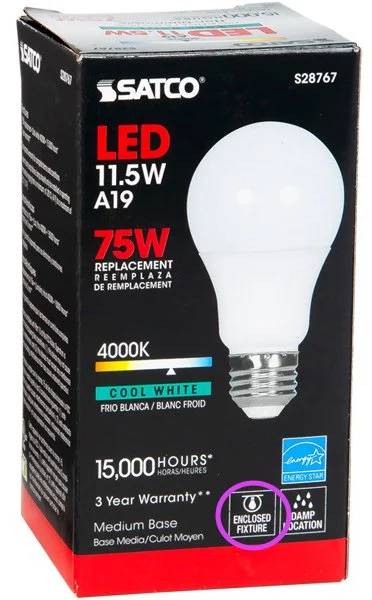
Enclosed rating printed on packaging
Manufacturers usually list enclosed compatibility directly on:
Product packaging
Specification sheets
Product detail pages
Compatibility or application sections
The bulb itself
Look for language such as:
“Suitable for enclosed fixtures”
“Enclosed fixture rated”
“Approved for enclosed fixture use”
If the product does not explicitly state enclosed compatibility, it should generally be treated as an open-fixture bulb.
This is especially important for outdoor fixtures, recessed lighting with covers, and decorative globe fixtures where airflow is heavily restricted.
Signs You Are Using the Wrong Bulb
Many enclosed fixture problems follow the same predictable pattern. The bulb works initially, heat builds over time, and symptoms gradually begin appearing as the driver becomes stressed.
Flickering After the Bulb Warms Up
One of the clearest warning signs is a bulb that operates normally when first turned on but begins flickering after running for several minutes.
When the fixture cools down, the flickering may temporarily disappear before returning again later.
This is commonly caused by driver components struggling under elevated operating temperatures rather than by a defective socket or dimmer issue. One way to distinguish heat-related flickering from dimmer incompatibility: heat flickering begins after the bulb has been on for several minutes and stops when the fixture cools. Dimmer incompatibility causes flickering immediately from the moment the light is switched on.
Early Burnout
A standard LED bulb should not fail after only a few months of normal use.
If bulbs repeatedly fail in globe pendants, enclosed ceiling fixtures, bathroom vanity globes, or sealed outdoor lanterns, heat is often the primary cause. In particular, any LED that fails in under six months in a globe pendant or recessed can is almost certainly a heat issue, not a defective bulb.
Replacing the failed bulb with another standard LED usually produces the same result again later.
Discoloration or Yellowing
Some overheated bulbs begin showing visible yellowing or browning on the diffuser lens over time.
This is a sign of sustained thermal stress inside the fixture. By the time discoloration appears, the driver has often already experienced prolonged heat exposure.
Sudden Complete Failure
Some bulbs fail without obvious warning signs.
The fixture itself still works, but the bulb no longer illuminates, even though there is no visible physical damage. In many enclosed fixtures, long-term heat exposure slowly degrades the driver until it eventually stops functioning altogether.
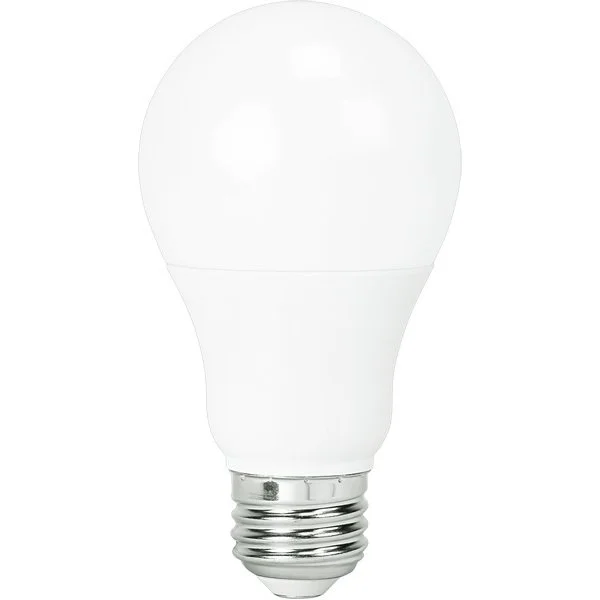
Best LED Bulbs for Enclosed Fixtures
The best bulbs for enclosed fixtures are the ones specifically designed to handle higher operating temperatures over long periods of time.
That does not always mean the brightest bulb or the highest wattage option. In many cases, proper thermal management matters more than raw output.
Residential Enclosed Fixtures
Most residential enclosed fixtures use standard A-shape bulbs such as A19 or A21 formats.
These are commonly installed in:
Flush-mount ceiling fixtures
Globe pendants
Bathroom vanity globes
Covered ceiling fans
Recessed fixtures with glass covers
For general residential lighting, specify enclosed-rated bulbs at 800 to 1,100 lumens (equivalent to 60 to 75W incandescent) and a color temperature of 2700K to 3000K for most living spaces. This range provides warm white light that reads naturally in residential settings while keeping wattage, and heat output, in check.
When space allows, A21 bulbs can sometimes perform better than smaller A19 lamps in enclosed fixtures because the larger housing provides additional surface area for heat dissipation.
The key is verifying that the bulb is explicitly approved for enclosed fixture use before installation.
Commercial Enclosed Fixtures
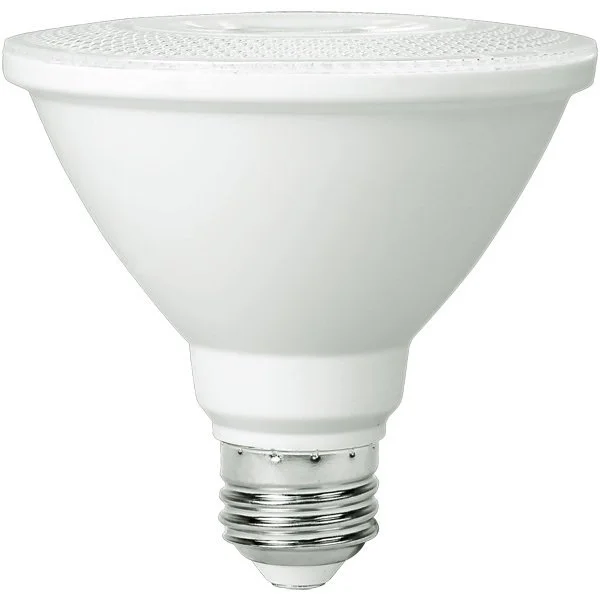
LED PAR30 lamp
Commercial environments often use enclosed-rated PAR lamps, BR lamps, and specialty directional bulbs in recessed downlights, track lighting, and covered fixtures.
These applications place additional stress on the bulb because:
Fixtures may operate for extended hours daily
Ceiling cavities can trap heat
Higher lumen outputs generate additional thermal load
Commercial-grade enclosed-rated LEDs are typically designed with stronger thermal management systems and more durable driver components to support longer operating life under demanding conditions.
For larger retrofit projects, many facility managers also prioritize DLC-listed products when evaluating rebate eligibility and long-term performance.
Outdoor Enclosed Fixtures
Outdoor enclosed fixtures create a unique challenge because bulbs must handle both heat and environmental exposure.
Coach lights, lanterns, enclosed sconces, and sealed porch fixtures often trap heat while also dealing with moisture, humidity, and weather changes throughout the year.
Outdoor bulbs should be rated appropriately for both conditions:
Damp or wet locations for environmental exposure
Enclosed fixture use for heat management
These are separate ratings, and both matter.
A wet-rated bulb that is not enclosed-rated may still fail prematurely from heat buildup inside a sealed fixture. Likewise, an enclosed-rated bulb may not be appropriate for direct weather exposure unless it also carries the correct environmental rating.
Open vs Enclosed Fixtures Explained
Many lighting problems come down to a simple difference in airflow.
An open fixture allows heat to escape naturally around the bulb. An enclosed fixture traps that heat inside the housing.
Open Fixtures
Open fixtures allow air to circulate freely around the lamp during operation.
Common examples include:
Table lamps with open shades
Exposed ceiling fan sockets
Open pendant fixtures
Standard floor lamps
Open recessed cans without covers
In these environments, most standard LED bulbs operate normally because warm air can dissipate continuously during use.
Enclosed Fixtures
Enclosed fixtures restrict airflow around the bulb either partially or completely.
Examples include:
Globe pendants
Covered flush mounts
Outdoor lanterns
Sealed sconces
Recessed fixtures with glass lenses
Bathroom globe fixtures
The defining characteristic is not necessarily whether the fixture looks sealed from the outside. The important factor is whether heat can escape effectively from around the bulb.
If warm air remains trapped around the lamp, enclosed-rated bulbs are usually the safer choice.
Common Fixture Types That Need Enclosed-Rated Bulbs
Some fixtures consistently create heat buildup problems because of how tightly they surround the bulb.
Globe Pendants
Globe pendants fully surround the lamp with glass or plastic, limiting airflow significantly.
These are one of the most common causes of repeated LED failures in kitchens, dining rooms, and entryways when standard bulbs are installed.
Flush-mount Ceiling Fixtures
Covered ceiling fixtures mounted directly against the ceiling often create very little ventilation around the bulb.
Because warm air cannot escape easily, enclosed-rated LEDs are typically recommended.
Covered Recessed Cans
A standard open recessed can usually allows enough airflow for normal LED operation.
Once a recessed fixture adds a glass cover, airtight trim, or a sealed lens, however, heat retention increases substantially.
Outdoor Coach Lights and Lanterns
Outdoor lanterns often combine multiple stress factors:
Limited airflow
Extended operating hours
Heat accumulation
Moisture exposure
These fixtures are one of the most important places to verify enclosed compatibility.
Bathroom Vanity Globes
Vanity globe fixtures create small enclosed chambers around each bulb individually.
Even though the fixture itself may not appear fully sealed, each globe traps heat close to the lamp during operation.
Ceiling Fans With Globe Shades
Many ceiling fans include enclosed glass or plastic shades that restrict airflow around the bulbs.
Because ceiling fans often operate for long periods in bedrooms and living spaces, enclosed-rated bulbs help reduce repeat failures over time.
How Heat Impacts LED Performance
LED performance is heavily tied to temperature management.
Inside every LED bulb is a semiconductor junction where light is produced. That junction generates heat during operation, and the heat must travel away from the bulb through the housing and surrounding air.
In open fixtures, that process works relatively efficiently.
In enclosed fixtures, the surrounding air temperature rises steadily, reducing the bulb’s ability to cool itself effectively. As internal temperatures climb, both light output and component lifespan begin declining faster.
The driver is especially vulnerable because many of its internal electronic components are highly sensitive to sustained heat exposure.
Over time, excessive heat can lead to:
Reduced light output
Flickering
Driver instability
Shortened lifespan
Complete bulb failure
That is why enclosed-rated bulbs matter. They are designed with thermal management systems and driver components intended to tolerate elevated operating temperatures more effectively than standard LEDs.
Best Practices for Longer Bulb Lifespan
Most enclosed fixture LED problems are preventable with proper bulb selection and a few simple installation habits.
Always Verify the Enclosed Fixture Rating
Do not assume a bulb is compatible with enclosed fixtures simply because it is LED.
The enclosed fixture rating should be stated clearly on the packaging, specification sheet, or product listing. If the rating is missing, the bulb should generally be treated as intended for open-air use only.
This is especially important for:
Covered ceiling fixtures
Globe pendants
Outdoor lanterns
Bathroom vanity globes
Recessed cans with lenses or covers
Leave Thermal Headroom When Possible
Using the highest-output bulb a fixture can physically accept is not always the best long-term choice.
Lower-wattage LEDs often operate cooler while still producing more than enough usable light for residential and light commercial applications. Leaving some thermal headroom inside the fixture can help extend driver lifespan significantly. For example, if a fixture is rated for a maximum of 60W, a 9W LED often produces adequate light while running cooler than a 13W option that also fits. Both replace a 60W incandescent in terms of lumen output, but the lower-wattage choice gives the driver more thermal headroom in an enclosed housing.
Consider Larger Bulb Formats
When the fixture allows it, larger bulb formats may help with heat dissipation.
For example, an A21 bulb has a larger housing than an A19, giving it more surface area for passive cooling. That additional space can help reduce thermal stress in enclosed residential fixtures.
Pay Attention to Recessed Can Airflow
Some recessed fixtures appear open from below but still trap heat internally because insulation surrounds the housing above the ceiling.
If airflow around the can housing is heavily restricted, enclosed-rated bulbs are often the safer choice, even if the trim itself is not fully sealed.
Standardize Bulb Specifications in Larger Properties
For apartment complexes, hotels, offices, and commercial properties, documenting which fixtures require enclosed-rated bulbs can prevent repeated failures later.
Without clear specifications, maintenance teams may unintentionally install standard LEDs in enclosed fixtures during routine replacements, restarting the same heat-related problems again.
A simple fixture-to-bulb reference sheet can eliminate a large amount of unnecessary troubleshooting and repeat maintenance.
Final Thoughts: The Small Rating That Makes a Big Difference
Enclosed fixture failures are one of the most common reasons people become frustrated with LED lighting, but the problem is usually not the LED technology itself.
Heat is the real issue.
Standard LED bulbs depend on airflow to manage internal temperatures. Once that airflow disappears inside a sealed fixture, the driver begins operating under conditions it may not have been designed to handle.
The solution is typically straightforward: use bulbs specifically rated for enclosed fixtures.
That small compatibility detail can dramatically improve lifespan, reduce flickering and burnout issues, and prevent repeated replacement cycles in homes and commercial buildings alike.
The right enclosed-rated LED should perform just as reliably as any other quality LED installation when matched properly to the fixture.
Shop Enclosed Fixture LED Bulbs or call 1-800-624-4488 for help choosing the right bulb for your fixture type.

FAQs
Can any LED bulb be used in enclosed fixtures?
No. Many standard LED bulbs are only designed for open-air fixtures where heat can dissipate normally. Enclosed fixtures trap heat around the bulb, which can shorten lifespan significantly if the bulb is not specifically rated for enclosed use.
What happens if I use the wrong bulb?
Using a non-enclosed-rated bulb inside a sealed fixture often leads to overheating, flickering, buzzing, discoloration, or premature failure. In many cases, the driver fails long before the LED itself.
Why do LEDs fail in enclosed fixtures?
LEDs fail in enclosed fixtures because trapped heat raises internal operating temperatures beyond what standard drivers are designed to handle. Sustained thermal stress gradually damages the driver components and shortens the overall bulb lifespan.
How do I know if a bulb is enclosed-rated?
Manufacturers usually list enclosed compatibility directly on the packaging, specification sheet, the product page, or the bulb itself. Look for phrases such as “enclosed fixture rated” or “suitable for enclosed fixtures.”
Are enclosed-rated LEDs more expensive?
Some enclosed-rated LEDs cost slightly more because they use improved thermal management and higher-temperature-rated components. However, the added lifespan and reduced replacement frequency usually offset the higher upfront cost over time.