
The Complete Guide to T8 Tubes

If you have ever managed a building, worked in a warehouse, or even looked up at a drop ceiling in an office, you have probably seen T8 lighting.
For years, T8 tubes have been the go-to solution for commercial and institutional spaces. They hit that sweet spot between performance, cost, and reliability, which is why they became so widely used.
But lighting is changing.
LED upgrades are becoming more common. Fluorescent systems are being phased out in some areas. And a lot of people are now asking the same questions.
What exactly is a T8 tube?
Should I keep using it or upgrade?
And how do I know what works with my current setup?
This guide walks you through all of it so you can make confident decisions, whether you are maintaining what you have or planning what comes next.
What Is a T8 Tube?
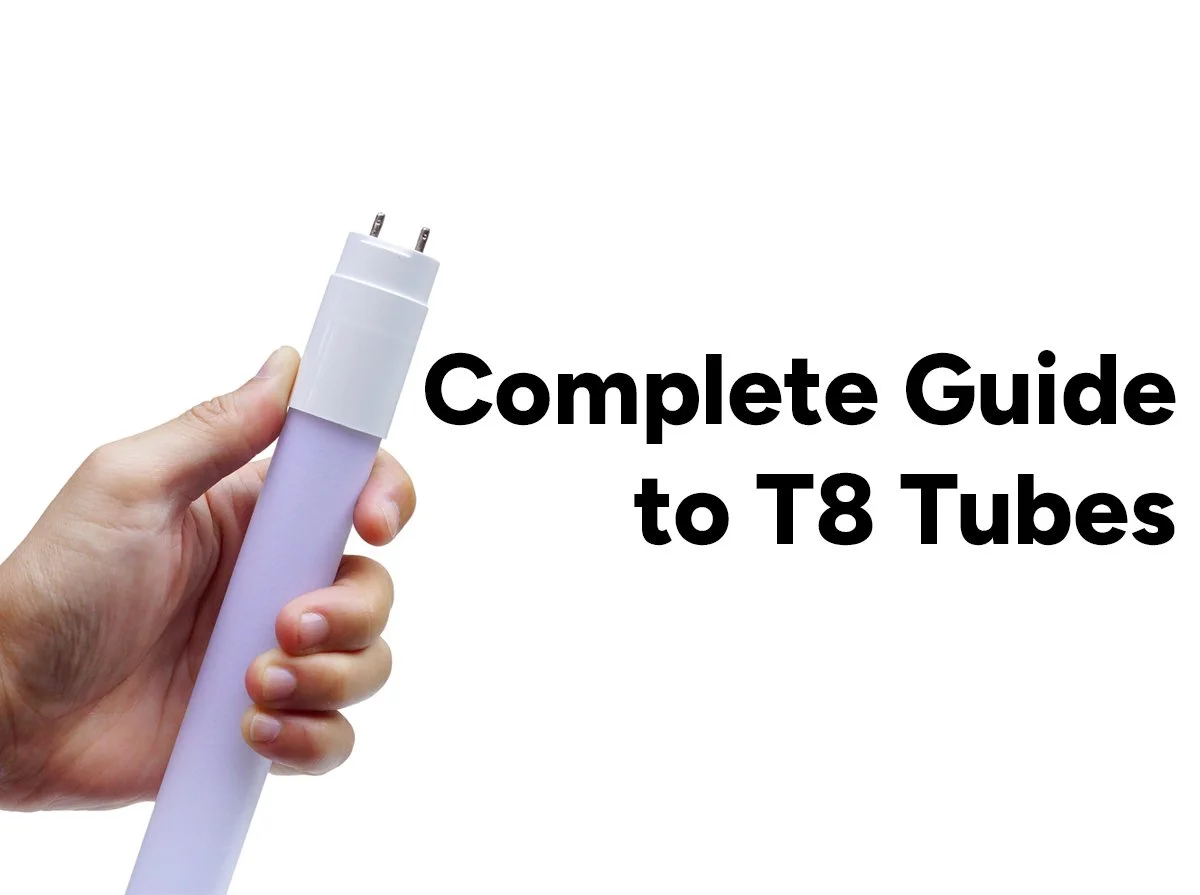
A T8 tube is a fluorescent light bulb used in commercial and industrial lighting.
The name tells you everything you need to know once you understand it. The “T” stands for tubular, and the “8” means the tube is 8 eighths of an inch in diameter. That comes out to exactly 1 inch.
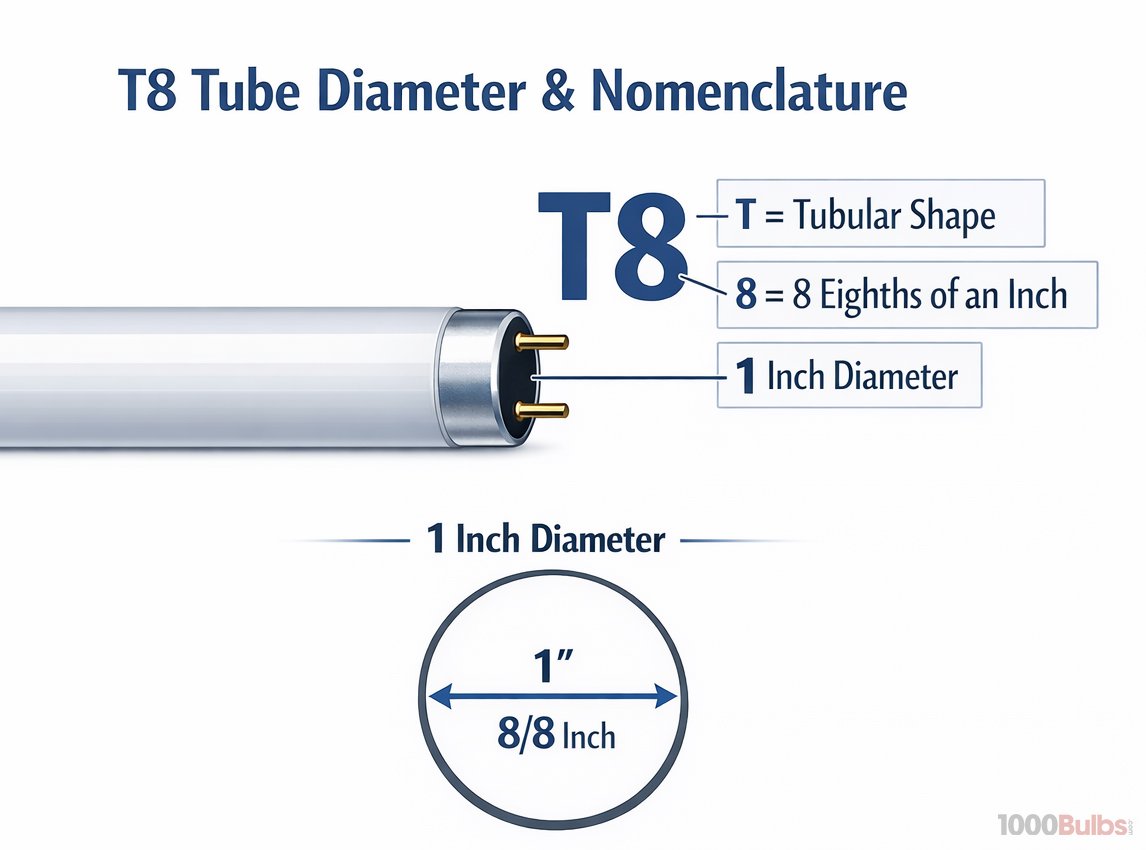
T8 tubes became popular because they improved on older T12 systems. They used less energy, performed more consistently, and worked in a wide range of fixtures.
You will typically find them in:
Office ceiling troffers
Retail lighting setups
Warehouses and storage facilities
Schools and institutional buildings
Garages and utility spaces
Because they were so widely adopted, T8 systems are still one of the most common lighting setups in existing buildings today.
How T8 Fluorescent Tubes Work
T8 tubes create light through a process that converts electricity into visible light using gas and a phosphor coating.
Here is what is happening inside the tube:
Electricity flows into the lamp
The ballast regulates the current
Mercury vapor inside the tube is energized
That produces ultraviolet light
The phosphor coating converts that into visible light
That process is what makes fluorescent lighting more efficient than older incandescent bulbs.
The role of the ballast
The ballast is not optional. It is what keeps the system running correctly.
It controls the electrical current and helps the lamp start and operate safely. Without it, the lamp would draw too much power and fail.
Why flickering happens
If you are dealing with flickering, it usually comes down to one of three things:
Aging tubes
A failing ballast
Components that are not compatible
Modern electronic ballasts reduce flicker compared to older magnetic ones, but problems can still show up as systems age.
Common T8 Sizes and Specifications
The 4-foot T8 tube is the most common, but it is not the only option.
Common T8 tube sizes are:
2-foot
3-foot
4-foot (most widely used)
8-foot (less common, often in industrial settings)
Wattage ranges
Most 4-foot T8 tubes fall between 25 and 32 watts.
There are also lower-wattage options that maintain similar light output while using less energy.
Color temperature basics
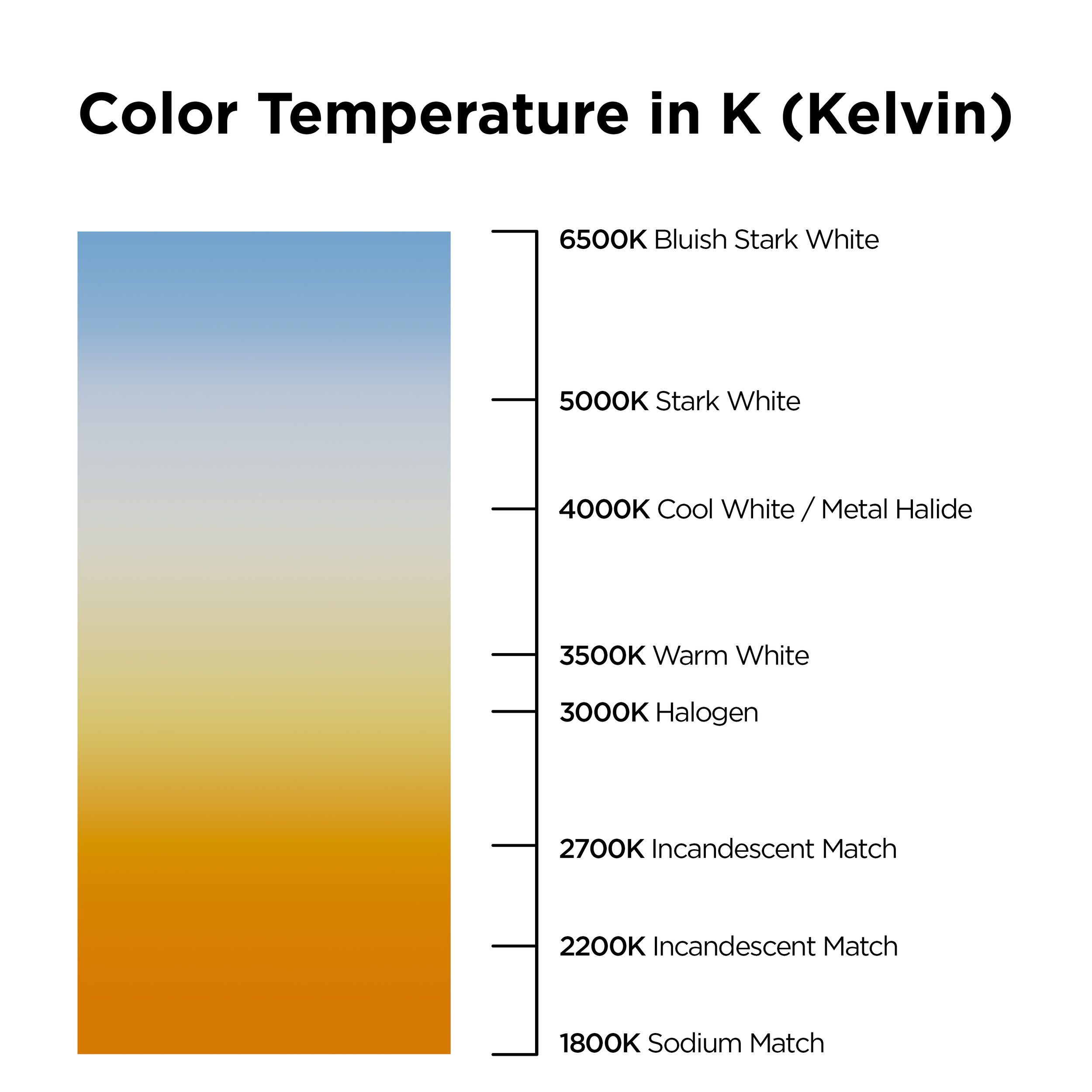
Color temperature has a big impact on how a space feels.
3000K – warm, slightly yellow light
3500K – neutral white
4100K – cool white (common in offices)
5000K+ – daylight, bright and crisp
Choosing the right one depends on the environment and how the space is used.
T8 vs T12 Tubes
T8 tubes replaced T12 tubes in many applications, but both still exist in older buildings.
The main differences come down to size and efficiency.
T8 tubes are smaller, more efficient, and typically use electronic ballasts.
T12 tubes are larger, less efficient, and often rely on older magnetic ballasts.
If you are still using T12 lighting, upgrading to T8 or LED is usually one of the easiest ways to improve efficiency.
T8 vs LED Tubes
This is where most decisions are happening today.
T8 fluorescent lighting works well, but LED systems take things further.
Here is how they compare in real terms:
LED tubes use less energy
LED systems last longer
LED lighting reduces maintenance
LED setups can remove the ballast entirely
So what does that mean for you?
T8 may still work if your system is in good shape. But if you are thinking long-term, LED often wins on cost, maintenance, and performance.
Advantages of T8 Lighting
There is a reason T8 systems stuck around for so long.
They are practical, reliable, and easy to work with.
Some of the key benefits include:
Affordable replacement for existing systems
Reliable performance across different environments
Widely available products and parts
Compatibility with many existing fixtures
If you are not ready to upgrade, T8 is still a dependable option.
Disadvantages of T8 Tubes
At the same time, there are some clear limitations.
They contain mercury and require proper disposal
They are less efficient than LED
They rely on ballasts, which can fail
They have a shorter lifespan than modern alternatives
These are the reasons many facilities are slowly moving toward LED lighting.
Where T8 Tubes Are Commonly Used?
T8 lighting shows up almost everywhere in commercial and institutional spaces.
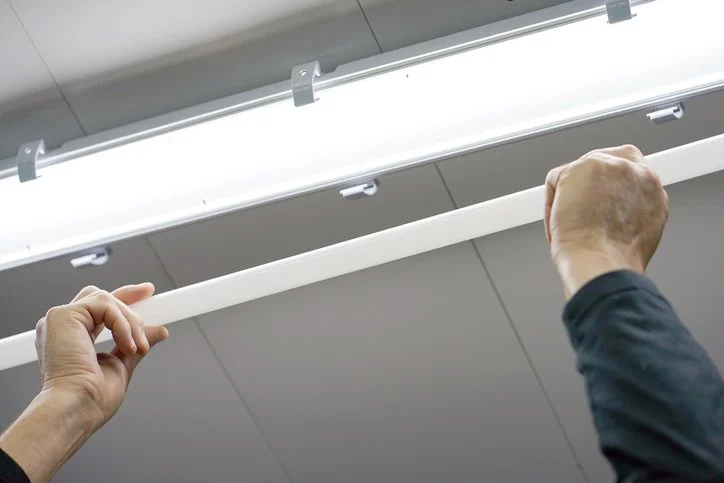
You will commonly see it in:
Office buildings
Warehouses and distribution centers
Schools and universities
Retail stores
Healthcare facilities
They are especially common in ceiling troffers, strip fixtures, and general utility lighting.
Understanding T8 Ballast Compatibility
The ballast is a key part of any T8 system.
There are two main types:
Magnetic ballasts, which are older and less efficient
Electronic ballasts, which are newer and perform better
How to identify your ballast
Check the label inside the fixture or directly on the ballast.
It should list:
Voltage
Lamp type
Compatibility
Matching the correct ballast to your T8 tube is essential. If they do not align, the system will not perform properly.
How to Retrofit from T12 to T8
Upgrading from T12 to T8 is one of the most common lighting improvements in older buildings.
It usually does not require replacing the entire fixture, but it does require some changes.
The process typically includes:
Confirming the fixture is a T12 system
Replacing the ballast with a T8-compatible electronic ballast
Installing T8 tubes
Testing the system
This upgrade improves efficiency and light quality while extending the life of the existing fixture.
Should You Upgrade from T8 to LED?
This is the big question for many facilities.
If your T8 system is working well, you may not need to rush into a change.
But if maintenance is becoming an issue or you are looking to reduce long-term costs, LED is worth serious consideration.
T8 still makes sense when:
Your system is in good condition
You need a lower upfront cost option
You are maintaining the existing infrastructure
LED is the better move when:
You want long-term energy savings
Maintenance costs are increasing
Ballasts are failing
You are planning a larger upgrade
For most facilities, LED is becoming the long-term solution.
Energy Savings Potential with T8 Lighting
T8 systems are more efficient than older T12 setups, but savings depend on how the system is used.
For example:
Replacing T12 with T8 can reduce energy use by 20 to 30 percent
Switching to LED increases savings even further
The biggest factors that affect savings are:
How long the lights are on each day
How many fixtures are in use
The type of ballast and lamps
Even small improvements can add up over time.
How to Choose the Right T8 Tube
Choosing the right T8 tube is about more than just size.
Start with color temperature so the space feels right.
Then look at brightness. Make sure the lumen output matches how the space is used.
Check ballast compatibility to avoid performance issues.
And consider the application. A warehouse, office, and retail space all have different lighting needs.
Getting these details right helps everything work the way it should.
Maintenance Tips for T8 Lighting Systems
Like any lighting system, T8 performs best with regular upkeep.
A few simple habits can make a big difference:
Replace tubes in groups instead of one at a time
Clean fixtures to maintain brightness
Watch for signs of ballast failure
Replace aging components before they fail
Staying ahead of maintenance helps keep lighting consistent and reduces downtime.
Environmental Considerations
T8 fluorescent tubes contain small amounts of mercury, so proper handling and disposal are important.
Best practices include:
Following local recycling regulations
Avoiding disposal in standard trash
Using approved recycling programs
For businesses looking to reduce environmental impact, moving toward LED is often part of the plan.
Planning the Right Lighting Upgrade Strategy
T8 lighting has been a reliable standard for years, but it is now part of a bigger transition in the lighting world.
The right decision depends on your current setup and your goals.
Take a step back and look at:
The condition of your system
Your energy and maintenance costs
Whether a retrofit or full upgrade makes more sense
There is no one-size-fits-all answer, but a thoughtful approach will always lead to a better result.
Lighting should work without you thinking about it
At the end of the day, good lighting just works. It is consistent, reliable, and easy to maintain.
Whether you stick with T8 for now or start planning a move to LED, the goal is the same. A system that supports your space without creating extra work.
Frequently Asked Questions About T8 Tubes
What does T8 mean in lighting?
T8 refers to the diameter of the tube. The “T” stands for tubular, and the “8” means the tube is 8 eighths of an inch, or 1 inch in diameter.
Are T8 and T12 interchangeable?
Not directly. While they may fit in similar fixtures, T8 tubes require compatible ballasts. Converting from T12 to T8 usually involves replacing the ballast.
Can you replace T8 with LED tubes?
Yes. Many LED tubes are designed to replace T8 fluorescent bulbs, either using the existing ballast or bypassing it entirely.
How long do T8 tubes last?
Most T8 fluorescent tubes last between 20,000 and 30,000 hours, depending on usage and ballast quality.
Do T8 tubes save energy?
Yes, especially compared to older T12 tubes. However, LED lighting is more energy efficient overall.
What ballast is needed for T8?
T8 tubes require an electronic ballast designed for T8 lamps. Using the correct ballast ensures proper performance and lifespan.
What size is a standard T8 tube?
The most common size is a 4-foot tube with a 1-inch diameter.