
Retail Store Lighting Design: How to Increase Sales
| What This Article Covers |
|---|
Retail lighting design is one of the most controllable variables in any store, and one of the most overlooked. The right lighting strategy affects how long customers stay, which products attract attention, how merchandise colors appear, and how shoppers emotionally experience the space from the moment they walk in. This guide explains how lighting influences customer buying behavior, how to use layered lighting to improve product presentation, and which fixture types and color temperatures work best by store category. It also covers the advantages of LED over traditional fixtures, how smart controls reduce operating costs, and the most common retail lighting mistakes — along with practical fixes for each. Best for: retail store owners, facility managers, lighting contractors, and commercial property operators planning a new store layout, fixture upgrade, or LED retrofit. |
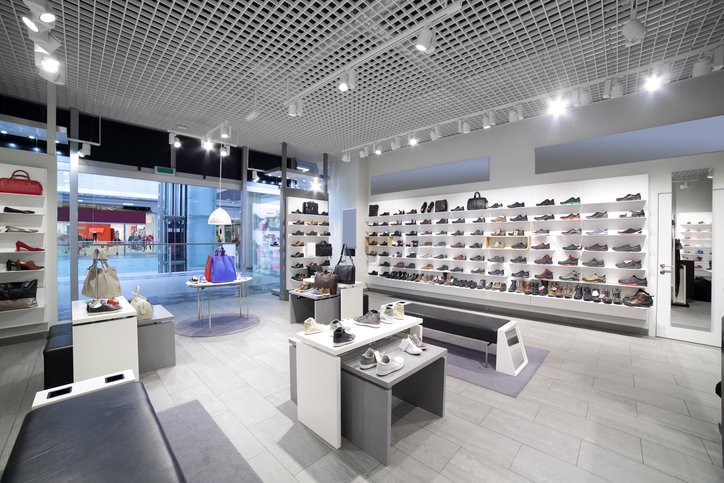
A customer walks into two clothing boutiques on the same street. One feels bright, warm, and intentional, with focused lighting drawing attention to featured displays and fitting rooms that flatter skin tones naturally. The other feels flat and dim, with uneven fluorescent lighting that makes fabrics look dull and shadows gather in the corners. Even if both stores sell similar products, the shopping experience feels completely different.
That difference is retail lighting design.
Lighting is one of the most controllable variables in retail, yet many stores still treat it as a basic utility decision instead of a customer experience strategy. The right lighting influences how long shoppers stay, what products they notice first, how merchandise colors appear, and how customers emotionally respond to the space itself.
This guide breaks down how retail lighting design affects customer behavior, product visibility, and overall store atmosphere. It also covers practical store lighting ideas, fixture recommendations, retail LED lighting strategies, and energy-saving approaches for different retail environments.
Why Lighting Influences Customer Buying Behavior
Retail lighting affects much more than visibility. It shapes how customers experience a store from the moment they walk through the entrance.
Studies in retail psychology consistently show that lighting influences customer attention, dwell time, perceived product quality, and even how comfortable shoppers feel moving through a space. While customers may not consciously analyze the lighting itself, they absolutely react to the environment it creates.
Product Visibility
Customers cannot buy products they cannot clearly see.
Poor lighting flattens texture, mutes color, and reduces visual contrast across merchandise displays. Even high-quality products can appear lower-end under uneven or poorly rendered light.
This becomes especially important in categories like:
Apparel
Jewelry
Cosmetics
Furniture
Food merchandising
High-CRI retail LED lighting helps products appear more accurate and visually appealing because it renders colors more naturally. In clothing stores, for example, inaccurate lighting can make fabrics look washed out or shift color tones enough that customers hesitate to purchase.
Retailers investing in intentional lighting design are often improving product presentation as much as they are improving illumination itself.
Emotional Response
Lighting also affects how a space feels emotionally.
Warm lighting between roughly 2700K and 3000K tends to create a more relaxed and comfortable atmosphere. That softer environment works well in:
Boutiques
Restaurants
Home goods stores
Beauty retailers
Cooler lighting around 4000K to 5000K creates a brighter, more energetic feeling associated with clarity and cleanliness. Grocery stores, pharmacies, and electronics retailers often benefit from cooler lighting because customers prioritize visibility and efficiency in those environments.
The lighting strategy should align with the type of emotional response the retailer wants customers to experience while shopping.
Customer Movement
Lighting naturally guides customer attention throughout a store.
Brighter areas tend to attract the eye first, while dim corners often receive less foot traffic regardless of what merchandise is displayed there. Retailers frequently use accent lighting to pull customers toward:
Feature displays
Promotional tables
New arrivals
Endcaps
Seasonal sections
Well-positioned lighting can subtly influence how customers move through the space without requiring additional signage or direction.
This is one reason layered retail lighting design matters so much. Stores relying entirely on uniform overhead lighting often feel visually flat, making it harder to establish focal points throughout the sales floor.
Brand Perception
Lighting quality also influences how customers perceive the brand itself.
Dim, inconsistent, or poorly maintained lighting often signals neglect even when the merchandise is high quality. On the other hand, intentional layered lighting creates a more polished environment that immediately feels more premium and professionally designed.
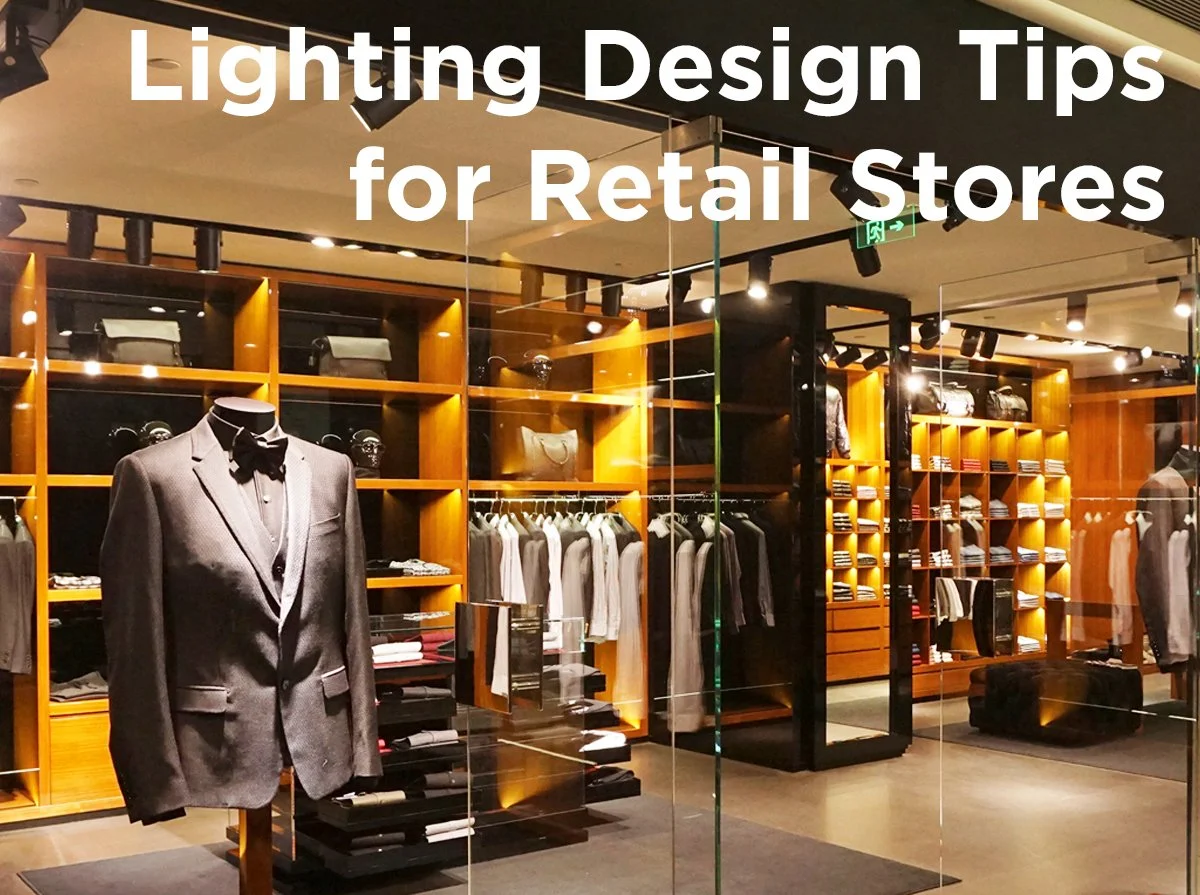
High-end retailers rarely rely on a single lighting layer. Instead, they combine ambient lighting, accent lighting, decorative fixtures, and display lighting to create depth throughout the space.
Customers notice those details even when they are not consciously thinking about the lighting itself.
The Best Types of Retail Lighting
Effective retail lighting design relies on layered lighting instead of a single uniform fixture type across the entire store.
Different lighting layers serve different purposes. Some establish overall visibility, while others direct attention toward products, displays, or work areas.
Ambient Lighting
Ambient lighting is the foundational layer that establishes overall brightness throughout the store.
In retail environments, ambient lighting commonly comes from:
LED panels
Troffers
Recessed fixtures
Linear fixtures
High bays in larger retail spaces
A strong ambient layer ensures customers can comfortably navigate the sales floor without harsh shadows or uneven visibility.
Most retail stores target roughly 50 to 75 footcandles for general ambient illumination, depending on the merchandise category and store layout.
Accent Lighting
Accent lighting draws attention to specific merchandise or display areas.
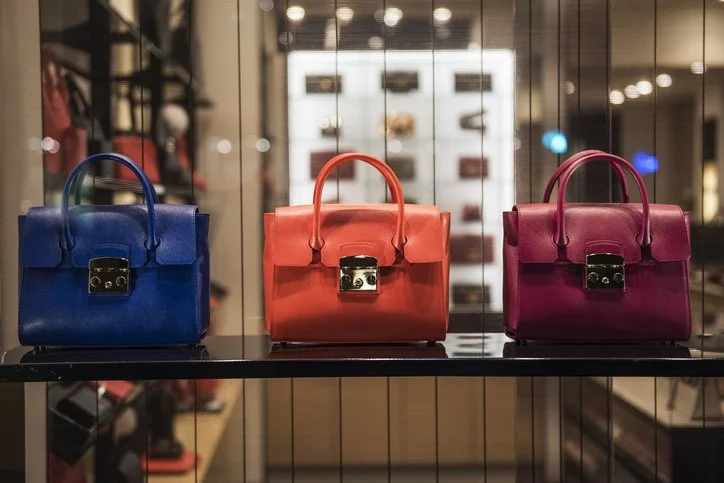
Track lighting and adjustable spotlights are among the most common accent lighting tools because they allow retailers to redirect focus as displays change throughout the year.
Effective accent lighting is usually several times brighter than the surrounding ambient light. That contrast naturally attracts customer attention toward:
Featured merchandise
Promotional displays
Window presentations
Endcaps
Brand focal points
Retail stores frequently use LED track lighting because it provides flexibility without requiring major fixture relocation during merchandising updates.
Task Lighting
Task lighting supports employees and functional work areas where visual clarity matters most.
Retail task lighting is commonly used in:
Checkout counters
Service desks
Fitting rooms
Stockrooms
Preparation areas
The goal is focused illumination without excessive glare or eye strain.
Under-cabinet fixtures, LED strip lighting, and directional fixtures often work well in checkout environments because they improve visibility for employees without overwhelming customers standing nearby.
Display Lighting
Display lighting is a more specialized form of accent lighting designed specifically for merchandise presentation.
This type of lighting is commonly used for:
Jewelry cases
Wine displays
Shelving features
Window displays
Product showcases
High-CRI recessed fixtures, LED puck lights, and adjustable display heads are common choices because they help products appear more vibrant and visually detailed.
In many retail environments, display lighting becomes one of the most important tools for shaping product perception before a customer even touches the merchandise.
Color Temperature and Retail Psychology
Color temperature is one of the most influential retail lighting decisions because it changes how customers emotionally respond to a space before they consciously process the merchandise itself.
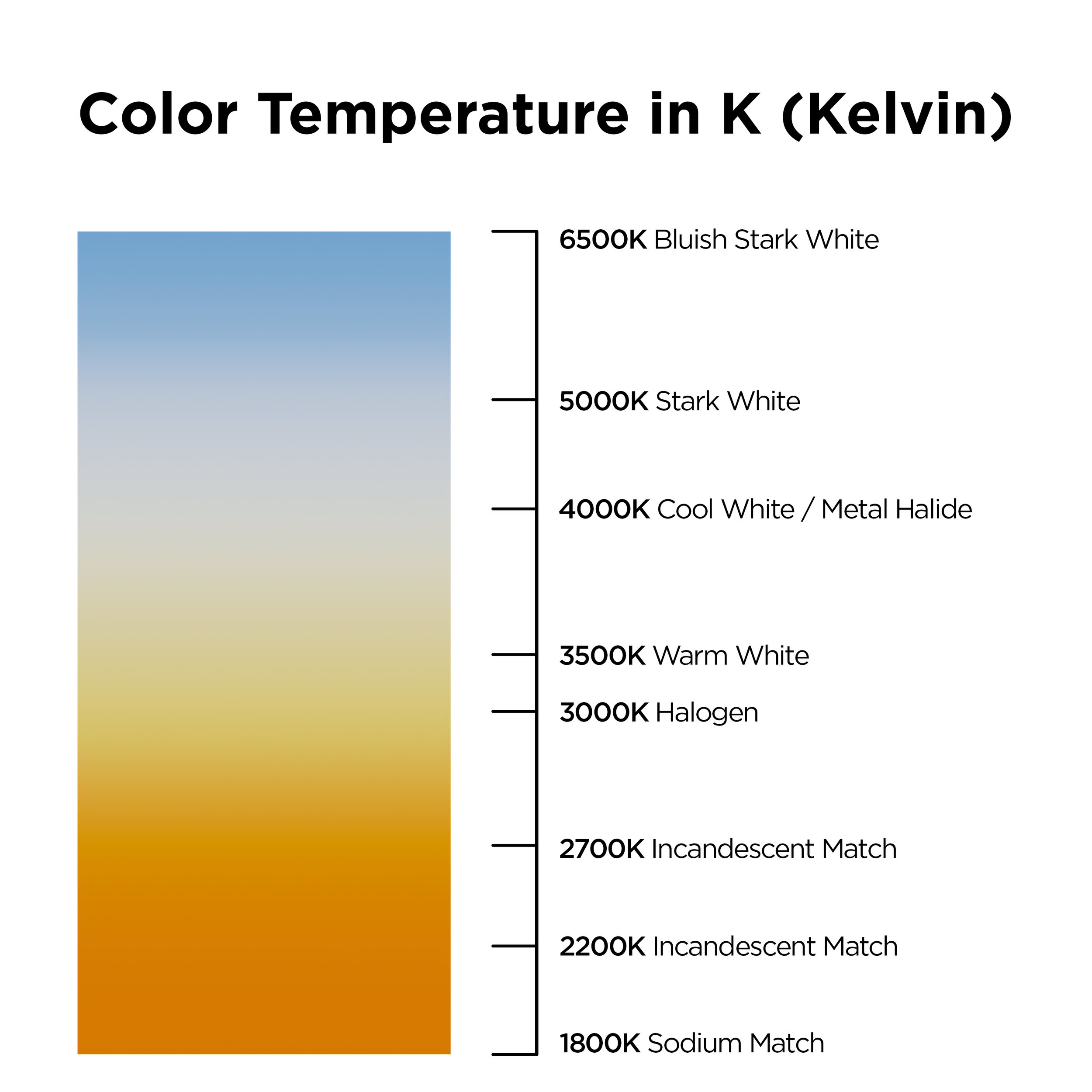
Measured in Kelvin (K), color temperature determines whether lighting feels warm and inviting or bright and energetic. The same store layout can feel dramatically different depending on the chosen lighting temperature.
Warm white lighting between 2700K and 3000K creates a softer, more comfortable atmosphere associated with relaxation and familiarity. This is one reason boutiques, restaurants, spas, and home goods stores often favor warmer retail LED lighting. The environment encourages customers to slow down, browse longer, and engage more comfortably with the space.
A clothing boutique, for example, may intentionally use warmer ambient lighting to create a more upscale and welcoming atmosphere throughout the sales floor.
Neutral white lighting between 3500K and 4000K is often considered the most flexible option for general retail applications because it balances warmth with visibility. Colors appear natural without the space feeling overly warm or overly clinical.
This range works especially well in:
Department stores
Sporting goods retailers
General merchandise stores
Showrooms
Cool white lighting between 4000K and 5000K creates a brighter, more alert environment associated with clarity and cleanliness. Grocery stores, pharmacies, electronics retailers, and auto parts stores frequently use cooler lighting because customers prioritize visibility, accuracy, and speed in those environments.
An electronics retailer operating under warm 2700K lighting may feel visually inconsistent with customer expectations, while the same lighting temperature might feel perfectly appropriate in a luxury home décor showroom.
The most effective retail lighting design strategies often layer color temperatures intentionally instead of relying on a single Kelvin value across the entire space.
A boutique may use:
2700K ambient lighting for warmth
3500K accent lighting for product clarity
That combination preserves a comfortable atmosphere while still helping merchandise colors appear accurate under focused display lighting.
Best Retail Lighting by Store Type
Different retail environments require different lighting strategies because customers interact with products differently depending on the store category.
The right retail lighting design should support both the merchandise itself and the type of shopping behavior the retailer wants to encourage.
Clothing Stores
Clothing stores benefit from layered lighting that balances atmosphere with accurate color rendering.
Most apparel retailers perform well using warm ambient lighting between 2700K and 3000K combined with high-CRI accent lighting throughout display racks and fitting room areas.
Fitting room lighting is especially important because customers rely heavily on visual confidence before purchasing clothing. Poor fitting room lighting can:
Distort colors
Create harsh shadows
Flatten fabric texture
Make skin tones appear unnatural
Many retailers overlook fitting rooms entirely, even though they directly affect purchasing decisions.
Most fitting rooms perform best around:
75 to 100 footcandles
3000K to 3500K color temperatures
That range preserves warmth while still rendering clothing colors accurately.
Grocery Stores
Grocery stores require higher and more consistent ambient illumination than many other retail environments.
Customers expect grocery spaces to feel:
Bright
Clean
Organized
Easy to navigate
Most grocery stores target 75 to 100 footcandles throughout the sales floor.
Specialty departments often use more customized lighting strategies. Produce sections benefit from high-CRI lighting that enhances natural color vibrancy, while meat and deli sections frequently use warmer-toned display lighting that complements natural food presentation.
Lighting consistency also matters heavily in grocery environments because uneven illumination can make shelves appear understocked or poorly maintained even when inventory levels are normal.
Jewelry Stores
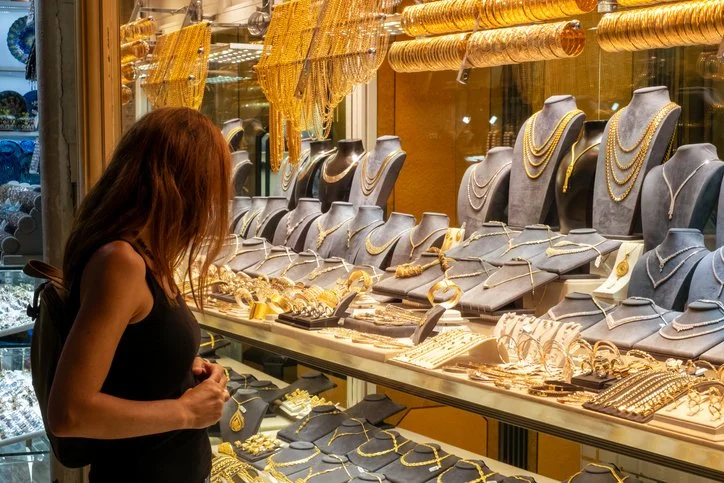
Jewelry stores require some of the most precise lighting designs of any retail category.
High-CRI lighting is essential because gemstones, precious metals, and polished finishes rely heavily on accurate light reflection to appear visually appealing.
Most jewelry retailers target:
CRI ratings above 95
Narrow beam spot lighting
Focused display illumination
Adjustable LED spotlights with tighter beam angles help create the sparkle and contrast customers associate with premium jewelry presentation.
In many jewelry environments, the lighting itself becomes part of the merchandising strategy.
Convenience Stores
Convenience stores prioritize speed, visibility, and clarity over atmosphere.
Customers entering convenience stores typically want to locate products quickly and move efficiently through the space. Bright, even ambient lighting helps reduce friction throughout aisles and checkout areas.
Many convenience stores target 100 footcandles or more across the sales floor to maximize visibility.
LED flat panels, linear fixtures, and compact high bays commonly work well in these environments because they create broad, consistent illumination throughout the store.
A bright, clean lighting environment also reinforces customer perceptions of safety and cleanliness, which strongly influence repeat visits in convenience retail settings.
LED Retail Lighting vs Traditional Fixtures
Most retailers already understand that LED lighting is more efficient than older fluorescent or metal halide systems. The real advantage is how much better LEDs perform across nearly every category that matters in a retail environment.
LED retail lighting typically uses 50 to 75 percent less energy than comparable fluorescent or HID fixtures. For stores operating long business hours every day, that reduction creates meaningful savings on monthly utility costs over time.
Lifespan is another major difference.
A fluorescent tube operating in a retail store for 12 to 14 hours daily may require replacement within roughly two to three years.
Comparable LED fixtures commonly operate for 25,000 to 50,000 hours, which often translates into five to ten years of service depending on operating schedules.
That longer lifespan reduces:
Maintenance labor
Lamp replacement costs
Disruptions during business hours
Inventory storage for replacement lamps
LEDs also produce substantially less heat than traditional lighting technologies. In retail environments with large fixture counts, reducing excess heat can help lower cooling demand while minimizing heat exposure near merchandise displays.
Color consistency is another major advantage. Fluorescent lighting output changes over time as lamps age, often creating noticeable color differences across the sales floor.
LED fixtures maintain far more consistent color temperature and output throughout their usable lifespan, helping stores preserve a cleaner and more visually unified appearance.
1000Bulbs carries a wide range of commercial retail LED lighting products, including LED track lighting, flat panels, display fixtures, high bays, and retrofit solutions designed specifically for retail environments.
Businesses planning larger upgrades can also inquire about bulk pricing options by calling 1-800-624-4488.
How Smart Lighting Can Reduce Costs
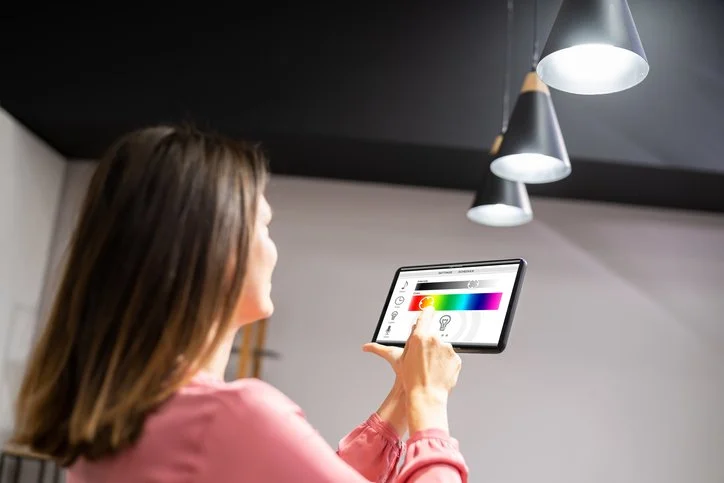
Smart lighting controls help retailers reduce operating costs without compromising the customer experience.
One of the simplest upgrades involves occupancy sensors in low-traffic areas such as:
Stockrooms
Restrooms
Break rooms
Storage spaces
These systems automatically dim or switch off lighting when spaces are unoccupied, often reducing energy use in controlled zones by 30% to 50%.
Dimming systems create additional flexibility by allowing stores to adjust brightness levels based on:
Time of day
Seasonal conditions
Promotions
Store traffic patterns
Some retailers intentionally operate slightly brighter environments during peak shopping hours while lowering output during slower periods to reduce energy consumption and extend fixture lifespan.
Daylight harvesting systems add another layer of efficiency. Stores with large windows or skylights can use photosensors to automatically reduce artificial lighting output when sufficient natural light is available.
This strategy works particularly well in:
Showrooms
Furniture stores
Large-format retail spaces
Modern storefront designs with extensive glass exposure
Many modern retail LED lighting systems already support:
0-10V dimming
Occupancy sensors
Daylight harvesting controls
Common Retail Lighting Mistakes
Many retail lighting problems are not caused by insufficient fixture output. They are caused by lighting decisions that unintentionally work against the shopping experience.
Here are some of the most common retail lighting issues seen in commercial spaces:
| Mistake | Why It Hurts the Store Experience |
|---|---|
| Relying only on overhead ambient lighting | Stores using nothing but flat overhead illumination often feel institutional and visually one-dimensional. Without accent or display lighting, merchandise loses depth, and focal points disappear throughout the sales floor. |
| Using low-CRI lighting | CRI ratings below 80 may work in warehouse environments, but retail spaces generally benefit from CRI ratings above 90. Poor color rendering can make clothing, cosmetics, furniture, and food appear dull or inaccurate. |
| Mixing color temperatures unintentionally | Combining warm 3000K fixtures with cool 5000K fixtures without a clear lighting strategy can make a store feel visually disorganized. Customers may not consciously identify the issue, but the environment can still feel inconsistent or uncomfortable. |
| Ignoring maintenance schedules | Fluorescent and older fixtures gradually lose brightness as they age. Many stores slowly become dimmer over time without employees noticing until large areas begin looking uneven or poorly lit. |
| Overlooking storefront and window lighting | Exterior lighting creates the first impression customers experience before entering the store. Poorly illuminated entrances and dark window displays reduce curb appeal and make stores less visually inviting during evening hours. |
In many retail environments, fixing these issues does not require a full redesign. Small adjustments to color temperature consistency, display lighting placement, fixture maintenance, and CRI selection can dramatically improve how the store feels to customers.
How 1000Bulbs Supports Commercial Lighting Projects
Commercial lighting upgrades often involve more than simply choosing a fixture wattage. Ceiling height, beam angle, controls compatibility, rebate eligibility, and fixture spacing all affect long-term performance across large facilities.
1000Bulbs helps businesses navigate those decisions with a broad catalog of commercial LED products, including UFO high bays, linear high bays, industrial fixtures, occupancy sensors, and emergency lighting solutions for warehouses, manufacturing plants, gyms, and retail spaces.
Customers also have access to US-based lighting specialists who can help review fixture options, discuss layout considerations, and recommend products based on the application and operating environment.
For larger retrofit projects, bulk ordering support and account management assistance are available to help coordinate commercial purchasing timelines and product availability. Many product pages also feature a lighting layout tool that estimates fixture quantity and projected footcandle levels based on room dimensions.
Call 1-800-624-4488 to speak with a lighting specialist or browse commercial lighting solutions at 1000Bulbs.com.
Lighting That Helps Products Sell Themselves
Good retail lighting design is not about adding more fixtures or making a store overwhelmingly bright. It is about using light intentionally to shape customer attention, improve product presentation, and create an environment that supports the way people naturally shop.
The most effective retail lighting strategies balance:
Ambient visibility
Accent lighting
Product presentation
Energy efficiency
Customer comfort
Retailers who approach lighting as a business decision instead of a purely aesthetic one often create stores that feel more polished, easier to navigate, and more visually engaging for customers.
Whether you are upgrading a boutique, redesigning a grocery store, modernizing a convenience store, or planning a full commercial retail lighting retrofit, the right fixture selection and lighting layout can improve both the customer experience and long-term operating efficiency.
If you are not sure where to start, the team at 1000Bulbs can help.
Call 1-800-624-4488 Monday through Friday, 7 a.m. to 5 p.m. CST to speak with a US-based lighting professional, or browse the commercial retail lighting collection at 1000Bulbs.com.
FAQs
What Lighting Is Best For Retail Stores?
The best retail lighting depends on the store type, merchandise category, and customer experience goals. Most stores benefit from layered lighting that combines ambient illumination, accent lighting, and display lighting to improve both visibility and product presentation.
Does Lighting Impact Sales?
Lighting can influence how customers experience a retail space, including how long they browse, which products attract attention, and how merchandise appears visually. While lighting alone does not guarantee increased sales, intentional retail lighting design can support stronger product presentation and customer comfort.
What Color Temperature Works Best In Retail?
Warm lighting between 2700K and 3000K works well in boutiques, restaurants, and home goods stores because it creates a softer atmosphere. Neutral and cool lighting between 3500K and 5000K is more common in grocery stores, pharmacies, and electronics retailers where clarity and visibility are priorities.
Are LEDs Better For Retail Stores?
LED retail lighting generally offers better energy efficiency, longer lifespan, lower maintenance requirements, and more consistent color rendering compared to fluorescent or HID systems. LEDs also generate less heat and integrate easily with smart lighting controls.
How Bright Should Retail Stores Be?
Most retail environments target roughly 50 to 75 foot-candles for general ambient lighting, though brightness levels vary depending on the store type. Grocery stores and convenience retailers often use higher illumination levels, while boutiques may use softer ambient lighting combined with stronger accent lighting.